Rustic Spring Wedding Ideas: 16 Grounded Ways to Style Flowers, Wood, and Outdoor Spaces
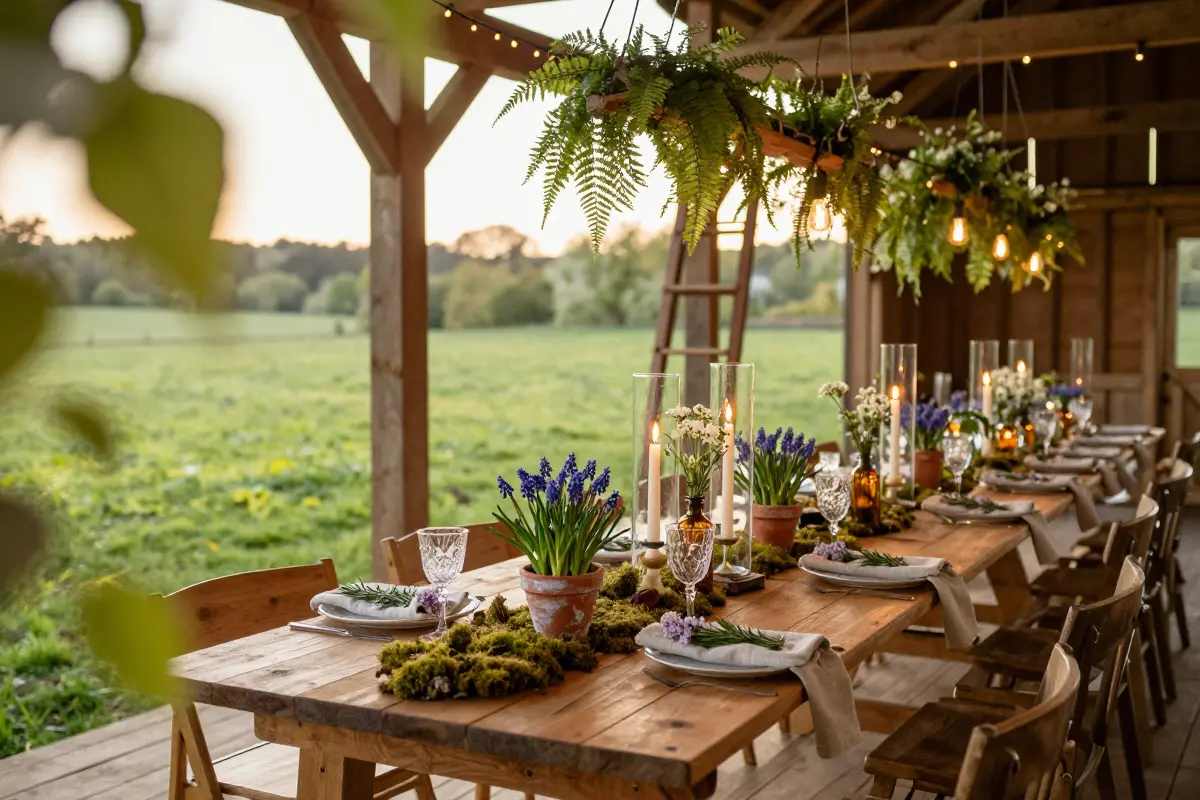
When the first light catches dew-slick pine tables at the edge of a meadow, the contrast between fresh green buds and weathered wood is unmistakable. That moment captures the balancing act a spring rustic wedding demands: raw textures, seasonal blooms, and a venue that can handle lingering chill and soft, muddy ground.
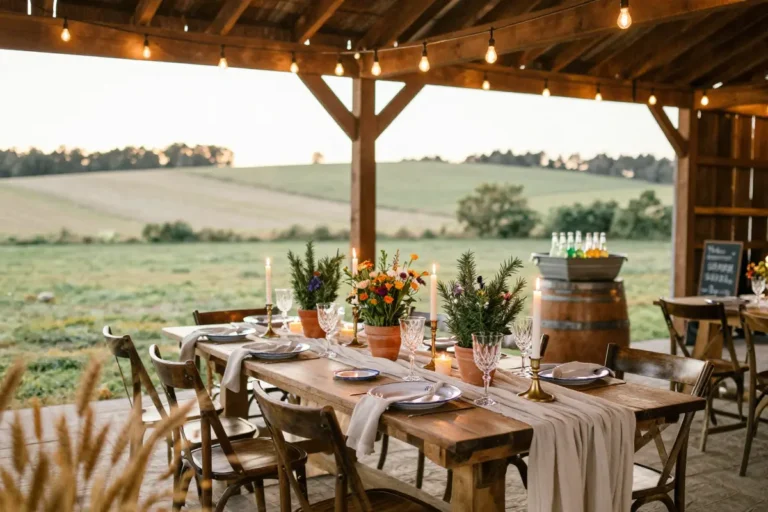
The best rustic spring wedding ideas pair natural materials, such as wood, terracotta, and linen, with in-season flowers, and plan ahead for mud, wind, and cold. Below are 16 of them, from unfinished pine tables with moss runners to galvanized stock-tank drink stations and Edison-style string lights. Each comes with pros and cons plus a tip, budget note, or checklist, and practical advice on anchoring decor, protecting fabrics, and keeping pathways firm.
Short on time? Jump to the picks by problem or the setup and weatherproofing checklist.
1. Unfinished Pine Farm Tables with Moss Runners
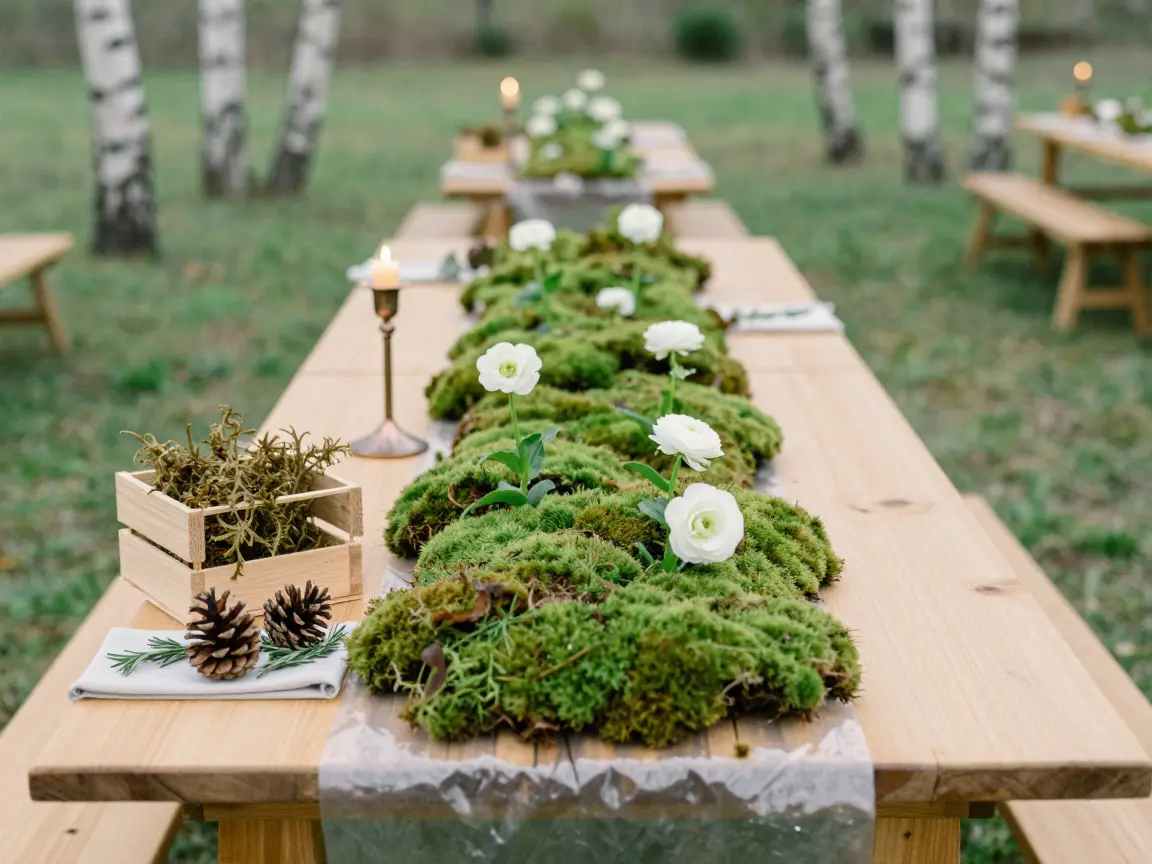
Unfinished pine farm tables pair beautifully with a runner of fresh moss, but live moss is wet, and wet moss can stain raw wood. Lay a thin sheet of 2-mil polyethylene film directly on the pine and trim it flush with the table edge, then set the moss on top in a 12-inch-wide runner that stops a couple of inches short of each table end. Tuck in pale hellebore and white ranunculus stems at intervals for height without crowding the narrow trestle tops.
Hellebores wilt quickly once cut, so sear the stem ends or place them in small water tubes hidden in the moss. If live moss feels too high-maintenance, dried sheet moss lightly misted with water gives a similar texture and can be reused next season. For more table ideas, see our guide to wedding table decorations.
- Natural, tactile look
- Soft color contrast
- Needs a moisture barrier
- Live moss has limited reuse
- Dried sheet moss: $15 to $25
- Polyethylene film: $5 to $10
Don’t overcrowd narrow trestle tables with glassware and florals, because they can tip.
2. Weathered Terracotta Pots with Potted Spring Bulbs
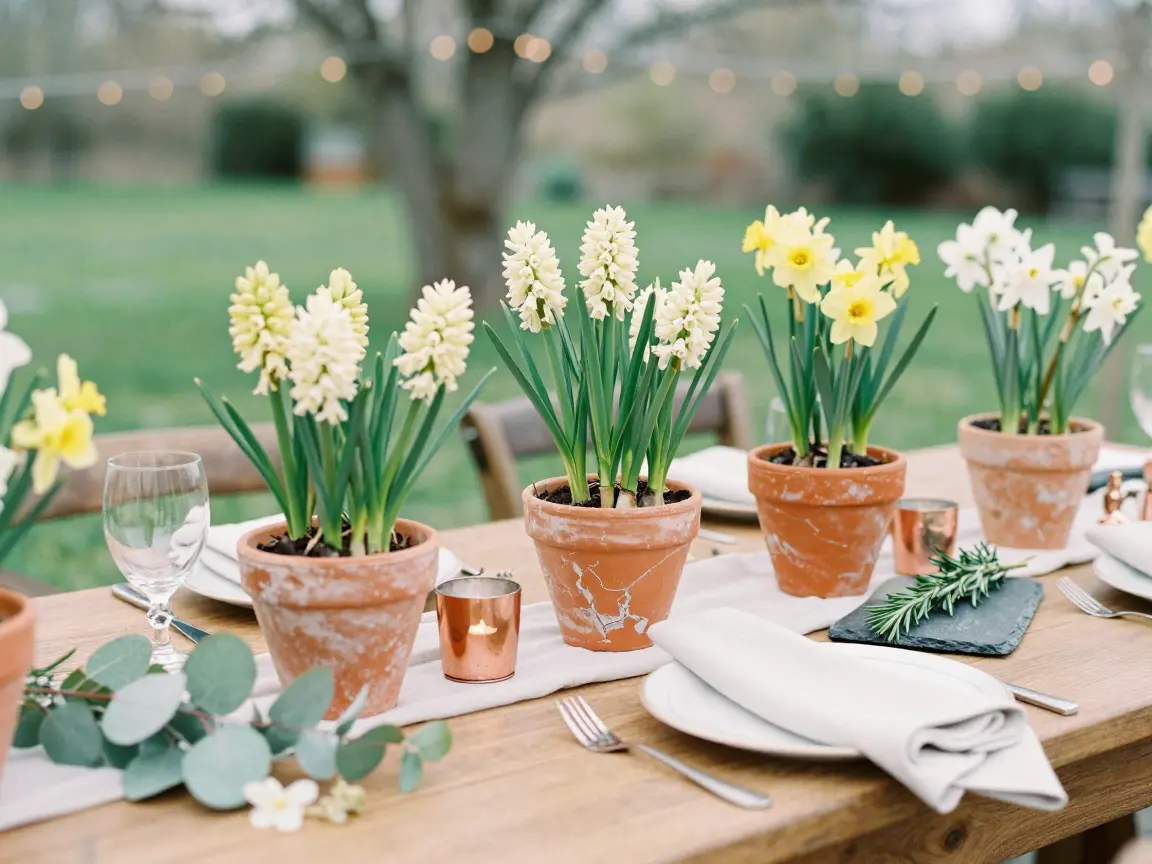
Weathered terracotta pots sit low on each table, each holding a cluster of muscari and miniature daffodils. The muted orange of the clay echoes the rustic palette, and the low profile keeps sightlines open across the table. Guests can carry the pots home, which turns a centerpiece into a favor and cuts floral waste.
Timing is the tricky part. Daffodils and muscari need roughly 12 to 15 weeks of cold before they bloom, so DIY forcing means starting in autumn. The easier route is to order potted, nursery-forced bulbs timed for your wedding week and keep them cool and bright until setup. Group the pots in clusters of three so a breeze can’t topple tall single stems. For more send-home ideas, see our wedding favors guide.
- Reusable take-home favor
- Low profile keeps sightlines open
- Bloom timing is hard to control
- Pots can tip in wind
Order potted bulbs from a local nursery for your wedding week, and keep them cool and bright until setup.
3. Deconstructed Birch Branch Ceremony Arbors
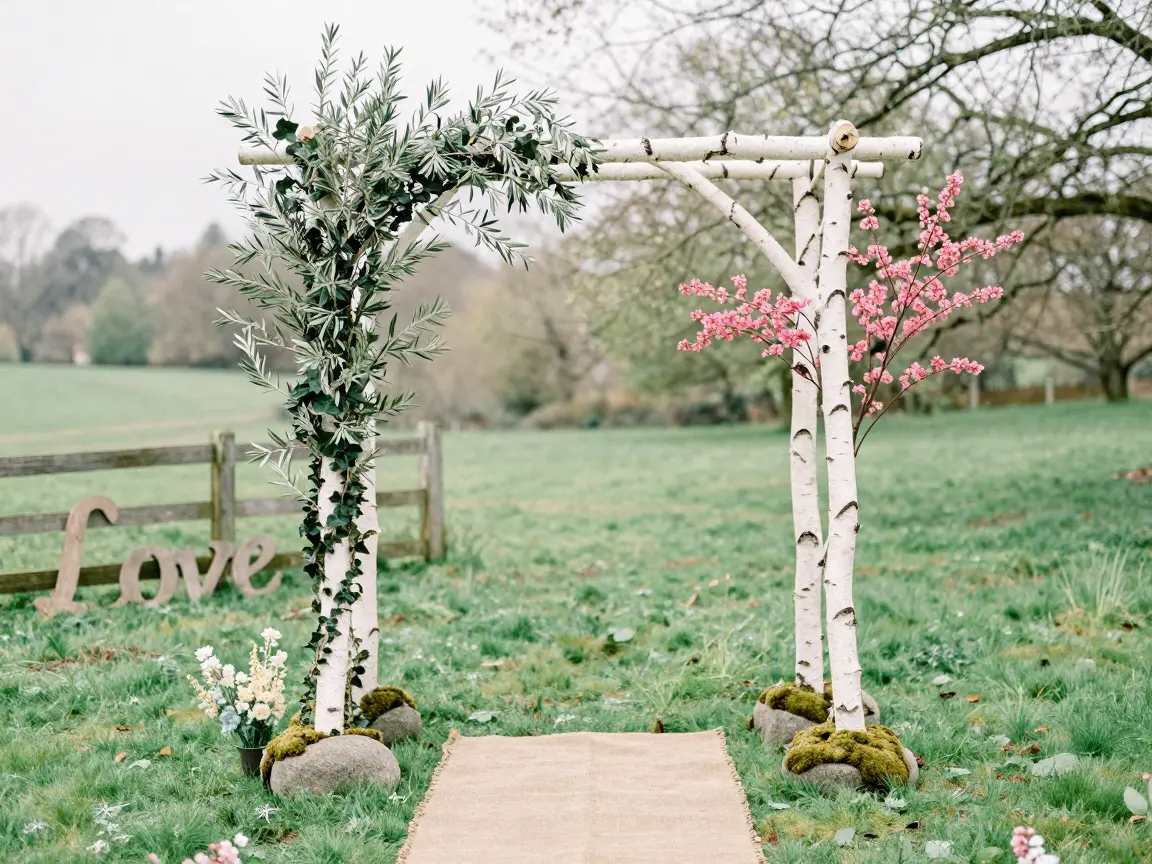
When the early-spring lawn is still soft, a birch-branch arbor can sink or tear the turf. Anchor each pole in a weighted stone footing or a sandbagged concrete block, hidden beneath moss or trailing vines. Birch branches are brittle and top-heavy, so they need careful placement and enough ballast to hold in a gust.
A splurge version uses kiln-dried reinforced poles with steel caps and professional installation, at $1,200 to $1,800. A budget option sources raw branches from local arborists for $80 to $150 and relies on sandbags and reclaimed flagstones. DIY is realistic with tools and helpers, but a rental service saves time and ensures proper anchoring. Finish the look with dogwood clippings draped across the crossbeam, and see our wedding arch ideas for more structures.
- Natural texture
- Branches are easy to source locally
- Brittle poles
- Heavy ballast needed
Stone footings can damage soft turf unless padded, and tall arbors act like sails in the wind. Check the forecast and weigh down or stake every leg.
- Splurge: $1,200 to $1,800
- Budget: $80 to $150
4. Washed Oatmeal Linen Napkins with Fresh Rosemary Sprigs
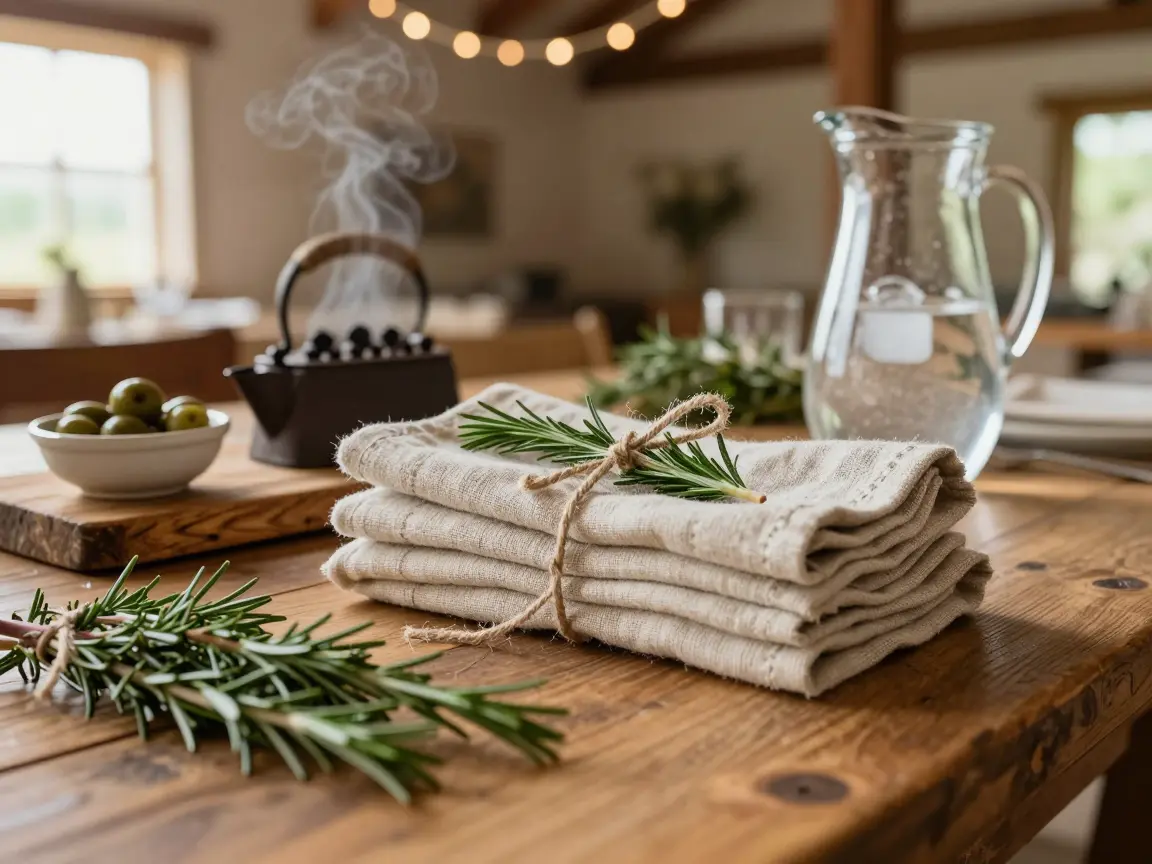
Hem-stitched flax linen napkins in washed oatmeal, each tied with a loose loop of raw jute twine and a fresh rosemary sprig, set a relaxed tone. The slightly off-white color hides small water or grease spots better than stark white damask, and a mid-weight weave holds up to repeated use. Press them lightly with a warm iron for a little texture rather than flattening them board-flat, which crushes the relaxed fibers.
Washed linen wrinkles by design, so embrace the rumple; in humid air it can wrinkle unevenly. New linen can also shed fine lint onto dark clothing, so wash and tumble the napkins once before the event.
- Hides minor stains
- Natural texture
- Wrinkles in humidity
- Can shed lint on dark clothes
Tuck the rosemary sprig just below the twine knot for a balanced look.
5. Clear Glass Cloches Covering Sprouting Ferns
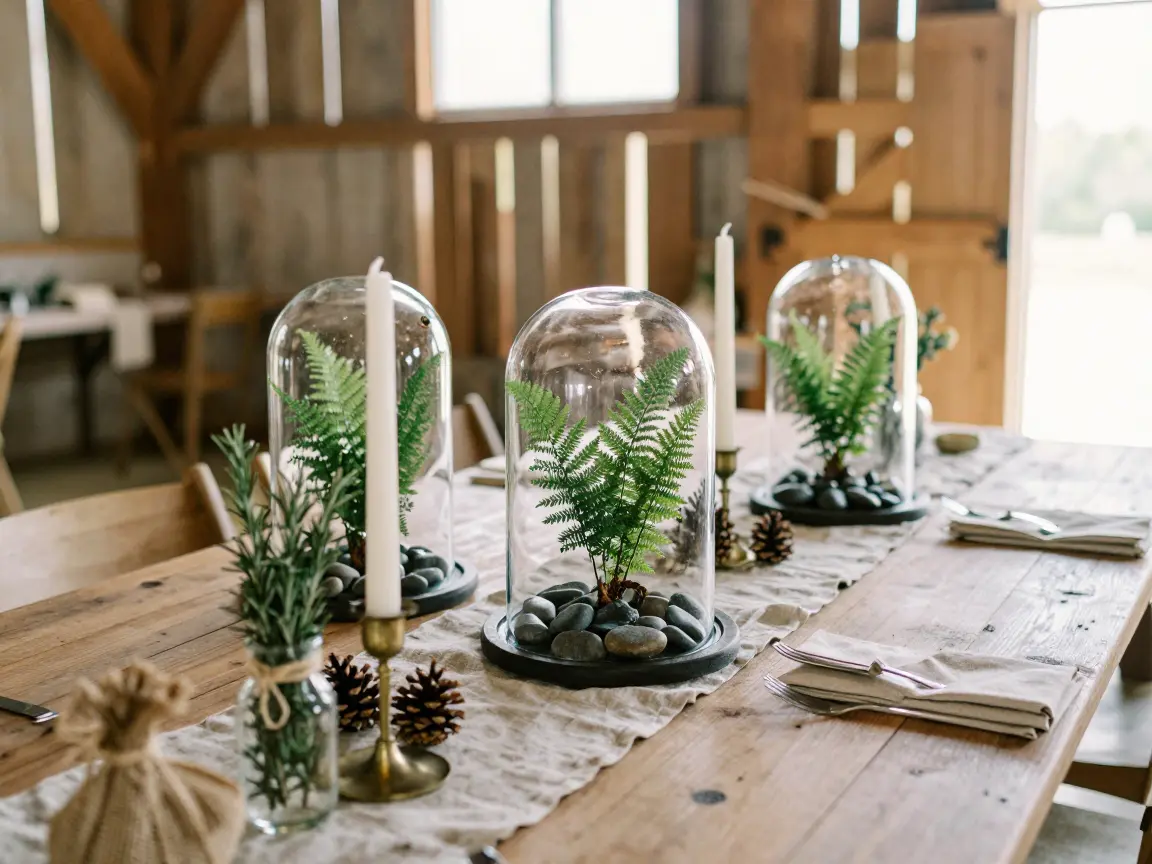
Drafty barn doors and sudden temperature drops can wilt delicate maidenhair ferns before guests even sit down. Set each sprouting fern under a clear glass cloche on a shallow tray of damp river pebbles. The cloche shields the fern from drafts while the table’s natural wood still shows through, and it works like a tiny greenhouse, holding humidity around the fronds through dinner.
Keep cloches out of direct midday sun, where the glass traps heat, fogs up, and scorches the ferns. After the event, wash the cloches and reuse them for future decor or to cover herbs and desserts.
- Protects delicate plants
- Elegant, tidy look
- Traps heat in direct sun
- Condensation can cloud the glass
Direct sunlight causes condensation that clouds the glass and can scorch the ferns.
6. Galvanized Stock Tank Drink Coolers with Herb-Infused Ice

Shallow galvanized stock tanks on thick rubber utility mats make a rustic, electricity-free drink station. Fill each tank with ice blocks frozen with rosemary, thyme, or lavender, and nestle cans of craft beer, hard cider, and bottled sodas into the ice. The ice does the cooling, so the tank needs no power, and the frozen herbs add a subtle aroma as they melt. Keep this ice for chilling only, and use separate ice in guests’ glasses.
A splurge option is a custom-finished, double-wall tank with drainage hoses that direct meltwater to a floor drain, which suits polished barn floors. A budget-friendly version is a plain 55-gallon farm-supply trough at $70 to $120. Choose a tank with a drain plug so you can empty it into a bucket or hose instead of tipping it. DIY setup is realistic with a drill and a level; otherwise a rental company can handle drainage. For more bar ideas, see our guide to outdoor wedding bars.
- Keeps drinks cold without power
- Herb ice adds a rustic scent
- Uninsulated metal sweats and melts ice faster
- Meltwater can create slippery spots
Meltwater can pool on finished barn floors, increasing slip risk. Keep the tank on mats and a towel or mop close by.
- Farm-supply trough: $70 to $120
- Custom double-wall tank: $250 to $350
7. Suspended Ladder Greenery Installations Above Dining Tables
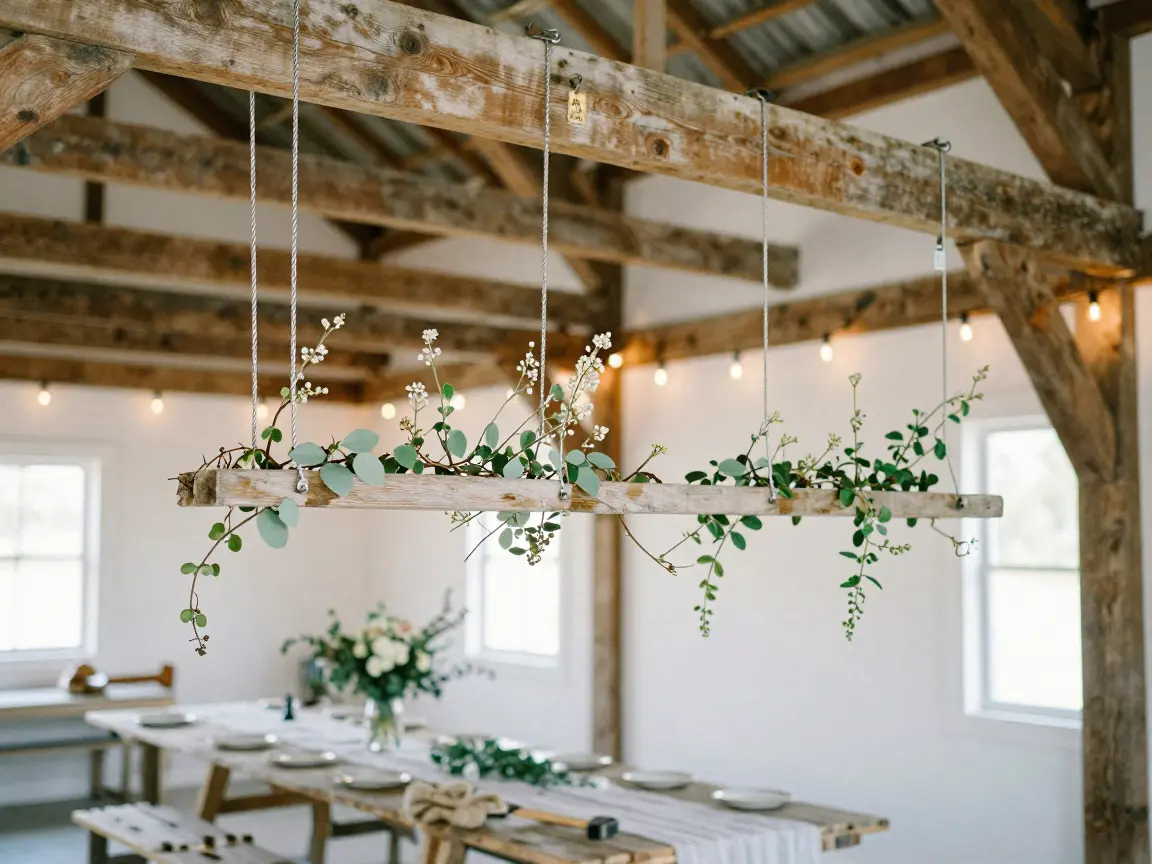
Hang a reclaimed orchard ladder from the barn’s exposed beams, then drape loose smilax vines and small flowering branches along its rungs. Attach it to structural beams, never to a light-fixture box or ceiling tile, and use cable and hardware rated for several times the finished weight; ask your venue or a rigger for the working load limit. A wooden orchard ladder can weigh 20 to 30 pounds before any greenery, and water-filled vases push the total much higher, so add up the weight before you rig.
A common mistake is trusting a venue’s existing light-fixture box, which isn’t built to carry that load. Overhead installs should be approved by the venue and, ideally, hung by a qualified rigger.
- Creates a dramatic overhead line
- Adds natural texture
- Adds rigging complexity
- Risk of debris or drips onto tables
Skip water vials that could drip onto guests’ glasses, and use dry or well-sealed stems instead.
What you’ll need:
- Ladder cleaned of loose bark
- Smilax vines pre-cut to length
- Stainless steel cable and turnbuckles
- Structural beam anchor points
- Completed weight calculation
8. Seed-Packet Escort Cards on Weathered Trellis Boards
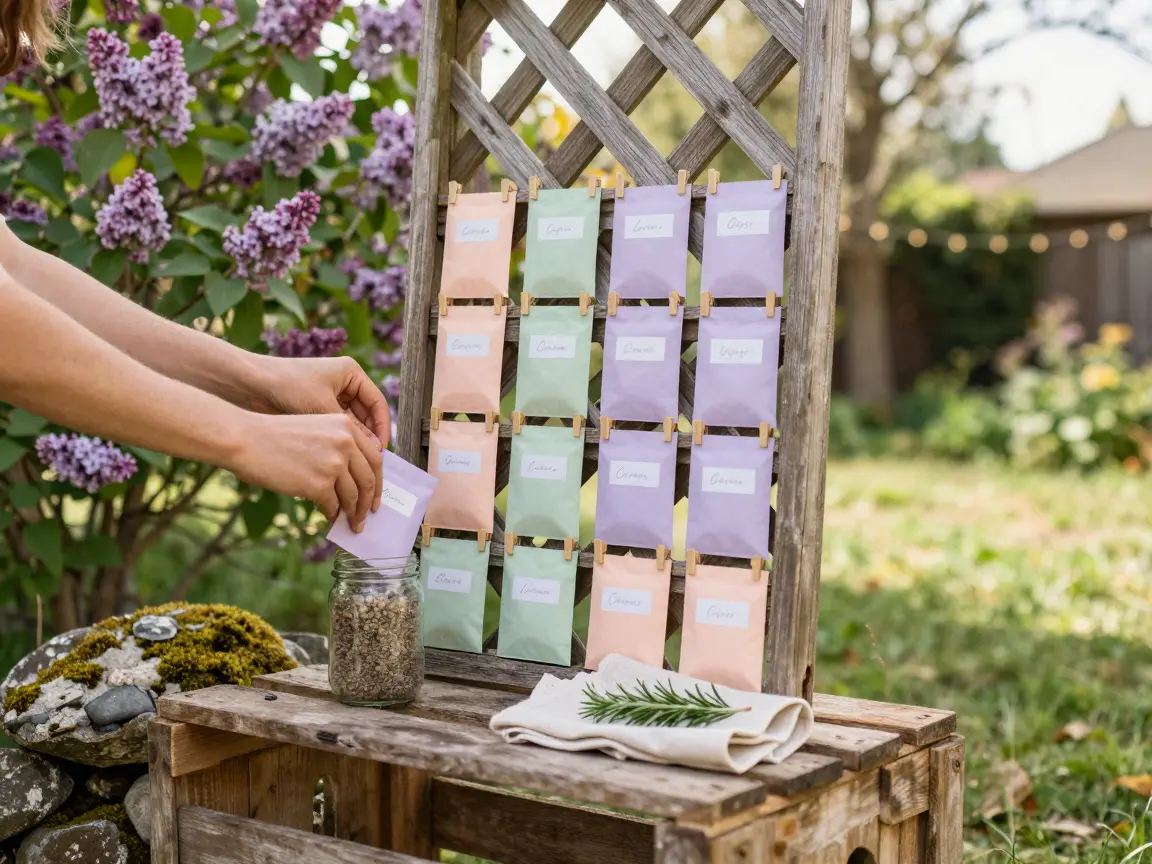
A weathered cedar trellis leans against the garden fence, its lattice dotted with tiny wooden pegs that each hold a seed packet printed with a guest’s name and table number. Arrange the packets alphabetically so guests can find theirs at a glance. The trellis steadies the cards against a spring breeze, and the seeds double as a planting favor.
Source a regional, non-invasive perennial or wildflower blend from a local nursery so the seeds actually thrive in guests’ gardens. Lean the trellis against a fence or stake it so wind can’t topple it. This setup works well for medium-sized outdoor weddings of roughly 30 to 80 guests, where the trellis can sit near the entrance without crowding.
- Cards stay put in a breeze
- Doubles as a lasting favor
- Extra setup time
- Needs sturdy anchoring
Use mini clothespins or zip ties to secure the packets on uneven boards.
9. Mismatched Amber Glass Bottles with Single Wildflower Stems
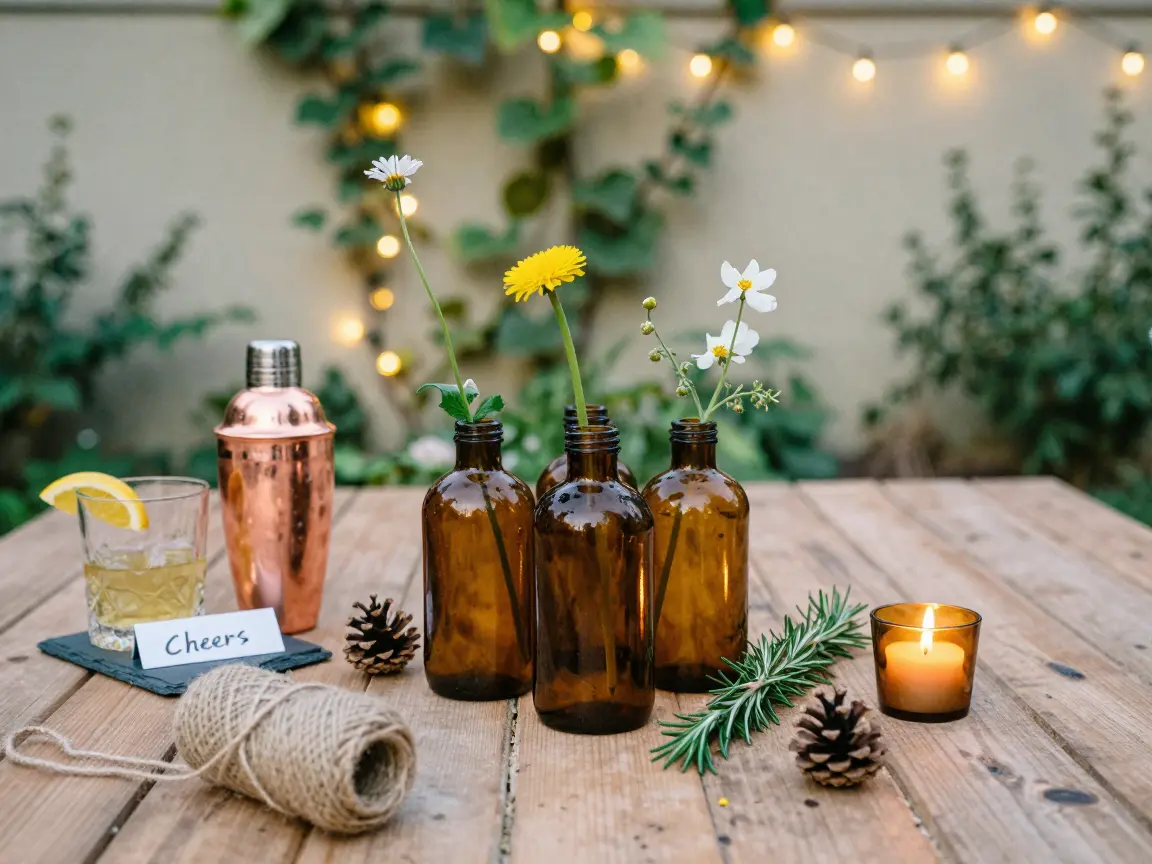
Amber glass bottles are inexpensive, and single stems of chamomile, buttercups, and sweet peas make them look deliberate. Cluster them in threes and fives on cocktail highboys. The tight groupings keep the tablescape light yet anchored, and they prove you don’t need a foam-filled centerpiece to feel intentional. For more field-style florals, see our wildflower centerpieces guide.
A budget route is to hunt thrift stores for 8-ounce amber bottles at $1 to $2 each. The splurge version swaps in hand-blown amber glass from a studio at $12 to $18 per piece, with thicker walls and a more custom look. DIY is realistic with a steady hand and a small sink for quick water changes. Each bottle holds only a splash of water, so field blooms can wilt by late afternoon in breezy spots, and if you forage your own stems, pick only where you have permission.
- Low cost
- Easy to source
- Tiny water reservoir
- Stems dry out quickly
Top off the bottles with a squeeze bottle before guests arrive and again at cocktail hour.
10. Pressed Floral Resin Table Numbers with Wood Block Bases
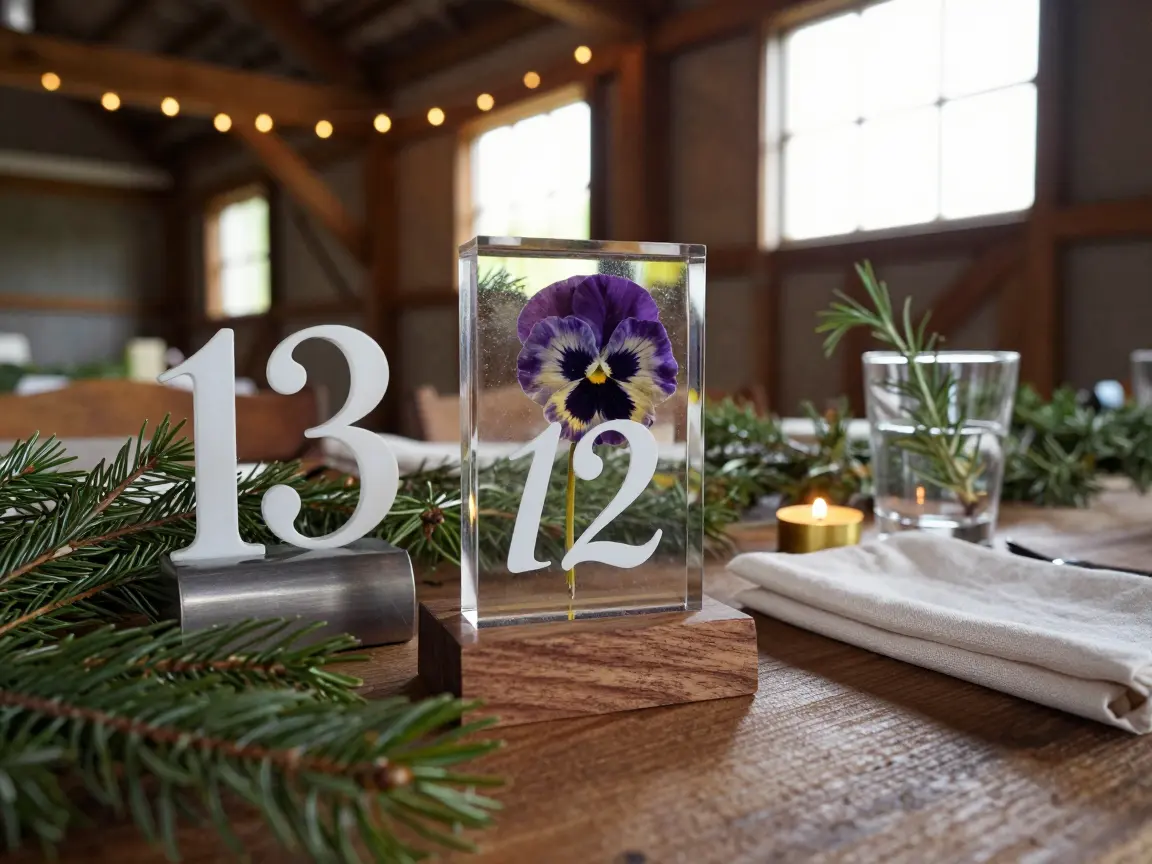
Clear resin blocks each hold a single dried pansy or violet, set into a slotted walnut base. Light passes through the botanical layer, so the flower seems to glow beside the hand-lettered number. High-contrast numerals stay legible from across a dim barn, but an embedded flower can make small numbers harder to read for guests with low vision or in fading evening light, so keep the numerals large.
If the effect feels too busy, swap the resin for a simple acrylic number on a brushed-metal stand: clean, inexpensive, and easy to read. DIY is doable with a silicone mold and UV-cure resin, but curing and sanding take time, and resin needs gloves and good ventilation, so a professional service is often worth the cost. Paper table cards soak up grease and moisture from shared platters, so resin numbers stay crisp longer.
- Elegant visual interest
- Natural rustic feel
- Can be harder to read in low light
- Requires careful curing
Sand the resin surface lightly before the final seal coat for crystal clarity.
11. Repurposed Apple Crate Bread and Butter Display Bars
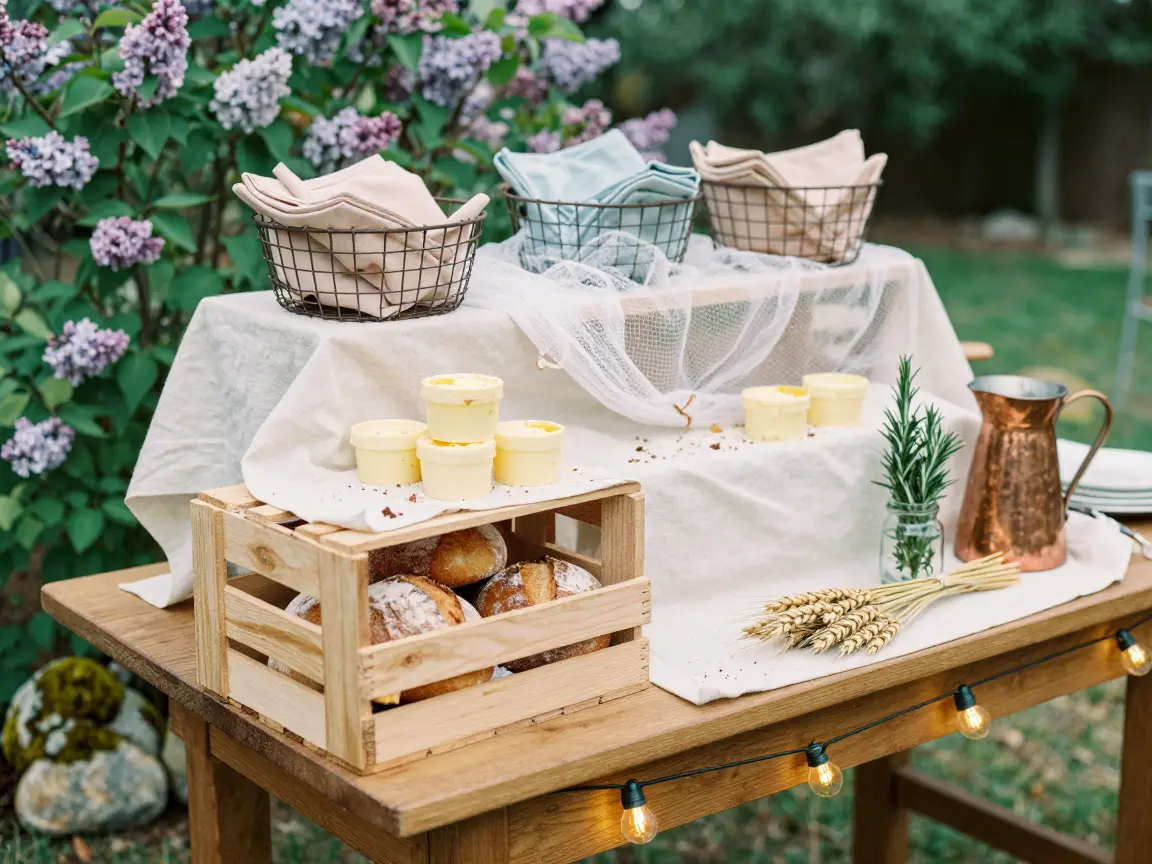
Stack three slatted apple crates on a sturdy table, lining each tier with a white linen runner to catch crumbs and protect the wood. Place round sourdough boules on the bottom crate, honey-butter crocks in the middle, and wire baskets of napkins on top. Set the stack in the middle of the table so guests can reach from both sides, which keeps lines moving at a garden-style buffet. For more serving ideas, see our outdoor wedding food guide.
Raw crates often hold splinters and field dirt, so cover every surface with a washable canvas drop-cloth and drape fine fly mesh over the top tier. Secure the mesh with twist ties to keep insects out while still showing the rustic texture. Keep the butter cold on ice packs under the cloth and replace it after a couple of hours.
For a small backyard wedding, three 12-inch crates suffice; a larger venue can double the stack for a wider serving line.
- Rustic charm
- Visual interest
- Splinter risk
- Needs extra barriers
Make sure every barrier is food-grade and tightly fastened to avoid contamination.
12. Beeswax Taper Candles Inside Tall Glass Chimneys
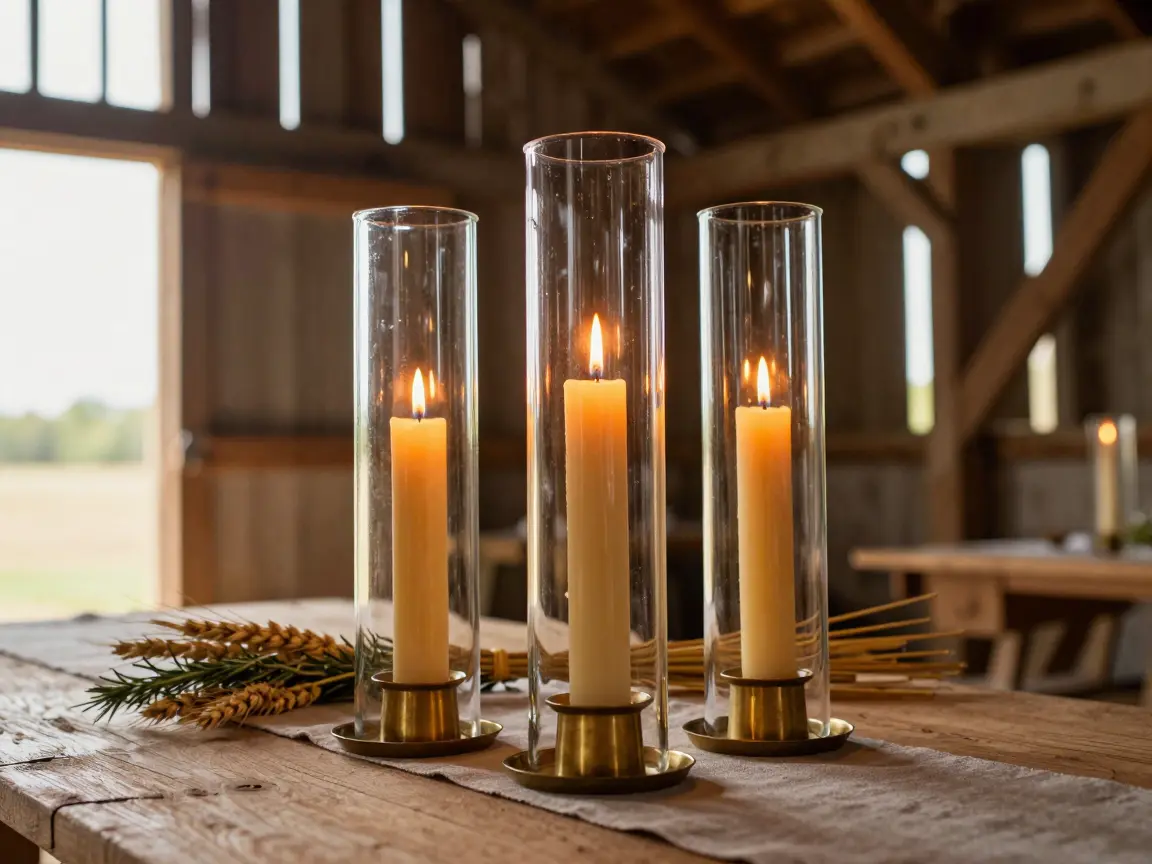
A spring barn draft can blow out an unshielded taper within minutes. Honey-toned beeswax tapers in low brass holders burn steadily and typically more cleanly than paraffin, and tall glass chimneys shield the flame from the breeze. The tradeoff is that glass traps heat, so tapers can burn down faster, and repeated heating can stress thin glass.
Check venue rules first, because some venues ban open flames even when they’re enclosed in glass. A common mistake is swapping in cheap paraffin tapers, which tend to drip and smoke more when a breeze hits. If the faster burn, glass risk, or venue rules are a concern, use battery-operated LED candles in brass bases for the same rustic glow.
- Typically burns cleaner
- Less soot
- May burn down faster inside glass
- Glass can crack from heat stress
Confirm that your venue permits open flames, and keep candles away from fabric and dried florals.
13. Woven Willow Basket Umbrella and Blanket Stations

Wide split-willow baskets line the entry, each holding rolled wool blankets and wooden-handled umbrellas for guests caught by a 50-degree April chill or a spring shower during cocktail hour. Tag the baskets “Borrow, please return” so guests know the throws aren’t favors, and assign a helper to restock and count items at the end of the night.
A common pitfall is leaving the baskets unattended, since unmonitored items can walk off or end up soaked on damp grass, leading to costly replacement invoices. For a budget-friendly setup, use reclaimed willow crates and thrift-store blankets. A splurge version upgrades to hand-woven willow baskets and cashmere throws that you can donate after the day.
- Easy guest comfort
- Natural aesthetic
- Items can go missing
- Needs a helper to monitor
Clip a colored clothespin to each rental blanket so they’re easy to spot and count at the end of the night.
14. Textured Buttercream Cakes on Tree Trunk Slabs

A semi-naked vanilla sponge sits on a 10-inch dry-cured oak slab, brushed with food-grade mineral oil and covered with a greaseproof cake board before the cake goes down. Fresh berries and rosemary sprigs crown the buttercream, adding color and scent without hiding the texture of the cake. The exposed sponge sides dry out quickly in open air, so plan to cut the cake within two hours of putting it on display. For more options, see our rustic wedding cake ideas.
Keep the slab away from sunny barn windows, where buttercream can soften and slump, ruining the neat finish. If you use a tree slab you cut yourself, make sure it is fully dried and sealed before it touches food.
- Rustic visual impact
- Showcases fresh fruit
- Sponge dries out fast
- Needs oil-treated, fully dried wood
Avoid direct sunlight on buttercream, which can melt and slip.
15. Blackboard Slate Cheese Boards for Family-Style Appetizers

A blackboard slate cheese board takes up more table space than a traditional platter, but it also doubles as a menu. Rough-edged natural slate lets you chalk “Cheddar, Honeycomb, Radishes” right on the surface, creating a rustic focal point guests can read from any angle. Because the boards stay on the table, servers can restock them quickly instead of running plated first courses.
For round tables, use a 12-inch square slab placed off-center to keep seating clear; for long banquet tables, a 24-inch rectangular piece fits the middle without crowding water carafes, bread baskets, or wine bottles. Slate is reusable, but hand-wash it and handle it carefully, since its weight demands sturdy tables. Follow USDA food safety guidance: dairy and cured meats shouldn’t sit out for more than two hours (one hour above 90°F).
- Visually striking
- Reusable
- Easy to label
- Heavy and space-hungry
- Chalk can smear with condensation
Use a thin slate slab, about 1/4 inch thick, to reduce weight and keep tables stable.
16. Edison Filament String Lights Swagged Across Exposed Rafters
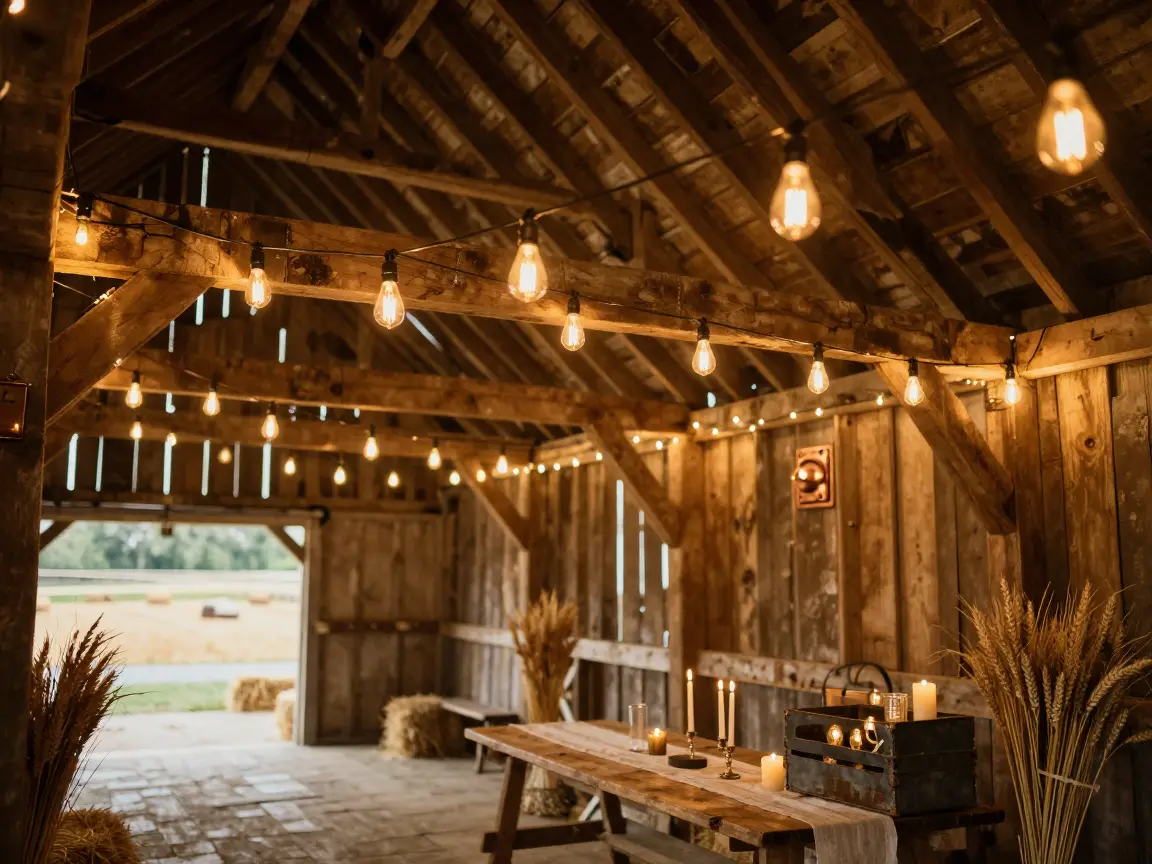
Swag amber Edison-style string lights in gentle drops from the barn’s exposed rafters, keeping every bulb well above head height, at least 7 feet from the floor over aisles and tables. Choose bulbs rated 2200 K to 2700 K and put the strings on a compatible dimmer, so you can soften the light for the ceremony and raise it for the reception.
Do the electrical math first. A 40-watt incandescent bulb on a standard 120 V circuit draws about 0.33 amps, so a string of 30 bulbs draws about 10 amps. That is close to the 12-amp continuous limit of a 15-amp circuit, and older farm circuits can trip when you add anything else. LED filament bulbs use a fraction of the power and run much cooler, so they’re the safer choice for long runs. Use outdoor-rated cords, and ask your venue which circuits you can use.
- Warm amber ambience
- Rustic visual impact
- Incandescent strings draw a lot of power
- Needs sturdy rafters or support lines
Overloaded older circuits can trip mid-reception. Check amperage with the venue, and consider LED bulbs.
- Color temperature: 2200 K to 2700 K
- Bulb wattage: 40 W incandescent, or roughly 2 to 5 W LED
- Circuit guidance: keep continuous load under 80% of the breaker rating (12 A on a 15 A circuit)
Rustic Spring Wedding Ideas at a Glance: Picks by Problem
- Soft, muddy ground: the birch arbor with hidden footings (idea 3) and the anchored trellis (idea 8), plus the walkway items in the checklist below.
- Chilly or rainy weather: blanket and umbrella baskets (idea 13), glass chimneys for candles (idea 12), and cloches for delicate plants (idea 5).
- Tight budget: dried moss runners (idea 1), thrifted amber bottles at $1 to $2 (idea 9), a farm-supply trough at $70 to $120 (idea 6), and potted bulbs that double as favors (idea 2).
- Food and drink stations: the stock-tank coolers (idea 6), apple-crate bread bar (idea 11), tree-slab cake (idea 14), and slate cheese boards (idea 15).
- Confirm with your venue first: the overhead ladder install (idea 7) and the string lights (idea 16), since both involve rigging or power.
Prices in this list come from the ranges given in each idea, and local quotes vary. For more ways to stretch a budget, see our small wedding ideas on a budget, and for the aisle itself, our outdoor wedding aisle ideas.
Rustic Spring Wedding Setup and Weatherproofing Checklist
This list gathers the ground-prep, hardware, and backup items a couple or planner should have on hand the morning of a spring rustic wedding.
- Groundcloth: a heavy-duty tarp or groundcloth under tables and aisle runners to keep mud from seeping up.
- Anchors: stakes, sandbags, or weighted crates for the trellis board, arbor, and any signage.
- Walkways: gravel, straw, duckboards, or plywood sheets to firm up soft ground around the ceremony arch and buffet stations.
- Rain cover: a pop-up canopy or sidewalls to protect the cake, cheese boards, and bread bar from drizzle.
- Quick-fix kit: zip-tie bundles and garden wire for garlands, basket tags, and string-light drapes.
- Floral backups: spare rosemary sprigs and wildflower stems for last-minute refreshes.
- Flame safety: battery-operated LED candles and a small fire extinguisher, in case open flames aren’t allowed.
- Footwear: waterproof shoe covers or rubber boot liners for the bridal party and key vendors.
A frequent oversight is forgetting a spare tarp for the aisle, so keep one in your emergency kit to prevent a mud-soaked walk. For the full timeline, use our free wedding planning checklist.
Frequently Asked Questions
What colors work best for a rustic spring wedding palette?
Grounded neutrals like warm oatmeal, sage green, and raw wood tones, paired with muted seasonal accents such as butter yellow, dusty lilac, or terracotta, create an authentic rustic spring look without feeling washed out.
How do you keep rustic decor from looking cheap or outdated?
Skip synthetic burlap rolls, heavily distressed signs, and mass-market mason jars. Instead, prioritize authentic materials like aged terracotta, unvarnished solid wood, heavy linen textiles, and loose, garden-style floral arrangements.
How do you handle unpredictable spring weather at a barn venue?
Check the forecast, then prepare clear sidewalls for open pole barns, reserve patio heaters where the venue allows them, and set out wool throws and umbrellas for guests. Keep gravel or duckboard walkways ready so soft ground and spring rain do not ruin footwear between ceremony and reception.
Which flowers are most cost-effective for a rustic spring wedding?
Ranunculus, daffodils, sweet peas, tulips, and flowering branches like dogwood or cherry blossom are in season in spring, which usually keeps prices lower than imported roses. Potted bulbs and locally clipped greenery cut costs further.
How do you protect a rustic spring wedding from mud?
Lay gravel, straw, or duckboard walkways along high-traffic paths, put ground mats or plywood under tents and ceremony seating, and give the bridal party waterproof shoe covers for the walk between ceremony and reception.
How do you keep a rustic spring wedding on a budget?
Use in-season blooms and potted bulbs, thrifted amber bottles, dried moss, and reusable linens. DIY the signage and escort cards, and rent larger items like stock tanks instead of buying them.