18 Practical Outdoor Wedding Food Ideas That Actually Work
18 Practical Outdoor Wedding Food Ideas That Actually Work
The moment I watched a line of guests wrestle with limp sliders that had turned to mush in the midday heat, I realized outdoor wedding menus need a sturdier game plan. From handheld cones that keep fries crisp to a mobile pizza truck that serves pre‑sliced slices, this list gathers 18 food concepts that stay tasty, tidy, and trouble‑free on grass or patio.
If you’re juggling a modest budget, a picky crowd, or a sunset ceremony, you’ll find options that require minimal equipment, stay safe in warm weather, and still feel festive. Expect a menu that feeds guests efficiently, keeps insects at bay, and lets you focus on dancing rather than dish‑dashing.
1. Gourmet Sliders and Hand-Cut Fries in Cones
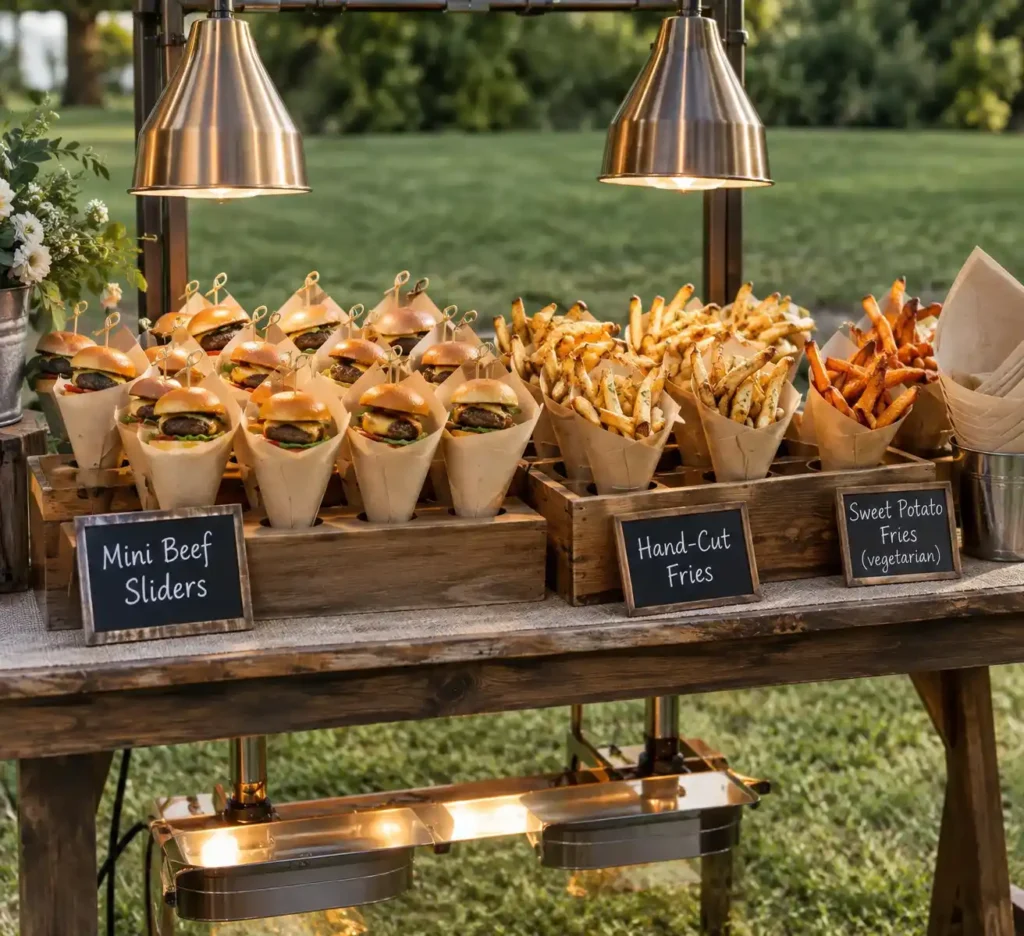
A trio of mini beef sliders sits in crisp paper cones, next to a heap of golden hand‑cut fries. Guests can pick up a cone and eat while standing on the grass, no plates needed.
Keep the buns soft by positioning two portable heat‑lamp stations under the serving table; the lamps prevent the buns from drying out or getting soggy in humid air.
For a budget‑friendly version, swap boutique brioche mini buns for store‑brand slider rolls, which run about $0.50 each.
Offer a vegetarian sweet‑potato fry cone as an easy alternative for non‑meat eaters; the sweet potatoes add color and stay crisp longer. If gluten is a concern, replace the buns with lettuce‑wrapped sliders or mini taco shells; both work well on the same cone format.
Remember the lamps need a nearby power outlet and regular checks to avoid overheating. Use compostable cones to cut waste and keep the setup tidy.
Quick tip: assemble all sliders on a sheet pan, cover with foil, and slide the pan under the lamp right before guests arrive.
This keeps the portion size consistent and reduces last‑minute prep.
2. Mobile Wood-Fired Neapolitan Pizza
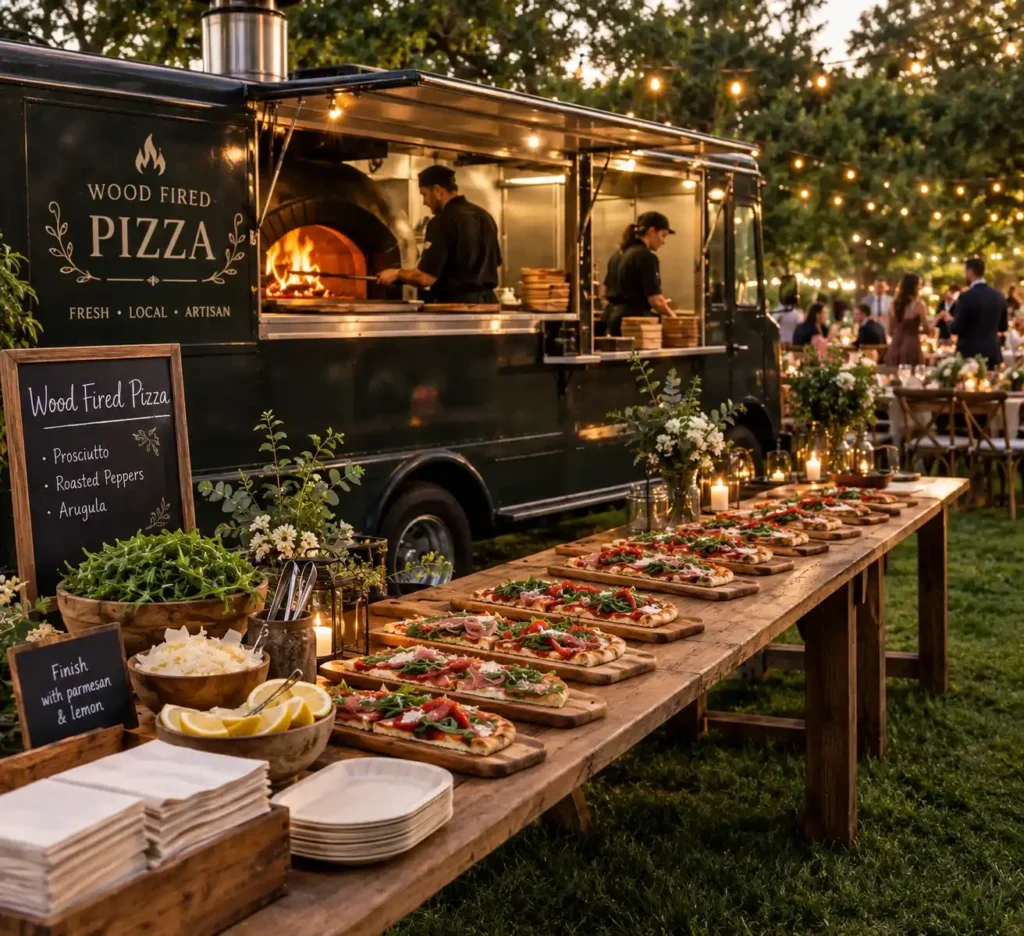
At a garden ceremony with string lights and long wooden tables, a mobile wood‑fired pizza truck adds a warm, smoky centerpiece.
Start by booking a truck that can serve 100‑150 guests; anything larger usually needs a second oven to keep lines short.
Arrange a 10‑foot clearance behind the truck for ventilation and a nearby power source for the dough mixer.
Set the service window at one end of the buffet and line the opposite side with pre‑sliced pizza boards; each board holds three to four ready‑to‑serve slices.
This layout eliminates the need for guests to wait while toppings are added. Limit toppings to thin‑cut prosciutto, roasted peppers, and fresh arugula; heavy, greasy options like extra cheese or meatballs make slices slip off the board and require plates.
Staff the oven with one chef and one runner who refills boards every five minutes.
Quick tip: place a small garnish station with shaved parmesan and lemon wedges beside the boards so guests can finish each slice without extra dishes.
Remember, the visual flair of the flame‑kissed pies is worth the extra planning, but custom orders will clog the line.
Provide sturdy napkins and a few disposable plates at each board for guests who need a quick bite.
3. Individual Charcuterie Grazing Cups
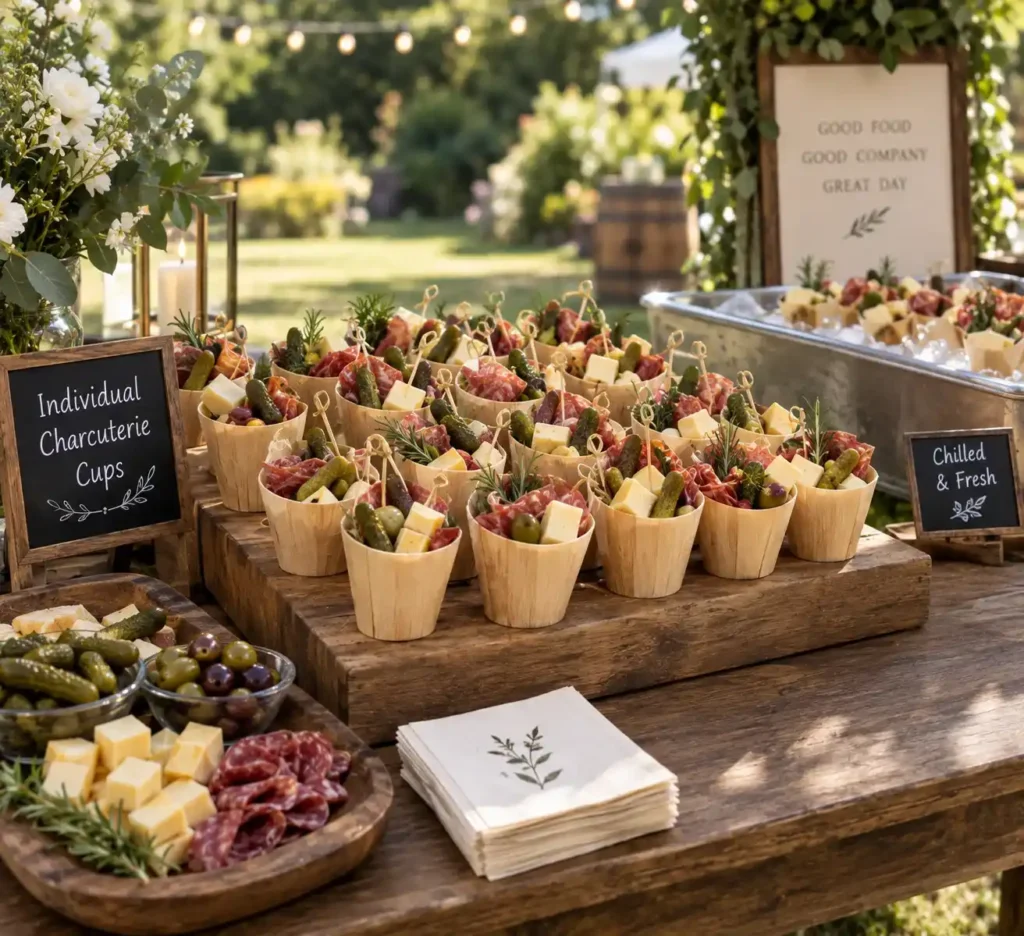
Large flat grazing boards melt and attract insects in summer heat, turning a stylish spread into a sticky, buggy mess.
Individual bamboo charcuterie cups sidestep that issue by keeping each portion sealed and cool. Fill each cup with hard cheeses like aged gouda, dry salami slices, and crisp cornichons; avoid soft brie or goat cheese that sweats in the sun.
The cups also limit waste because guests take only what they need.
Preparing dozens of single‑serve cups demands more hands than laying out one board, so factor extra labor into the caterer’s quote.
A practical alternative for low‑maintenance weddings is a chilled stainless‑steel platter with pre‑cut bite‑size containers; it offers the same hygiene without the assembly time.
Bamboo cups are reusable after a quick hand wash, but soaking them longer than five minutes can cause warping, so dry them promptly.
For a budget‑friendly DIY route, line recyclable paper cups with bamboo lids and seal with a food‑safe tie; bulk bamboo lids run about $2‑$3 per set.
Quick tip: assemble the cups the night before, cover with cling film, and store them in the refrigerator; then transfer to a chilled serving tray just before guests arrive.
Add a small ice pack beneath the tray to keep the cups cool through the ceremony.
4. Street Taco Flights with Mini Margaritas
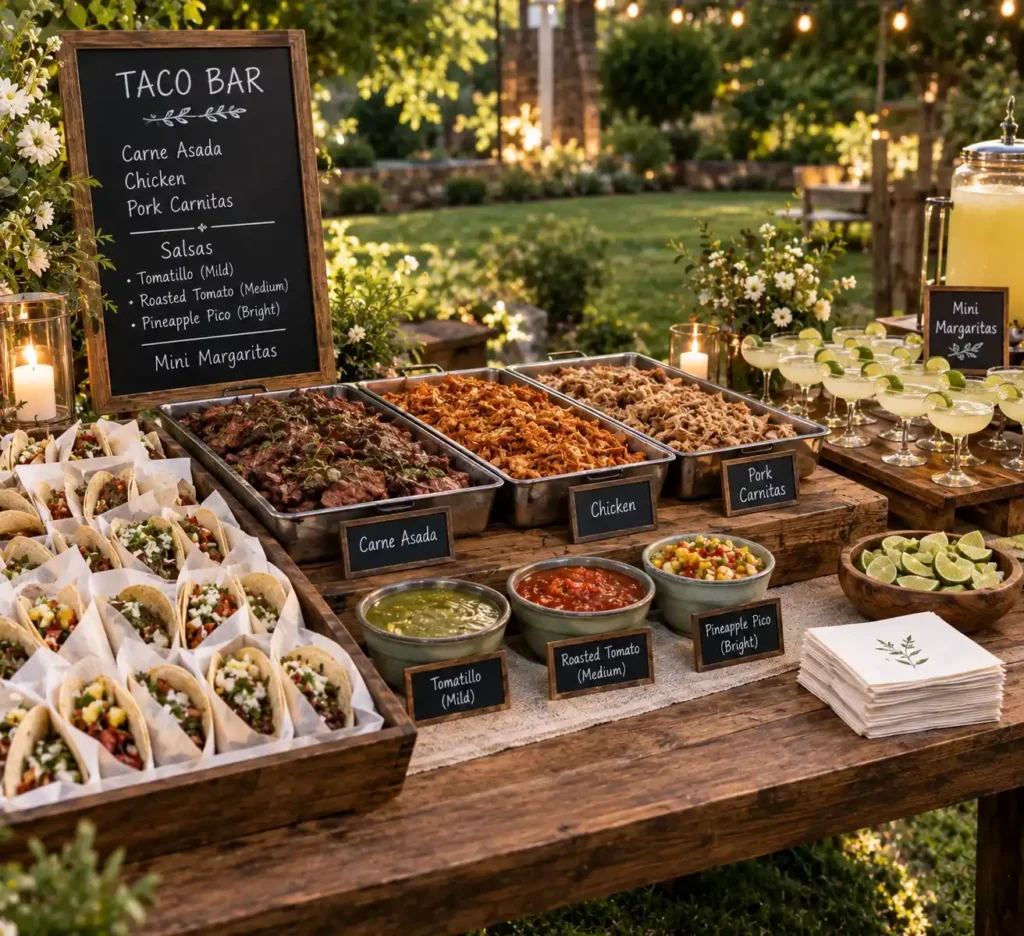
Wrap each corn tortilla in two layers of wax paper before placing it on the serving board. The double layer stops tears when guests lift the taco while standing or dancing.
Lay out grilled carne asada, spiced shredded chicken, and simple pork carnitas in shallow metal trays.
Sprinkle each meat with a quick seasoning blend of lime juice, smoked paprika, and a pinch of sea salt right after it leaves the grill; the acid locks in moisture for an outdoor setting.
Offer three salsas, mild tomatillo, medium roasted tomato, and a bright pineapple pico, in small, sealed ramekins. Keep the sauces thick; watery versions drip onto dresses and suits.
Provide mini margaritas in 4‑ounce coupe glasses, each pre‑filled from a chilled batch of tequila, lime juice, orange liqueur, and a splash of agave.
Guests can grab a glass and a taco without waiting in line. This station pumps energy and serves quickly, but the trade‑off is that a slip of runny salsa can stain expensive formal wear.
A practical tip: place a row of napkins and a shallow bowl of lime wedges at the end of the line to catch any stray drips before they hit the floor.
5. Ice-Bedded Seafood and Raw Bar
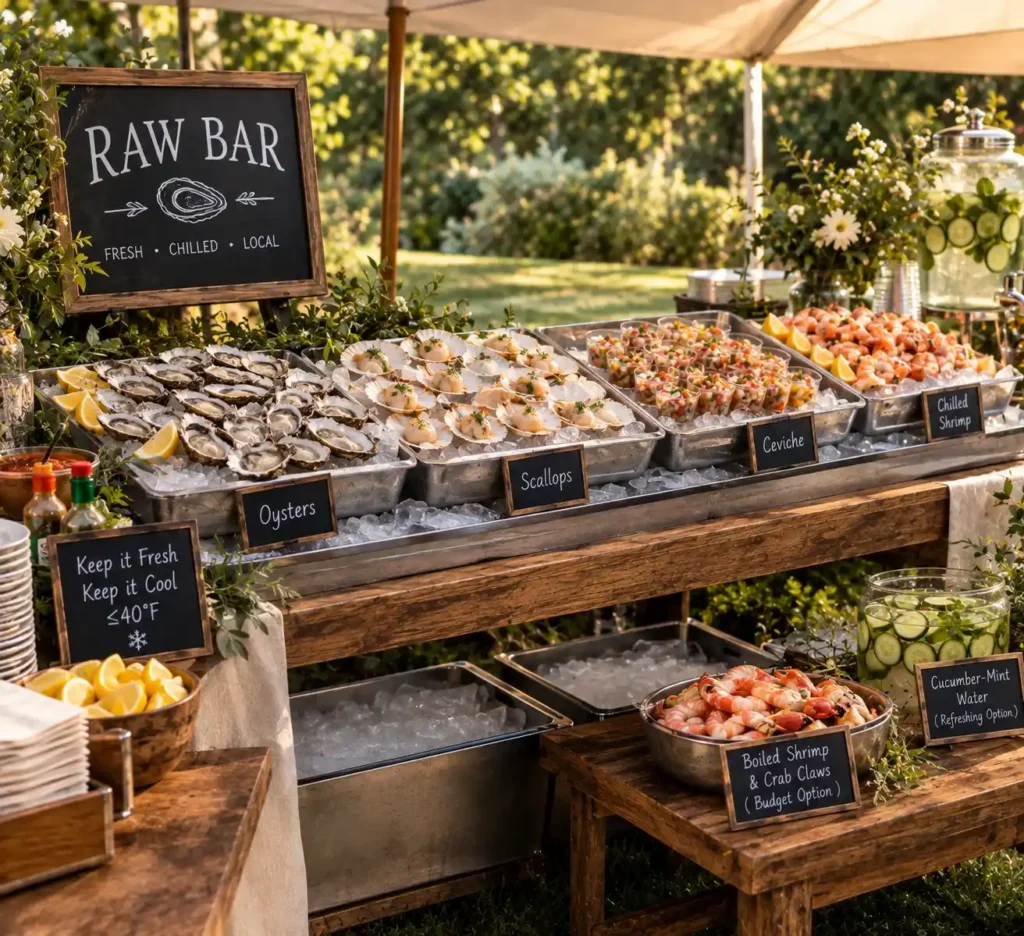
When raw seafood sits in the sun, bacteria can multiply within minutes. Keep the ice‑bedded bar shaded under a canopy or a tall umbrella to block direct light.
Lay a sturdy, food‑grade tray on a bed of crushed ice, then add a second shallow pan beneath to collect meltwater.
Replenish ice often; aim for an ice‑to‑food weight ratio of about 2 : 1. Keep the temperature at or below 40 °F throughout service, and never let the seafood sit more than two hours, or one hour if the ambient temperature tops 90 °F.
Wrap oysters, scallops, and ceviche tightly in sealed containers to stop juices from contaminating other dishes.
This ultimate luxury setup elevates any outdoor reception, but it carries a thin margin of error for temperature control and requires constant structural monitoring to prevent melt‑water pooling.
For tighter budgets, swap raw oysters for boiled shrimp and pre‑cooked crab claws; they stay safe at the same temperature and cost roughly $8-$12 per pound versus $2-$3 per oyster.
If handling raw shellfish feels risky, offer a simple chilled cucumber‑mint water as a refreshing alternative.
Remember to rinse and dry the ice bins after the event so they can be reused for future celebrations. Place a shallow tray of crushed ice under the serving platters and attach a drip pan to catch meltwater.
6. Caprese Skewers with Balsamic Reduction
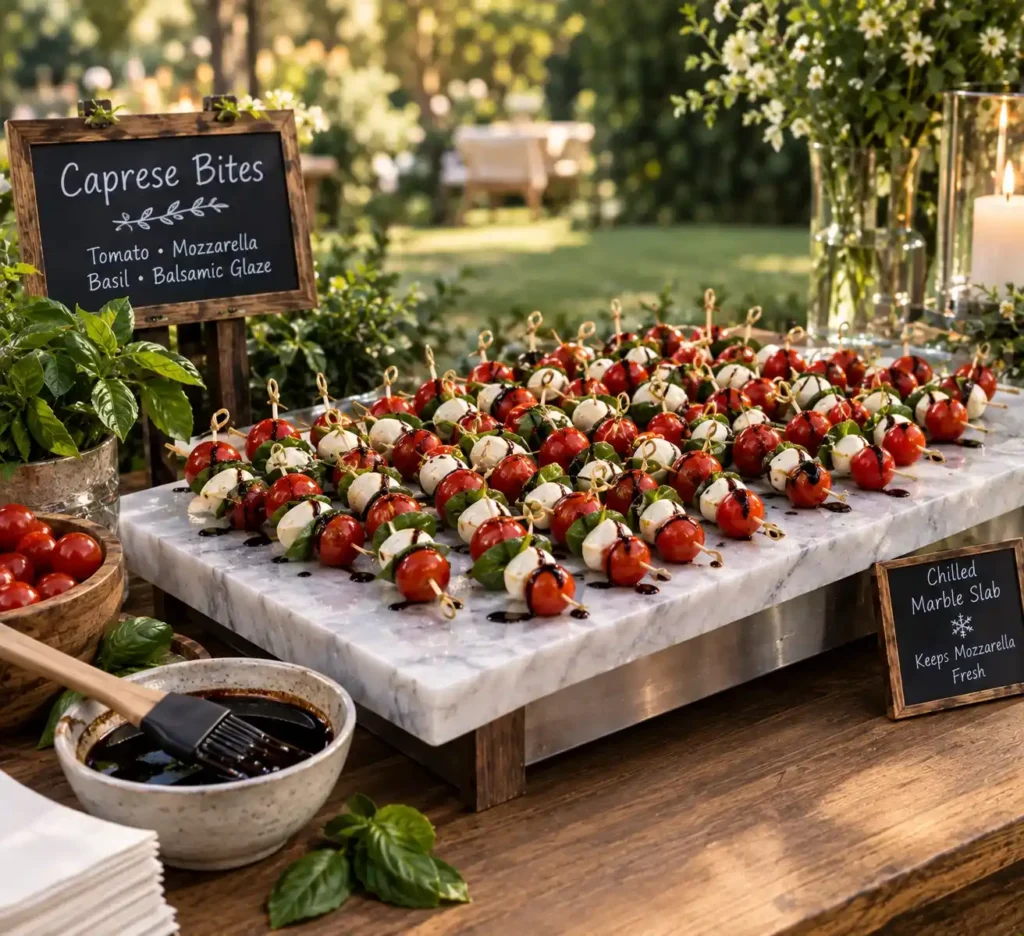
A three‑inch wooden skewer threaded with a cherry tomato, a ½‑inch mozzarella ball, and a folded basil leaf makes the base of this Caprese bite.
Cherry tomatoes stay firm in the sun and wind, unlike sliced heirloom tomatoes that wilt or slip off the stick.
A thick, aged balsamic reduction coats the skewers without pooling. The glaze clings to the cheese and tomato, so it stays on the food rather than dripping onto guests’ tuxedos or gowns. Using regular liquid balsamic would create a glossy mess and likely stain formal attire.
Quick tip: drizzle the glaze with a small silicone brush just before the first bite; the brush spreads a thin, even layer and prevents excess pooling.
For a DIY version, simmer 2 cups of balsamic vinegar with a tablespoon of brown sugar for 15 minutes until it reaches a syrupy consistency; it costs under $8. Store‑bought glaze runs $12- $18 per bottle and saves time.
This finger food shines at medium‑sized garden weddings where many guests prefer vegetarian options and the casual setting allows easy handheld service. Place the finished skewers on a chilled marble slab to keep the mozzarella firm until they reach the plate.
7. Artisanal Flatbreads with Seasonal Fruit
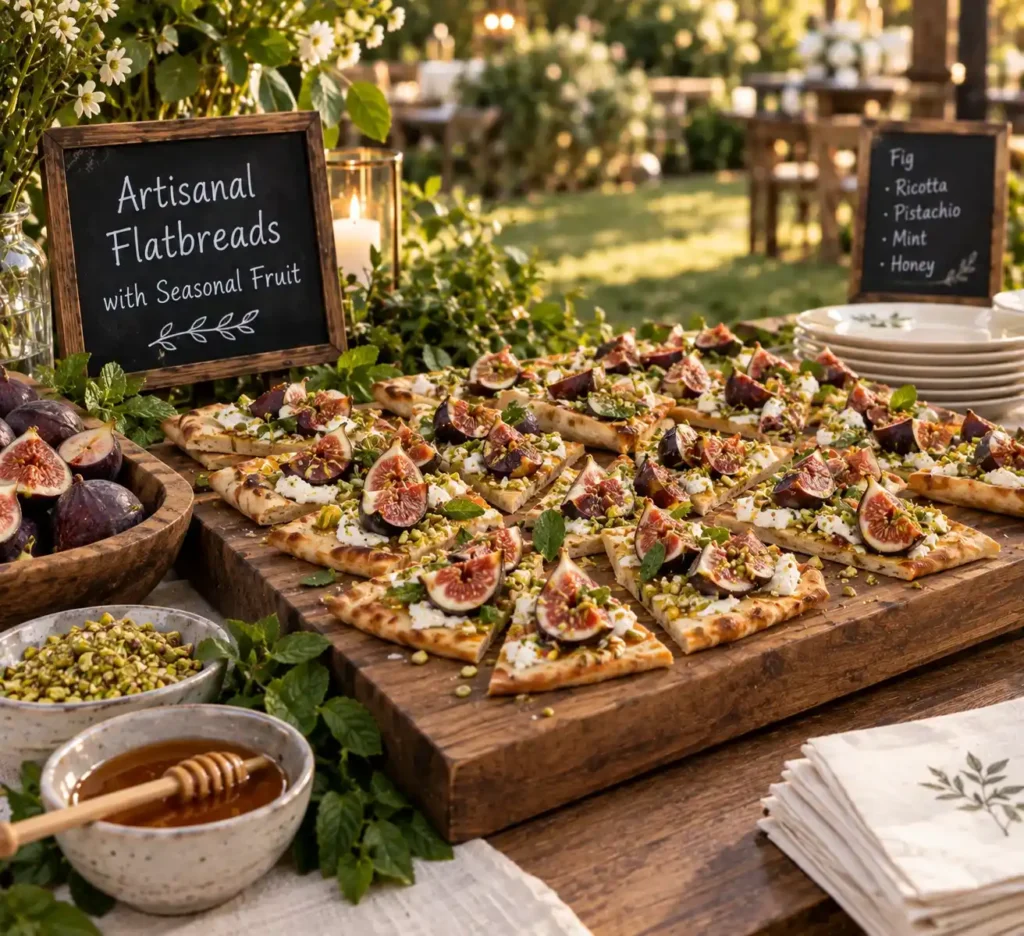
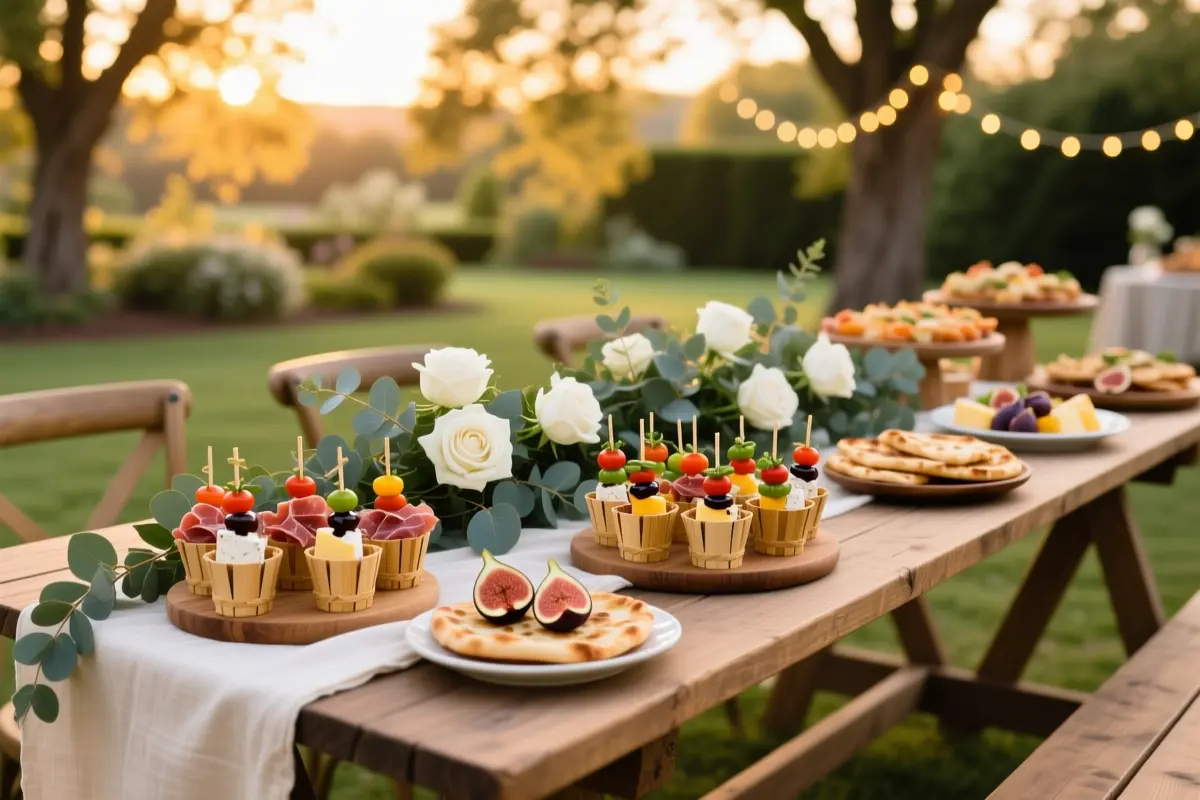
A crisp, golden round flatbread glistens under a scatter of halved figs, their deep purple skins contrasting with a light brush of olive oil.
The fruit’s natural sheen creates a visual rhythm that reads like a summer palette, warm amber, soft pink, and fresh green herb flecks.
Slice the bread into bite‑size wedges and arrange them on a matte wooden board; the board’s neutral tone lets the colors pop without any sauce competing for attention.
For a dairy‑free crowd, swap ricotta dollops for a smooth spread of cashew‑based cheese, seasoned with lemon zest.
Gluten‑free guests can achieve the same look with pre‑made almond‑flour flatbreads, which hold toppings just as well.
Keep the toppings light: a drizzle of honey, a pinch of sea salt, and a few torn mint leaves add flavor and height without weighing the base down.
A common mistake is letting the flatbreads sit uncovered on a breezy patio; the edges will harden within minutes.
To avoid this, cover the platter with a loosely draped parchment sheet until service, then uncover for the final presentation.
This trend is hot this summer, especially for garden weddings, but if wind is a constant, consider sturdy mini fruit tarts as an alternative.
Finish by sprinkling toasted pistachio crumbs over the fruit for a crunchy finish.
8. Tomato Soup Shooters with Grilled Cheese Wedges

As the sun sets and a cool breeze rolls in, line the buffet table with clear shot glasses filled to the rim with smooth tomato soup.
The tiny vessels keep the broth from spilling while guests mingle. Pair each shooter with a crisp grilled‑cheese wedge cut into a bite‑size triangle.
The warm, tangy soup and melty cheese create a comforting starter that feels right when evening temperatures drop.
Temper the soup to about 140 °F before pouring; water‑bath reheating helps keep it hot without reaching a boil.
Boiling liquid can crack the glass or burn mouths, so a quick temperature check with an instant‑read thermometer is essential. Warm the shot glasses in a bowl of hot tap water for a minute, then dry them on a clean towel.
This prevents sudden temperature shock and adds a subtle sheen.
Serve the shooters on a chilled marble slab to keep the glasses steady on uneven grass. A small metal spoon placed next to each glass lets guests stir the soup for an even sip.
This pairing shines at intimate outdoor weddings of 30‑60 guests, fitting relaxed, rustic settings and pleasing guests of all ages.
For a budget‑friendly twist, use reusable acrylic shooters instead of glass; they tolerate higher temperatures without cracking.
Place a tiny ramekin of extra‑sharp cheddar on the side for guests who want a richer bite. Keep a ladle handy to top off any empty glasses quickly.
Adding a small metal spoon beside each shooter lets guests stir the soup before sipping.
9. Mini Lobster Rolls

Traditional mayo‑based lobster rolls melt in summer heat, while a butter‑tossed Connecticut‑style version stays firm. Mini lobster rolls give a coastal wedding an instant luxury feel, but the cold mayo dressing can spoil within an hour under direct sun.
Switch to a warm butter‑tossed filling: melt unsalted butter, toss toasted New England split‑top rolls, then fold in a mix of lobster meat, a splash of lemon juice, and a pinch of sea salt.
The butter creates a heat‑resistant coating that keeps the roll crisp and the seafood safe.
For couples watching the budget, blend 60 % rock shrimp with 40 % lobster meat. Rock shrimp costs about $12‑$15 per pound, cutting the overall expense while preserving the surf‑side vibe.
Portion each roll at two inches for easy finger food and arrange them on an insulated metal tray lined with ice packs.
Maintenance: keep the tray covered until service, and replace the ice every 30 minutes to maintain a safe temperature.
A common mistake is assembling the rolls too far ahead; the butter softens and the rolls become soggy. If seafood isn’t feasible, serve mini chicken‑salad croissants as a comparable handheld option.
Place the butter‑tossed rolls on a chilled slate board and garnish each with a thin sprig of micro dill for a polished finish.
10. Steamed Bao Buns with Pork Belly or Tofu

Place the bao buns in a bamboo steamer just before serving to lock in moisture. The steam creates a humid micro‑environment that preserves the soft, pillowy crumb until guests bite.
Keep the steamer covered with a damp kitchen towel; the extra moisture prevents the buns from drying out in the open air.
For the pork belly version, slice the meat thin, glaze with a mixture of soy, honey, and five‑spice, then quickly sear. Load the hot buns, add a slice of meat, a smear of pickled cucumber, and a drizzle of hoisin.
The contrast between the melt‑in‑your‑mouth bun and the caramelized pork keeps the palate engaged.
Swap the meat for marinated tofu to serve vegans. Press firm tofu, coat in a blend of soy sauce, smoked paprika, and a touch of maple syrup, then pan‑fry until crisp.
The tofu’s crunch mirrors the pork’s texture while staying fully plant‑based.
If a steamer isn’t available, serve the buns in insulated food jars; the sealed container mimics steam retention for up to 15 minutes.
After the event, clean the bamboo steamer with warm water and let it air‑dry; it can be reused for future weddings.
Add a small dish of shredded carrots and cilantro on the side so guests can customize each bite.
11. Cold Sesame Noodle Boxes
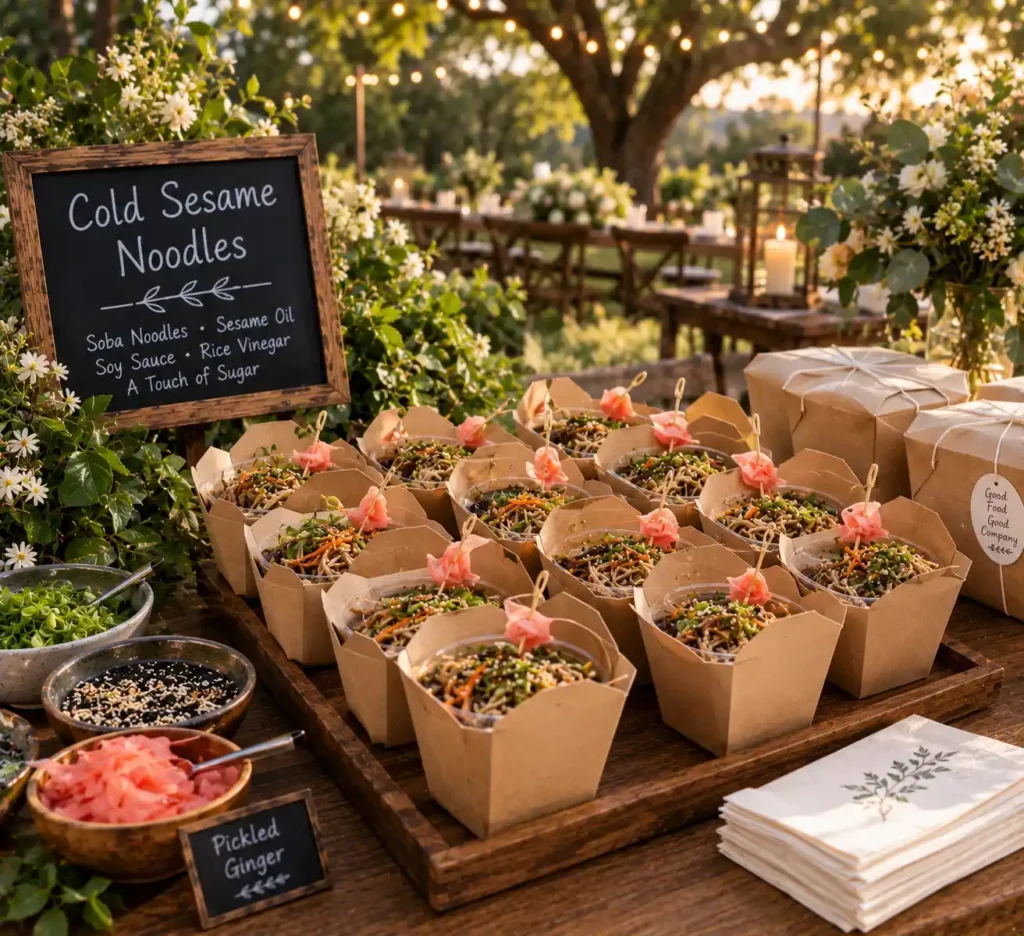
At a garden ceremony under oak trees, the sealed noodle boxes sit safely on the buffet table. Cold sesame noodles travel well in sturdy Chinese‑style takeout containers, keeping ants and flies out without any on‑site heating.
Prepare the noodles a day ahead; toss cooked soba or thick wheat noodles with sesame oil, soy sauce, a splash of rice vinegar, and a pinch of sugar.
Keep the dressing in a separate compartment to avoid soggy strands. When the sun sets, simply hand each box to guests; no stovetop or portable burners needed.
A budget version uses bulk dried soba at $1.20 per pound and a homemade sauce made from pantry staples, bringing the cost to under $2 per serving.
For a hands‑off option, order pre‑packaged cold noodle boxes from a local Chinese market; they run about $5 to $7 each.
Quick tip: line the box lids with a thin layer of parchment paper; it absorbs any stray moisture and makes removal easier.
Add a small bamboo skewer with a pickled ginger slice to each box for an extra burst of flavor.
12. Interactive Live Pasta Station
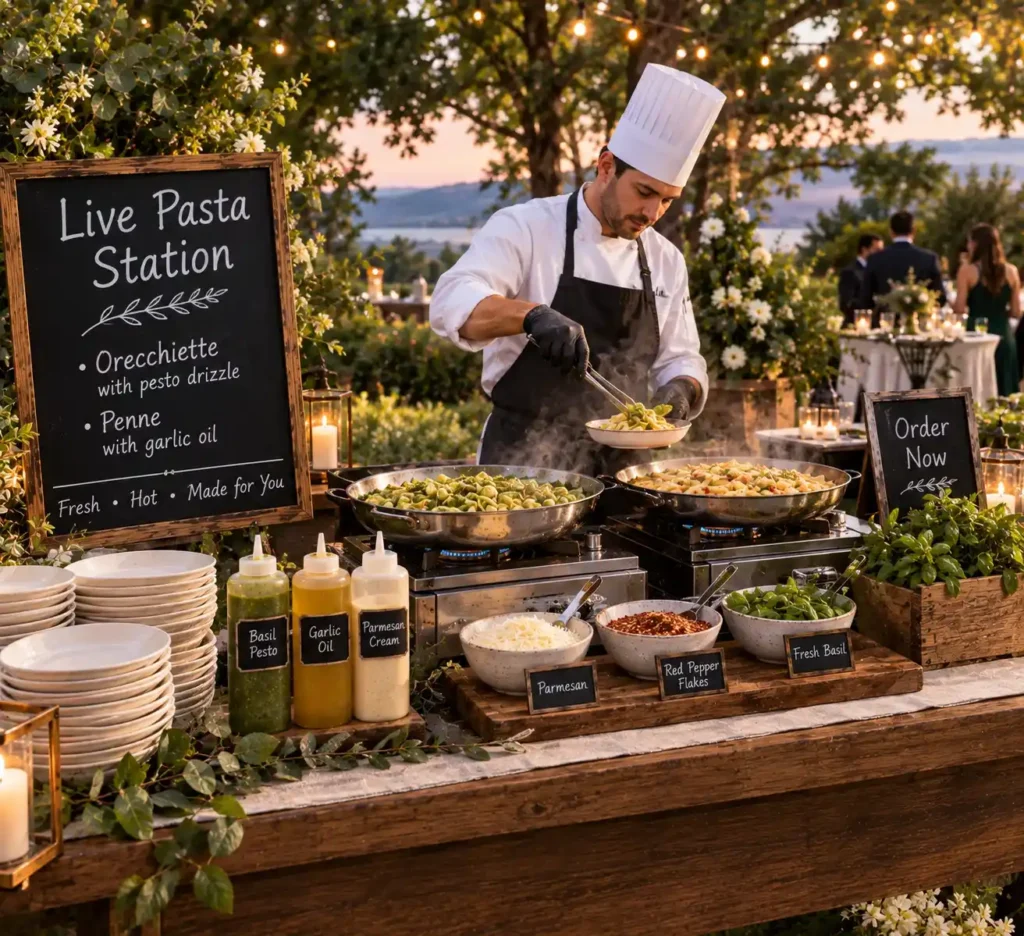
Long lines form when guests wait for a made‑to‑order pasta station. A chef‑manned live pasta setup solves the boredom but demands a reliable power source and adds a natural bottleneck to the dinner flow.
Keep the queue moving by limiting the menu to two fast‑plating shapes, such as orecchiette with a quick pesto drizzle and penne tossed in a garlic‑oil sauce.
Both cook in under two minutes and can be plated in seconds.
Plan the station size around your guest count. For intimate gatherings of 50 or fewer, a single portable burner and a compact prep table fit a garden tent.
Larger weddings need at least two burners, a larger countertop, and a dedicated generator to avoid overloading venue outlets.
Position the station near the cocktail area so guests can mingle while they wait.
Quick tip: pre‑portion sauce containers in 2‑ounce squeeze bottles and label them. This lets the chef drizzle without pausing to measure, shaving seconds off each plate. Add a small “order now” chalkboard to signal when the next batch is ready, keeping guests aware and reducing idle time.
Offer a simple garnish station, parmesan shavings, crushed red pepper, and fresh basil, so guests can customize without adding to the cooking line. Schedule a brief test run the morning of the event to confirm power stability and burner output.
13. Individual Low-Country Boil Pots
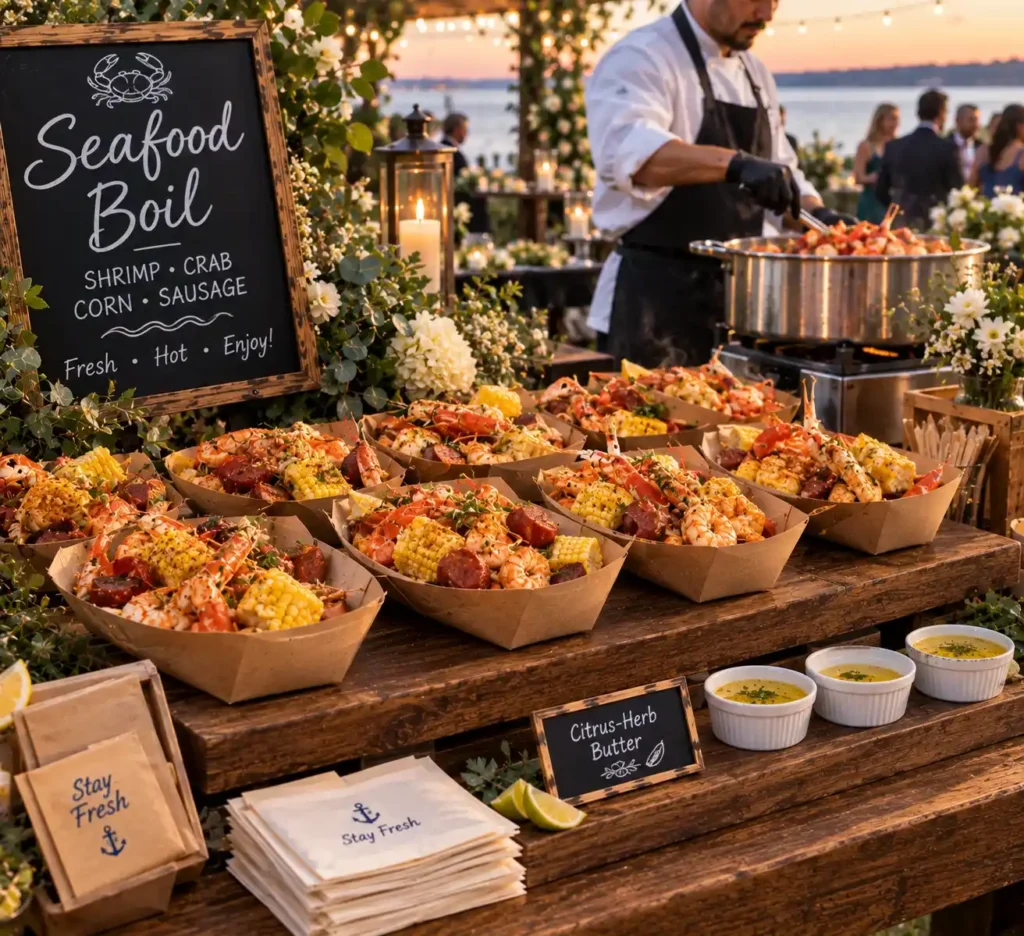
A 12‑inch kraft paper boat cradles shrimp, crab legs, corn on the cob, and smoked sausage seasoned with Old Bay.
Each pot sits on a wooden board and is served hot from a portable burner. The individual size keeps portions manageable and eliminates a communal mess.
Guests reach in, pull a bite, and instantly start chatting about the flavors. This works especially well at casual coastal or backyard weddings with 50‑150 guests, where a relaxed vibe encourages hands‑on eating.
The concept sparks conversation because everyone shares the same messy, fun experience.
The main drawback is the inevitable splatter on dresses and suits. Place a stack of branded wet‑wipe packets next to each serving station and label them with a playful “Stay Fresh” tag.
A quick tip: fold the wipes into a small paper pouch that matches the boat’s color; guests can grab one without leaving the line.
Cost stays reasonable: kraft boats run about $0.60 each, and a full seafood boil costs $8‑12 per pot, depending on seafood selection.
Pair the pots with a simple citrus‑herb butter sauce in miniature ramekins for an extra flavor boost without adding bulk. This setup delivers a memorable, interactive meal while keeping cleanup under control.
14. Sweet and Savory Crepe Station
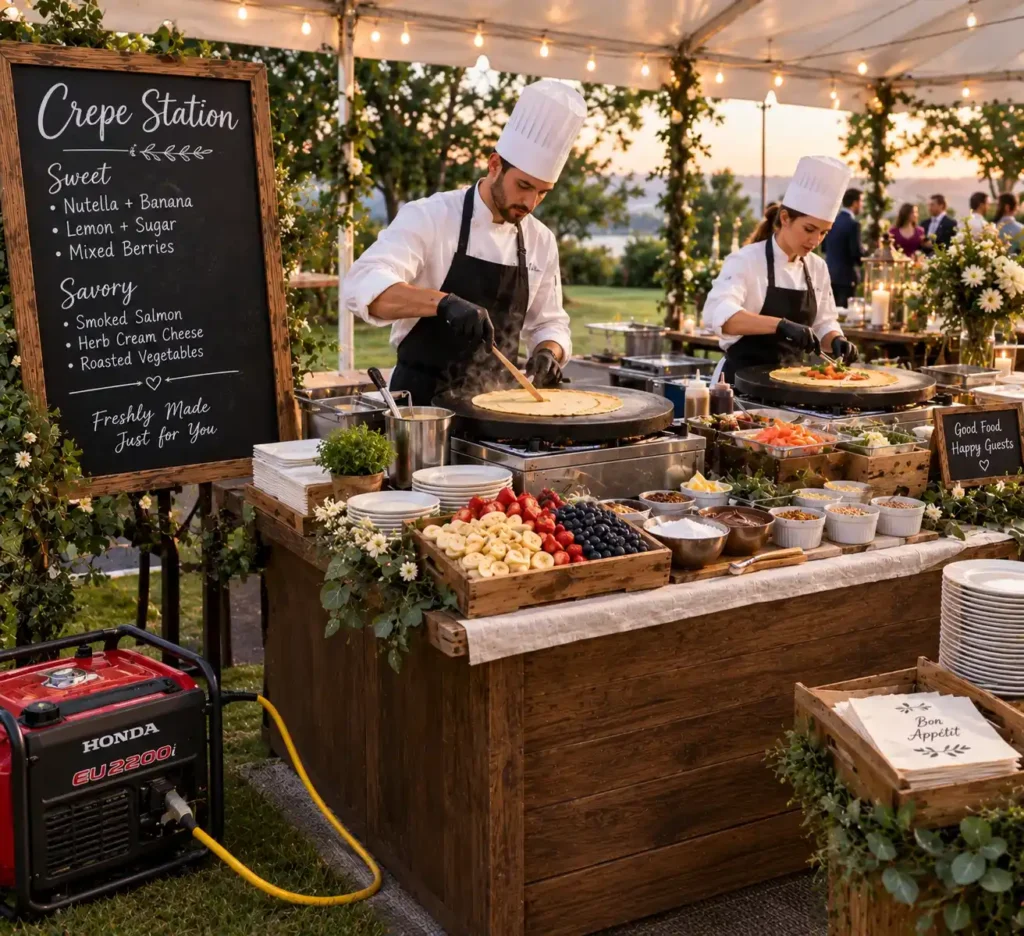
A 36‑inch cast‑iron crepe griddle, plugged into a 20‑amp generator, heats to a steady 375°F within five minutes.
Set the griddle on a sturdy 8‑by‑10‑foot tent floor, leaving at least three feet of clearance on each side for safe movement and ventilation.
Connect the generator to a heavy‑duty extension cord rated for outdoor use; most venues limit power to 15 amps, so a dedicated 20‑amp line avoids tripping breakers.
Arrange two griddles side by side and staff each with a trained operator. One can focus on sweet fillings like Nutella‑banana and lemon‑sugar, while the other handles savory options such as smoked salmon and herb cream cheese. This split keeps the line moving when guests flock to the station after dinner.
A common bottleneck occurs when only one cook handles both stations. The result is a slow queue that stalls the dessert flow and frustrates guests.
For a gathering of 150 guests, plan for at least two operators; for events over 200, add a third griddle and a backup cook.
Keep the batter chilled in insulated containers and stir it every 15 minutes to maintain consistency.
Stock pre‑sliced fruit, powdered sugar, and small ramekins within arm’s reach to speed plating. Reserve a second portable generator if your venue limits power outlets to 15 amps.
15. Slow-Smoked Pulled Pork or Jackfruit Slider Station
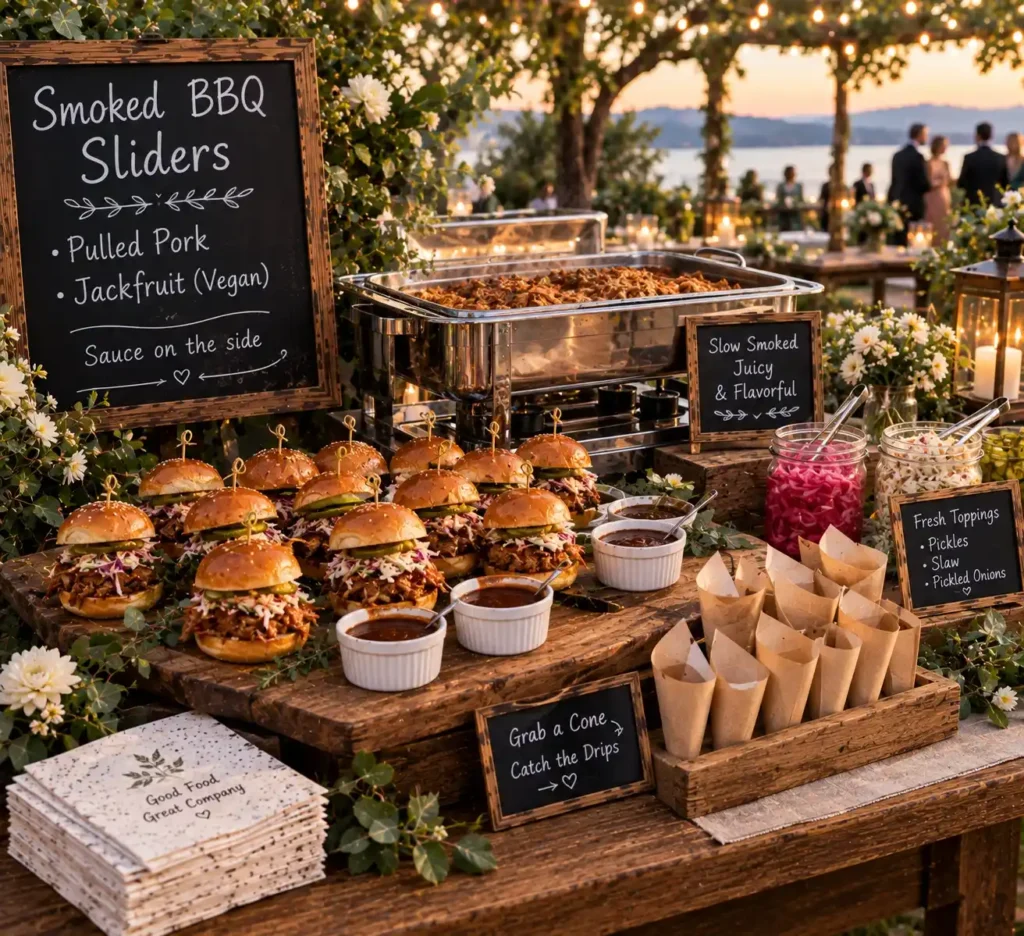
A slow‑smoked pork slider stays juicier than a pre‑sauced pulled‑pork sandwich. The smoke infuses the meat while the low heat of outdoor chafing dishes locks in moisture.
Serve the barbecue sauce in small ramekins on the side; guests can dip without soaking their gowns.
Heavy sauce mixed into the meat creates drips that stain silk or satin. For a plant‑based option, swap the pork for jackfruit pulled‑jack; the texture mimics pork, and the flavor holds up to the same smoke.
Budget‑friendly pork shoulder runs $3‑$4 per pound, while premium brisket can reach $8‑$10 per pound; canned jackfruit costs $6‑$8 per can.
Quick tip: line the warming tray with a thin layer of broth or apple juice to add steam and prevent the meat from drying out.
Arrange the sliders on a reclaimed wood board for a rustic vibe and add garnish jars of pickled red onions and coleslaw. Provide napkins with a speckled pattern to hide any accidental sauce spots.
Place a row of mini paper cones beside each slider so guests can catch stray sauce before it reaches their dresses.
16. Chilled Gazpacho Shooters

On a sun‑blazed garden aisle, chilled gazpacho shooters sit on a low ivory marble tray. The cold tomato‑cucumber broth offers instant hydration for guests sweating under a July sky.
Serve it in thick‑walled glass or heavy ceramic shot glasses; these keep the temperature steady while the sun bakes the surrounding tables.
A cold soup is incredibly refreshing on high‑summer days, but serving it in metal shot glasses under direct sunlight will ruin the chill instantly.
The recipe is naturally vegan, gluten‑free, and dairy‑free, covering most dietary restrictions without extra prep. It shines at intimate outdoor weddings of up to 100 guests, where guests mingle near the ceremony space rather than sit for a sit‑down dinner.
Quick tip: load the glasses into a large cooler with a handful of ice cubes and a sheet of dry ice for 15 minutes before plating; the extra chill stays visible even as the tray moves outdoors.
This presentation follows the current summer‑2024 trend of mini‑portion, palate‑cleansing starters. For a final flourish, rest a tiny sprig of fresh basil on each rim just before service.
17. Individual Mediterranean Mezze Platters
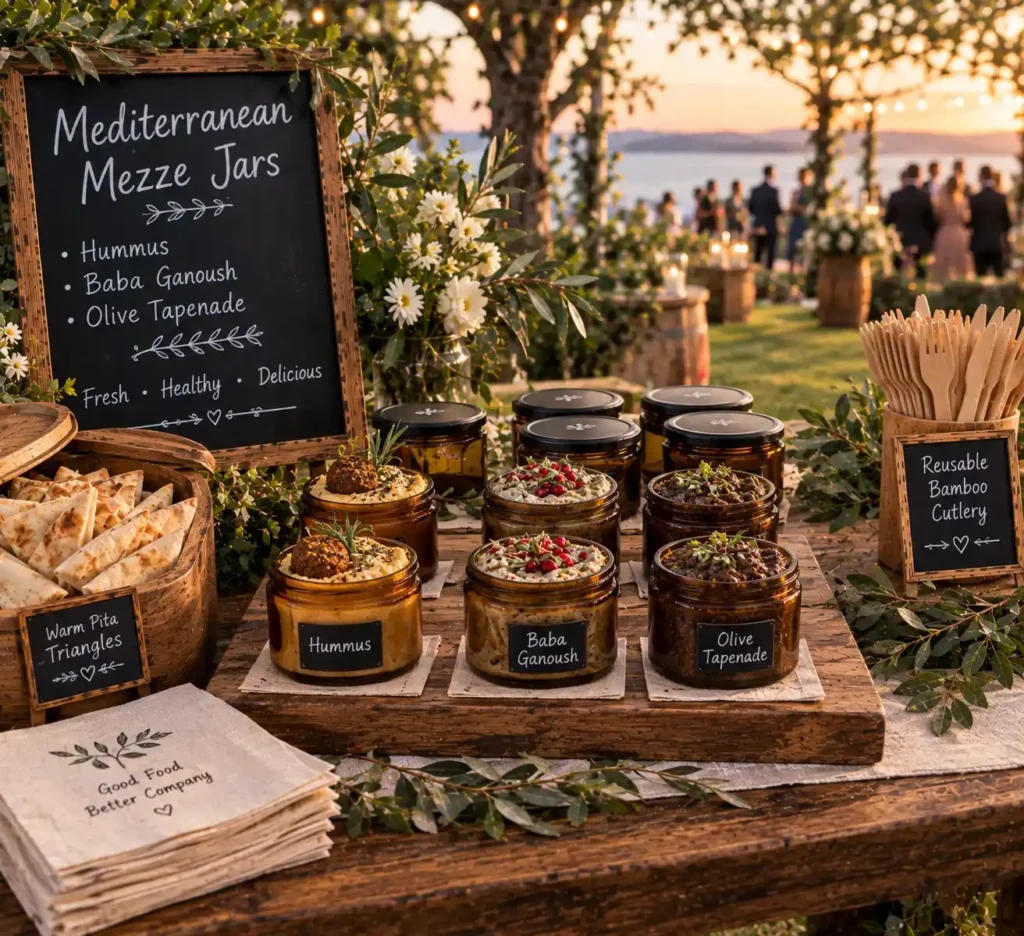
A 4‑ounce amber glass jar filled with smooth hummus sits beside a matching jar of tzatziki, each sealed with a snap‑on lid.
The jars keep the dips sealed from wind, so no dry film forms on the surface. Arrange three jars per guest: hummus, baba ganoush, and a small scoop of olive tapenade.
Add a mini falafel ball and a folded rosemary sprig garnish on top of the hummus jar. Place a stack of warm pita triangles in a separate lidded container, or tuck a few pieces inside the hummus jar’s lid to keep them soft.
Prep the jars the night before. Spoon each dip into the jars, then cover and refrigerate. When the ceremony ends, bring the jars out and set them on a wooden board with a row of reusable bamboo cutlery.
The sealed lids protect the dips during the outdoor breeze and make cleanup simple; just rinse the jars and reuse them for future events.
Quick tip: line the jar rims with a circle of parchment paper before adding the dip; the paper slides out cleanly and prevents a sticky edge.
The trade‑off is extra prep time and the need to collect the glass after the reception, but the result stays fresh and looks polished. Add a small folded napkin under each jar to catch any condensation and keep the platter tidy.
18. Late-Night Warm Churro and Cocoa Cart

Unlike a melting ice‑cream station, a warm churro and cocoa cart stays inviting as the night cools. Heat‑retaining equipment keeps the dough crisp and the chocolate‑cocoa velvety, so guests can keep dancing without a sticky mess.
The cart needs a 6‑by‑6‑foot footprint and a reliable power source, either a nearby outlet or a small generator, so plan the placement early in the layout.
This setup shines at medium‑sized outdoor weddings of 50‑150 guests, especially when the ceremony runs into the evening and the temperature drops.
Quick tip: line the cart’s serving window with a heat‑proof mat and pre‑fill insulated pitchers with cocoa; a single stir before each serving keeps it silky without extra burners.
Offer churros in individual paper bags with a sprinkle of cinnamon sugar; guests can slip them into their hands and walk straight to the dance floor.
Remember the cart occupies space and needs electricity, so reserve a spot under a portable canopy to protect the equipment from breezes.
Adding a small chalkboard with “Warm Churros & Cocoa, Ready Until 11 PM” directs guests and signals the late‑night treat.