7 Summer Wedding Color Palettes That Actually Work in Real Venues
7 Summer Wedding Color Palettes That Actually Work in Real Venues
In this list, I’ve gathered seven summer‑ready palettes, from earthy terracotta and sage to bold coral paired with forest green, each paired with the 60‑30‑10 distribution rule and lighting tips that keep hues from fading. If you’re planning a beach ceremony, a desert barn, or a lush garden, these combinations will help you lock in a look that feels polished, photogenic, and doable on a budget.
1. Terracotta, Dusty Sage, and Warm Cream

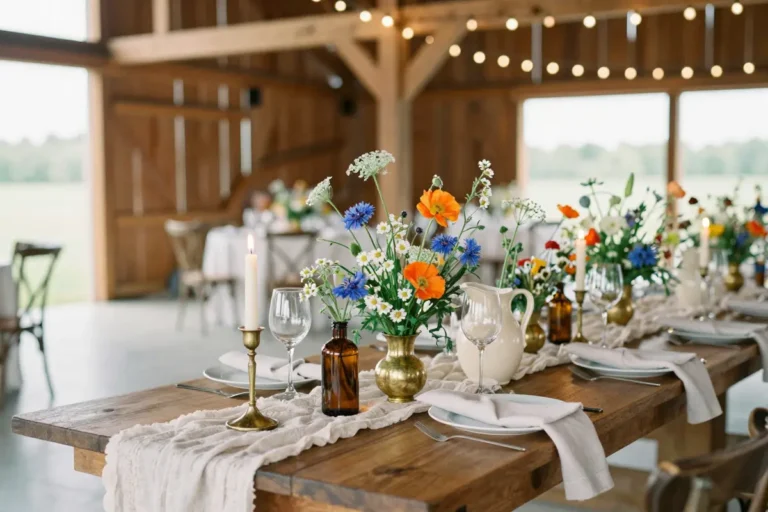
A terracotta linen runner stretched over a dusty‑sage tablecloth anchors the scene with earthy depth, while warm‑cream napkins soften the contrast.
The heavy linen adds texture and keeps the palette grounded; terracotta earthenware pots double as vase holders and visual anchors.
Pair them with dried eucalyptus bundles and rust‑colored pampas grass for a cohesive, natural feel.
Skip cheap orange‑dyed carnations; they clash with the muted tones and look cheap. This look shines at rustic barn venues with 80‑120 guests, especially for couples who love an organic aesthetic.
For smaller gardens, swap the large pots for medium‑size planters to avoid crowding the space.
A splurge option is hand‑blown terracotta vessels at $70‑$120 each; a budget alternative is paint‑your‑own terra‑cotta pots bought for $10‑$15 and sealed with clear spray.
Heavy linens need gentle hand wash and air dry to preserve color, so plan for a day of re‑use rather than single‑use rentals.
If the venue feels sweltering, hang a light canopy and place a portable misting fan near the ceremony arch to keep the area breezy.
A quick tip: tie a thin jute rope around each pot for an extra rustic touch.
2. Lemon Yellow, French Blue, and Crisp White

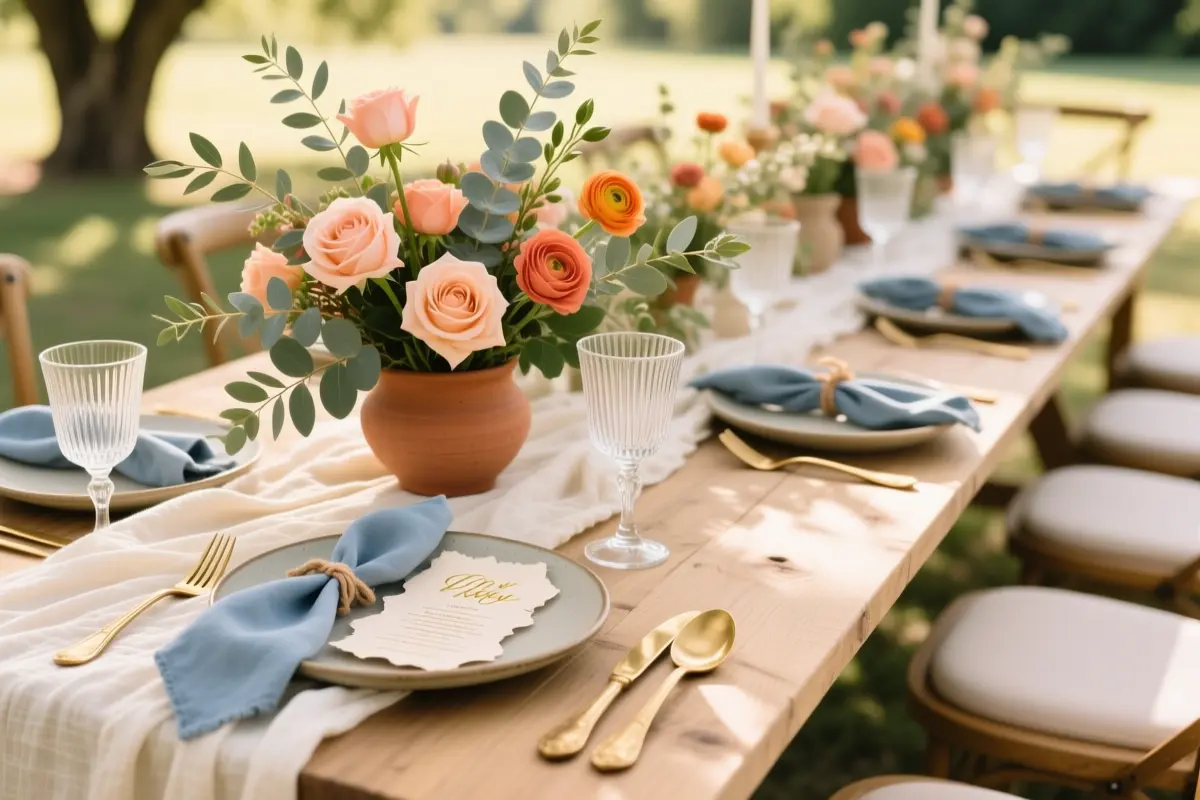
At a sun‑lit garden reception, a French‑blue linen table runner stretches the length of each table.
Paired with navy‑blue taper candles, the runner covers about 60 % of the visual field and grounds the palette.
Lemon‑yellow appears only in thin slices of fresh lemons and a few garden roses, keeping the accent to roughly 10 % of the décor.
The bright citrus pops without overwhelming the scene, even under midday glare.
Fresh lemons are a budget‑friendly centerpiece, typically $3‑$5 for a dozen at a farmers’ market. Slice them thin and secure each slice under a tiny perforated lid; this deters bees and fruit flies that love exposed juice.
A common mistake is leaving the fruit uncovered, which invites swarms and forces an early cleanup.
The look works best for medium‑size (50‑80 guests) garden or beach weddings, especially when the bride has warm undertones that echo the lemon hue. For a splurge, choose a silk French‑blue runner at $45 per yard; a thrifted linen runner at $12 per yard offers the same impact for less.
If you enjoy DIY, cut the runner from a solid‑color fabric and hem it yourself; otherwise, rent a pre‑finished table runner from a décor shop.
The coastal blue‑and‑yellow combo is a current summer trend, though it may soften as fall approaches.
Tuck a small rosemary sprig under each lemon slice to add aroma and keep insects at bay.
3. Lavender, Antique Gold, and Olive Green
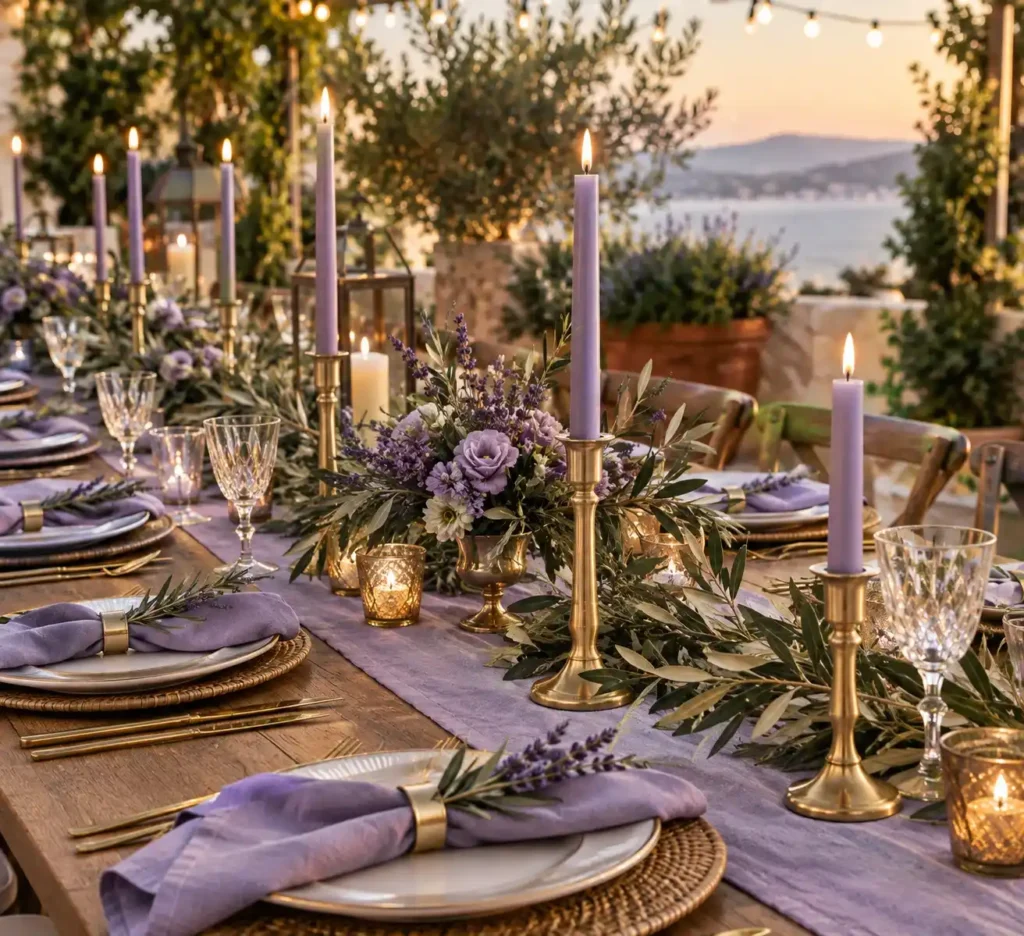
Place a brushed‑brass candlestick at each table and line it with a single olive branch. The olive leaves act as a muted, dusty neutral that tones down lavender’s sweetness without turning the scene pastel.
Add a sprig of fresh lavender tucked into the napkin ring for a fragrant, tactile detail that ties the color trio together.
The polished metal of the candlestick prevents the palette from slipping into a rustic or French‑country vibe; without that shine, lavender and olive can feel too farmhouse.
Choose solid‑gold brass pieces that reflect the evening bistro lights, or opt for a budget‑friendly spray‑painted brass set that costs around $20 per piece instead of $80‑$120 for authentic antique gold.
This combination shines at medium‑size Mediterranean‑inspired weddings, 50 to 100 guests on a garden terrace or rooftop. It works especially well for couples who want a sophisticated look that isn’t overly sweet.
Quick tip: use a single tall lantern instead of multiple small candles to keep the table line clean and reduce set‑up time.
For a higher‑end look, pair the candlesticks with hand‑blown glass votives; for a tighter budget, replace them with matte gold LED tea lights that still catch the light without the weight of real brass.
4. Coral, Peach, and Deep Forest Green
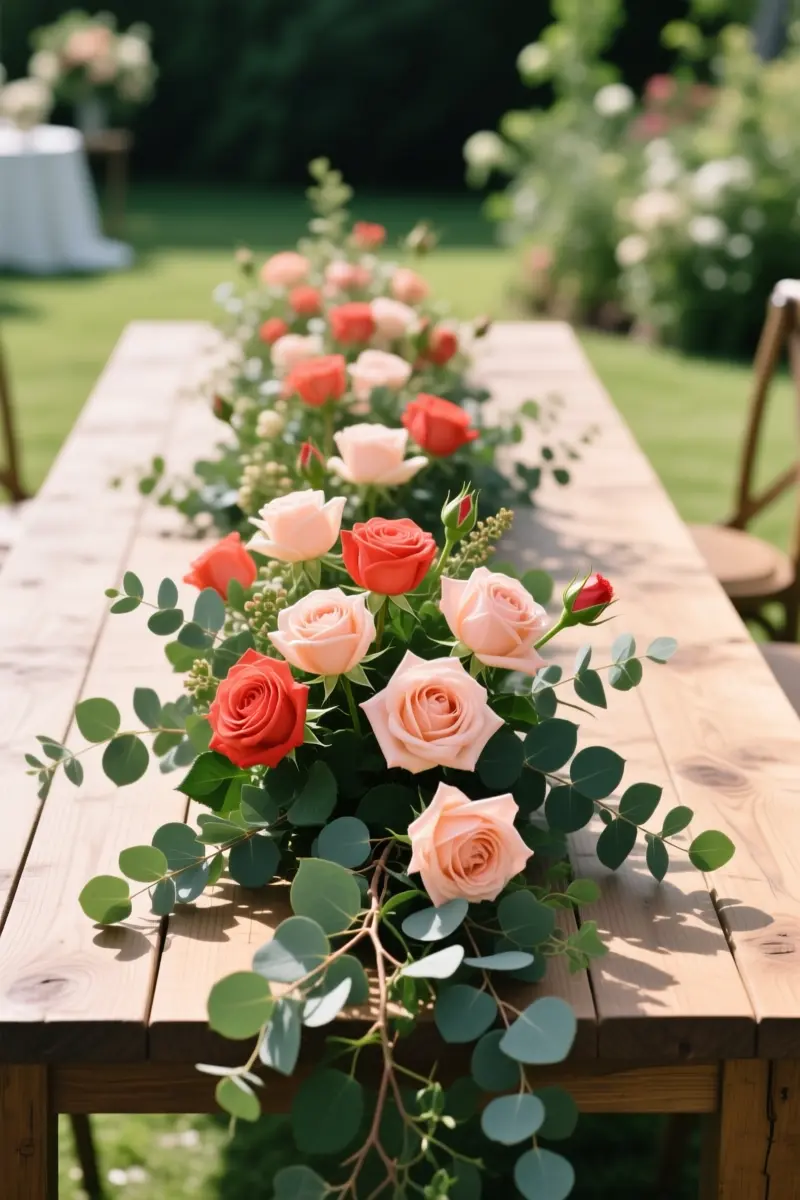
Pairing coral with bright white often feels dated in summer weddings. The clash makes the coral look washed out instead of vibrant.
Swapping the white for deep forest green grounds the bright peach and coral, creating a tropical‑adjacent contrast that reads fresh in outdoor venues.
Coral Charm peonies deliver the punchy hue, but they open and fade from coral‑peach tones to soft peach as the heat rises, sometimes within a single afternoon.
Their season in early summer is short, and the stems run $30‑$45 each, so they quickly become the most expensive floral element.
If the budget feels tight, substitute garden roses in coral and peach shades, which cost $12‑$18 per stem, and use a few deep‑green foliage clusters for the same grounding effect.
For venues with limited shade, keep the peonies in a cooler backstage area until the ceremony, then bring them out for the ceremony walk‑down to preserve color intensity.
A common mistake is arranging the peonies in tight bouquets; they need space to breathe, or the buds will wilt faster.
After the ceremony, repurpose the remaining stems in a simple runner of eucalyptus and ivy to maintain the forest‑green presence as the peonies fade.
Add a few sprigs of eucalyptus to each table runner to keep the deep green tone visible after the peonies begin to pale.
5. Mustard Yellow, Dusty Rose, and Warm Taupe
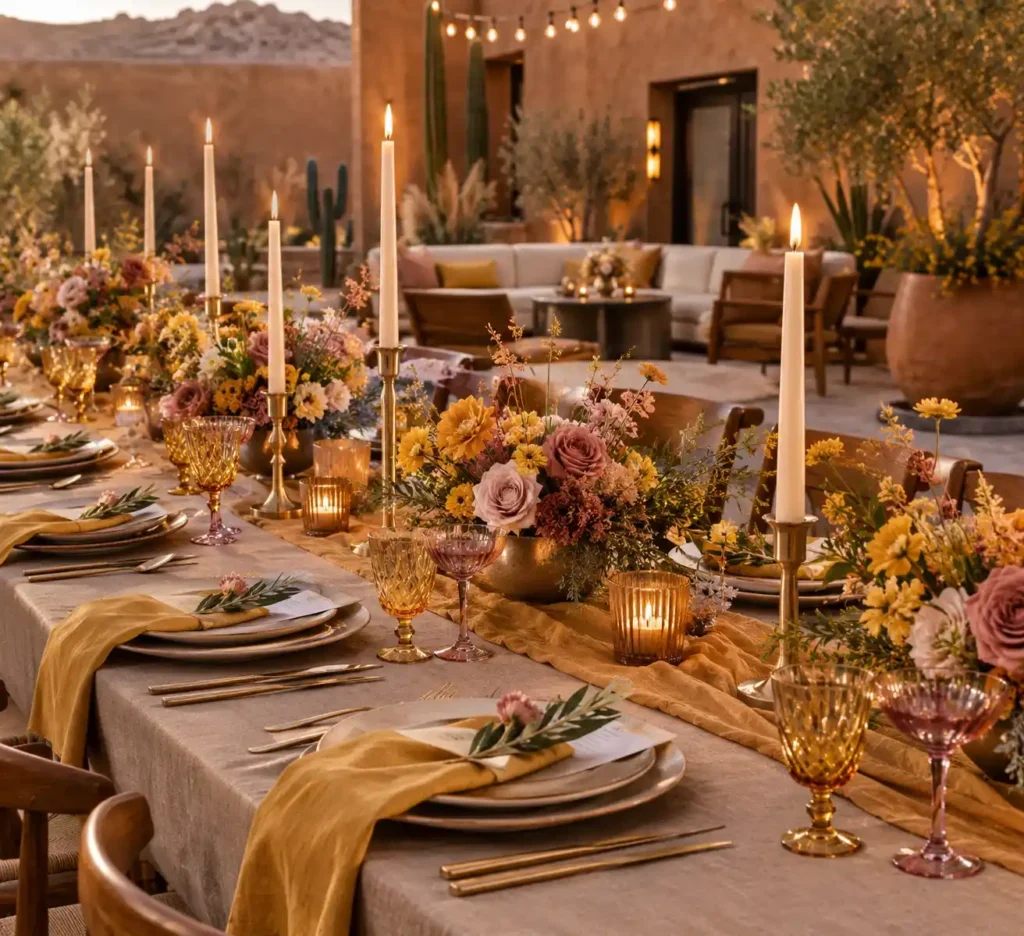
A desert‑style venue with exposed adobe walls and a low‑slung mid‑century modern lounge sets the stage for this palette.
Warm taupe linen tables anchor the space; the neutral hue balances the sun‑bleached landscape and prevents the room from feeling too bright.
Mustard yellow blooms and dusty rose accents on glassware inject retro flair without overwhelming the backdrop.
The colors echo late‑summer foliage that is turning dry, so the overall vibe feels seasonal and intentional.
This combination shines with soft, slightly cool venue lighting; harsh warm uplights can mute mustard and turn taupe into a muddy gray. Test a sample table under the actual chandeliers before ordering full‑size linens.
The look works best for medium‑sized weddings of 50‑100 guests who love a retro‑modern aesthetic. It flatters a range of skin tones because the warm neutrals provide contrast without clashing.
Trend‑wise, mustard‑dusty rose pairings are popular in 2024 summer weddings but may recede as pastel palettes dominate next year.
For a quick fix, place a thin amber gel over the main chandelier to keep mustard vivid while preserving taupe’s clarity.
6. Navy, Dusty Blue, and Natural Linen

Bright white and navy stripes feel overtly nautical, whereas navy paired with dusty blue and raw, unbleached linen creates a relaxed, high‑end organic vibe.
The linen’s natural, crinkled drape adds texture without the crisp sterility of traditional white tablecloths.
Pair it with dusty‑blue silk ribbons tied around napkins and deep‑navy stoneware plates for a cohesive seaside feel that avoids a ship‑deck look.
This palette works best for intimate outdoor or garden weddings of 50‑80 guests, especially couples who prefer a laid‑back yet upscale atmosphere.
For indoor receptions that demand stricter formality, swap the raw linen for a brushed ivory linen and keep the navy accents; the lighter shade reads more polished under chandeliers.
Raw linen’s organic drape can appear too casual or untidy for a highly formal indoor setting, so plan for a professional press before the day and store the cloths flat to minimize wrinkles.
Expect a modest upkeep cost: dry‑cleaning runs about $12‑$18 per tablecloth, but the pieces can be reused for future events, stretching the investment.
When ordering, choose a 60‑inch drop for six‑foot tables to ensure full coverage without excess pooling.
Secure the silk ribbons with small, clear hairpins to prevent slipping during service. Order the deep‑navy stoneware plates at least six weeks ahead to lock in the glaze and avoid rush fees.
7. Plum, Blush, and Sage Green
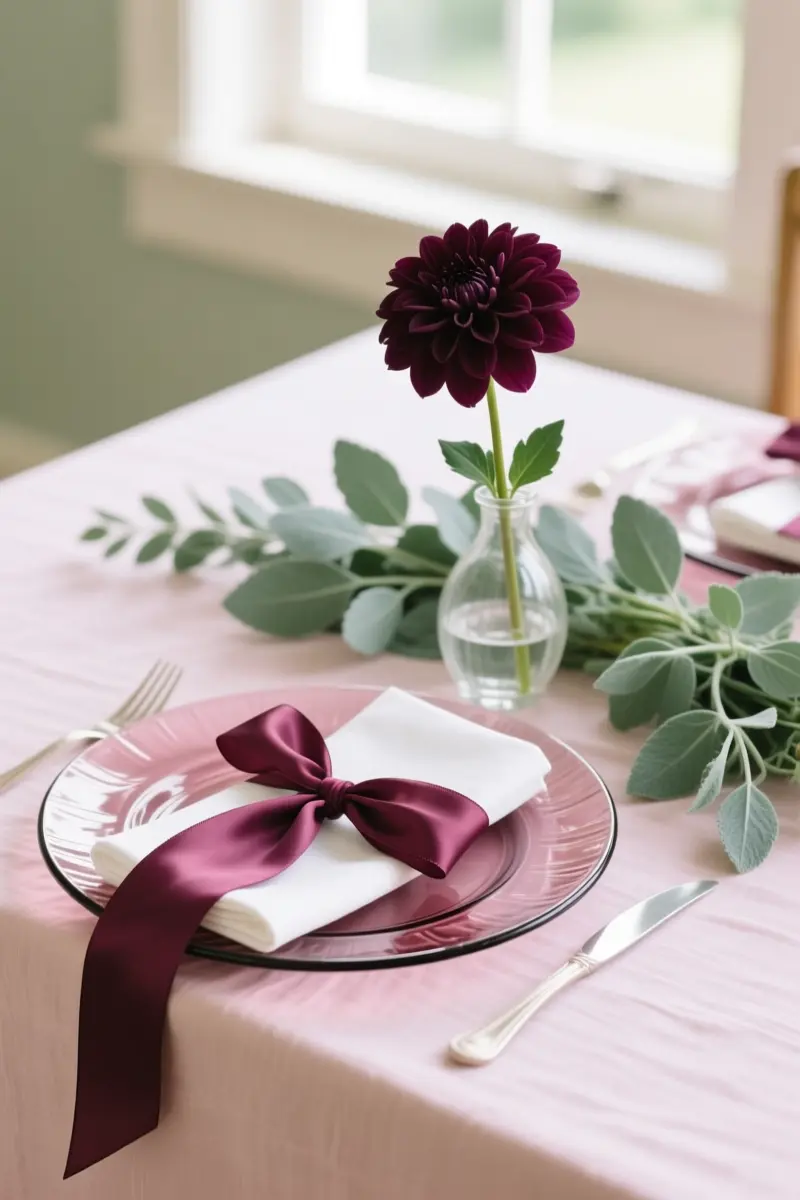
A deep plum chiffon ribbon tied around each napkin adds a subtle pop of color. The ribbon’s weight anchors the airy blush table linens and the muted sage greenery, giving the late‑August setting a refined formality.
Pair the ribbons with dark‑berry dahlias and tiny plum accents in the menu cards for a cohesive look.
This palette shines at intimate weddings of 50‑100 guests, especially when the bride favors warm undertones and wants a romantic vibe without overwhelming the space.
Quick tip: limit plum to one accent per table, napkin ribbon, menu header, or a single flower bud, so the colors stay balanced.
Be careful not to saturate the room with plum; too much deep hue can make the venue feel prematurely autumnal and visually close in the space.
Add a single plum‑tinted glass charger to each place setting for a coordinated finish.
The 60-30-10 Rule for Wedding Color Distribution
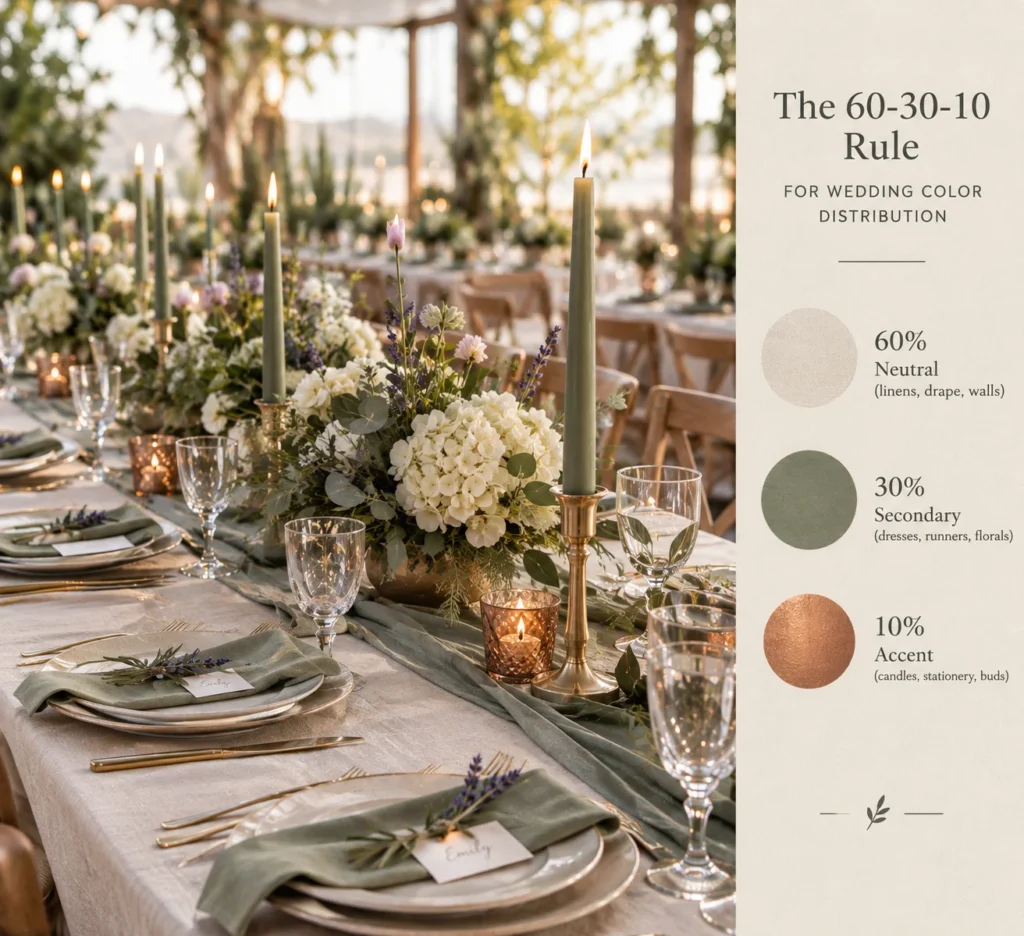
Start by painting a 60‑30‑10 color chart on a large sheet of butcher paper to see the balance before any orders.
First, assign 60 % of the visual field to a neutral; think ivory linens, white drape panels, or a light gray ballroom wall. This creates a calm backdrop that lets other hues breathe.
Next, allocate 30 % to your secondary shade. Use it for bridesmaid dresses, napkins, and the larger floral arrangements. In a garden ceremony, sage‑green dresses paired with matching table runners and oversized hydrangeas work well.
Finally, reserve 10 % for the accent color. Apply it to candles, stationery ink, and tiny floral buds.
A copper candle holder or a blush ribbon on each place card delivers the pop without overwhelming the space.
For a venue that seats 80, keep the neutral on all tablecloths and the main wall, the secondary on the bridal party and centerpiece bouquets, and the accent on one or two décor pieces per table.
In a micro‑wedding of 30 guests, you can shrink the secondary to just the bridesmaids and a single floral arch, letting the accent appear on every napkin.
A common mistake is overloading the accent; stick to the 10 % rule or the look feels chaotic.
Quick tip: bring home three fabric swatches and view them under the ceremony lighting before finalizing.
Remember, rigidly following the percentages can make the room feel sterile, so feel free to add a stray lavender sprig or a handwritten sign if the space feels too formal.
Place a copper votive holder at each table’s center as the final 10 % accent detail.
How Harsh Midday Sun Affects Your Color Palette

Bright, direct midday sun bleaches pale blush or lilac table linens, turning them almost white in photos. The wash‑out happens because the sun’s high UV intensity reflects off white surfaces, flattening subtle tones.
To keep color integrity, shift each pastel up a step to a more saturated hue: dusty rose instead of blush, muted lavender for lilac.
This saturation holds up under harsh light, showing depth in both décor and images.
A common mistake is assuming the same palette will work for an evening reception indoors; those richer tones can feel heavy when the lights dim. If the celebration moves inside after 6 PM, balance the palette with neutral ivory or muted sage accents to soften the look.
Couples planning a garden ceremony for 50‑80 guests benefit most from this approach. The larger guest count allows enough tables to showcase the upgraded colors without overwhelming the space.
Quick tip: bring fabric swatches to the venue and photograph them at 2 PM on a sunny day; adjust the hue before ordering bulk linens.
Alternative: set up a light‑colored canopy or white umbrella over the head table to filter direct sun, preserving pastel shades without changing the palette.
Add a sheer white drape behind the cake stand to diffuse sunlight and keep the chosen colors true.
Budget Limitations of Specific Floral Colors

True blue delphiniums run $30‑$45 per stem and wilt within a day of July heat, whereas a set of blue‑tinted glass vases can be purchased for under $20.
Fresh bridal bouquets typically cost $150‑$800, and full wedding floral décor for a medium‑sized event can climb to $3,000‑$8,000, making true‑blue blooms a costly splurge.
A practical tip: keep stems in a cooler and mist them hourly to delay wilting, but expect daily maintenance and a short display window.
If the boho feel of glassware clashes with a classic theme, swap the glass for high‑quality silk bouquets in powder blue.
Faux silk arrangements are hand‑dyed, come in 8‑12 in sizes, and cost $80‑$200, offering year‑round durability without wilting.
They also include a white satin ribbon and can be mixed with garden rose, allium, and baby’s breath for a cohesive look.
For a DIY route, submerge dried eucalyptus in food‑grade blue dye for an hour; the result costs $5‑$8 per bundle versus $10‑$15 for pre‑dyed pieces.
Remember that dyed dried elements and glassware steer the décor toward a vintage vibe, so balance them with traditional linens or silverware if you want a more formal atmosphere.
Add a single blue taper candle to each table runner for a subtle pop that survives the heat.
Pick Your Palette and Pin It
You’ve just seen seven curated color stories: terracotta with dusty sage, lemon‑yellow and French blue, lavender with antique gold, coral‑peach‑forest green, mustard with dusty rose, navy‑dusty blue linen, and plum‑blush‑sage, each paired with the proven 60‑30‑10 layout and sun‑smart adjustments. Pick the one that matches your venue’s vibe and the time of day you’ll celebrate.
Before finalizing, order fabric swatches or create a digital mood board to see how the hues read under natural light.
- Linens/Drapes: 60 %
- Bridesmaid dresses & large blooms: 30 %
- Accent pieces (candles, stationery): 10 %
Keep in mind that some shades may shift in different lighting, so a test run is advisable. Trust the palette, enjoy the process, and don’t forget to pin this guide for your next planning session or share it with a fellow bride‑to‑be.
Frequently Asked Questions
What are the most popular summer wedding colors?
Warm terracotta, dusty sage, French blue, peach, and soft olive green are highly popular because they coordinate easily with natural outdoor foliage and summer floral availability.
How do you choose a summer wedding color palette?
Start by evaluating your venue’s existing colors (carpets, walls, or natural landscape). Select one dominant neutral, one supporting tone, and one sharp accent color that fits the environment.
Are dark colors okay for a summer wedding?
Yes. Deep colors like navy, plum, or forest green work well in summer when balanced with light linen neutrals, raw wood textures, and plenty of fresh greenery to keep the atmosphere feeling airy.
Which summer flowers are easiest to match to a warm palette?
Dahlias, garden roses, zinnias, and carnations are excellent summer blooms that naturally grow in a wide range of warm terracotta, peach, yellow, and dusty rose shades.