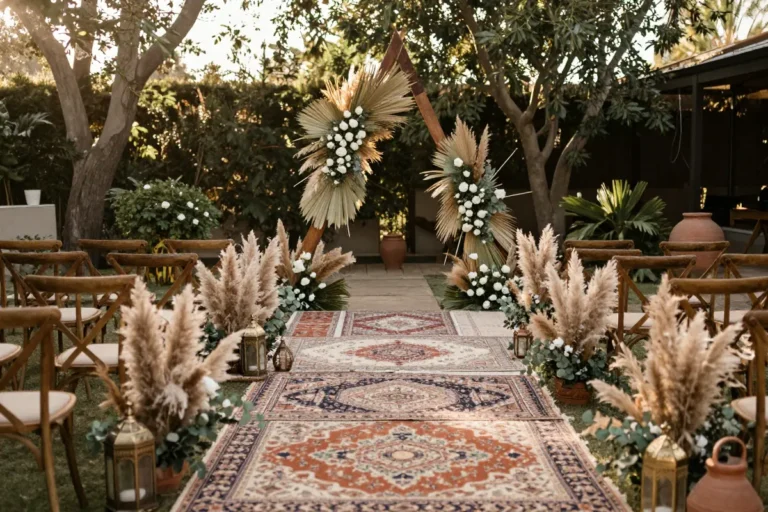

14 Practical Outdoor Wedding Aisle Ideas (That Won’t Blow Away)
14 Practical Outdoor Wedding Aisle Ideas (That Won’t Blow Away)
When a gust lifted the last rose petal off the aisle at my friend’s garden ceremony, I realized every outdoor wedding needs a plan that can actually stand up to the wind. I’ve spent months testing solutions that stay rooted, look polished, and won’t demand a rescue crew halfway down the path.
In this list, I share fifteen aisle concepts that balance durability with style: heavy potted olive trees, flat‑woven seagrass runners pinned with staples, low‑profile floral crescents, vintage wool rugs, and more. Whether you’re a DIY bride, a planner on a budget, or a venue manager, these ideas give you a sturdy, beautiful walkway that guests can walk down without a hitch.
1. Heavy Potted Olive Trees
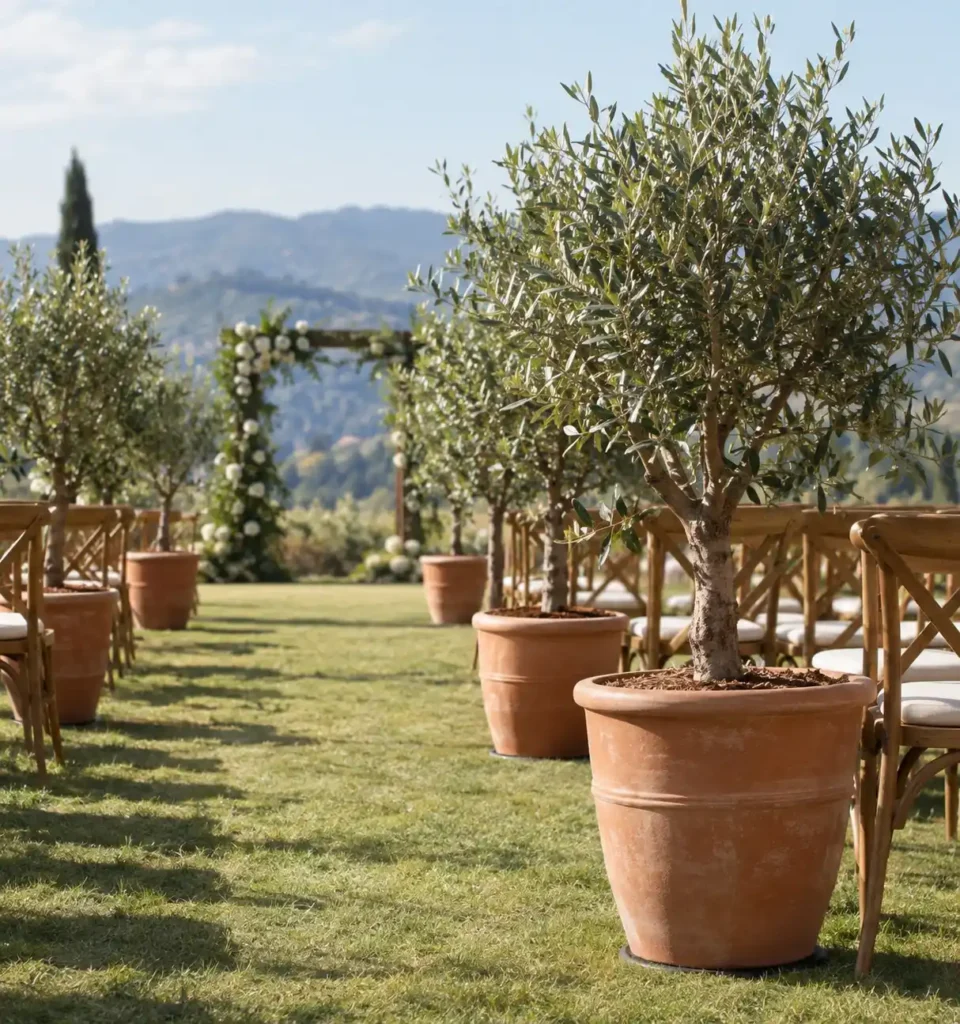
A 4‑foot olive tree set in a solid terracotta pot anchors the aisle with Mediterranean charm. The heavy vessel keeps the tree steady when a breeze picks up, and the evergreen foliage stays vibrant even under full sun.
Choose trees between 3 and 5 feet tall for height without crowding a standard 5‑foot aisle.
Space each pot about 4 feet apart to allow comfortable passage for guests and the bridal party.
The highest cost is the labor. Moving a 30‑pound pot and a mature root system usually requires two strong hands or a small crew, and a dolly can help on smooth surfaces.
If you don’t have dedicated help, plan a loading day before the ceremony and enlist a friend with a truck.
After the vows, keep the soil moist and place the trees in a shaded spot; they transition nicely to a patio garden, giving you a reusable décor element.
A quick tip: line the base of each pot with a thin rubber mat. The mat prevents the terracotta from cracking on uneven grass and gives guests a non‑slip surface.
For a budget‑friendly version, swap the terracotta for a concrete slab and choose a 3‑foot dwarf olive, which still offers the same silhouette at a lower price point.
If you prefer not to buy, many garden centers rent mature potted olives for the day and handle delivery and pickup.
2. Flat-Woven Seagrass Runners Pinned with Staples
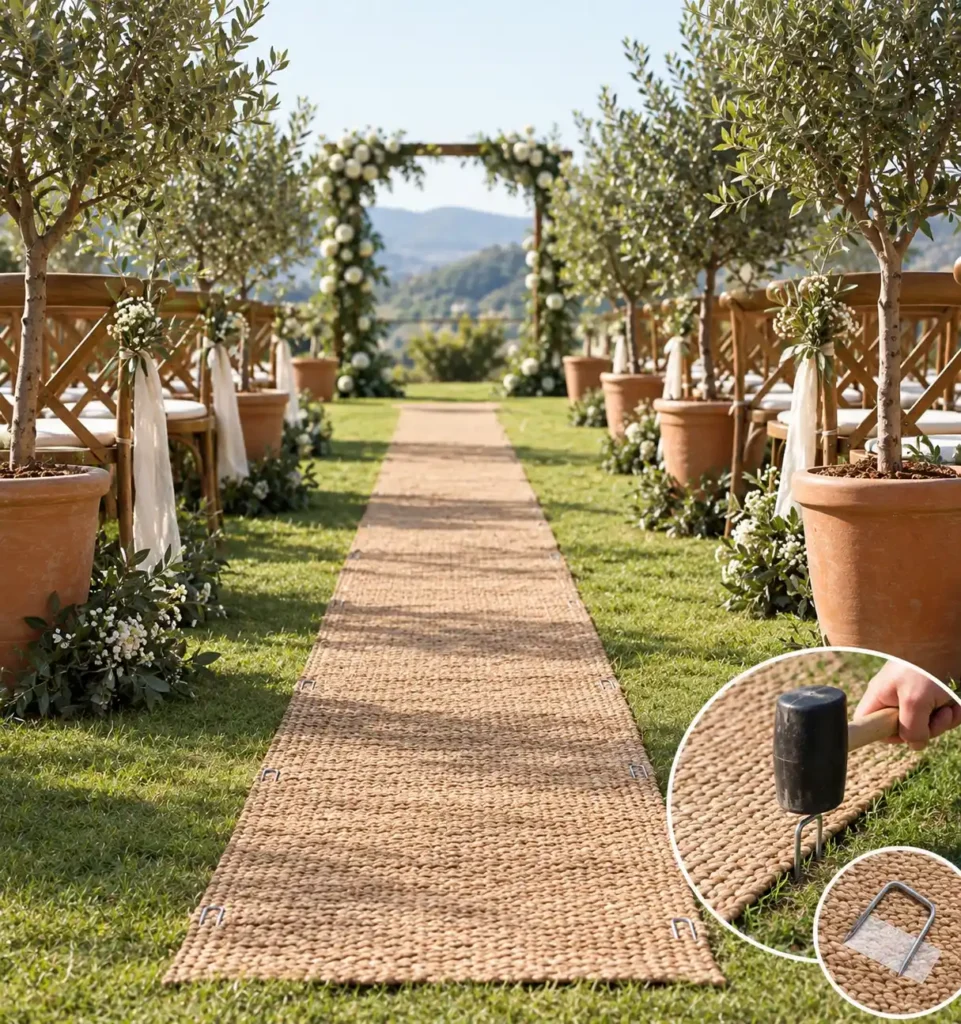
Heels sink into the lawn, making the aisle uneven for guests. A flat‑woven seagrass runner solves that by creating a firm surface that won’t bunch under weight.
Choose a runner about 12‑inch wide; its stiff fibers stay flat where sisal or loose jute would curl.
Lay the runner along the grass, then secure it with U‑shaped metal landscape staples placed every two feet.
Push each staple through the runner and into the soil, keeping the runner flush with the sod so no ridge forms. Use a rubber mallet to drive staples without tearing the fibers.
The seagrass texture is rough, so barefoot wedding parties will find it abrasive. If you need a barefoot‑friendly option, swap the runner for a rolled bamboo mat or a thin vinyl strip that can be taped to the grass.
You can buy a pre‑cut seagrass runner for $30‑$80 at a home‑goods store, or create a DIY version by braiding natural fibers and stitching the edges for durability.
Quick tip: after the ceremony, slide a small piece of carpet tape under each staple.
The tape protects the grass from tearing and makes removal easier, leaving the lawn ready for the reception.
3. Layered Vintage Wool Rugs
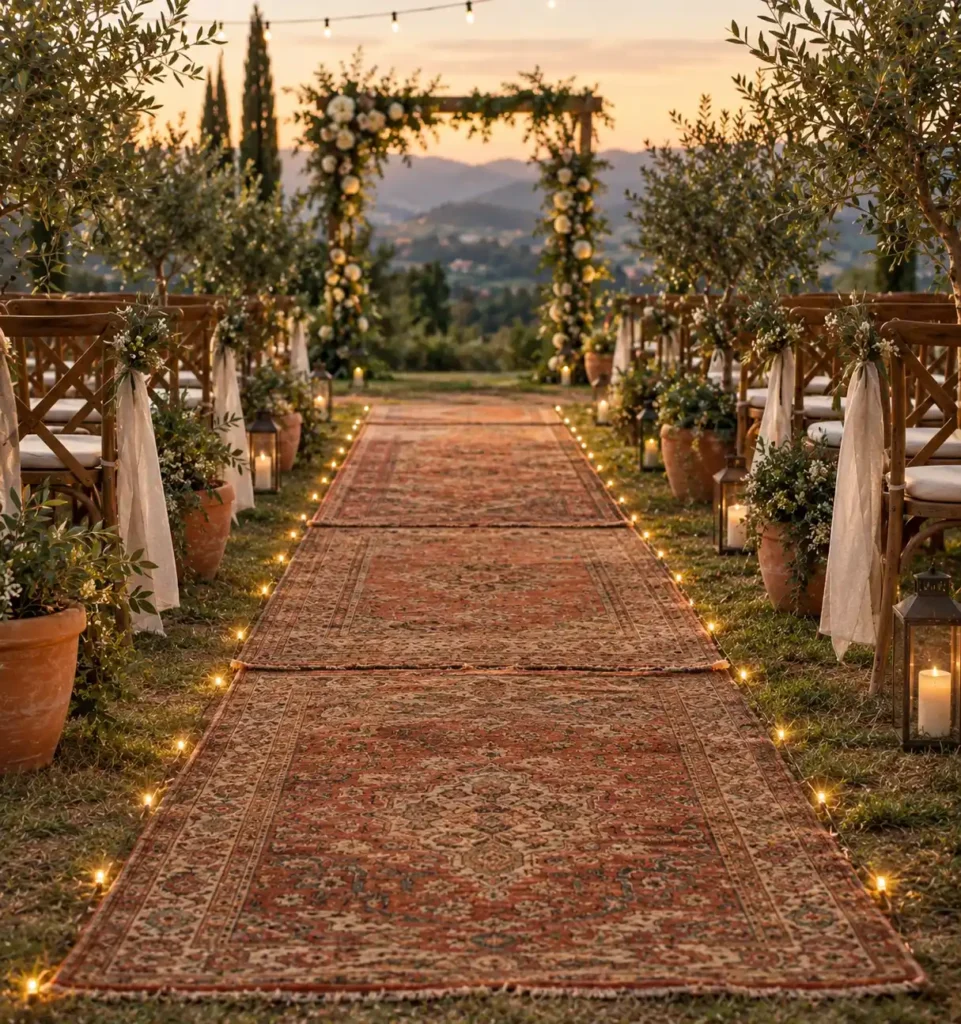
A dirt aisle framed by a row of terracotta‑hued wool rugs feels grounded and rustic. Lay the first rug directly on the ground, then add a second layer for depth.
Under each piece, spread a thin non‑slip rug pad; it prevents shifting and keeps the surface safe for barefoot guests.
Avoid silk or glossy synthetic rugs, which glide on gravel and can cause slips. Choose deep earth tones, terracotta, sage, and rust to conceal soil and grass stains.
Genuine vintage wool is heavy to transport and can absorb damp earth, leaving permanent marks that may need professional cleaning.
If the weight or cleaning cost is a concern, rent thrift‑store finds or opt for thick cotton canvas runners that mimic the texture without the stain risk.
Quick tip: tape the pad edges to the ground with double‑sided carpet tape before laying the rugs; this locks everything in place even after a light rain.
This approach works best for medium‑sized outdoor weddings on uneven terrain, where guests will walk barefoot or in sandals.
Budget‑friendly couples can source a set of three‑foot runners for $80‑$120 each at local vintage shops, then reuse them for future events after a gentle vacuum and spot‑clean.
Add a low‑profile string light border along the rug edges to define the aisle after dark.
4. Solid Oak Boardwalk Planks

On a wind‑swept beach where sand shifts under each step, a solid oak boardwalk keeps the aisle level.
Loose fabric runners sink and slide, making the bridal party stumble. Start by measuring the aisle length and ordering 12‑ to 14‑inch‑wide oak planks, each 6 feet long.
Lay a ½‑inch marine‑grade plywood sheet on the sand to spread weight evenly, then snap the planks onto it, spacing them a few inches apart for drainage.
Secure each plank with a simple U‑shaped metal bracket that anchors into a sand‑filled sandbag placed underneath.
A quick tip: tap a rubber mat under the brackets; it absorbs minor shifts and reduces wobble.
This setup works best for larger gatherings with long wedding dresses and guests in heels, because the wide planks accommodate trains and provide a stable footing.
Renting standard pallet‑style decking runs about $5‑$10 per plank, far cheaper than custom‑cut oak at $30‑$50 each.
If storage or flat terrain is a concern, consider interlocking rubber stepping stones as an alternative.
DIY assembly is feasible for those comfortable with basic tools, but most couples find it easier to rent pre‑assembled panels from event suppliers.
Remember to level the sand before laying the plywood; uneven ground will cause the boards to tilt and create a tripping hazard.
Add a 2‑inch rubber mat under each plank to dampen any wobble on slightly uneven sand.
5. Potted Lavender and Rosemary Paths
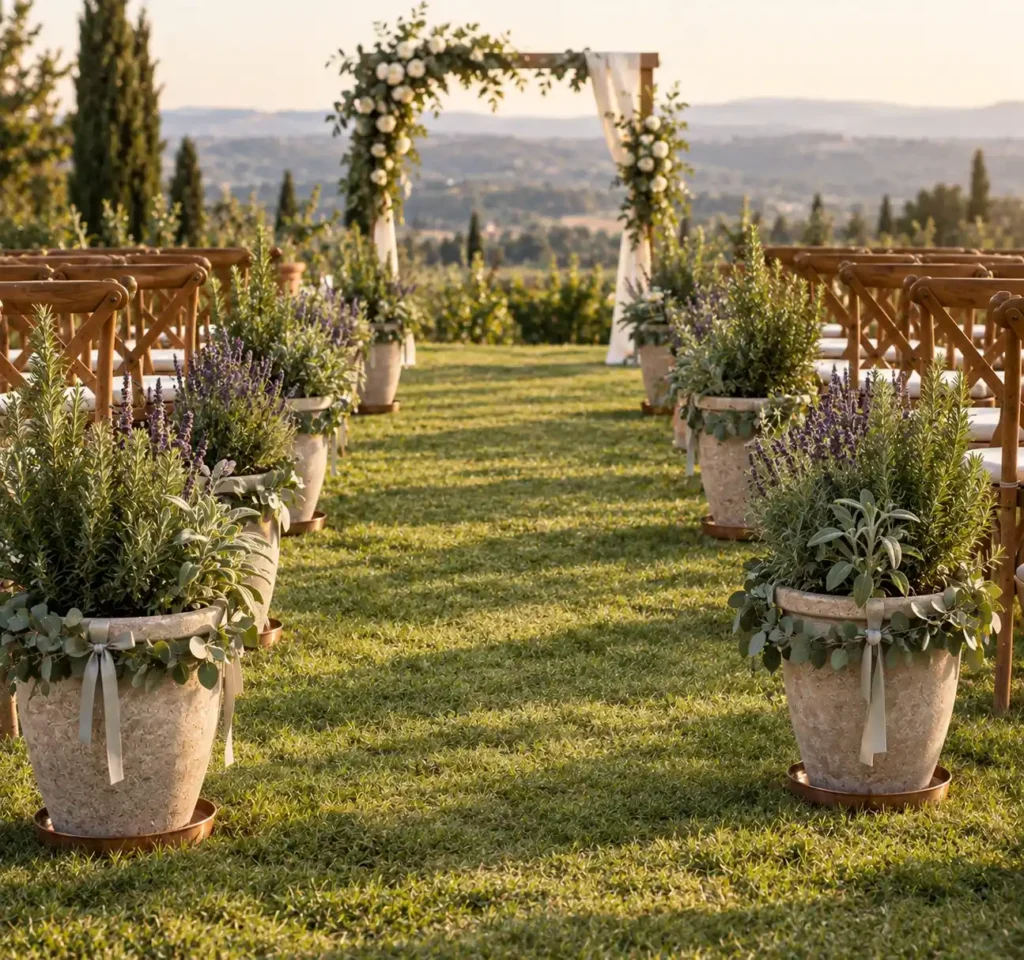
Place wide‑based stone planters filled with lavender, rosemary, and sage along the aisle, spacing them about three feet apart.
The herbs release fragrant oils that keep flies and mosquitoes at bay without chemicals, while the scent adds a calming, garden‑fresh atmosphere for guests.
Start by selecting 12‑inch stone containers with flat bottoms; they stay steady on uneven grass or dirt.
Fill each with a well‑draining mix, then plant one lavender, one rosemary, and a few sage cuttings per pot. Water lightly after planting and keep the soil moist but not soggy.
A weekly mist with a spray bottle maintains humidity and prevents the plants from drying out under the summer sun.
Quick tip: tuck a copper saucer under each planter to catch excess water and deter ants.
A common mistake is over‑watering, which can cause root rot and make the planters tip over. Use a moisture meter or press a finger into the soil to gauge dryness before adding water.
DIY‑savvy couples can repurpose old concrete garden blocks as planters, painting them in muted gray for a cohesive look. If you prefer a hands‑off approach, many florists rent stone pots for a few dollars per day.
Be aware that strong, blooming herbs may attract bees and other pollinators directly onto the aisle, so keep a small bowl of sugar water away from the walkway to draw them off the path.
Finish each pot with a thin ribbon of eucalyptus tied around the rim; the greenery masks the stone base and reinforces the herbal theme.
6. Thick Wood Slices with Weighted Lanterns
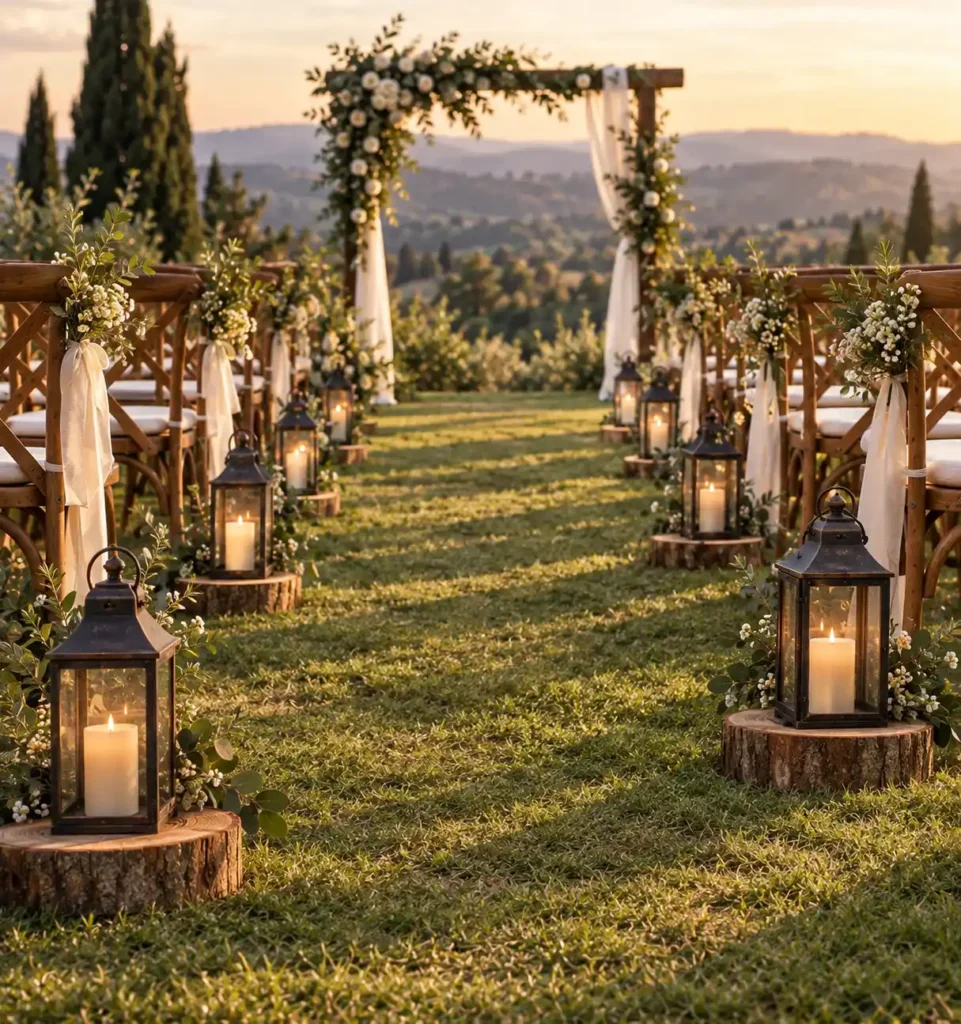
Two‑inch cedar rounds line the aisle, each cradling a heavy iron lantern.
The wood’s natural grain adds rustic depth, while the lantern’s metal weight steadies the slice on uneven ground. Choose cedar or oak for durability; both resist rot and hold weight well.
Place an outdoor‑rated LED pillar candle inside each lantern and set a timer for a gradual fade‑out after the ceremony. LED candles eliminate fire risk near dry grass and delicate wedding dresses.
A minimum thickness of two inches prevents wobbling, especially when guests walk by. Secure the slices with a sandbag or a small stack of river rocks to stop them from shifting in a breeze.
Freshly cut green wood can split and ooze sap under direct sun, so source kiln‑dried slices or let fresh cuts air‑dry for at least a week before the wedding.
This setup shines at medium‑sized outdoor weddings of up to eighty guests, where the aisle length allows a balanced visual rhythm.
DIY‑savvy couples can purchase pre‑cut rounds from a lumberyard for $12‑$18 each and rent lanterns for $30‑$45 per piece.
For a tighter budget, replace the iron lanterns with repurposed metal buckets and use battery‑operated LED tea lights.
Add a small bag of river rocks under each slice to keep it steady on uneven ground.
7. Scattered Dried Eucalyptus Leaves

Unlike fresh rose petals that wilt, brown, and scatter, dried eucalyptus leaves stay flat and retain shape.
Their broad, papery form resists wind, so they remain where you place them even on a breezy lawn. When guests step on them, a subtle, citrusy scent is released, adding a quiet aroma without overwhelming the ceremony.
Buying bulk dried packs, often $12‑$18 for a 5‑lb bag, keeps the cost well under a traditional petal spread, which can exceed $30 for a similar coverage.
A key drawback is that the leaves decompose slowly, which may clash with venues that require immediate, zero‑trace cleanup after the event.
If the policy is strict, swap the eucalyptus for biodegradable paper confetti; it offers a similar visual effect and breaks down within hours.
Quick tip: lay a thin line of sand or fine mulch along the aisle before scattering the leaves. The substrate holds the foliage in place and prevents shifting when guests walk past.
For a splurge option, choose hand‑picked eucalyptus branches with larger leaf clusters; they cost about $25‑$30 per bundle but create a richer texture.
Add a final layer of small, flat river stones at the aisle edges to keep the leaves from drifting onto the grass.
8. Low Concrete Bowls with Dried Grasses
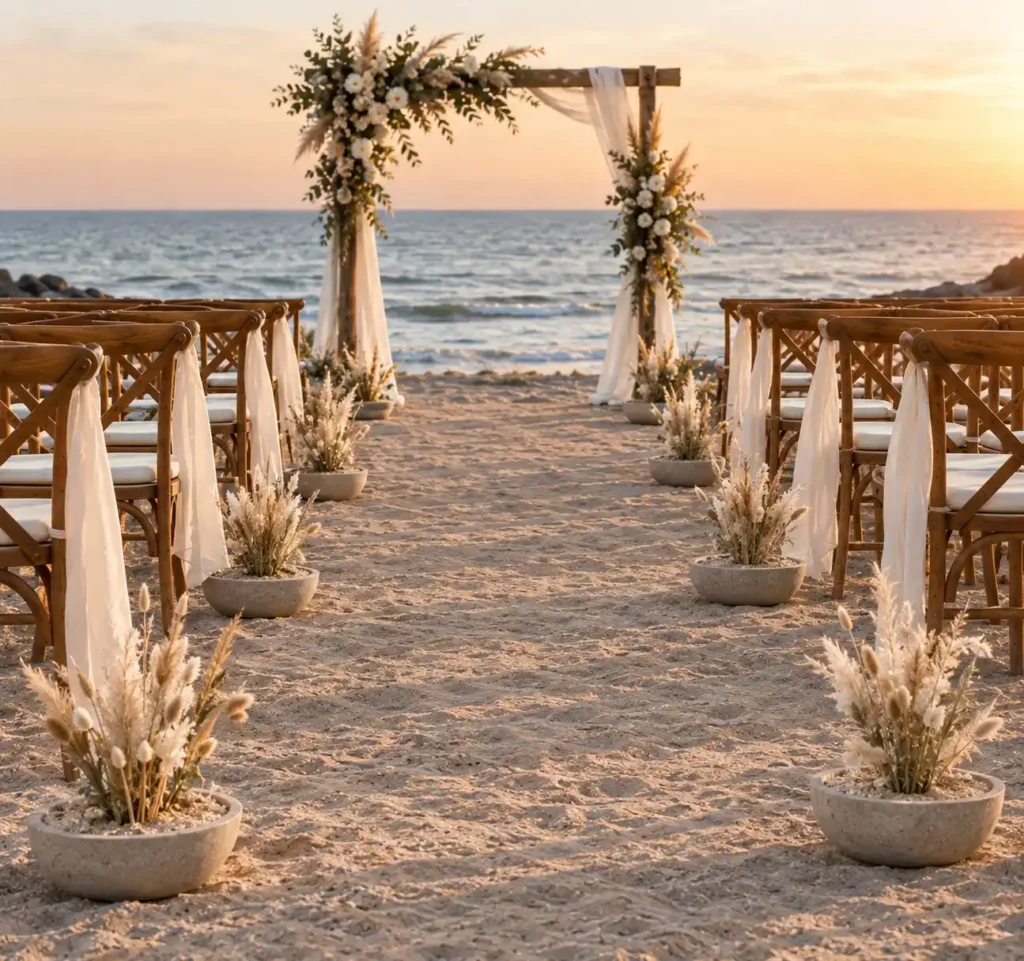
Place a shallow, heavy concrete bowl filled with sand and a handful of dried pampas or bunny tails at each aisle marker.
The low center of gravity keeps the arrangement stable when coastal breezes pick up. Unlike tall, fluffy grasses, the short grasses stay anchored and won’t scatter across the venue.
Concrete vessels are brittle and heavy so rough transport can crack or chip the edges. If you’re concerned about damage, swap the bowl for a weighted resin tray that mimics the same silhouette.
Quick tip: coat the interior with a thin layer of clear acrylic sealant; it repels moisture and keeps the sand from spilling.
This setup shines at intimate beach or cliffside weddings of 30‑50 guests, especially couples who favor a minimalist, modern vibe.
The trend peaked in 2023‑24 and still feels fresh for coastal ceremonies. A 12‑inch diameter bowl runs $30‑$45 at most hardware stores, keeping the aisle under $500 total for a 30‑guest ceremony.
Space the bowls about 8 feet apart to maintain a clear path while preserving visual rhythm. If weight is a concern, a sand‑filled wooden crate offers similar stability with a lighter profile.
Secure each bowl with a small sandbag hidden under the base to prevent accidental tipping during gusts.
9. Woven Rattan Baskets with Weighted Bases

A low, wide rattan basket rests at the aisle, its open weave cradling a loose tumble of eucalyptus, lavender sprigs, and soft ferns.
Start by selecting baskets with flat, broad bases; tapered bottoms will tip once the foliage shifts. Slip a standard red brick or a small cobblestone into each basket’s bottom before you add the floral liner.
The weight anchors the basket and keeps the unstructured foliage from sliding forward as guests walk by.
Next, arrange the wild greenery in an uneven, natural pattern. Let stems spill over the rim for a relaxed boho vibe.
If you prefer a DIY route, source reclaimed rattan baskets from a local flea market; prices often sit between $15 and $30 each.
Store‑bought options range up to $45, offering a sturdier weave that resists cracking.
Quick tip: place a thin silicone mat under the brick to prevent moisture from seeping into the rattan and to protect the stone from rain.
Be aware that lightweight rattan can absorb damp morning grass, leading to rot if left out too long.
Keep the baskets covered with a breathable fabric until just before the ceremony to extend their life. Adding a discreet waterproof liner around the basket’s interior gives extra protection against unexpected drizzle.
10. Grounded Meadow Clusters
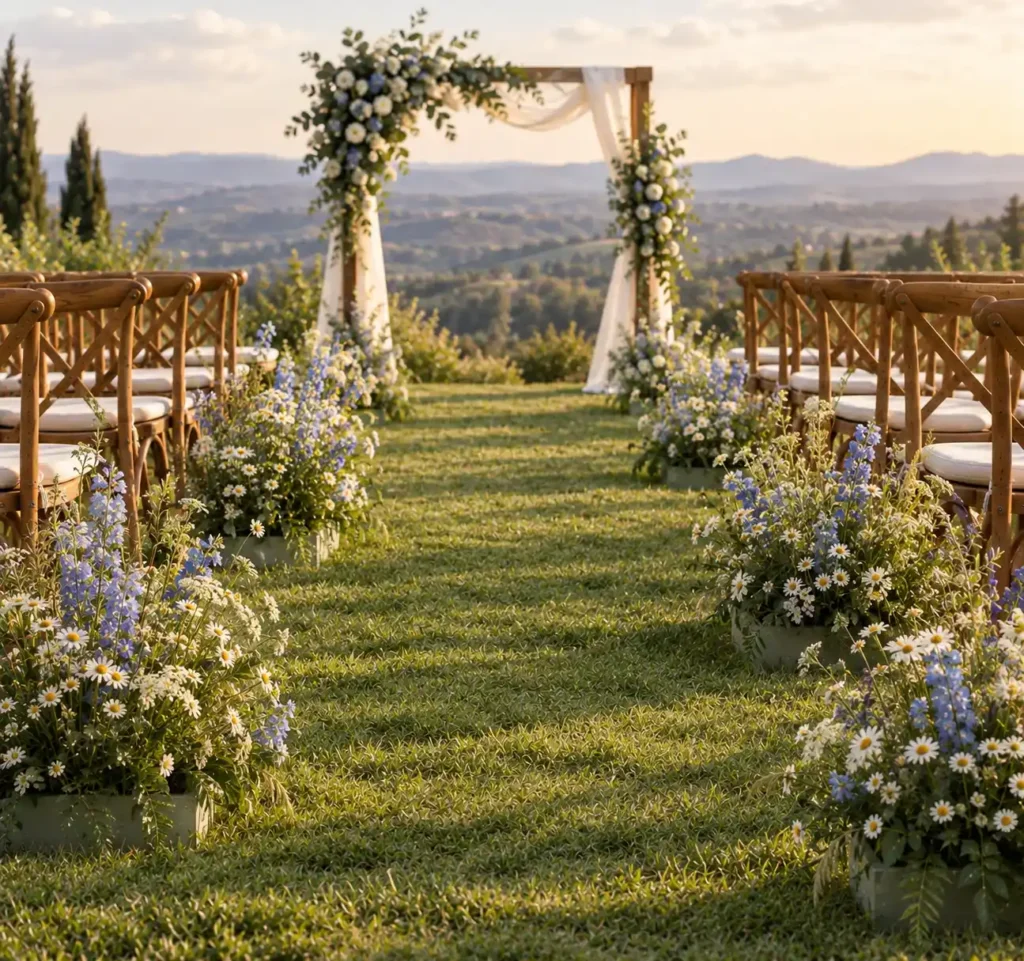
A low, rectangular block of pale green plastic sits tucked into the grass, its surface dotted with clusters of white daisies and sky‑blue delphiniums.
Florists place reusable water‑filled trays under each block, hiding the containers in the turf so the stems stay fresh without visible foam.
The flowers rise just a few inches, letting the aisle blend into the meadow while still offering a defined path.
Building these organic clusters takes several hours of on‑site work; a professional florist typically arrives three hours before the ceremony to arrange each block.
After the day, the trays can be emptied, cleaned, and stored for future weddings, reducing waste.
Quick tip: line the tray with a thin sheet of clear vinyl to prevent soil from leaking onto the lawn.
For a small garden wedding, use three‑foot blocks spaced every two feet; for a larger venue, double the block length and add a second row to keep the walkway wide enough for a bridal party.
A splurge version uses hand‑picked wildflowers in glass jars that cost $120, $180 per aisle, while a budget option swaps the jars for inexpensive plastic pots at $25, $40 total.
The meadow‑cluster look is trending this spring, especially for outdoor ceremonies that favor natural textures.
DIYers can assemble the trays and purchase bulk stems, but the precise placement and water management usually require a florist’s expertise. Add a 12‑inch PVC pipe to each tray as a discreet drainage channel for the next event.
11. Heavy Stone Bench Seating Borders
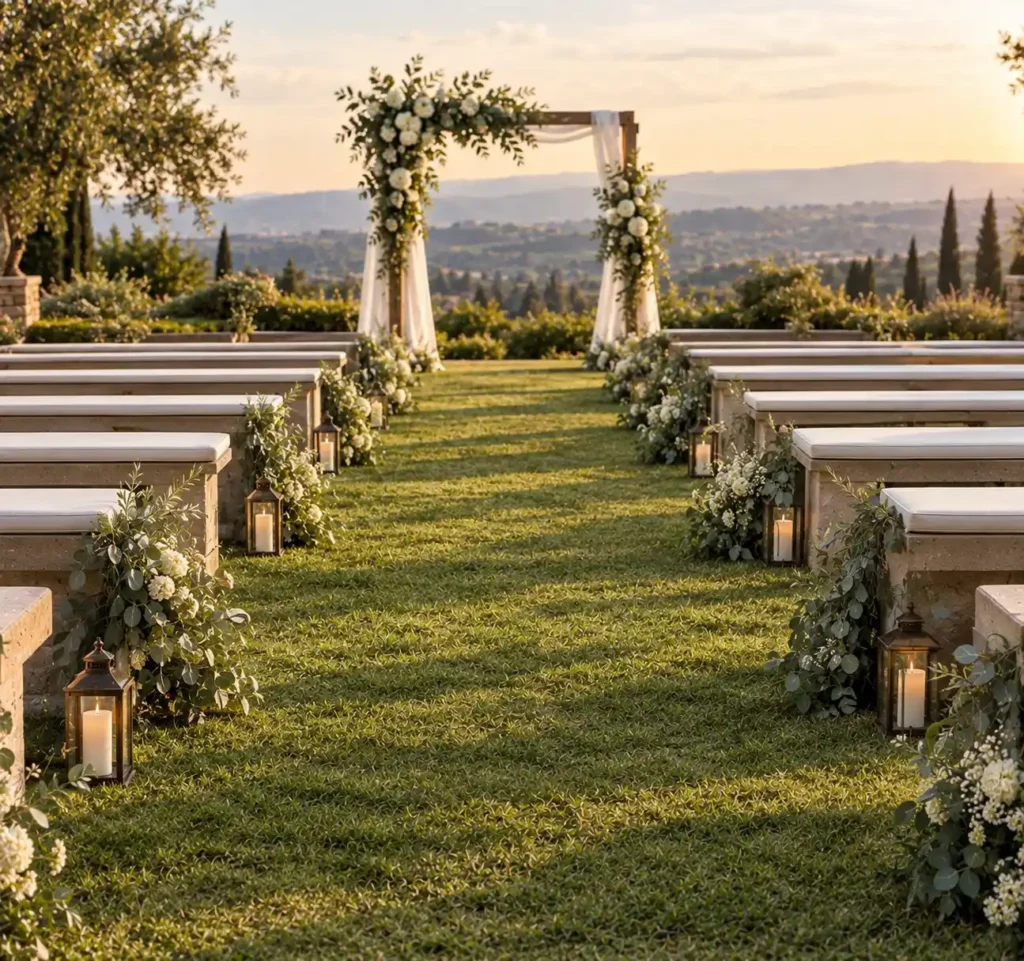
Soft turf often lets chairs sink, creating uneven rows and a wobbly aisle. Low stone or concrete benches sit firmly on the ground, preventing that problem while defining a clean border for the pathway.
The benches act as a permanent, structured edge that guides guests straight to the altar.
This solution works best for large, formal outdoor weddings where the guest list is set, say 150‑200 people, and the venue is a permanent garden or estate.
Each bench typically measures 6 ft long, 18 in high, and costs between $800 and $1,500, so it’s a splurge for most couples.
For tighter budgets, reclaimed concrete blocks with a wooden top run about $200‑$300 each and provide a similar weight without the custom finish.
A common mistake is placing benches too close together, which narrows the aisle and makes it hard for larger guests or those in flowy dresses to pass comfortably.
Keep at least 4 ft between the bench edge and the aisle centerline. Use rubber pads under each bench to protect the turf and keep the stone level.
If the venue can’t support permanent stone, because the ground is soft or the event is temporary, consider heavy wooden benches on metal legs.
They weigh enough to stay put but can be moved if the guest count shifts at the last minute.
Remember to measure the aisle length before ordering; a mis‑sized bench will either leave gaps or extend beyond the pathway, breaking the visual line.
12. Hand-Painted Heavy Canvas Runners

A 12‑oz duck canvas runner, 10 ft long, lies flat under its own weight, so it stays smooth even on uneven grass.
Start by measuring the aisle length and cutting the canvas a few inches longer on each side for hemming. Apply iron‑on hem tape along all edges, then press with a hot iron for a secure seal.
While the tape is still warm, fold the excess over and iron again to create a tidy double‑fold hem.
Mask the border with painter’s tape, then brush on a simple stripe or floral motif using acrylic paint mixed with a fabric medium.
Let the paint cure for 24 hours, then remove the tape for a clean line. To keep the runner from shifting, drive heavy metal lawn pins every two feet around the perimeter, angling them into the soil for a firm hold.
Canvas soaks up morning dew quickly, and moisture will seep through, leaving dark spots on the runner.
Spot‑clean any wet area with a damp cloth and mild detergent, then lay the runner flat to air‑dry before the ceremony.
For a DIY route, buy plain canvas at a craft store for $15‑$25 per yard; a professional artist will charge $80‑$120 for a custom design.
Quick tip: lay a thin rubber mat under the canvas to shield the grass from residual dampness.
13. Structured Metal Frame Towers

Sudden breezes can fling loose fabric backdrops and topple bulky wooden pedestals, ruining the aisle look.
Thin black or brass metal geometric frames avoid that risk. The open‑air design lets wind pass through, so the structure stays steady even on a gusty day.
Attach low‑placed floral clusters, no taller than 12 inches, to each frame. The flowers soften the industrial lines and keep the vibe organic.
Anchor the base with matching heavy‑metal garden pegs; the pegs dig into the lawn and prevent any wobble.
A quick tip: thread trailing greenery through the frame’s corners; it fills gaps and hides the metal’s sharp angles.
Remember, without thoughtful floral placement, the towers can feel stark and too industrial for a natural setting.
Use brass frames for a warm glow at sunset, or black for a modern contrast against a meadow backdrop.
14. Potted Hydrangeas in Terracotta

Cut hydrangeas wilt within an hour in heat, while whole potted plants in damp soil stay crisp all afternoon. Line the aisle with 12‑inch terracotta pots filled with mature hydrangea shrubs.
The earthy orange of the pots highlights the soft blues and pinks of the blooms, creating a classic garden feel.
This setup works best for midsize outdoor weddings of up to 100 guests, especially when the ceremony is on a lawn or garden path.
A splurge option is a set of 14‑inch hand‑painted terracotta containers from a boutique florist, costing $45‑$70 each.
A budget‑friendly alternative is to buy plain pots at a home‑center for $12‑$18 and fill them with nursery‑grown hydrangeas priced $15‑$30 per plant.
If you enjoy DIY, pot the plants yourself; use a sturdy potting mix and a moisture‑retaining layer of sphagnum moss to keep soil saturated.
Quick tip: place a shallow saucer or waterproof mat under each pot. It catches runoff and prevents muddy streaks on light‑colored aisle runners. A common mistake is overwatering the soil, which makes the pots heavy and hard to move.
After the ceremony, replant the hydrangeas in the couple’s garden or give them as gifts to family members. Adding a small zip‑tie to secure the pot’s handle makes transport easier for the venue crew.
Pick Your Breeze‑Proof Aisle
You’ve just explored options from weighty olive trees in terracotta pots to sturdy seagrass runners secured with U‑shaped staples, each designed to keep the aisle intact when the breeze picks up. Pick two or three that fit your venue’s terrain and your budget, then do a quick walk‑through a day before the ceremony to test stability.
A little extra anchoring, whether it’s a concrete base, a brick inside a basket, or a non‑slip rug pad, turns a pretty detail into a reliable runway. Trust the process, set up early, and let your guests glide down a path that looks as calm as it feels. Save this list, pin your favorites, and share it with anyone planning an outdoor “I do.”
Frequently Asked Questions
What are some outdoor wedding aisle decor ideas?
Sturdy and weather-resistant ideas include heavy potted olive trees, flat-woven seagrass runners pinned with landscape staples, grounded floral meadows in weighted trays, and heavy metal lanterns placed on flat wooden rounds.
What is the best material for an outdoor wedding aisle runner?
Heavy flat-woven seagrass, sisal, or thick 12oz cotton duck canvas are the best options. These materials lie flat, do not wrinkle easily in the breeze, provide a stable surface for heels, and can be securely stapled directly into the turf.
How do you keep a wedding aisle runner from blowing away on grass?
Use heavy-duty, U-shaped metal landscape staples placed every two feet along both edges of the runner. For dirt or gravel, secure the borders with heavy potted plants, stone lanterns, or decorative flat rocks.
How do you prevent heels from sinking into a grass aisle?
Lay a firm, flat-woven runner like seagrass over the grass, install a temporary wooden boardwalk, or provide guests with plastic heel protectors at the entrance of the ceremony site.