
12 Wedding Entrance Decor Ideas That Balance Logistics and Style
12 Wedding Entrance Decor Ideas That Balance Logistics and Style
When the venue’s entrance looked like a blank wall, I knew the day could slip into “just another hallway.”
Couples often panic trying to turn that space into a memorable first impression while juggling wind, budget, and limited time. Allow extra time for assembly to keep the schedule on track.
That frustration sparked a list of entrance solutions that stay put, look polished, and won’t break the bank.
Inside you’ll find twelve projects, from weighted A‑frame boards with professional calligraphy to terracotta pots brimming with citrus trees, low‑lying floral pillars, vintage rug pathways, and sturdy lantern clusters.
Whether you’re planning an outdoor garden ceremony or a sleek indoor gallery, the ideas balance practical setup with visual impact, so you can walk guests through a doorway that feels intentional and secure.
1. Weighted A-Frame Wooden Boards with Professional Calligraphy
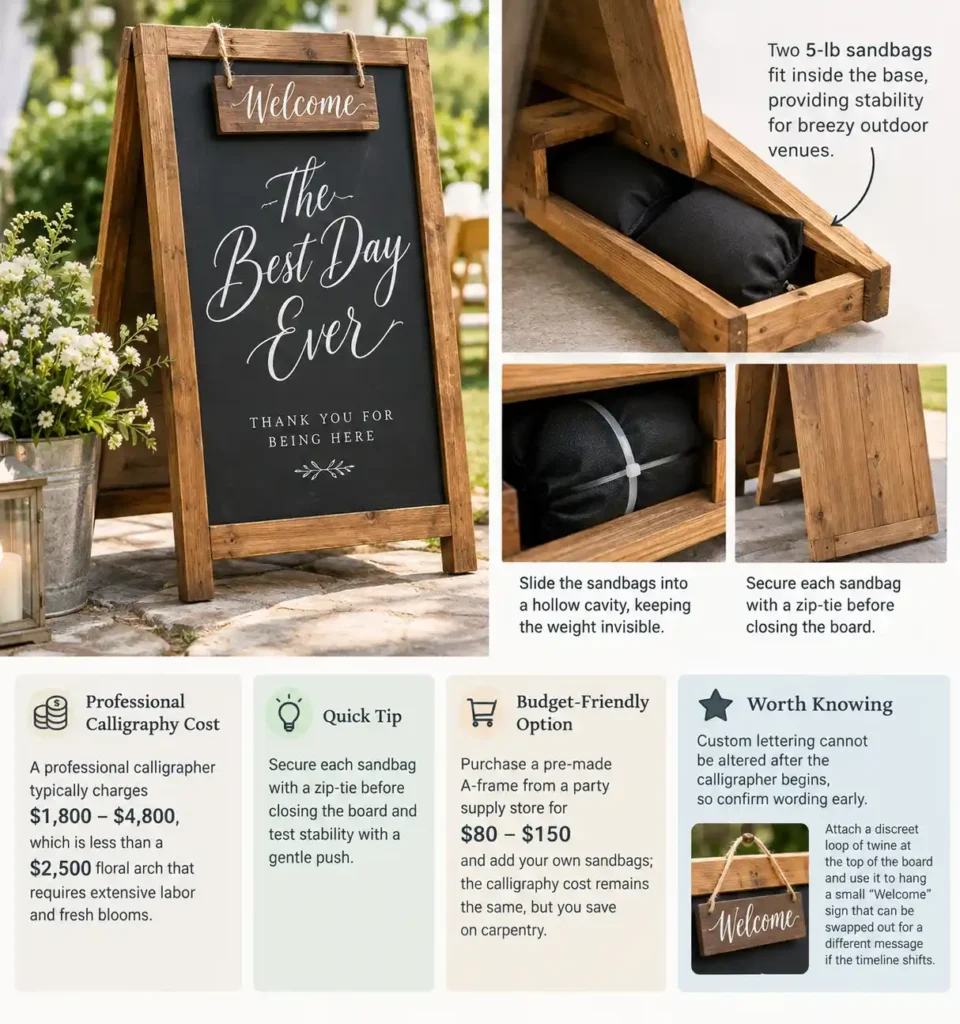
A 4‑foot A‑frame board of reclaimed pine holds two 5‑lb sandbags hidden inside its base, providing stability for breezy outdoor venues.
The sandbags slide into a hollow cavity, keeping the weight invisible.
A professional calligrapher typically charges $1,800 to $4,800, which is less than a $2,500 floral arch that requires extensive labor and fresh blooms.
Secure each sandbag with a zip‑tie before closing the board and test stability with a gentle push.
If you need a budget‑friendly version, purchase a pre‑made A‑frame from a party supply store for $80-$150 and add your own sandbags; the calligraphy cost remains the same, but you save on carpentry.
Custom lettering cannot be altered after the calligrapher begins, so confirm wording early.
For the final touch, attach a discreet loop of twine at the top of the board and use it to hang a small “Welcome” sign that can be swapped out for a different message if the timeline shifts.
- Calligrapher cost: $1,800, $4,800
- Pre‑made A‑frame price: $80, $150
2. Terracotta Pots with Potted Citrus Trees
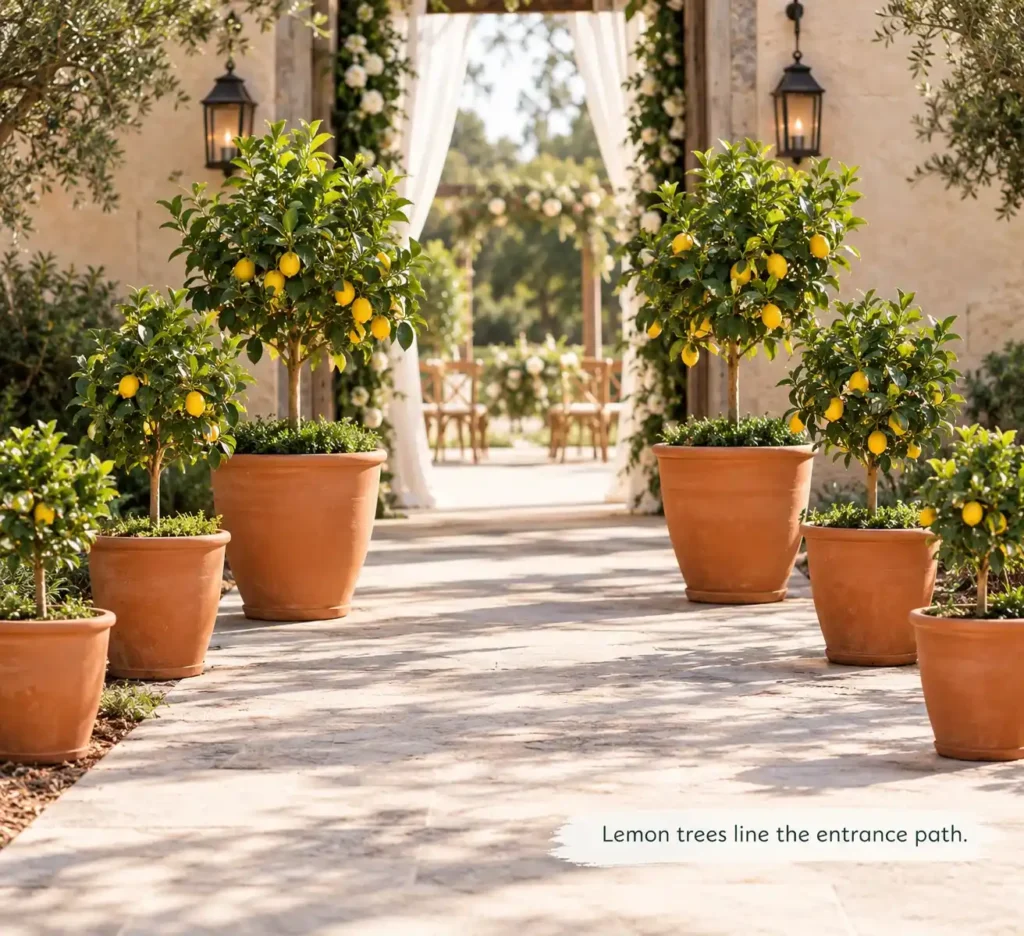
A line of sun‑warmed terracotta pots, each cradling a glossy lemon tree, frames the entrance path.
Arrange three heights, 12 in at the ends, 18 in in the middle, and 24 in at the center, to create a gentle rise, spacing each pot about two feet apart.
The trees weigh 30-40 lb each once soil is added, so a small truck or van with a lift gate is required for delivery and pickup.
Plan the drop‑off the night before to avoid traffic and give staff time to level the pots on the venue’s concrete slab.
If the weight is a deal‑breaker, swap the live trees for high‑quality faux citrus in the same terracotta containers; they cost about $40 per piece and are easy to move.
It works well for medium‑sized outdoor weddings of 80, 120 guests who favor a warm, rustic aesthetic.
After the ceremony, keep the trees for the reception garden or replant them at home; they need weekly watering for the first month.
Reserve a delivery slot with the nursery at least two weeks before the ceremony to guarantee availability.
Schedule delivery the night before to avoid traffic and allow leveling.
Each tree weighs 30, 40 lb; ensure a lift‑gate vehicle is available.
- Terracotta pot sizes: 12 in, 18 in, 24 in
- Faux citrus cost: $40 each
3. Ground-Level Deconstructed Floral Pillars
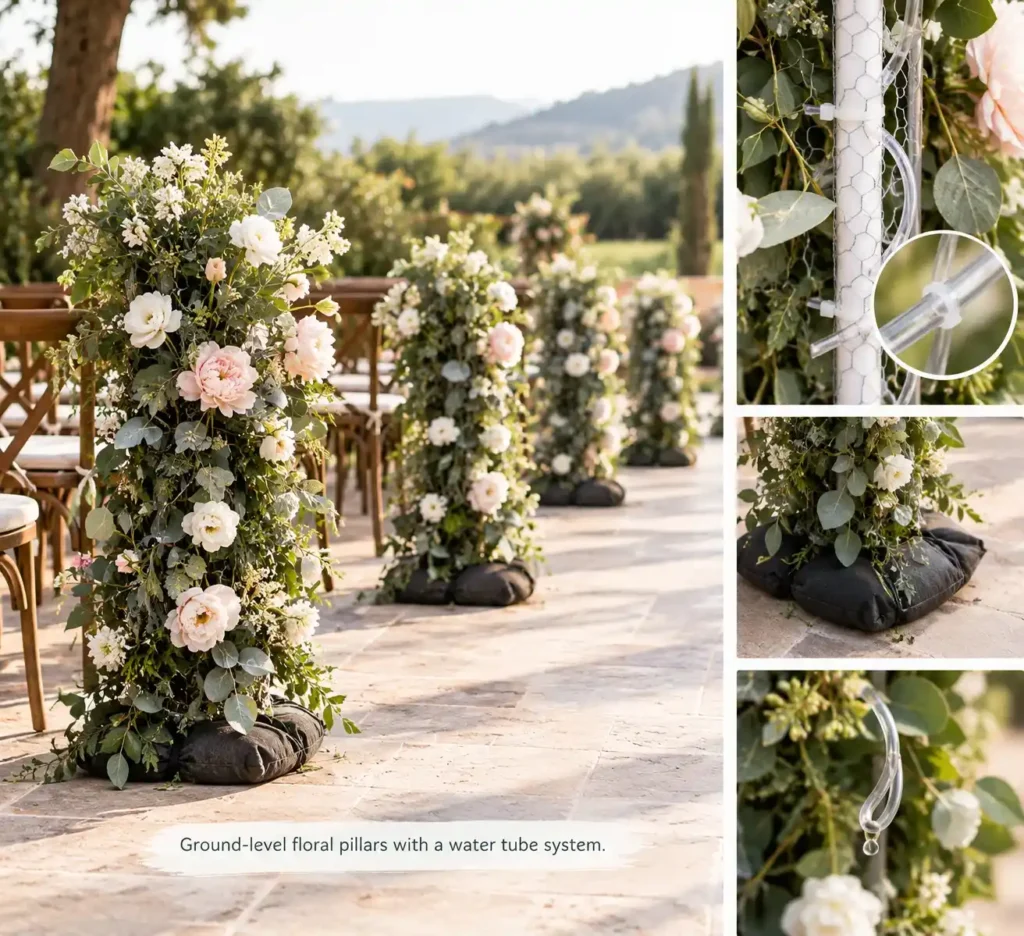
Wrap chicken wire around a sturdy 1‑inch PVC pipe, then thread ¼‑inch clear water tubes through the wire and secure each joint with zip ties.
The wire creates a flexible skeleton, while the tubes keep stems hydrated without any foam.
Build three to five pillars at waist height and anchor them with sandbags or weighted bases; this low‑lying profile stays stable on uneven floors and eliminates the top‑heavy risk of traditional arches.
Use a mix of seasonal greenery and small blooms, such as white lisianthus, dusty sage eucalyptus, and blush peonies, to keep the look fresh and on‑trend for 2024 weddings.
Because the design relies on water tubes, venues with strict cleanup rules appreciate the contained drip system; simply attach a short silicone drip loop to each tube before it enters the pillar.
A common mistake is over‑filling the tubes, which can cause leaks and damage flooring.
Fill each tube just enough to keep stems upright, and replace the water every two hours for optimal freshness. This setup is reusable; disassemble the wire and store the PVC cores for future events.
For tighter budgets, substitute the PVC with reclaimed wooden dowels and use garden‑store drip irrigation tubing, which cuts material costs by about 30 %.
Add a discreet silicone seal at each tube exit to prevent accidental spills during teardown.
4. Layered Vintage Rug Pathways
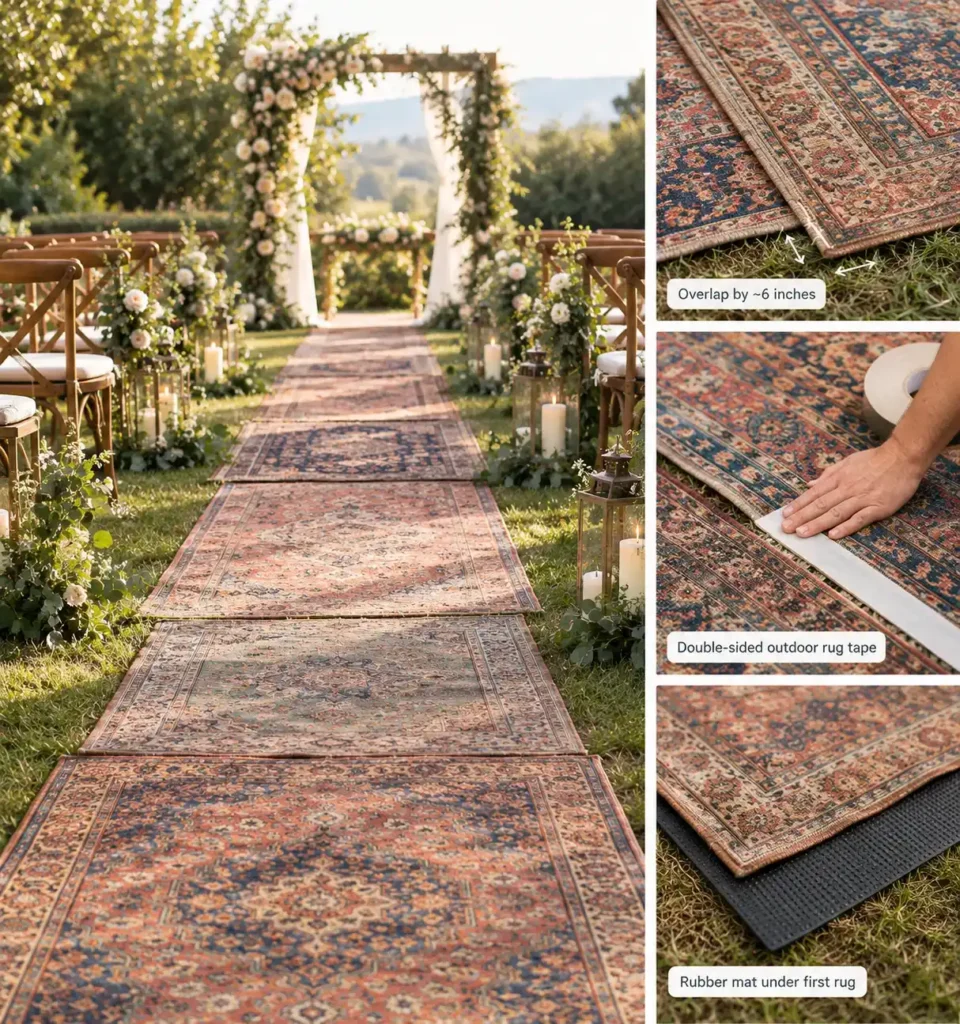
A row of overlapping 3‑ft vintage Persian rugs winds the garden lawn toward the ceremony arch. Choose low‑pile rugs with muted jewel tones so the colors blend with greenery.
Lay the first rug flat, then stagger the next piece so the edges interlock by about six inches.
Secure every seam with heavy‑duty double‑sided outdoor rug tape; press the tape firmly onto dry, level ground before attaching the rug.
Run a chalk line along the intended path first; it keeps the layout straight and prevents uneven buckling. Test the pathway by walking heel‑to‑toe; any lift means another strip of tape is needed.
This look shines at medium‑size outdoor weddings of up to 80 guests, especially when guests will be in heels.
A splurge option is an authentic Persian runner at $120‑$250 per piece, while a budget‑friendly alternative is a thrift‑store flatweave runner for $30‑$50 that mimics the texture.
Common mistake: skipping the tape on flat, dry surfaces, which lets rugs shift and catch heels.
Quick tip: use a laser level to verify the tape lies flush before the final press.
Add a thin rubber mat under the first rug to protect the tape and keep the entry clean.
5. Structured Fabric Drapes on Weighted Pipe Frameworks

When a gust lifts a sheer drape and it flutters onto the aisle, guests can stumble on the loose fabric.
Start by measuring the entrance width and the desired pool depth.
Multiply the width by 1.5 to allow a generous overhang, then add the pool depth (usually 12, 18 inches) to determine total yardage.
For a 10‑ft opening, 15 ft of fabric yields a clean, low pool without excess that could become a tripping hazard.
Sheer organza or chiffon fails outdoors because wind catches the light material and creates billowing chaos.
Heavy cotton‑velvet or mid‑weight linen holds its shape, resists gusts, and drapes evenly over a weighted pipe frame.
Use ½‑inch steel pipe sections, connect with couplers, and anchor each joint with sandbags or decorative concrete bases.
The weight adds stability but can dominate the visual line; hide the pipes with a ribbon‑wrapped border or a thin garland to soften the look.
Quick tip: attach a zip tie at the top edge of the fabric to the pipe before hanging; this prevents the drape from sliding off during setup.
A common mistake is underestimating pool depth, which leads to a sagging line that guests trip over.
If the venue’s outdoor conditions or budget prevent heavy fabrics, consider a pre‑fabricated acrylic arch as a low‑maintenance alternative.
After the ceremony, fold the linen flat, store it in a breathable bag, and spot‑clean any stains to preserve its color for future events.
For a DIY approach, purchase fabric by the yard and rent pipe fittings from a local party supply shop to keep costs under $150.
6. Mixed-Height Hurricane Lanterns with Pillar Candles
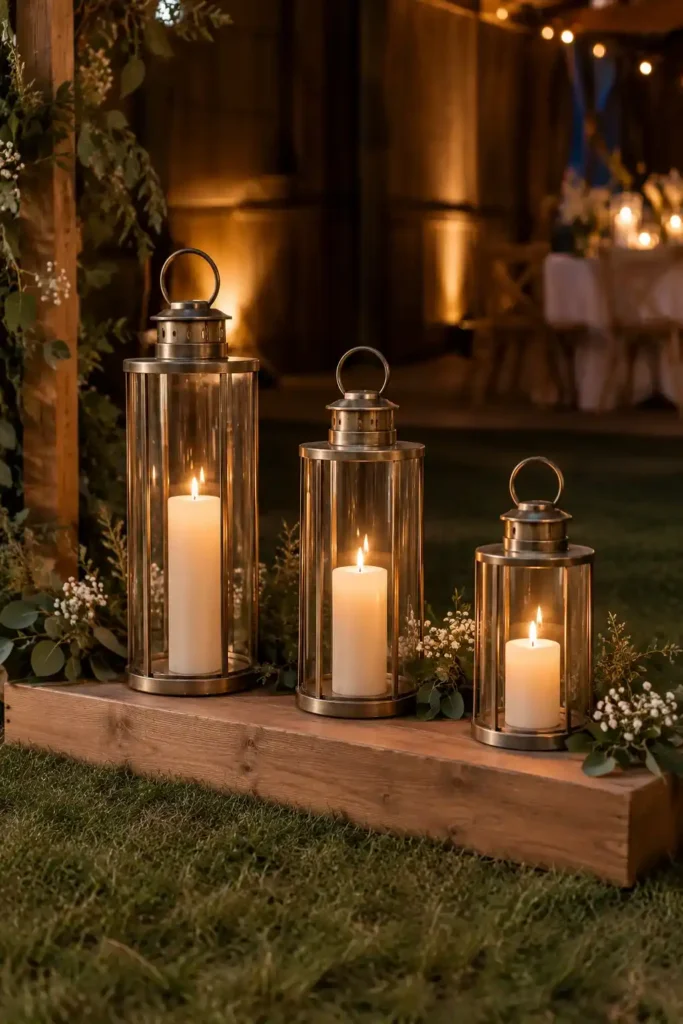
Three hurricane lanterns of differing heights- tall, medium, short- anchor a line of slender pillar candles, creating a tiered halo of light.
Odd numbers draw the eye, so arrange them in groups of three or five for balanced impact.
Before buying, ask the venue about open‑flame rules at least 48 hours in advance; many historic barns and indoor halls ban real wax.
If flames are prohibited, swap the candles for high‑quality wax‑coated LED versions that flicker like real fire yet resist wind and heat.
Set the lanterns on a low, sanded wooden riser to keep them level and protect the floor.
Space each piece about 18 inches apart, then nest the pillar candles inside the lanterns, centering them for even glow.
A common mistake is placing lanterns directly on uneven grass, which causes wobble and uneven lighting.
For tighter budgets, buy 12‑inch aluminum hurricane lanterns for $15‑$20 each and pair them with $8 LED candles that mimic wax.
An alternative for venues that disallow any lanterns is to use battery‑operated LED lanterns with faux glass covers, which still give the layered silhouette without metal.
Secure each lantern to the riser with a zip tie to stop wind from tipping the arrangement.
7. Free-Standing Salvaged Antique Doors

A reclaimed oak barn door, 7 ft tall and 3 ft wide, anchors the ceremony entrance.
Two hidden L‑brackets bolt into a steel‑rated floor plate, then a 150‑lb sandbag counterweight slides into a recessed cavity behind the door to keep it upright.
The brackets sit flush, so the door appears freestanding without visible supports.
Transport requires a pallet jack and a truck with a lift gate; each panel weighs roughly 120 lb, so a crew of three is needed for loading and unloading.
Because the rigging involves precise anchoring and load‑bearing calculations, professional coordinators usually handle the installation.
This option shines at large rustic weddings of 150 + guests where a dramatic, vintage frame sets the tone.
It is not a DIY project; attempting to mount the door without structural engineers risks wobble or floor damage.
A common mistake is placing the door on uneven ground, which forces the brackets to bear uneven stress and can cause the counterweight to shift.
If the budget cannot stretch to a salvaged door, a lightweight faux‑wood panel with magnetic brackets offers a similar look without the heavy rigging.
Secure a steel‑rated floor plate and schedule a test‑fit with the riggers at least two weeks before the ceremony.
8. Repurposed Wooden Ladders with Potted Culinary Herbs

A wooden ladder draped with rosemary and mint looks far less imposing than a marble floral arch, yet it brings a relaxed, garden‑yard feel.
The scent of rosemary, lavender, and mint greets guests as they step in, turning the entrance into a subtle aromatherapy station.
This setup works best for casual barn weddings or outdoor receptions of 30‑80 people, where guests can move freely around the ladders.
Because the ladders are low‑profile, they suit venues with modest ceiling heights and avoid crowding narrow walkways.
A DIY ladder can be sourced from a thrift store for $30‑$45, then sanded and painted for under $60 total. For a polished look, renting a vintage ladder runs $120‑$150.
Potted herb kits cost $8‑$12 each; buying bulk seedlings reduces the per‑pot cost to about $4.
The herbs double as favors; place a small pair of scissors on each pot and let guests snip a sprig to take home.
Maintain the herbs by watering them lightly each evening and keeping saucers underneath to catch runoff.
Swap the saucers for decorative tin trays for a cohesive look. Quick tip: attach a thin rope or twine to the ladder’s rungs and hang the pots at alternating heights for visual rhythm.
This arrangement stays sturdy on uneven ground if you level the ladder with rubber pads. Add a handwritten label naming each herb so guests know what they’re picking.
9. Hanging Brass Bells on a Natural Branch Structure
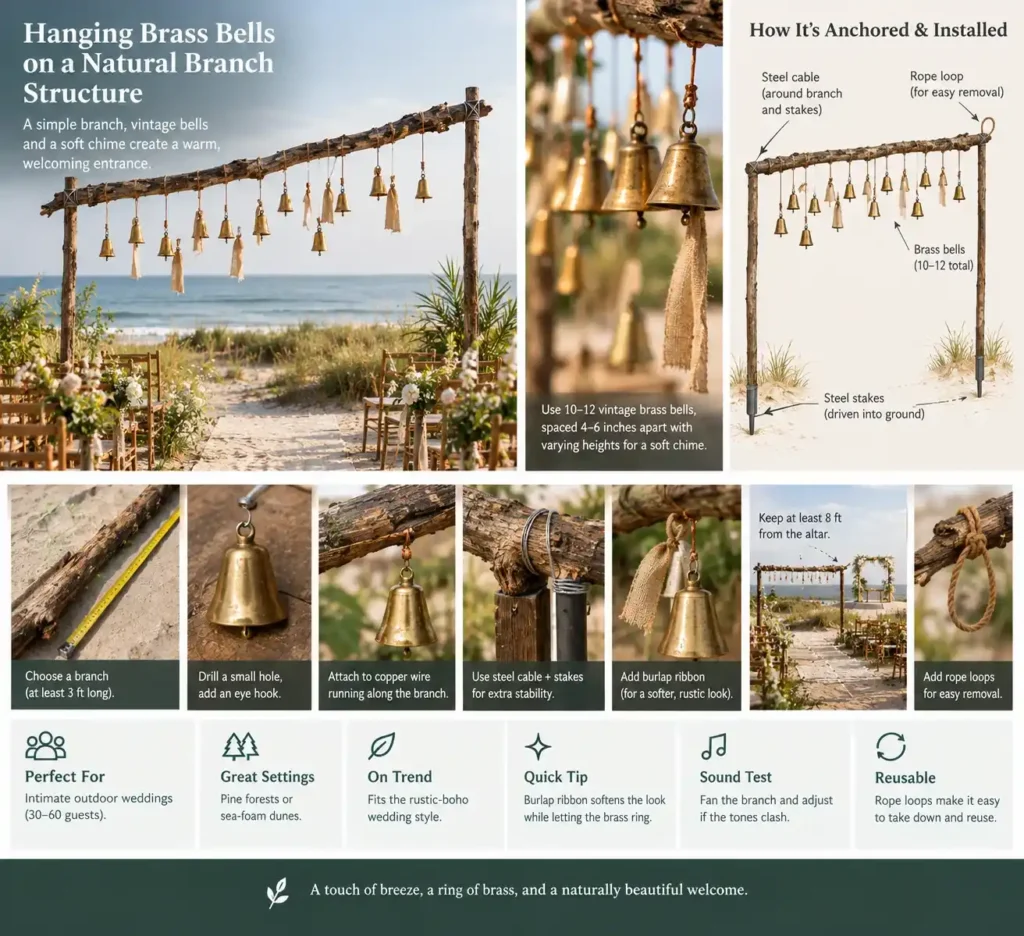
A weathered oak branch spans the entrance arch, its dark bark contrasting with the pale sand of a coastal venue.
Choose a branch at least three feet long and sturdy enough to hold ten to twelve vintage brass bells.
Anchor the ends with steel stakes driven into the ground, then wrap a thin steel cable around the branch and secure it to the stakes for extra stability.
Drill a tiny hole near the tip of each bell’s loop, thread a small eye hook through, and attach the hook to a thin copper wire that runs along the branch.
Space the bells 4‑6 inches apart and vary their heights so the wind strikes each one at a different angle, creating a cascading chime.
Test the sound by fanning the branch; adjust placement if the tones blend into a harsh clatter.
This installation shines at intimate outdoor weddings of 30‑60 guests, whether set among pine trees or beside sea‑foam dunes.
It taps into the current rustic‑boho trend that many couples are embracing this season.
Quick tip: add a short length of burlap ribbon to each bell’s loop; the ribbon catches the breeze and softens the visual edge while still letting the brass ring.
Position the branch at least eight feet from the ceremony altar to keep the melody pleasant rather than overwhelming.
The final touch is a discreet rope loop at each end for easy removal and reuse at future events.
10. Industrial Steel Frames with Minimalist Bud Vases
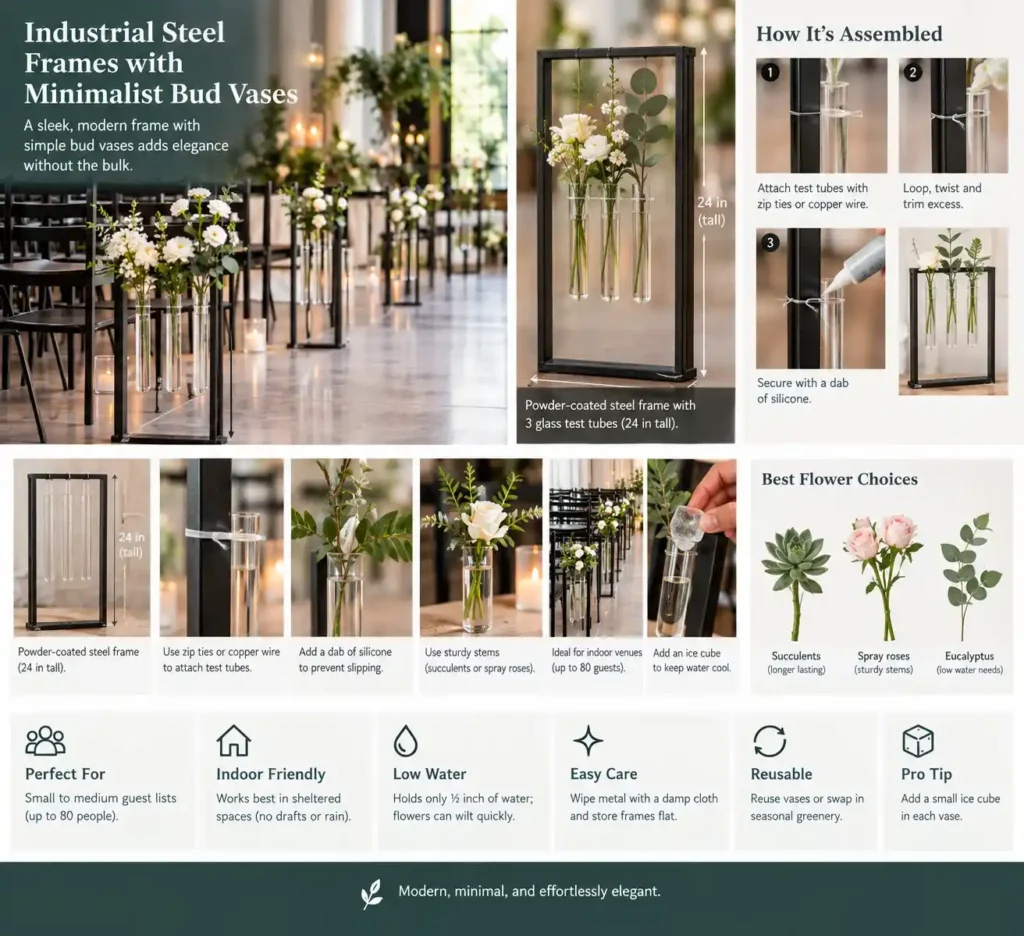
A powder‑coated black steel frame, 24 inches tall, anchors three minimalist bud vases. The slim silhouette reads clean and industrial, perfect for a gallery‑style wedding hall.
Attach glass test tubes to the frame with zip ties or thin copper wire; loop the tie, twist, and trim excess for a tidy look.
Secure the ties with a dab of silicone to prevent slipping during the ceremony. This setup shines in sheltered indoor venues where drafts and rain aren’t a concern.
The bud vases hold only a half‑inch of water, so flowers can wilt quickly if the sun hits them or a breeze stirs the room.
Choose sturdy stems like succulents or short spray roses that need less hydration.
For a small‑to‑medium guest list, up to about 80 people, this arrangement adds a modern edge without crowding the entrance aisle.
After the event, wipe the metal with a damp cloth and store the frames flat to avoid dents. Reuse the vases for future celebrations or swap in seasonal greenery for a fresh look.
As a final touch, nest a small ice cube in each vase to keep the water cool and prolong bloom life.
11. Architectural Window Panes with White Paint Pen Lettering
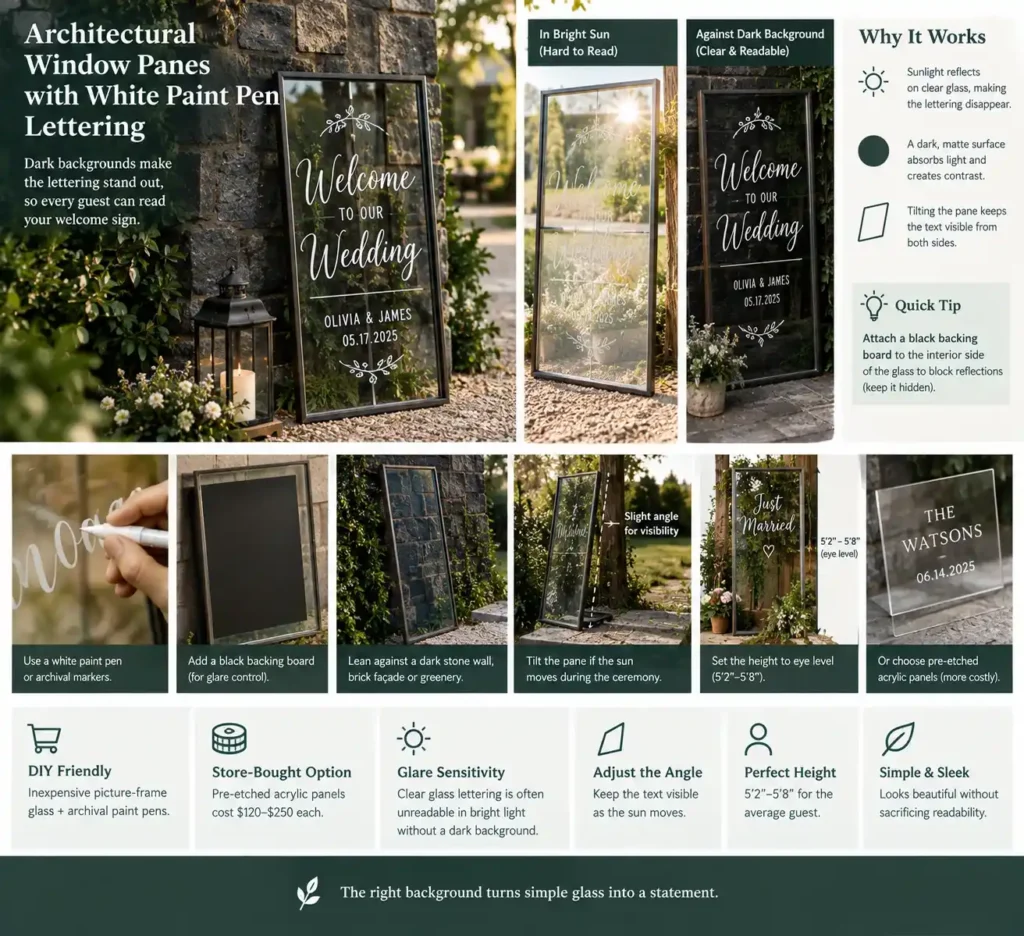
Bright outdoor light washes out clear glass entry signs, making the welcome text nearly invisible.
The glare issue stems from the glass reflecting sunlight, so the lettering disappears against a bright sky.
To fix this, lean the pane against a dark stone wall, a matte brick façade, or dense evergreen foliage.
The dark surface absorbs light and creates contrast, letting white paint‑pen lettering pop for guests walking up the aisle.
A quick tip: attach a thin black backing board to the interior side of the glass. The board blocks reflections while staying hidden from the front view.
DIY‑friendly couples can buy inexpensive picture‑frame glass and use archival paint pens to write the names or date.
Store‑bought options include pre‑etched acrylic panels that already have a frosted finish, but they cost $120‑$250 per piece.
Remember, clear glass lettering is highly sensitive to background glare, meaning it is often unreadable unless deliberately staged against dark, matte surfaces.
Position the pane at a slight angle if the sun moves across the entrance during the ceremony; the tilt keeps the text legible from both sides.
Adjust the height so the text aligns with eye level for the average guest, typically 5‑ft‑2‑in to 5‑ft‑8‑in.
This simple staging ensures the entrance looks sleek without sacrificing readability.
12. Dried Pampas Grass in Heavy Stoneware Crocks
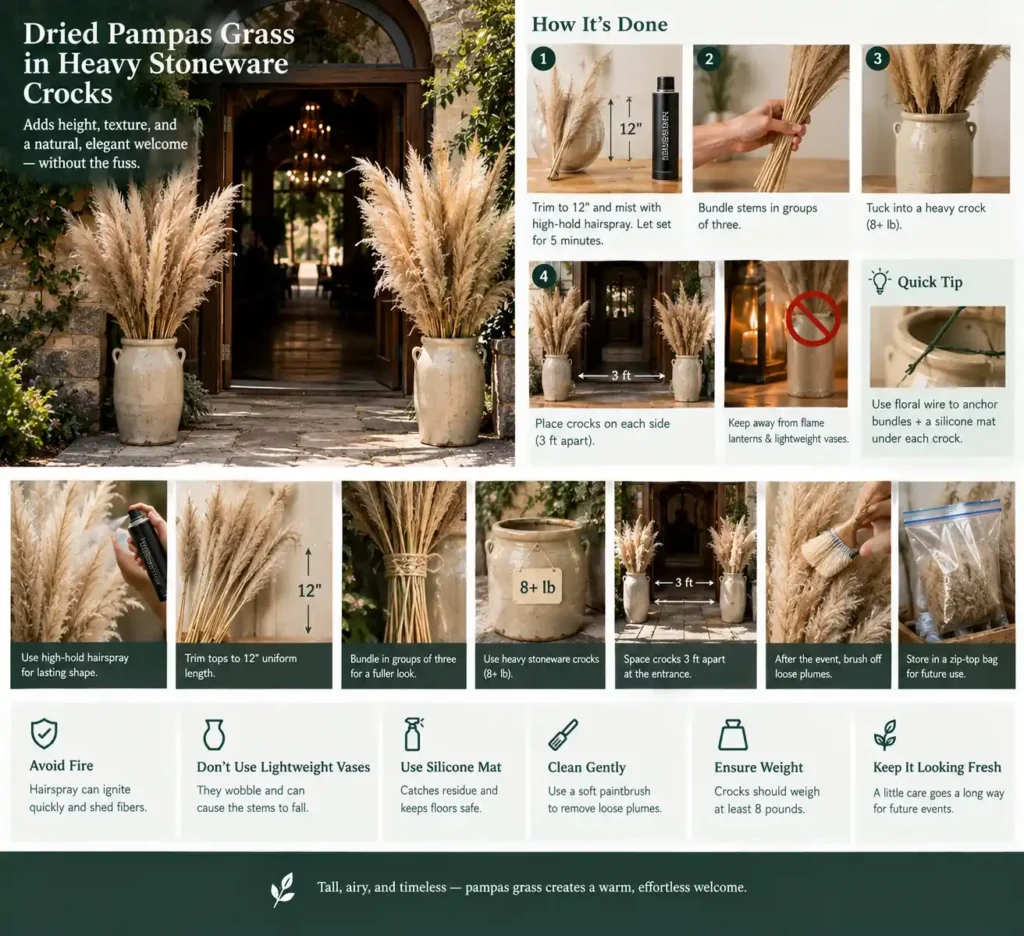
Spray the pampas stems with high‑hold hairspray before arranging them. Start by trimming the tops to a uniform 12‑inch length, then mist each stem lightly and let it set for five minutes.
Once the coating is tacky, bundle the stems in groups of three and tuck the bases into a heavy stoneware crock that weighs at least eight pounds.
The weight prevents the top‑heavy grass from tipping in breezy entryways and keeps the arrangement stable on uneven floors.
Position the crocks on either side of the doorway, spacing them three feet apart to frame the path without crowding guests.
Avoid placing real flame lanterns nearby; the hairspray‑treated grass can ignite quickly and shed fibers that cling to formal wear. A common mistake is using lightweight ceramic vases, which wobble and cause the stems to fall over.
For upkeep, brush off loose plumes with a soft paintbrush after the ceremony and store the crocks in a zip‑top bag for future events.
A quick tip: slip a short piece of floral wire through the base of each bundle to anchor it firmly to the crock’s rim.
Add a silicone mat under each crock to catch any stray hairspray residue and keep the floor slip‑free.
Pick Your Favorite Entrance
We’ve walked through twelve entrance concepts that keep wind, weight, and wallet in check while delivering a wow factor.
Start by choosing one structural anchor, like the weighted A‑frame board or the steel frame, and pair it with a softer element such as herb‑filled ladders or pampas grass in stoneware.
Test stability a day before the ceremony, and keep spare sandbags or zip‑ties on hand for quick tweaks.
Trust the details you’ve planned, and let the doorway set the tone for the celebration.
Save this guide for your next venue walk‑through, and share it with anyone else hunting for a stylish, stress‑free entry.
Entryway Design & Logistics Questions
What are some ideas for entrance décor for a wedding?
Effective wedding entrance decor ideas include weighted wooden sandwich boards with hand-lettering, collections of mixed-height lanterns with pillar candles, potted trees like olive or citrus in terracotta, and low deconstructed floral columns that frame the entryway path safely.
What are some good ideas for wedding entrances?
Good wedding entrances prioritize guest flow and safety. Use layered vintage rugs secured with outdoor rug tape, free-standing copper frames carrying minimalist greenery, or salvaged architectural pieces like window frames that present information clearly without blocking walkways.
How do you secure outdoor wedding entrance decor from blowing over?
Secure outdoor structures using sandbags hidden inside A-frames, heavy L-brackets screwed into stable wooden platforms, or heavy ceramic stoneware pots filled with pea gravel. Avoid top-heavy designs and lightweight metals that can catch the wind like sails.
What is a budget-friendly alternative to a full floral arch for a wedding entryway?
A cost-effective alternative is using potted plants, such as ferns or eucalyptus trees, which can be rented from local nurseries or replanted in your garden after the wedding. Alternatively, a grouped lantern display with pillar candles delivers high visual impact at a fraction of the cost.