20 Practical Country Wedding Ideas That Feel Authentic, Not Cheesy
When a sudden summer thunderstorm rolls over your barn venue, the first thing you notice is the slick plank floor and the way the exposed beams drink in the humidity.
That moment makes it clear that a country wedding needs more than a handful of burlap ribbons and mason‑jar centerpieces.
In this list you’ll find 20 down‑to‑earth ideas that tackle real challenges: weather‑proof flooring, sturdy aisle runners for grass or gravel, power‑ready drink stations, and cozy blankets for chilly evenings.
If you’re planning a rustic celebration on a farm or in a renovated barn, these tips will keep the day authentic without slipping into cheesy clichés.
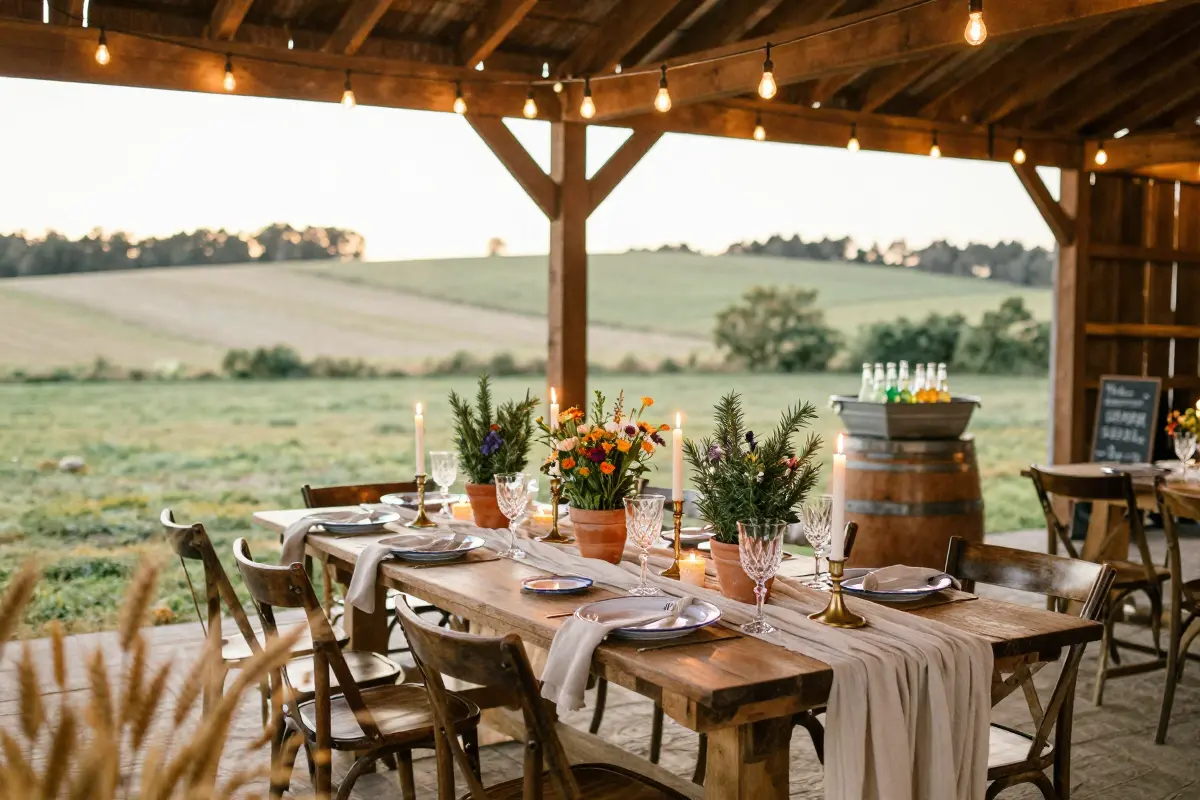
1. Bare Wood Farm Tables with Neutral Gauze Runners

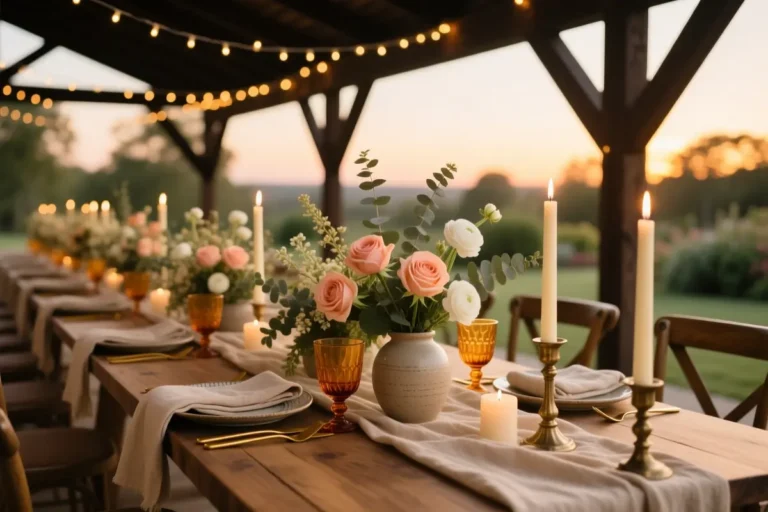
Long, weathered pine tables stretch down the barn aisle, raw grain exposed beneath soft, unbleached cotton gauze runners that drape like whispering clouds.
Neutral gauze in buttermilk or warm taupe pairs with the raw wood grain for a grounded base without harsh bleached linens.
Thin gauze can billow in outdoor gusts, so weighted ceramic bud vases act as practical anchors.
Unfinished wood lacks spill absorption and can splinter delicate attire if not sanded and sealed with food‑safe oil.
For a less rustic feel, use a melamine tabletop with a linen runner.
Execution tip: sand, oil, then secure runner corners with small sandbags.
Splurge: reclaimed oak tables $500‑$800 each; budget: rental pine tables $80‑$120 each.
DIY sanding is realistic for a few tables, but larger events are better served by renting.
- natural texture
- budget‑friendly
- splinter risk
- wind‑shifting runners
Tie a small sandbag to each runner corner to keep it from billowing.
2. Mismatched Vintage Wooden Ceremony Chairs

Narrow wooden chair legs disappear into soft pasture loam, leaving guests wobbling and sightlines jagged across the aisle.
Rent mismatched bistro or pew chairs from a local vintage yard and lay them on a compacted dirt strip or temporary turf before the wedding day; press each leg to see if it sinks more than an inch.
Buying individual antiques can cost $80 to $150 per piece, while a uniform set of folding wooden chairs rents for $2 to $4 each, offering stability at a lower price.
If the uneven heights bother you, choose a single‑style set or add risers under shorter legs.
A splurge version includes hand‑restored chairs with decorative nailheads; a budget option is a mixed bundle from a rental house.
DIY refurbishing is realistic only for sturdy frames, otherwise hire a vendor.
- charming, eclectic look
- uses recycled pieces
- narrow legs sink in soft ground
- uneven seat heights across rows
Check leg stability on turf before final placement to avoid chairs sinking during ceremony
3. Split-Rail Fence Backdrop with Asymmetrical Greenery
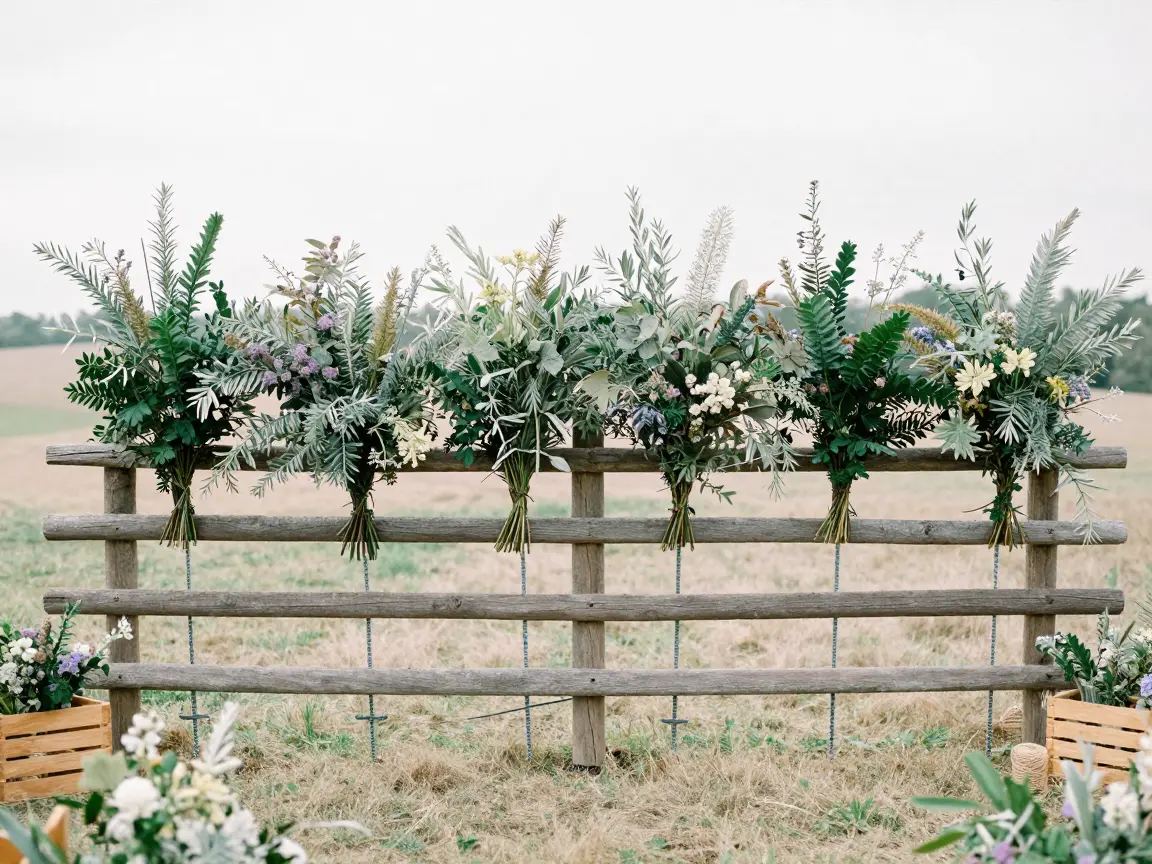
A 12‑foot‑wide split‑rail cedar panel works well as an altar backdrop on a 60‑by‑80‑foot field; it frames the ceremony without dominating the horizon.
Attach bundles of salal, olive branch, and locally foraged wildflowers in an uneven, cascading pattern to add height and soften the rustic line.
Use galvanized rebar stakes driven 24 inches into the ground at each post for wind stability; a common mistake is relying on surface stakes, which can tip in breezy pastures.
For a small, intimate gathering, a single 8‑foot section with modest greenery suffices, while a larger wedding benefits from two joined panels and taller floral clusters to keep the backdrop proportional to the couple’s gowns and the open sky.
DIY is feasible with a rental fence kit, but hiring a local farm‑stage crew saves time and ensures proper anchoring.
- Rustic charm
- Natural materials
- Miniature look if undersized
- Requires heavy anchoring
- Measure field width
- Build fence frame
- Attach asymmetrical greenery
- Secure with rebar
4. Galvanized Livestock Troughs for Iced Craft Beverages
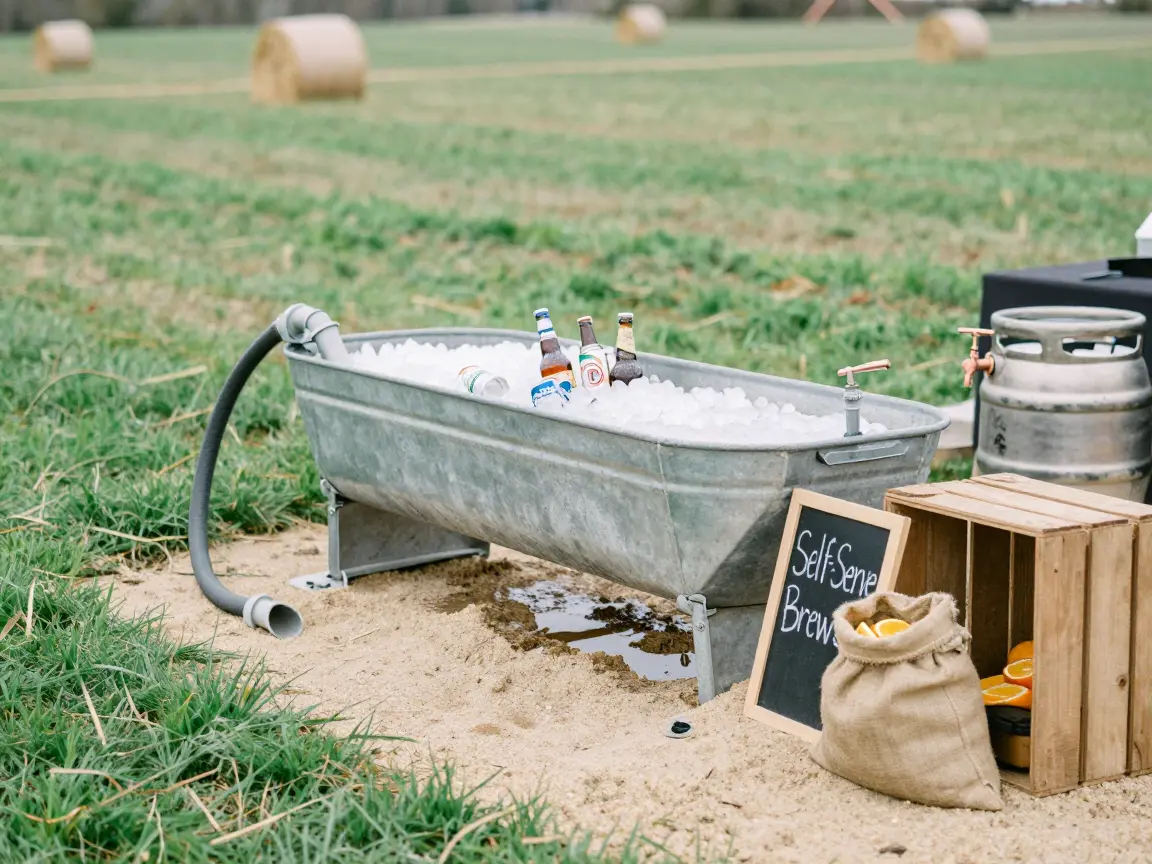
Place a clean, zinc‑coated stock tank on a level patch of grass and fill it with a solid block of ice.
The 44‑gallon capacity holds enough chilled water to keep a few kegs of cider or regional beer cold for self‑serve.
Lay a shallow PVC drain or a few garden hoses at the tank’s low point so meltwater runs off to a sand pit, preventing the turf from turning into a slick mud pool.
A budget set‑up uses a rented $25‑per‑day tank and a cheap drip tray; a splurge version buys a $230‑$300 galvanized tank and adds a stainless steel chilling coil for longer chill.
After the night, the tank can be washed and stored for future events.
- easy self‑serve
- rustic look
- melt runoff creates mud
- metal can dent in rough handling
- Rental tank: $25 per day
- Purchase tank: $230 to $300
Without proper drainage the ice melt will pool and make the turf slippery.
5. Terracotta Pots with Growing Kitchen Herbs as Centerpieces

Aged terracotta planters hold rosemary, sage, and flowering thyme, letting the scent drift naturally while the heavy clay stays anchored against wind.
The pots double as reusable décor for future garden parties.
Water the herbs at least a day before the ceremony; the porous unglazed clay will otherwise seep moisture and fine soil onto bare‑wood tables.
If you prefer a non‑soil option, metal tin vases filled with dried herb bundles give the same aroma without the spill risk.
A splurge version, hand‑thrown, glazed pots from a local studio, runs $40 to $70 each, while budget‑friendly kiln‑fired basics cost $12 to $20.
DIY is realistic if you have a potting bench and can source the herbs a week ahead; otherwise buying or renting saves time and avoids last‑minute mishaps.
- natural scent
- wind‑resistant anchoring
- moisture leaching
- soil stains on wood
Water herbs 24 hours before placement to prevent pot leakage
6. Repurposed Horse Trailer Mobile Draft Bar
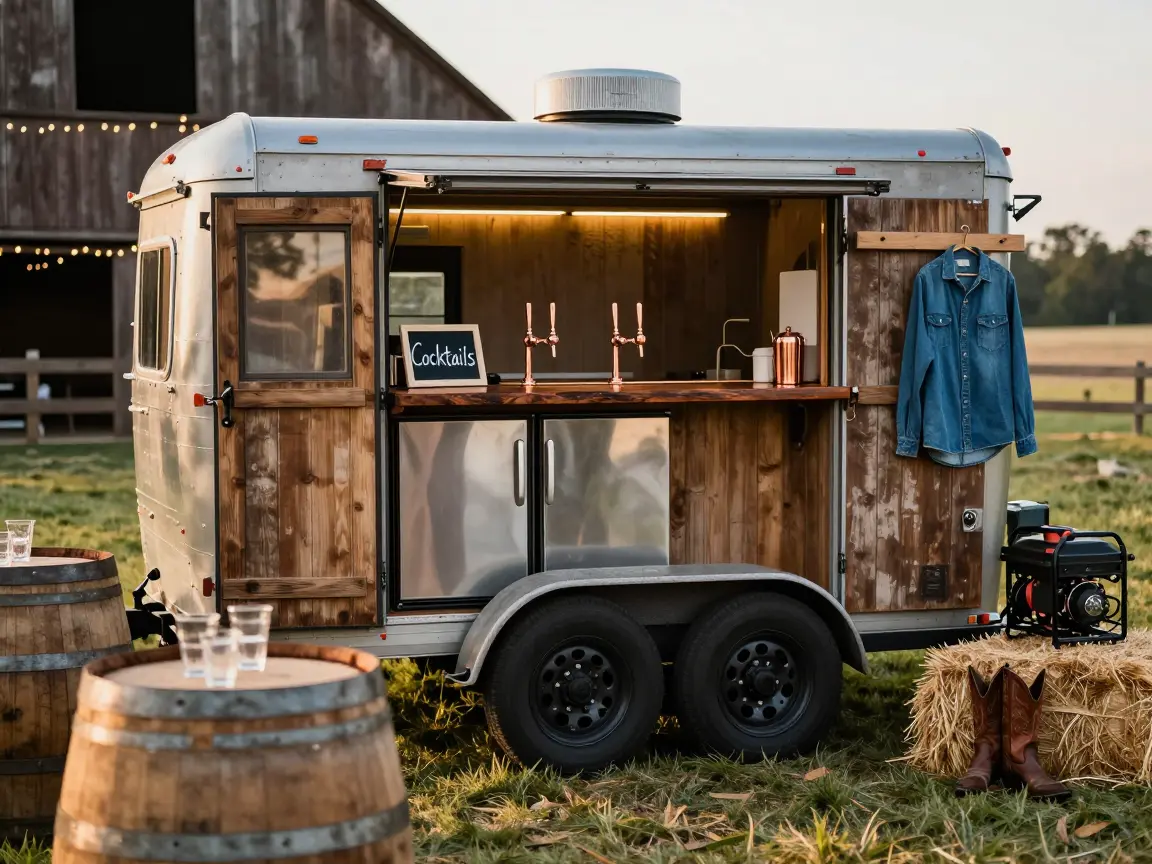
Guests crowd the cocktail hour when the bar can’t keep up, and a repurposed two‑horse trailer often becomes the bottleneck.
A four‑tap trailer handles about 120 guests before lines form; for 75 guests a two‑tap model suffices.
The trailer sits on compacted, level ground and needs a generator and a 10‑by‑12‑foot flat footprint for the built‑in bar, fridges, and LED backdrop.
If you lack space or power, a portable keg stand with a single tap is a budget‑friendly alternative.
This setup shines at midsize country weddings of 75‑150 guests and pairs well with denim shirts and cowboy boots.
The splurge version adds custom signage and two signature batched cocktails.
- authentic rustic vibe
- built‑in refrigeration
- requires level ground
- can cause service bottlenecks
- Tap trailer capacity: 75 guests (two taps) to 120 guests (four taps)
- Tap Trailer price: $600
- Mobile bartender rate: $75‑$95 per hour
7. Hanging Edison Bulb Strands Under Open Barn Rafters

Drape low‑kelvin (≈2200 K) Edison‑bulb strands in loose zig‑zags across the barn’s exposed rafters to cast a warm amber wash that flatters skin tones and accentuates aged timber.
Older timber barns often have circuits that can’t handle the load, and some venues or insurers restrict exposed filaments, so confirm the rules with your venue, have a licensed electrician size the circuit, and consider a professional rigging crew to secure the strands.
If the permit process is a hurdle, swap the bulbs for battery‑operated LED filaments that mimic amber hue and avoid wiring upgrades.
A practical tip: attach the bulbs to a lightweight steel cable that runs through the beam’s center, then tension it with turnbuckles to keep the line taut and level.
DIY wiring is rarely realistic; hiring an electrician and riggers saves time and keeps the venue compliant.
- Warm amber glow enhances skin
- Highlights timber grain
- May require venue approval or permits
- Overloaded rural circuits risk
Confirm with your venue and insurer that exposed filaments are allowed.
8. Wool or Canvas Blanket Baskets for Chilly Pasture Evenings
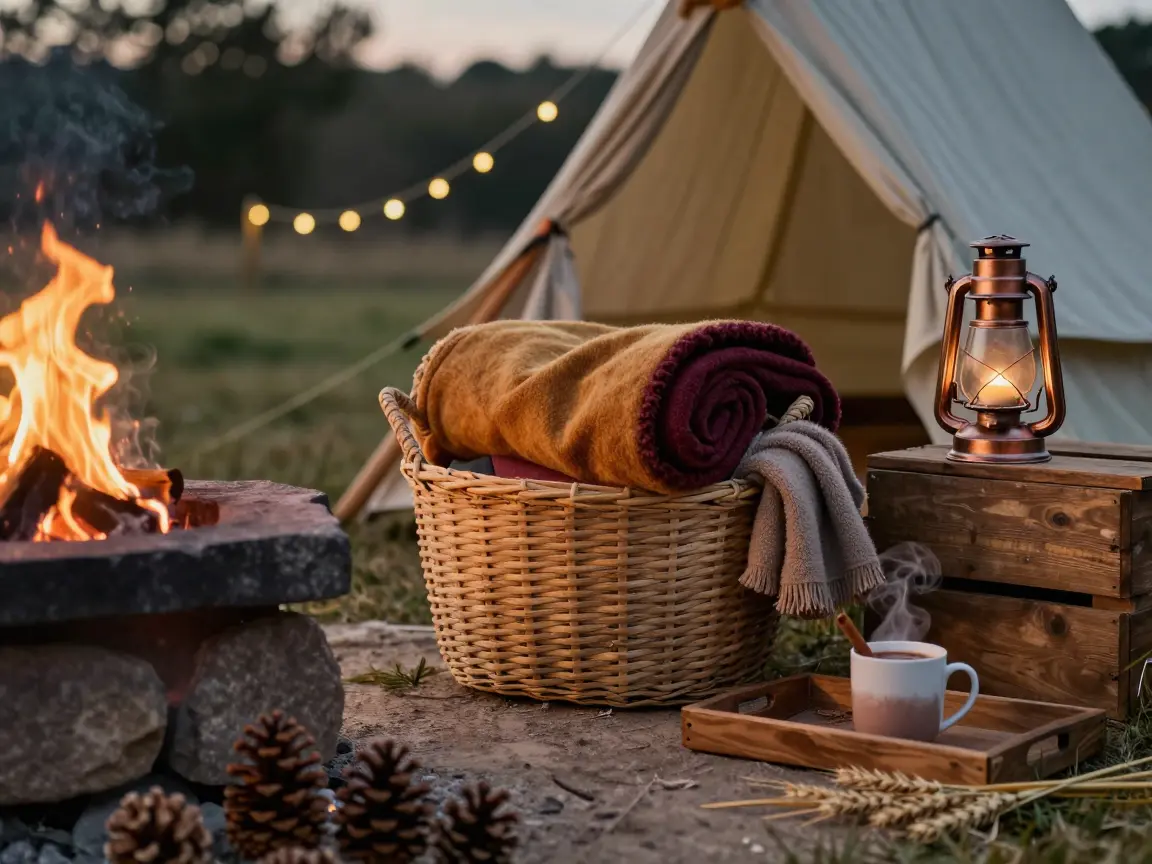
Rolled wool or canvas utility blankets tucked into woven ash baskets add instant warmth beside fire pits or tent entrances.
Evening temperatures on open acreage often drop into the 50s, so guests love a soft layer they can grab.
Owning dozens of authentic wool blankets brings steep up‑front laundry and inventory costs that frequently exceed professional rental packages.
A budget‑friendly swap is bulk camp‑fleece throws, priced around $5 to $12 each and easy to source from outdoor retailers.
For a luxe feel, rent or purchase custom‑embroidered wool throws at $30 to $60 each for a cohesive look.
These baskets suit outdoor or semi‑outdoor venues; indoor receptions with climate control usually don’t need them.
After use, shake out the blankets and spot‑clean with mild detergent, or let the rental service handle laundering.
- cozy warmth
- easy guest access
- high laundry cost
- storage needed
- Bulk camp-fleece blankets: $5 to $12 each
- Custom embroidered wool throws: $30 to $60 each
9. Heel-Friendly Aisle Runners Over Lawn or Gravel
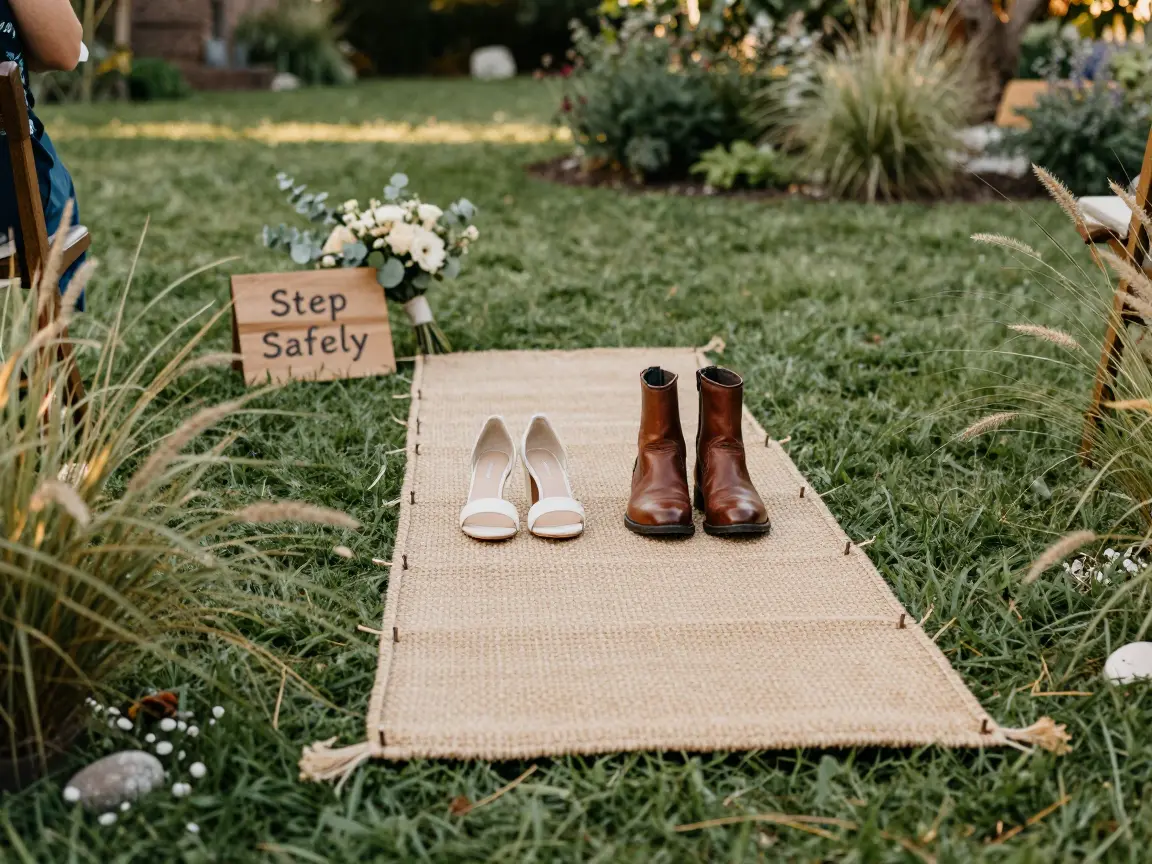
Stumbling over uneven grass or loose gravel turns a romantic stroll into a safety nightmare, especially when block heels or dress boots are involved.
Coarse woven seagrass or jute runners, staked flush with tent‑pegs every 2 feet, give a firm, natural‑looking path that keeps shoes grounded.
Secure the pegs just inside the runner’s edge so the material stays tight; a common mistake is placing them too far out, which lets the runner ripple and creates a tripping hazard.
Thin polyester runners may look neat but they bunch up and can cause falls.
If delicate tulle skirts risk snagging on the fibers, swap the runner for a low‑profile rubber mat or lay a thin, sturdy canvas overlay.
Buying pre‑cut runners from a rustic‑venue supplier is usually cheaper and faster than DIY weaving, which demands both material and time.
- Natural texture
- Easy installation
- Snags tulle
- Needs regular tension checks
- Seagrass or jute runner
- Tent‑pegs (2‑ft spacing)
- Hammer or mallet
- Extra pins for re‑tensioning
10. Whiskey Barrel High-Tops with Hand-Turned Zinc Tops
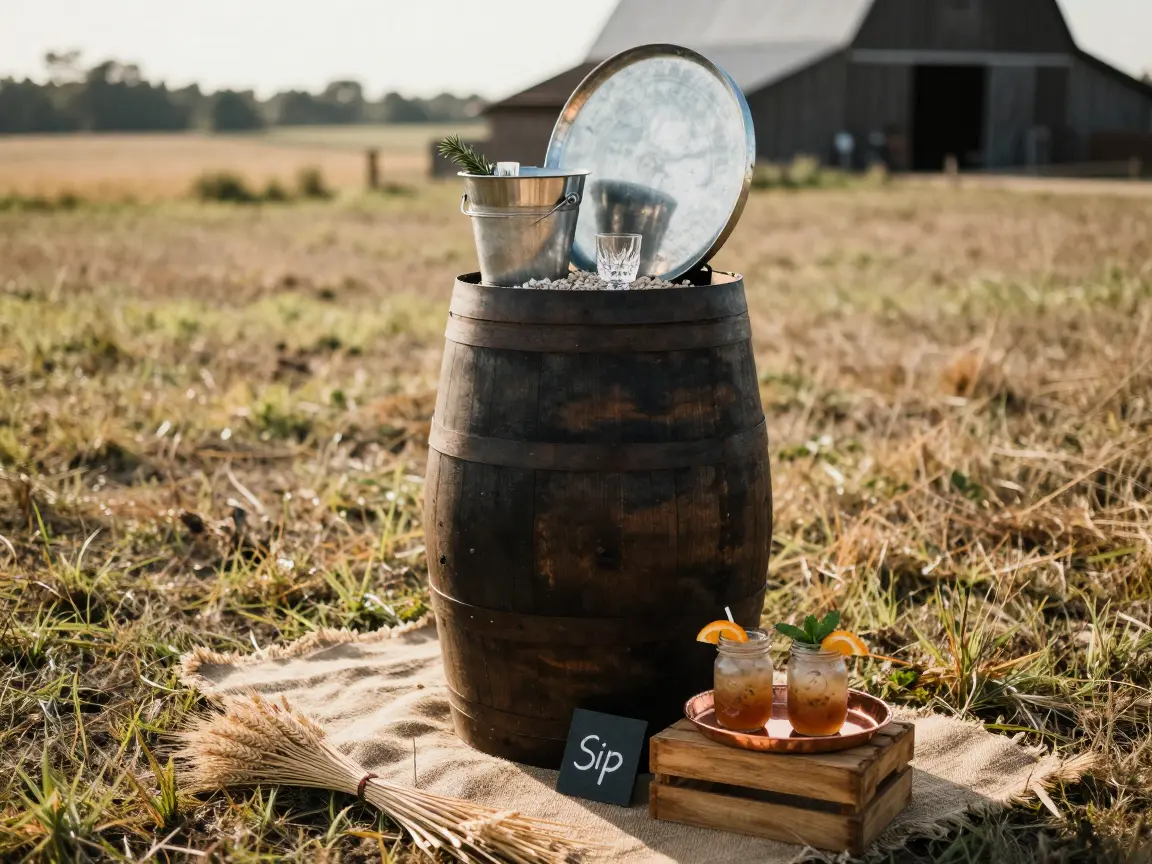
A 120‑pound charred oak barrel topped with a 1‑inch galvanized zinc disc instantly anchors the cocktail table area with genuine country grit.
The zinc top gives drinks a sturdy, easy-to-wipe surface.
Because the barrel weighs over 100 pounds, you’ll need a dolly and at least two strong hands to move it onto the meadow.
In breezy paddocks the empty barrel can tip over, so pack the cavity with pea gravel or sand before the event.
DIY‑ing the zinc disc is feasible with a metal‑working friend, but most couples save time and ensure safety by renting a pre‑finished barrel from a rustic‑event supplier.
- authentic charred oak look
- sturdy surface for drinks
- heavy to transport
- can tip in wind without ballast
Fill barrel interior with pea gravel before placement to lower center of gravity and prevent wind drift
11. Stone Slate Charcuterie and Warm Skillet Cornbread Stations

A slate board cradles a cast‑iron skillet brimming with golden, butter‑basted cornbread, while a neighboring wooden platter holds wedges of aged goat cheese, sharp cheddar, and a small jar of local honey butter.
Pre‑heat the skillet on a portable burner before placing it on the slate; the stone and iron lock in heat for up to 45 minutes, keeping the cornbread soft without needing chafing dishes that emit fuel odors.
Cheese sweats and spoils faster in warm afternoon sun, so keep the station in the shade and refresh the cheese platter from a cooler rather than leaving it out all evening.
After the event, scrub the skillet with a stiff brush, dry it thoroughly, and re‑oil the surface to prevent rust; the slate can be wiped clean and stored for future use.
- Warm, rustic presentation
- Reusable stone and iron
- No fuel smell
- Accelerated cheese spoilage
- Heavy equipment handling
Keep cheese shaded and refresh the platter to avoid spoilage.
12. Pressed Wildflower and Seed Paper Escort Cards

Pressed wildflower and seed‑paper escort cards add a tactile meadow feel while letting guests take home a plantable keepsake.
Hand‑cut the cotton paper, embed a regional seed mix, and write names with calligraphy ink; the cards stay crisp for two weeks before the wedding.
A common mistake is leaving the display outdoors; feather-light cards disperse across lawns at the first breeze and bleed ink when humidity spikes.
If you need sturdier options, swap in heavyweight cardstock with magnetic backs that can be reused.
DIY is doable in a two‑week window if you set aside an hour each day for soaking, pressing, and drying.
- Eco‑friendly
- Keepsake value
- Disperses easily
- Ink bleeds in humidity
Place cards between heavy books for 24‑hour flattening
13. Two-Piece Acoustic Fiddle and Fingerstyle Guitar Duo
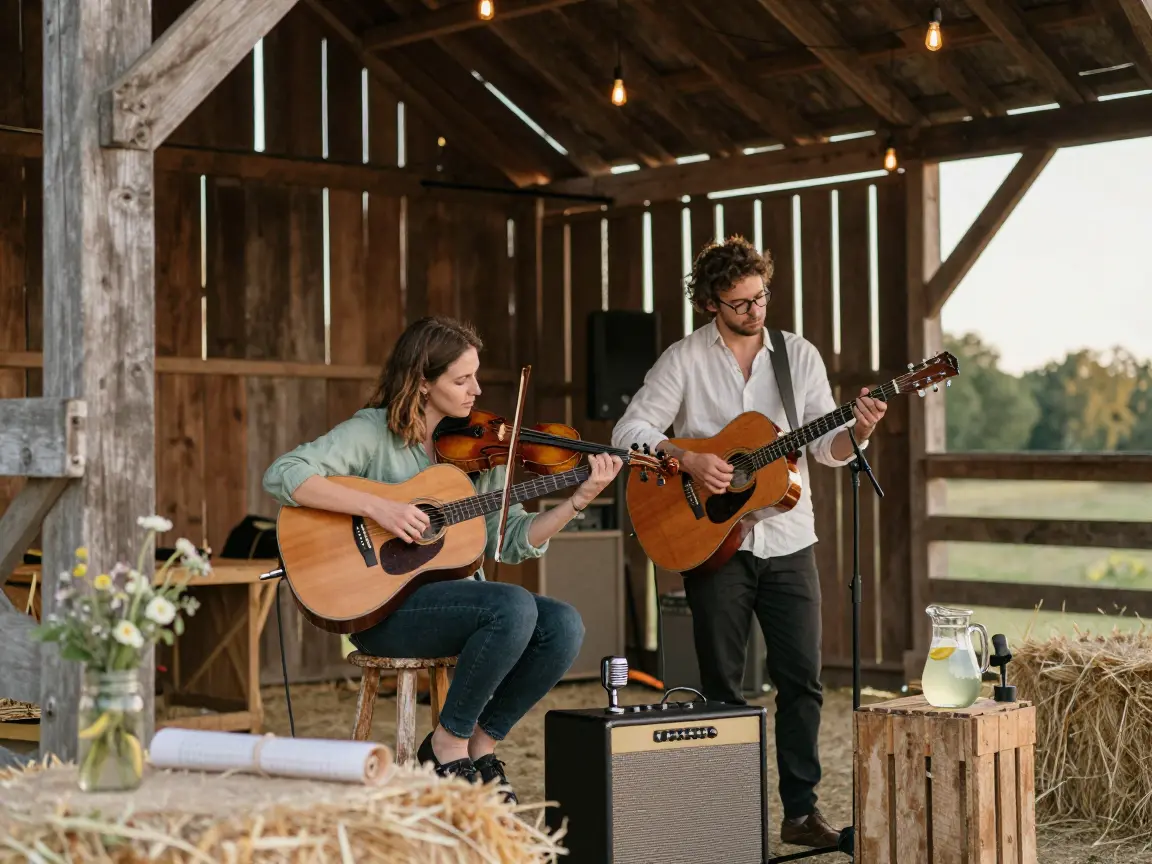
A fiddle‑and‑guitar duo sounds richer than a DJ but less imposing than a full band, making it a natural middle ground for a country ceremony and cocktail hour.
In a wooden barn or open pasture the instruments alone won’t carry, so the package includes a battery‑powered speaker for reliable amplification.
Expect a 3‑hour set to run $1,400 to $1,600, speaker and all; if you want music from ceremony through reception, the duo‑plus‑DJ upgrade tops out at about $2,900.
This works best for intimate gatherings of 50‑80 guests who appreciate a laid‑back, folk vibe.
If you need louder, no‑mic coverage or have a larger crowd, a traditional brass quartet or full band may be a better fit.
- visual intimacy
- balanced sound
- fits rustic vibe
- limited volume without amp
- equipment footprint needed
- Acoustic duo (3-hour set): $1,400‑$1,600
- Duo + DJ combo: $2,900
14. Straw Bale Lounge Seating Wrapped in Quilted Throws
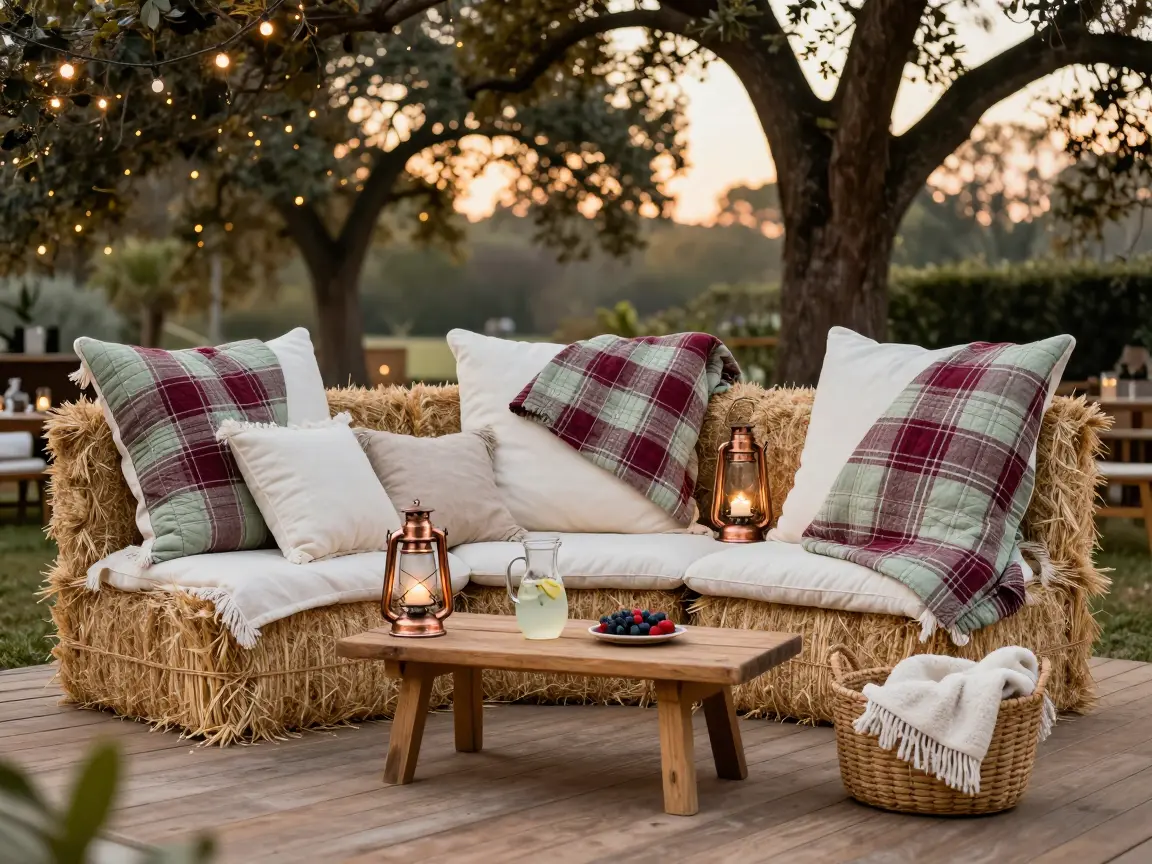
Guests stepping onto a lawn strewn with loose hay risk prickles and stains on their shoes, especially when the ceremony moves to a reception under the trees.
Build a lounge by stacking tightly bound wheat-straw bales; high-density straw holds its shape and sheds less dust than loose hay.
Drape each bale with a dense canvas drop, then wrap an antique quilt or a heavy cotton throw to seal the surface.
The quilt adds color and keeps moisture from the ground away from formal attire.
If bare bales feel too rustic, rent upholstered farm‑style sofas for a cleaner look.
A splurge option uses custom‑stitched, water‑repellent covers; a budget version pairs thrift‑store quilts with rental canvas.
DIY is doable for small weddings, but larger gatherings benefit from hiring a rental company that can deliver wrapped bales.
- Rustic charm
- Low cost
- Allergens
- Maintenance
Dust, pollen, and ground moisture can seep through thin fabrics and stain formal wear.
15. Hand-Lettered Weathered Slate Welcome Boards
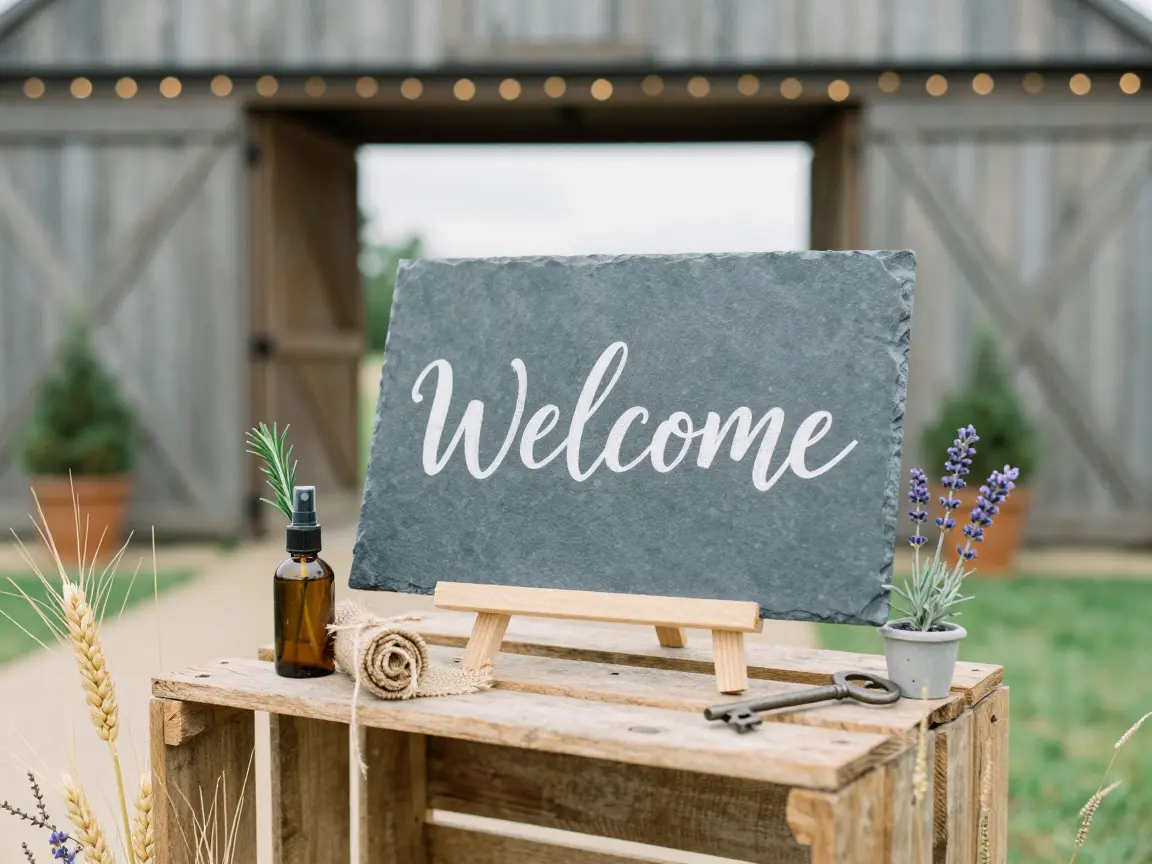
A single reclaimed roofing slate, typically about 12 by 24 inches, becomes the focal point of your entrance.
Letter it with an off‑white oil‑based paint pen for a welcome message or directional cue.
The pigment stays legible through morning dew or a surprise drizzle, unlike traditional chalk that smears.
Avoid placing the tiles on lightweight tabletop easels; even a gentle pasture breeze can tip them and cause the brittle stone to crack.
If you’re comfortable cutting and sanding the slates, a DIY kit works, but buying pre‑finished, mounted boards or hiring a local sign maker saves time and reduces breakage risk.
A simple sealant spray adds a subtle sheen and helps the ink resist rain longer.
- authentic rustic look
- uses reclaimed material
- brittle, shatters easily
- oil‑based pens not reusable
Secure each slate on a low wooden crate and weight with sandbags to prevent tipping in breezy pastures
16. Locally Foraged Flora and Dried Wheat Floor Urns
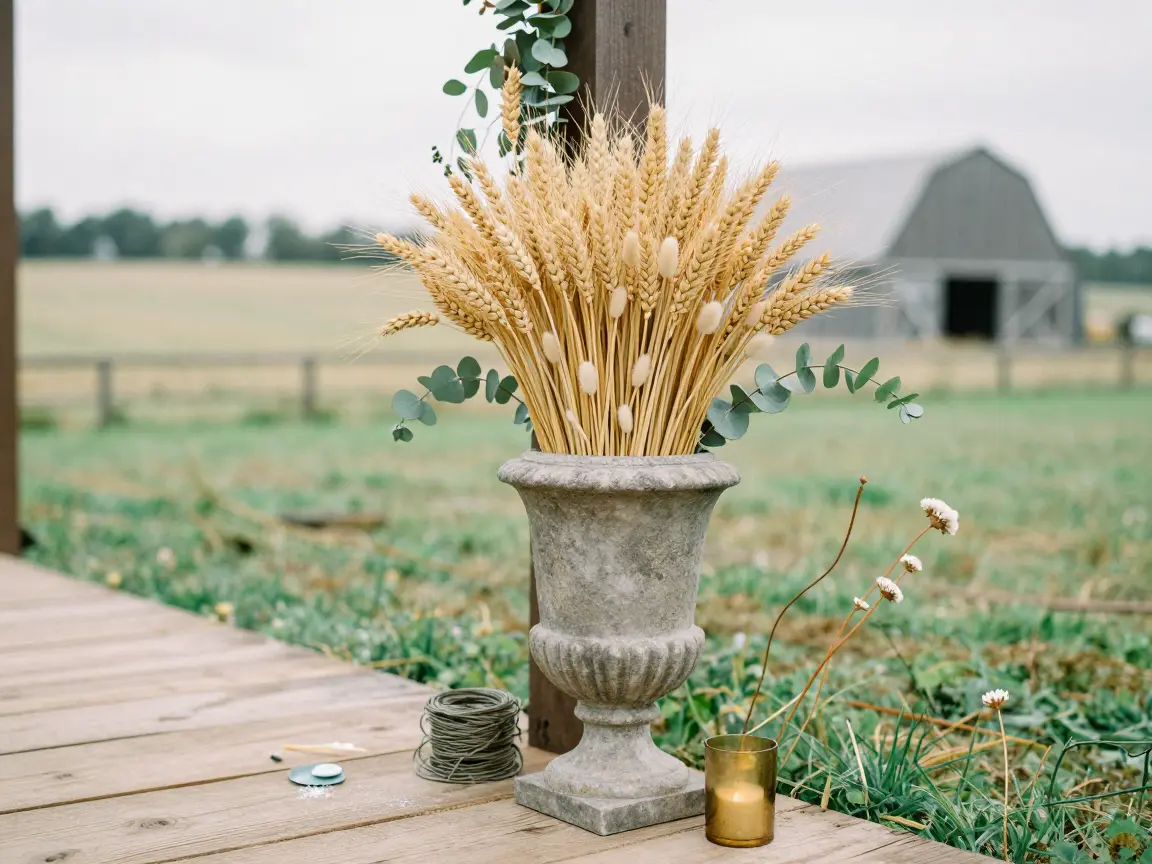
A concrete urn brimming with golden wheat stalks, a few sprigs of eucalyptus, and a handful of fluffy bunny‑tail seed heads frames each aisle entrance.
Start with a heavy urn, then layer the wheat, adding fresh eucalyptus tips at the top to soften the dry texture.
Secure the wheat with a thin coil of floral wire and a dab of hot‑glue at the rim to keep it from spilling.
A common complaint is that all‑dry urns shed brittle seeds under foot traffic and look washed‑out in harsh midday sun without the contrast of live foliage.
If the setup feels too fragile, swap the urns for tall potted lavender or rosemary, which stay vibrant and require only occasional watering.
DIY is doable with a purchased urn and bulk wheat, but hiring a florist who can pre‑arrange and weight the urns saves time and ensures the base stays stable.
- rustic texture
- natural color palette
- seed shedding
- sun‑bleached look
- choose heavy urn
- fill with wheat and eucalyptus
- weight base with sand or stones
17. Semi-Naked Cake with Foraged Mountain Berries
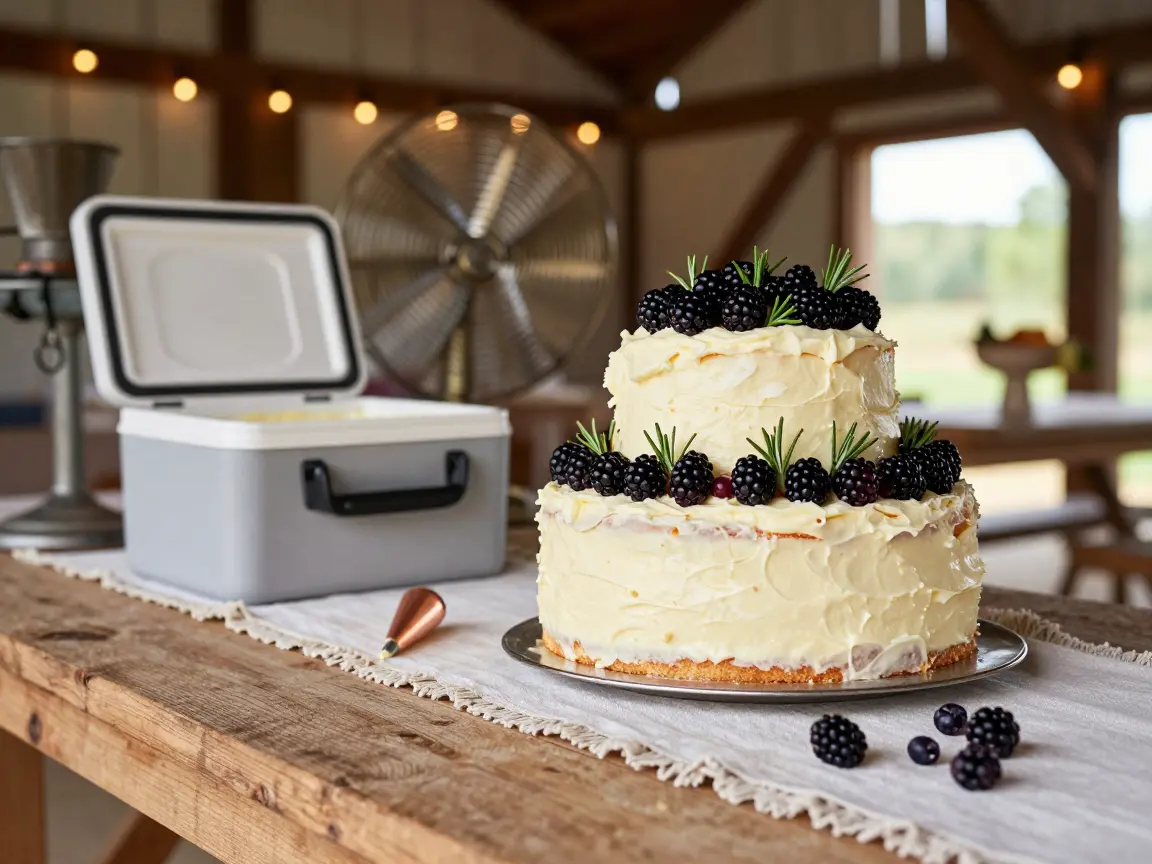
A thin, crumb‑coated vanilla sponge tier sits partly bare, its surface dotted with glossy blackberries, plump currants and a few rosemary sprigs that peek through the frosting.
The naked look lets the berries shine, but the exposed sponge can dry out fast if left out more than two hours.
Keep the cake chilled in an insulated cake cooler or a refrigerated walk‑in until the ceremony, then transfer it to the barn no earlier than fifteen minutes before cutting.
Buttercream frosting softens quickly above 75°F, so plan a shaded spot and a fan to keep the temperature down.
- Elegant, rustic look
- Highlights fresh foraged berries
- Minimal crumb coat dries cake quickly
- Buttercream melts in warm barns
Buttercream can become runny above 75°F, risking collapse.
18. Outdoor Smokeless Fire Pit Lounge for S’mores
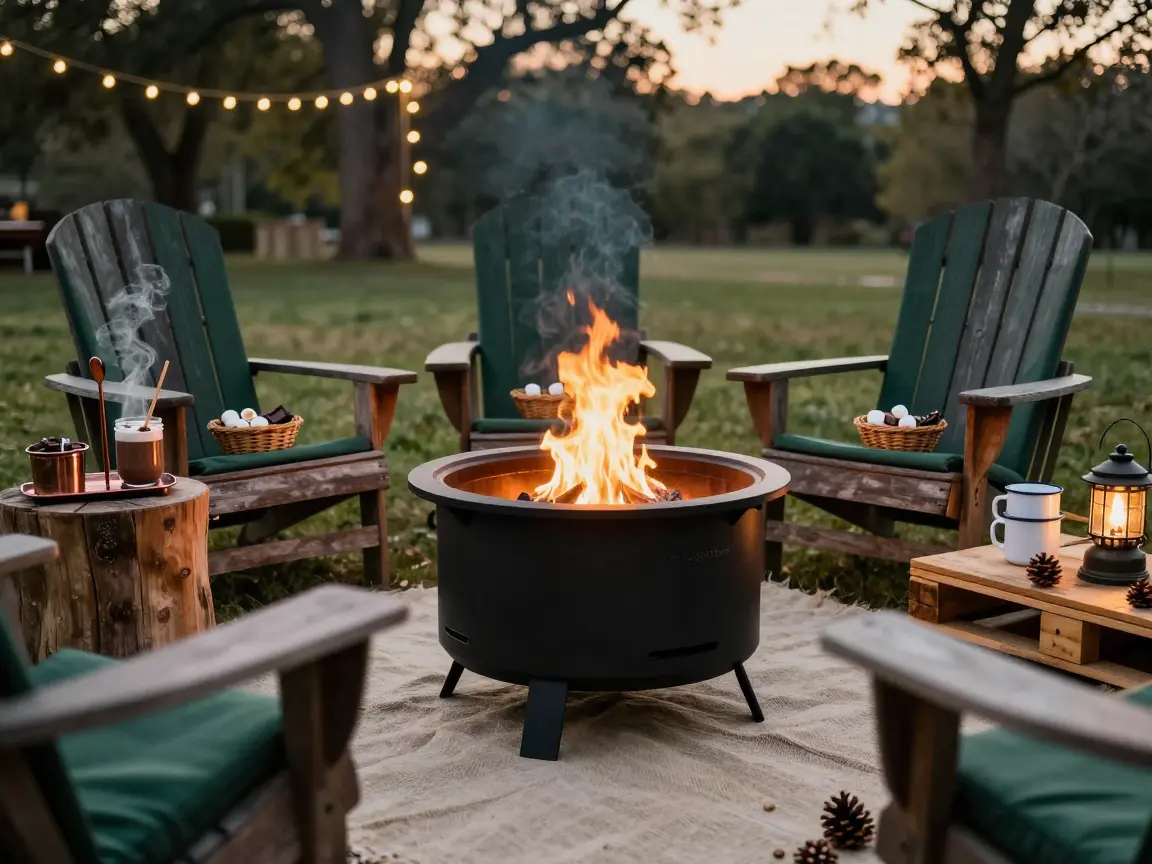
A smokeless metal fire bowl, such as a Solo Stove double‑combustion model, burns seasoned hardwood quickly, so you’ll need to schedule refuels every 45‑60 minutes to keep heat steady for a three‑hour reception.
Standard wood fires coat tuxedos and gowns with soot; the secondary‑combustion design forces air through a hollow chamber, completing combustion and cutting visible smoke.
For venues where wood isn’t allowed or where you prefer a low‑maintenance vibe, a portable LED fire effect can mimic glow without any fuel.
Keep a metal ash pan handy, let the pit cool fully before moving, and store the bowl for future events.
- Clean heat
- Minimal smoke
- Fast wood consumption
- Requires disciplined refueling
19. Vintage Enamelware and Linen Dinner Place Settings
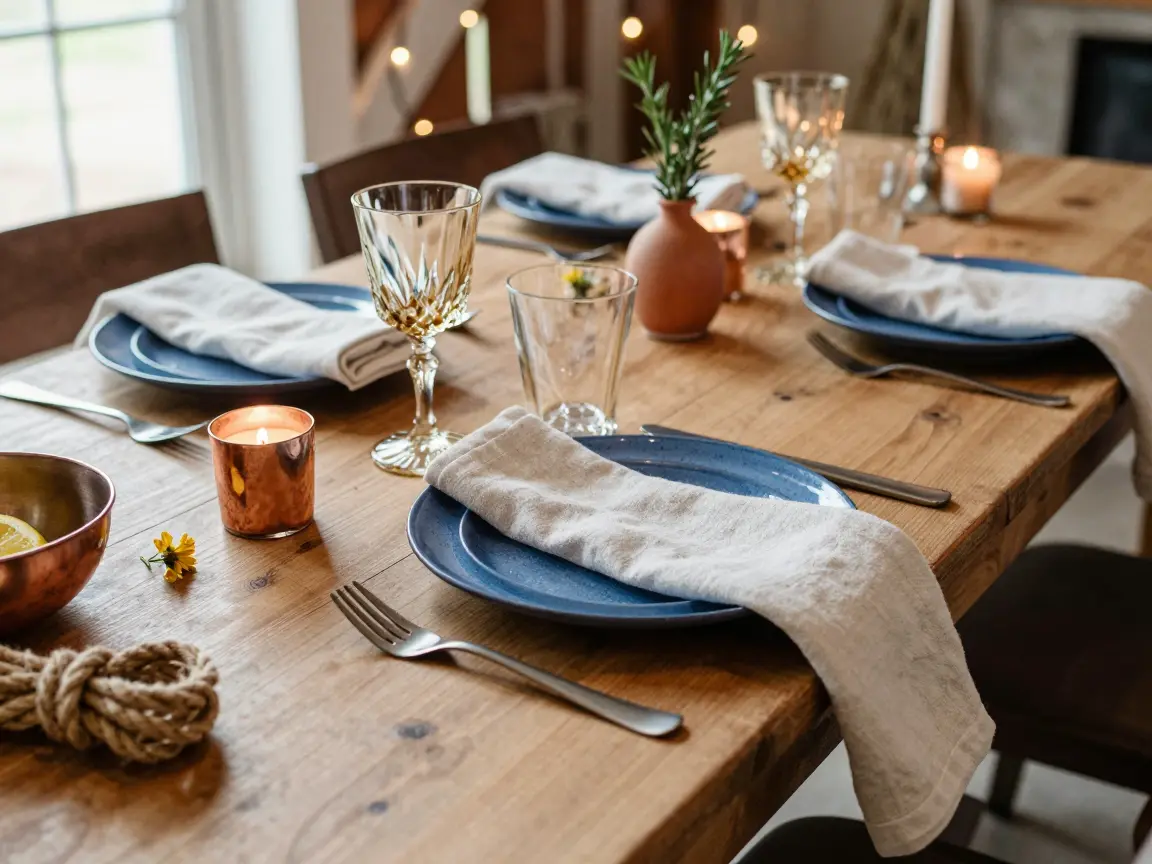
Speckled enamel plates anchor the table with a rugged pop of color.
Pair them with washed natural-linen napkins to keep the setting from slipping into a scout mess hall vibe.
Matte forged flatware adds a modern edge without competing for attention.
Enamel will echo each knife scrape; a common complaint is the audible clatter that can distract guests.
To mute the sound, place a thin silicone liner under each plate.
For a splurge, source hand‑loomed Irish linen at $30 to $45 per napkin; a budget alternative is a cotton‑linen blend at $12 to $18.
Reuse the enamelware for cocktail service to extend its life.
- rustic color pop
- tactile linen contrast
- audible knife scrapes
- risk of camp‑mess look
Place a silicone liner under each plate to dampen sound.
20. Late-Night Fried Chicken Slider and Pickle Bar
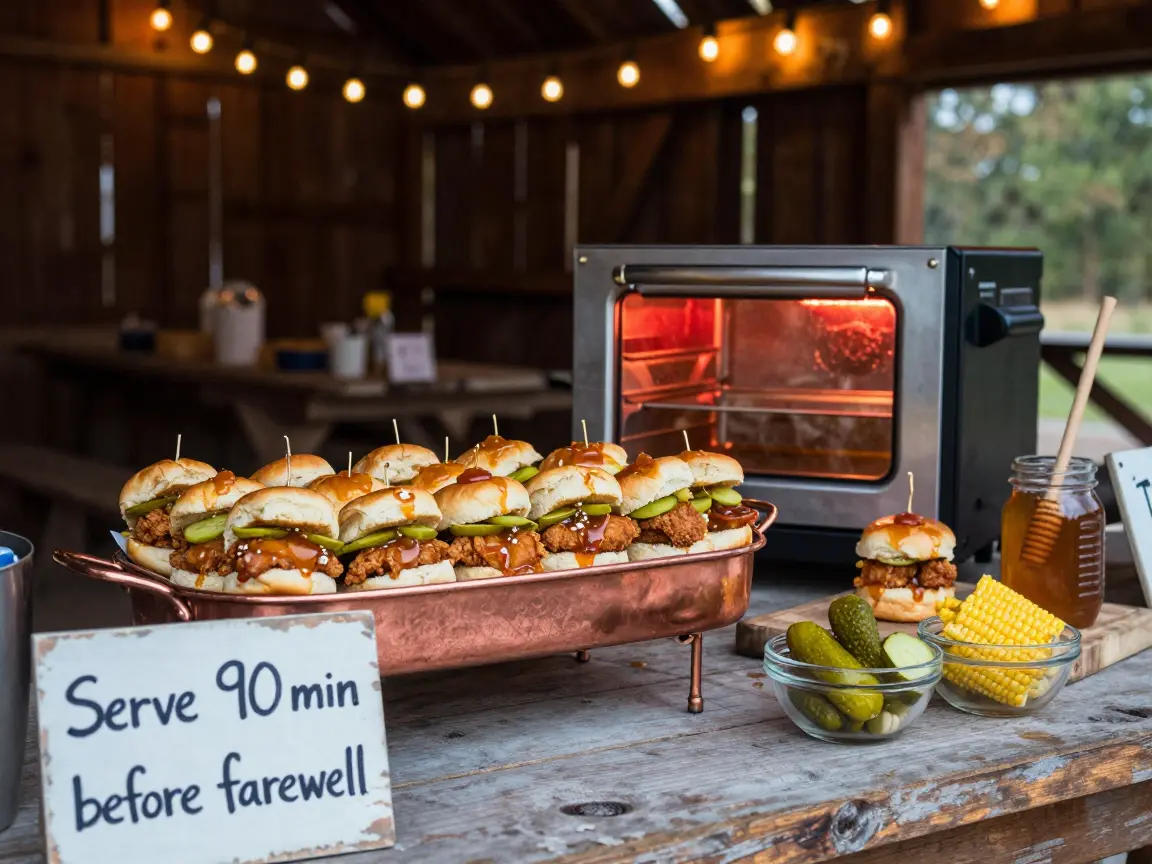
Serving the midnight comfort station about 90 minutes before the final goodbye keeps the energy high while guests still have a little buzz.
Mini hot‑honey fried chicken biscuits topped with pickled ramps and sweet relish arrive on a heated platter; the crisp bite holds for only a short window, so have the caterer fry or re-crisp the chicken on site and serve it right away to keep the breading from turning soggy.
Plan about 2 to 3 sliders per guest, which keeps the late-night line short and avoids waste.
This station shines at medium‑sized weddings of 80‑150 guests, where a dedicated kitchen crew can manage the timing without crowding the dance floor.
- On-site finishing keeps crunch
- Adds excitement to late night
- Requires extra equipment
- Needs precise timing
- Service window: about 90 minutes before the send-off
- Portion guide: 2 to 3 sliders per guest
Essential Infrastructure Checklist for Farm and Barn Venues
Use this list to verify that every essential piece of infrastructure is in place before the first guest steps onto the pasture or barn floor.
- A portable generator or approved on‑site power source, sized to run lighting, sound, and beverage refrigeration for the entire day.
- Heavy‑duty extension cords and surge‑protected power strips, routed away from walkways and weather‑proof covers.
- Ground‑level LED string lights and Edison bulbs with UL‑listed fixtures, plus a non-conductive fiberglass ladder for safe hanging and a backup battery pack.
- Slip‑resistant aisle runners or rubber mats for grass, gravel, or wooden floors, anchored at each end with tie‑down stakes.
- Portable restroom units with hand‑washing stations and climate‑controlled interiors, plus wheelchair‑accessible stalls.
- Weather‑proof flooring panels or plywood walkways to protect muddy areas and provide stable footing, and sealant for wet spots.
- Heating lamps or patio heaters with proper clearances for evening chill, and a timer for safety.
- A basic first‑aid kit and a copy of the venue’s emergency contact numbers, and a spare battery for communication devices.
The most common mistake is forgetting to test the generator load a day early; run a full‑scale trial to avoid a blackout during the ceremony.
Frequently Asked Questions
What are some ideas for a country wedding?
Focus on authentic textures rather than costumey props: bare wood refectory tables, living potted herbs, zinc beverage troughs, ambient Edison lighting, and locally sourced seasonal foods like fried chicken sliders or skillet cornbread.
How do you make a country wedding feel modern rather than dated?
Eliminate synthetic burlap, overly distressed signs, and neon mason jars. Instead, balance raw timbers with refined organic elements like unbleached linen, forged metal flatware, clean architectural greens, and monochromatic color palettes.
What should guests wear to a rural or barn wedding?
Specify dress codes clearly on invitations (such as ‘Country Cocktail’ or ‘Elevated Farm Casual’). Recommend sturdy footwear like chunky block heels, flat dress shoes, or leather dress boots to manage gravel, pasture turf, and uneven barn wood.
What is the biggest hidden cost of hosting an outdoor country wedding?
Infrastructure rentals represent the largest unexpected expense. Working farm sites usually require commercial power generators, luxury portable restroom trailers, exterior perimeter lighting, and tent rain plans with solid subflooring.