16 Practical Rustic Country Wedding Cake Ideas That Actually Hold Up
16 Practical Rustic Country Wedding Cake Ideas That Actually Hold Up
When the venue manager pointed out the barn’s open‑air layout and the summer heat, I knew my cake plan had to survive humidity and wind.
I’d watched glossy fondant melt and naked cakes dry out within minutes, leaving guests disappointed.
This list delivers 16 practical rustic country wedding cake ideas that actually hold up: semi‑naked berries, birch‑bark fondant, twig‑studded stucco buttercream, and more.
DIY brides, budget‑savvy couples, and anyone hosting an outdoor barn celebration will find a design that looks effortless and stays edible. Expect a cake that matches the countryside vibe without a last‑minute rescue.
1. The Semi-Naked Cake with Fresh Berries
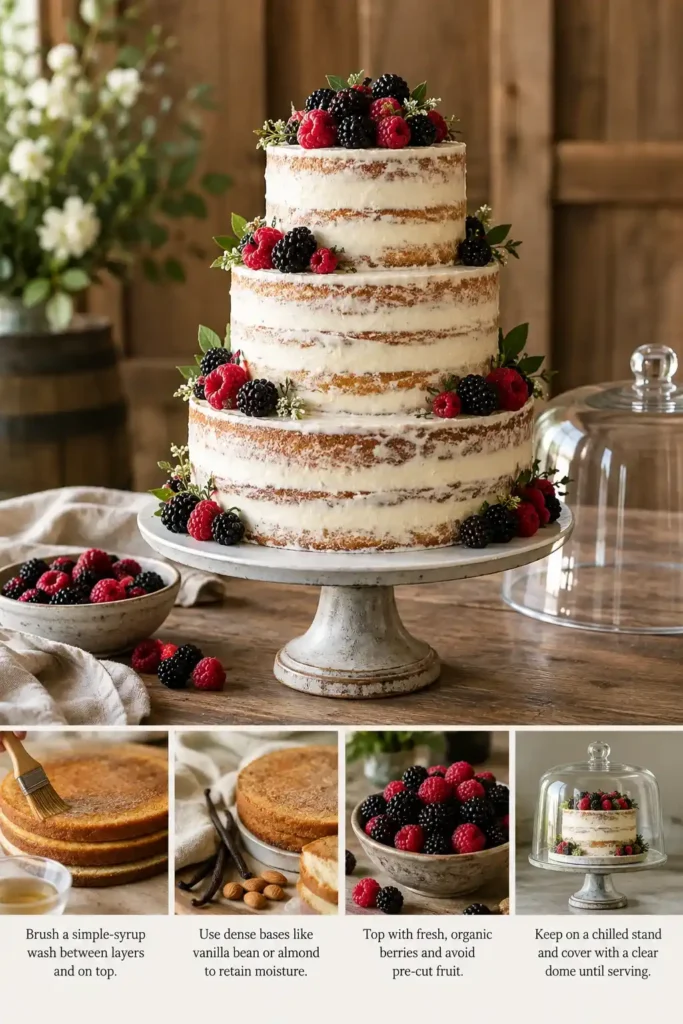
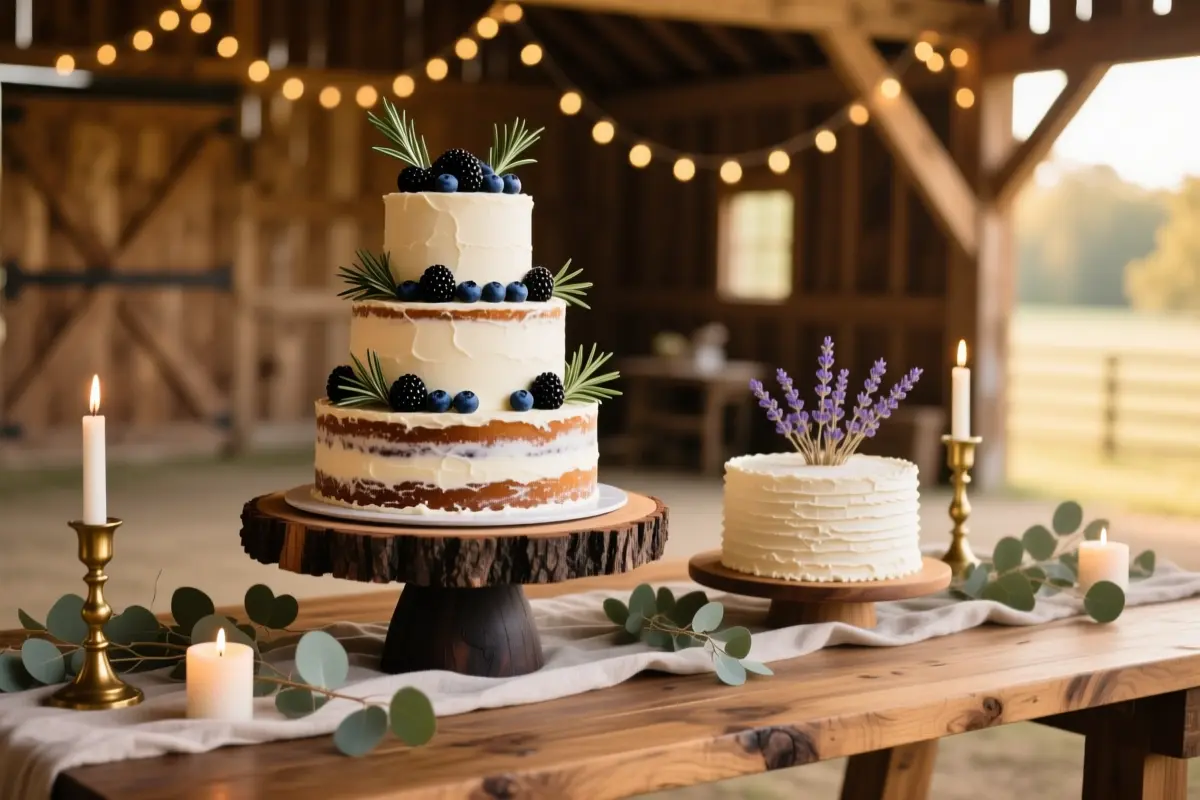
A thin veil of buttercream coats each tier, letting the crumb structure peek through. The scraped‑off look feels earthy and matches a barn‑yard backdrop.
To stop the exposed layers from drying, brush a light simple‑syrup wash between every cake sheet and again over the top before the buttercream is applied.
Choose dense bases such as vanilla bean or almond; they retain moisture better than fluffy chiffon.
Top the cake with a handful of fresh, organic blackberries and raspberries, arranging them in loose clusters so the berries sit on the frosting instead of sinking into it.
Avoid pre‑cut fruit that releases juice, which can bleed into the buttercream and create soggy spots.
If the open‑frosted style feels risky, swap it for a fully butter‑frosted tier with a rustic rope border for a similar vibe but longer shelf life.
Keep the cake covered with a cake dome or airtight container until the ceremony, then store any leftovers in the fridge within two hours.
Quick tip: use a pastry brush to apply the syrup in a thin, even coat; a drip‑free layer prevents excess moisture from pooling.
Place the finished cake on a chilled cake stand and cover with a clear dome until the first slice is cut.
2. Birch Bark Textured Fondant
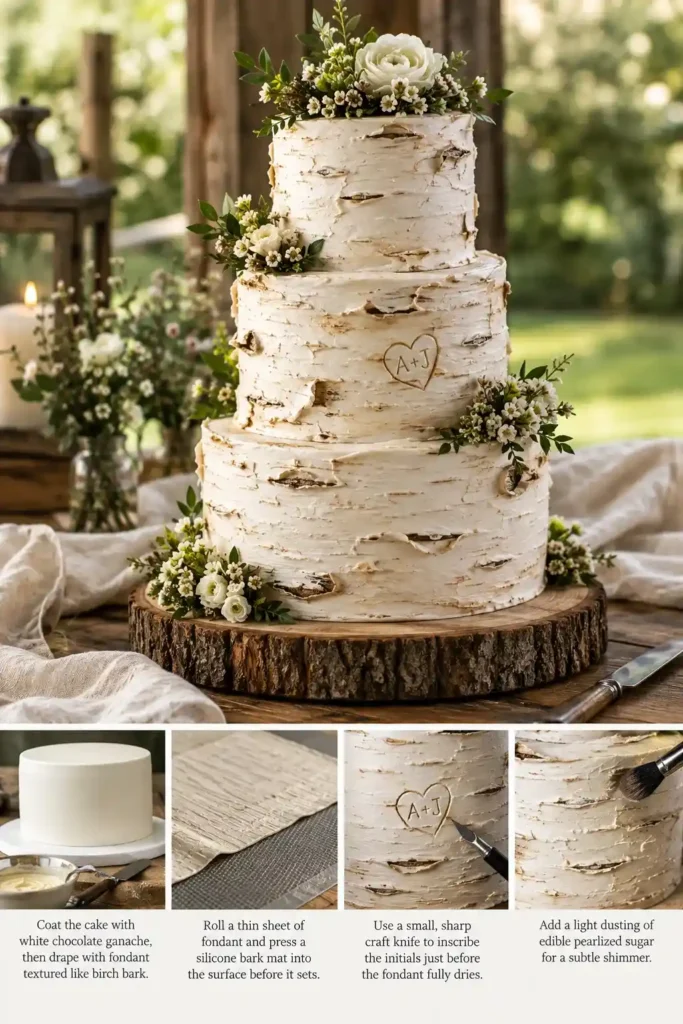
A smooth white cake is wrapped in fondant that mimics the pale, peeling bark of birch trees, with tiny carved initials tucked into the grain.
The texture comes from rolling a thin sheet of high‑quality fondant, then pressing a silicone bark mat into the surface before it sets.
This creates an ultra‑realistic bark pattern that shields the cake from outdoor dust and wind.
Guests often peel off the fondant because its chew is dense and flavorless, so a thin layer over a rich white chocolate ganache balances looks and taste.
Spread a ¼‑inch ganache coat, then drape the fondant; the ganache stays hidden yet delivers creamy sweetness.
If fondant feels too heavy for your crowd, a buttercream base tinted ivory and brushed with edible bark paint offers a softer bite while still suggesting tree bark.
DIY the fondant using rolled sheets and a kitchen rolling pin; a professional decorator will handle the texturing and carving for a higher price.
Quick tip: use a small, sharp craft knife to inscribe the couple’s initials just before the fondant fully dries, so the letters stay crisp.
Add a light dusting of edible pearlized sugar on the raised ridges for a subtle shimmer that catches sunlight without altering the flavor.
3. Horizontal Stucco Buttercream with Twigs
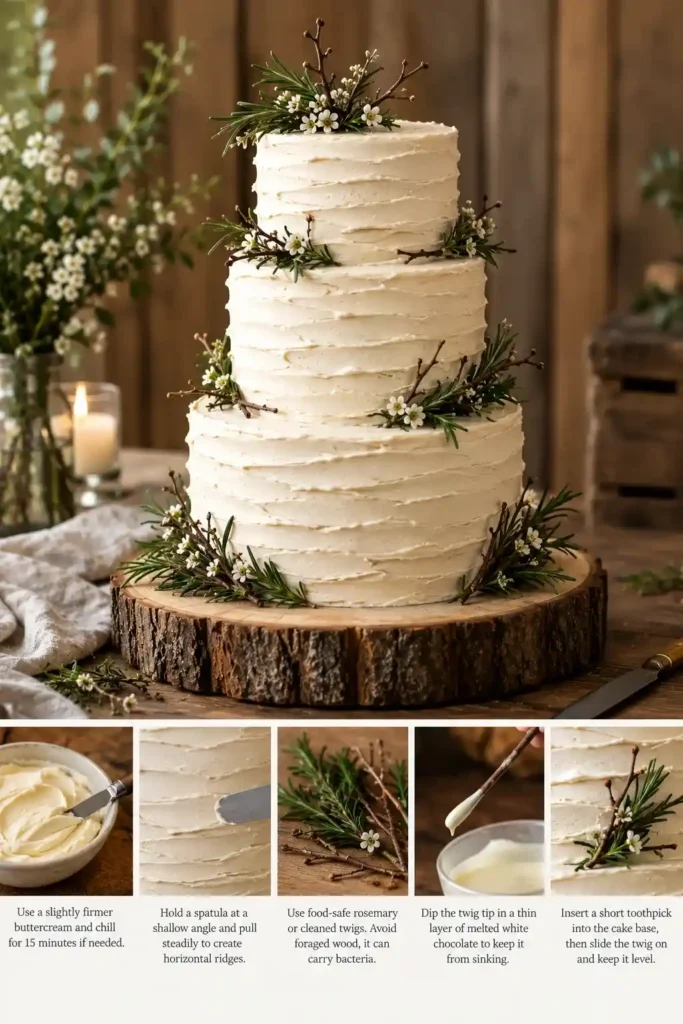
A spatula dragged across buttercream creates thick, horizontal stucco ridges that wrap each tier.
Start with a buttercream that’s slightly firmer than frosting for piping; chill it for 15 minutes if it feels soft.
Hold the spatula at a shallow angle and pull it steadily across the surface, letting the blade’s edge carve the ridges.
The uneven texture hides any cracks from uneven layers or under‑baked spots, so the cake looks polished without a flawless base.
For the twig accents, choose food‑safe rosemary sprigs or professionally cleaned wooden sticks. Avoid gathering twigs from the ceremony grounds; untreated wood can carry bacteria.
If you prefer a plant‑free look, replace them with chocolate bark shards cut to match the ridge depth.
Quick tip: dip the tip of each twig in a thin layer of melted white chocolate before placing it. The chocolate acts as a barrier and keeps the twig from sinking into the buttercream.
DIY‑friendly: the stucco ridges can be done with a standard offset spatula and a kitchen timer. For a flawless finish, many bakers hire a cake decorator who already owns a textured comb tool.
To keep the twigs upright, insert a short toothpick into the cake base and slide the twig onto it, ensuring it stays level throughout transport.
4. Local Wildflowers and Herb Accents
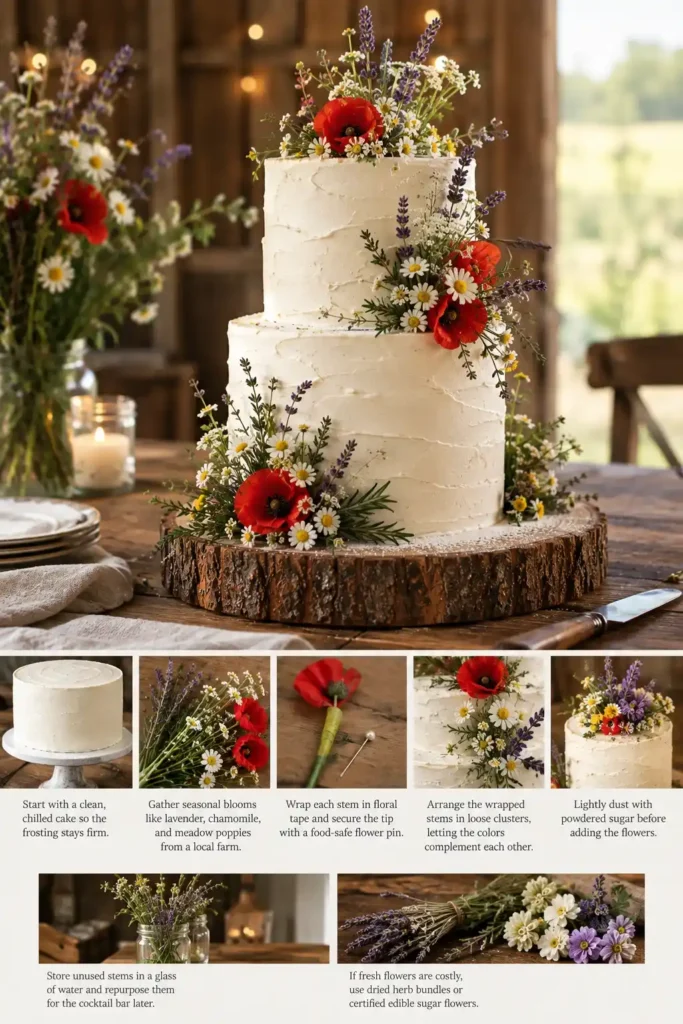
At a barn reception with reclaimed‑wood tables, a plain white cake becomes a canvas for local wildflowers and herbs.
Start with a clean, chilled cake so the frosting stays firm. Gather seasonal blooms such as lavender sprigs, chamomile heads, and a handful of meadow poppies from a nearby organic farm.
Wrap each stem in floral tape, then secure the tip with a food‑safe flower pin to prevent any contact between the petal and frosting.
Arrange the wrapped stems in loose clusters, letting the lavender’s purple hue frame the chamomile’s soft yellow and the poppies add a pop of red.
A common mistake is placing unwrapped stems directly on the frosting; toxic compounds from meadow flowers can leach into the cake.
Using the tape barrier avoids that risk, though it adds a few extra minutes of prep.
If sourcing fresh wildflowers feels costly, swap them for dried herb bundles or certified edible sugar flowers, which keep their shape longer and reduce waste.
Quick tip: dust the finished cake lightly with powdered sugar before adding the flowers; the powder hides any stray tape bits and adds a subtle sparkle.
Store any unused stems in a glass of water and repurpose them as garnish for the cocktail bar later.
5. Burlap and Lace Ribbon Wraps
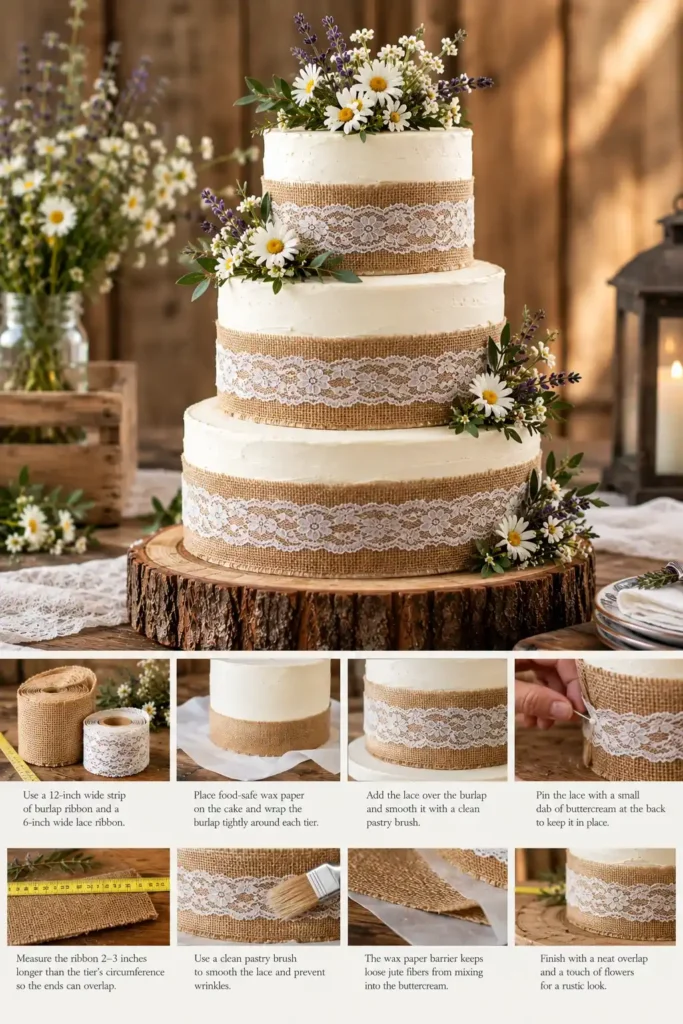
A 12‑inch wide strip of natural burlap ribbon, wrapped tightly around the base of each tier, gives the cake an instant country feel.
The rough jute texture contrasts with smooth white icing and highlights the delicate white lace that sits on top.
A roll of burlap costs about $4 at a craft store, while a pre‑finished rustic wrap can run $15‑$20, making the DIY option very budget‑friendly.
You can buy the burlap and lace in bulk at a fabric shop or repurpose a burlap grocery bag for a zero‑cost alternative.
Lay a sheet of food‑safe wax paper directly on the cake, then wrap the burlap over the paper to keep loose fibers from mixing into the buttercream.
Measure the ribbon 2‑3 inches longer than the tier’s circumference so the ends overlap and can be hidden under the lace.
Fold a 6‑inch wide strip of white lace over the burlap, smoothing it with a clean pastry brush to avoid wrinkles.
Because burlap fibers shed easily, the wax paper barrier is essential; otherwise tiny jute bits can get caught in the icing.
Finish by pinning the lace with a tiny dab of buttercream at the back so it stays in place during transport.
6. The Bundt Cake Tower on Wooden Slabs
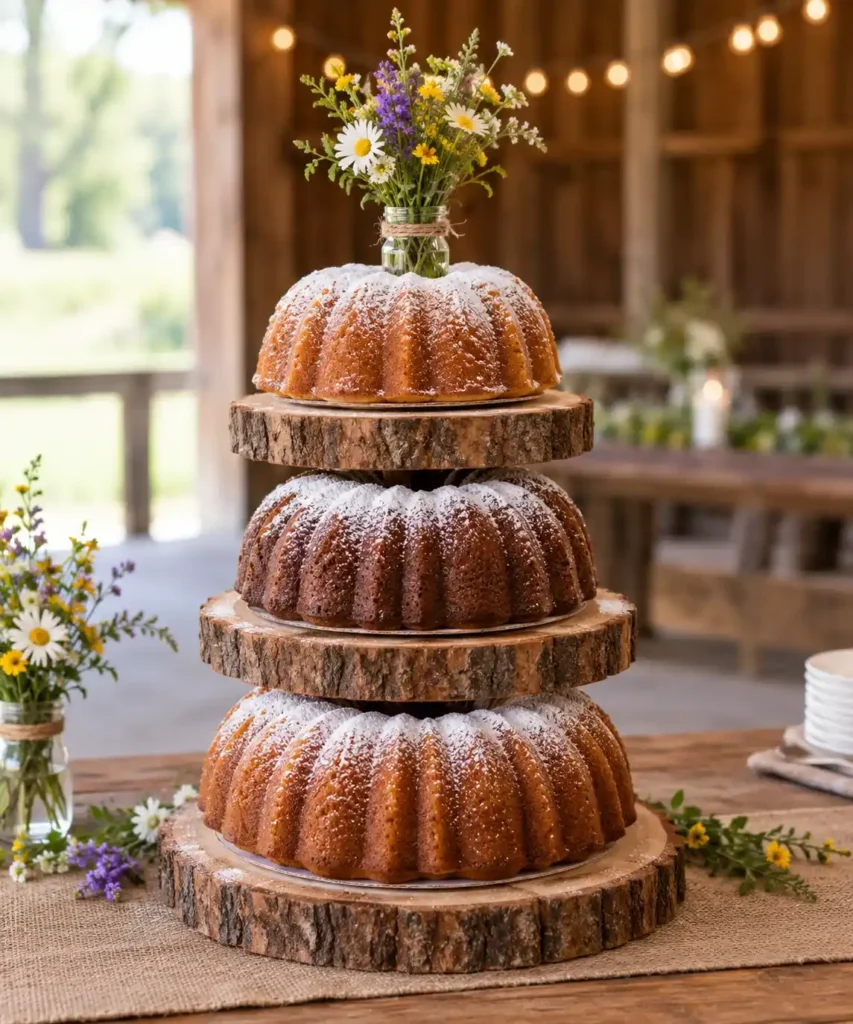
A classic three‑tier buttercream cake can tower 30 inches, whereas a bundt cake tower on wooden slabs stays around 18 inches.
The lower profile makes the display easier to move through a barn aisle and keeps it stable on uneven floors.
Bundt cakes need no intricate frosting, so they survive a warm July reception without a glaze melting.
Dust each layer with powdered sugar just before guests arrive for a soft, rustic finish.
This option shines for couples expecting 50 to 100 guests and planning an outdoor or barn ceremony.
The compact height fits small to medium tables without overwhelming the venue, while larger guest counts may require an additional slab or two.
A budget‑friendly version uses reclaimed pallet wood at $5‑$8 per slab and store‑bought bundt cakes at $12‑$18 each; a splurge upgrade swaps the pallets for hand‑finished cedar and orders custom‑flavored bundt cakes for $25‑$30 per tier.
DIY is straightforward: bake or order the cakes, place each on a pre‑cut slab, then secure the slabs together with double‑sided tape and a few cake boards to prevent slipping.
A quick tip is to line the slab edges with a thin strip of parchment to catch crumbs and keep the display tidy.
Add a small vase of wildflowers to the top slab for an extra touch of country charm.
7. Chocolate Ganache “Tree Trunk” Cake

A dark chocolate ganache cake mimics a tree trunk, its surface carved into realistic bark ridges that catch the light.
The glossy ganache holds its shape better than buttercream, so the wood‑grain details stay crisp in a drafty autumn barn.
This look shines at cozy fall or winter rustic weddings with 50‑100 guests, especially when paired with a light dusting of cocoa powder that resembles snow.
Place the cake under a shade tent or inside a cake dome as soon as it arrives. Direct, warm sunlight will melt the ridges into a muddy glaze, so keep it away from windows and fire pits.
A practical tip: chill the cake for 30 minutes before carving the bark; the firmer texture makes clean cuts and reduces crumb loss.
Common mistakes include letting the cake sit on a warm serving table for too long, which softens the ganache and blurs the design.
Because the ganache is stable, the cake can be transported in a refrigerated truck and still look fresh upon unveiling.
The tree‑trunk trend remains popular for seasonal barn weddings, offering a dramatic focal point without needing elaborate sugar work.
8. Drip Cake with Warm Caramel and Dried Apple Slices
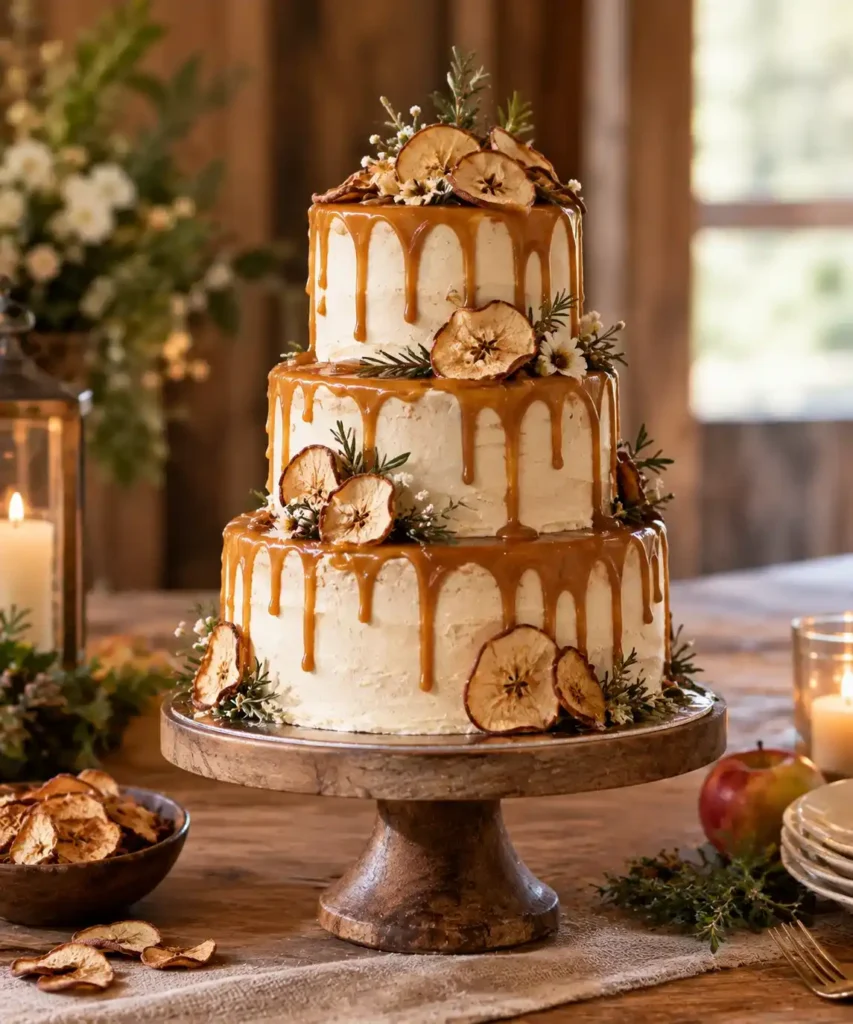
Caramel drips can run rapidly in warm environments, turning a clean design into a sticky pool.
The cascade looks gorgeous, but the sugar stays fluid above 70°F and will keep spreading if the venue heats up. Chill the cake at least two hours before you begin the drip.
Use a silicone pastry brush to pour warmed caramel slowly, letting it bead before it slides down the textured cream cheese frosting.
Swap fresh apple slices for dried ones; they add rustic texture without releasing extra moisture that would dissolve the drip line.
After the cake is set, keep it on a chilled cake board and cover it with a clear acrylic dome until serving.
This protects the caramel from ambient heat and preserves the crisp edge of the dried apples.
Leftover slices store best in an airtight container in the fridge for up to three days; the caramel will firm up again when chilled.
The caramel‑drip trend peaks in fall and winter weddings, when warm spices complement the golden hue. For summer events, consider a cooler buttercream base to offset the heat.
On warm days, place a small fan behind the cake stand to maintain airflow and keep the drip from melting.
9. Woodland Moss and Fern Accents

A thin veil of deep‑green faux moss blankets the cake’s top tier, dotted with delicate fern fronds and tiny pinecones.
The look feels like a damp forest floor, giving the wedding an enchanting, rustic vibe. Real forest moss brings hidden insects and soil, so it must be avoided for food safety.
Instead, blend white sponge cake crumbs with a few drops of green food dye; the crumbs dry into a crumbly, edible “moss” that stays bright and clean.
Purchase food‑grade faux greenery, silicone fern leaves and pinecones that are FDA‑approved, and arrange them loosely around the crumb moss.
Press the edible moss onto the cake with a damp pastry brush; the moisture locks the pieces in place without melting the frosting.
If sourcing edible moss proves difficult, a budget‑friendly alternative is to dust a buttercream surface with matcha powder and crushed pistachios for a similar green texture.
For venues with limited space, attach the pinecones to the underside of a thin cake board before stacking; this prevents them from shifting during transport.
This method delivers a forest‑inspired cake that stays sanitary and looks polished.
10. Wheat Sheaves and Dried Lavender

A late‑summer barn reception under golden light and the scent of fresh hay sets the perfect backdrop for wheat sheaves and dried lavender on the cake.
Take a simple butter‑cream‑frosted tier and gather small bundles of dried golden wheat stalks, each about 8‑10 inches long, with a few sprigs of lavender tucked in.
Tie the bundles around the cake with natural twine, spacing them evenly for a balanced look.
The wheat captures the late‑summer harvest vibe, while lavender adds a soft purple accent that reads as both rustic and refined.
The stalks are highly brittle and tend to drop chaff onto wet icing if handled carelessly.
Wrap each bundle tightly in a thin layer of cheesecloth, then give it a gentle tap over a clean plate to shake out loose particles before placing it on the cake.
Quick tip: use a 6‑inch piece of twine and press the bundle gently against the side of the tier with an offset spatula to keep it secure without crushing the frosting.
This decor works best for intimate farm weddings of 50‑80 guests, especially couples who love natural textures over sugary flowers.
The wheat‑and‑lavender motif remains a leading trend for 2026 rustic celebrations, showing no sign of fading.
For a cleaner finish, keep a small brush nearby to sweep any stray chaff off the frosting before the cake is sliced.
11. Deconstructed Multi-Cake Table
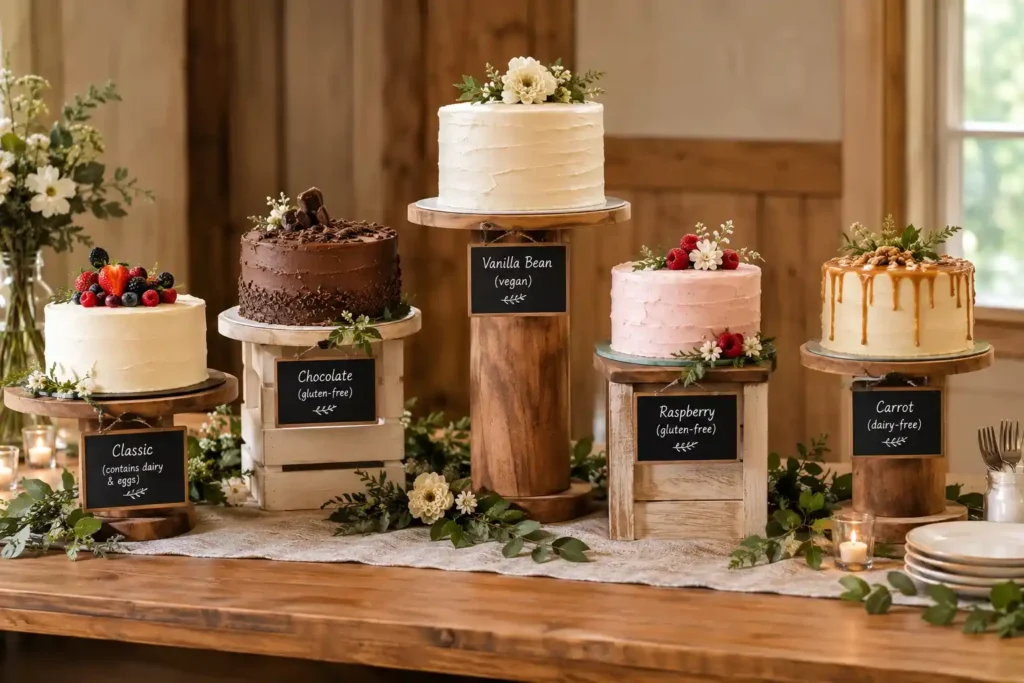
Unlike the classic single‑tier centerpiece, a deconstructed multi‑cake table spreads three to five single‑tier cakes across varying wooden pedestals.
This layout delivers several flavors, so guests can choose gluten‑free, vegan, or classic options without a separate dessert station.
Cutting stress drops because each cake is already portioned, and the staggered heights add visual depth to a rustic dessert spread.
The idea shines at medium‑sized country weddings of 80‑150 guests, especially when the couple expects diverse dietary needs.
A suitable table runs 6‑8 feet long; each cake sits on a 6‑8‑inch tier, while pedestals range from 12 to 18 inches tall.
For a splurge look, order hand‑painted cedar stands at $150‑$250 each. A budget‑friendly swap uses reclaimed pallet crates painted matte white for $30‑$50 each, topped with non‑slip pads.
You can buy ready‑made cake stands from a party store or build the crates yourself with sanded pine and a clear seal.
The main trade‑off is the space it consumes and the need to source multiple stands. Place the tallest pedestal centrally, then flank it with shorter ones for balanced flow.
Avoid crowding cakes; give at least two inches between each to keep cutting easy and the table tidy.
Finish the setup by attaching a small chalkboard tag to each pedestal that lists the flavor and any dietary note.
12. Frosted Cranberries and Pinecones (Winter Country)
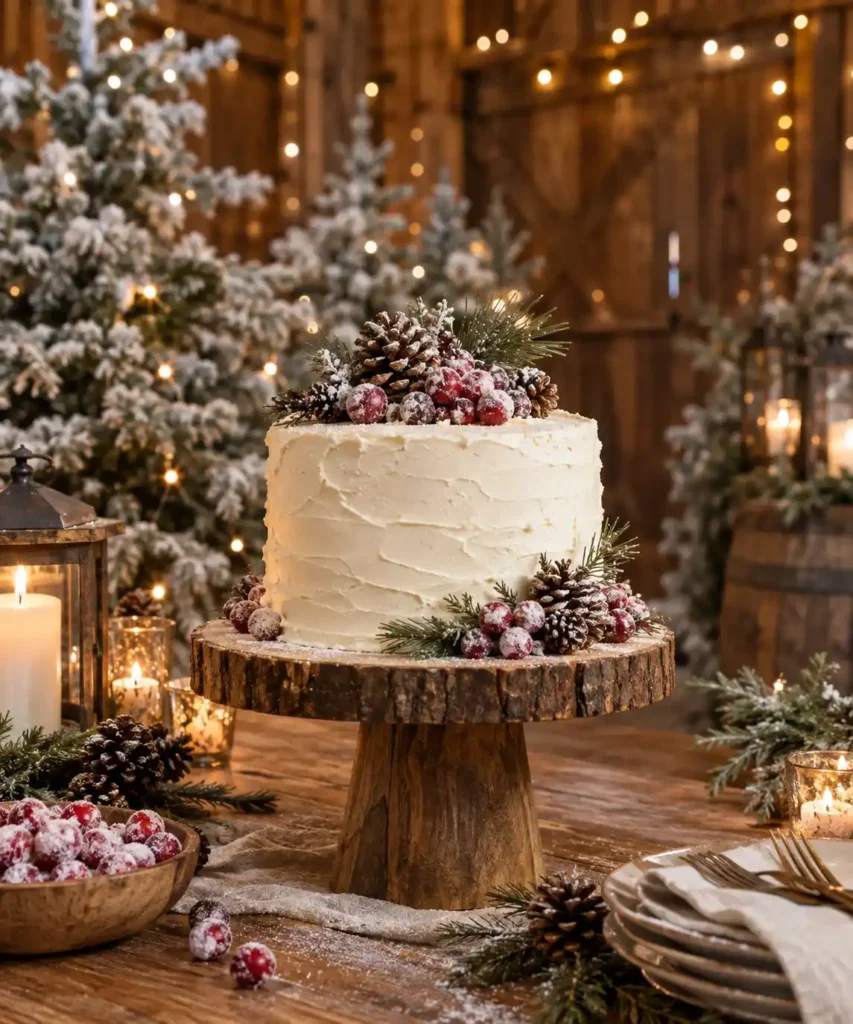
A barn lit by twinkling fairy lights and a backdrop of frosted pine trees frames the cake.
Sugar‑coated cranberries sit like tiny snowballs on the frosting, while small pinecones add texture and a pine‑needle feel.
The berries stay juicy because they’re brushed with a thin layer of simple syrup before rolling in powdered sugar, so each bite is sweet, not dry.
Raw pinecones must be boiled for ten minutes, then baked at 250°F for twenty minutes; this removes sap and kills any insects that could melt into the buttercream.
After cooling, a light brush of edible glue keeps the cones in place without slipping. This creates an instant winter scene, but the extra prep time can push the cake schedule tighter.
The look shines at intimate winter weddings of 50‑80 guests, especially when the couple wants a cozy, country vibe. It aligns with the current 2026 trend of edible natural décor for seasonal celebrations.
Quick tip: dust the boiled pinecones with a pinch of powdered sugar before attaching; the sugar acts as a barrier against any residual stickiness and blends with the frosting.
13. Naked Chocolate Cake with Caramelized Figs
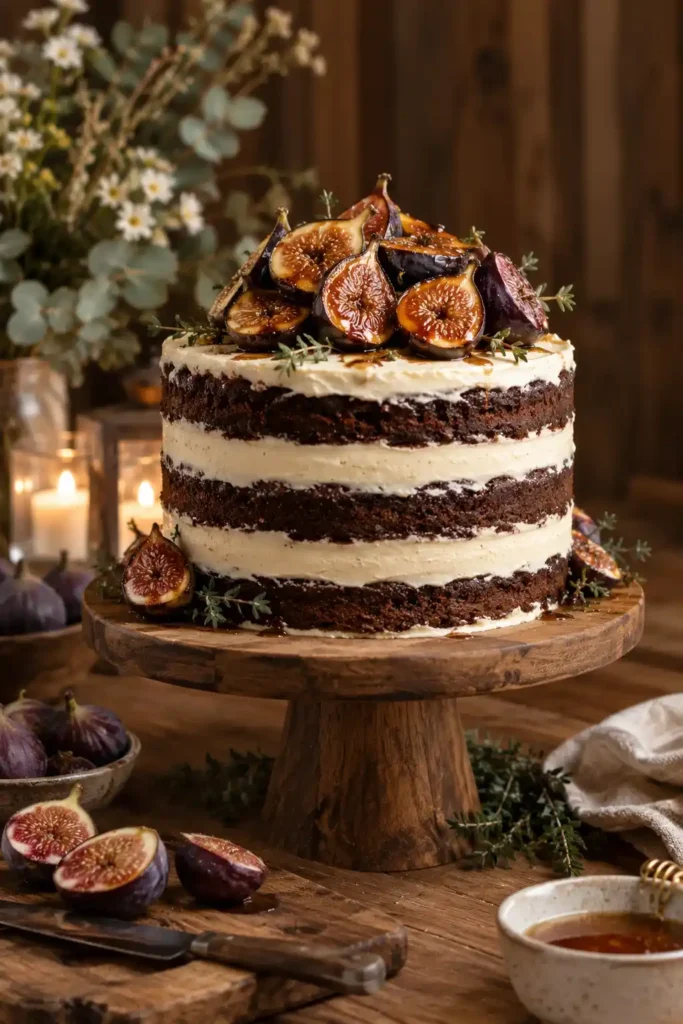
A dark chocolate naked cake with smooth vanilla buttercream shows off an exposed crumb, crowned by halved, caramelized figs that glisten amber and purple.
The bitter cocoa base pairs with the sweet, slightly smoky buttercream, while the figs add a honey‑rich burst that balances the richness.
The deep brown of the cake and the fig’s purple‑amber hues create an organic, grounded palette that feels instantly rustic.
Add the figs only a few hours before the reception. Once sliced, they release sticky syrup that can bleed into the buttercream and ruin the clean naked look.
A quick tip: sear each fig half on a hot skillet with a teaspoon of butter and a pinch of brown sugar for two minutes per side.
This caramelizes the surface and forms a thin glaze that slows weeping.
For upkeep, keep the cake covered in the refrigerator until the figs are placed. After the ceremony, remove any remaining figs and store the cake in an airtight container; it stays fresh for up to two days.
Place a thin layer of parchment between the cake and serving platter to catch any stray syrup during the first slice.
14. Rustic Apple Pie-Cake Hybrid
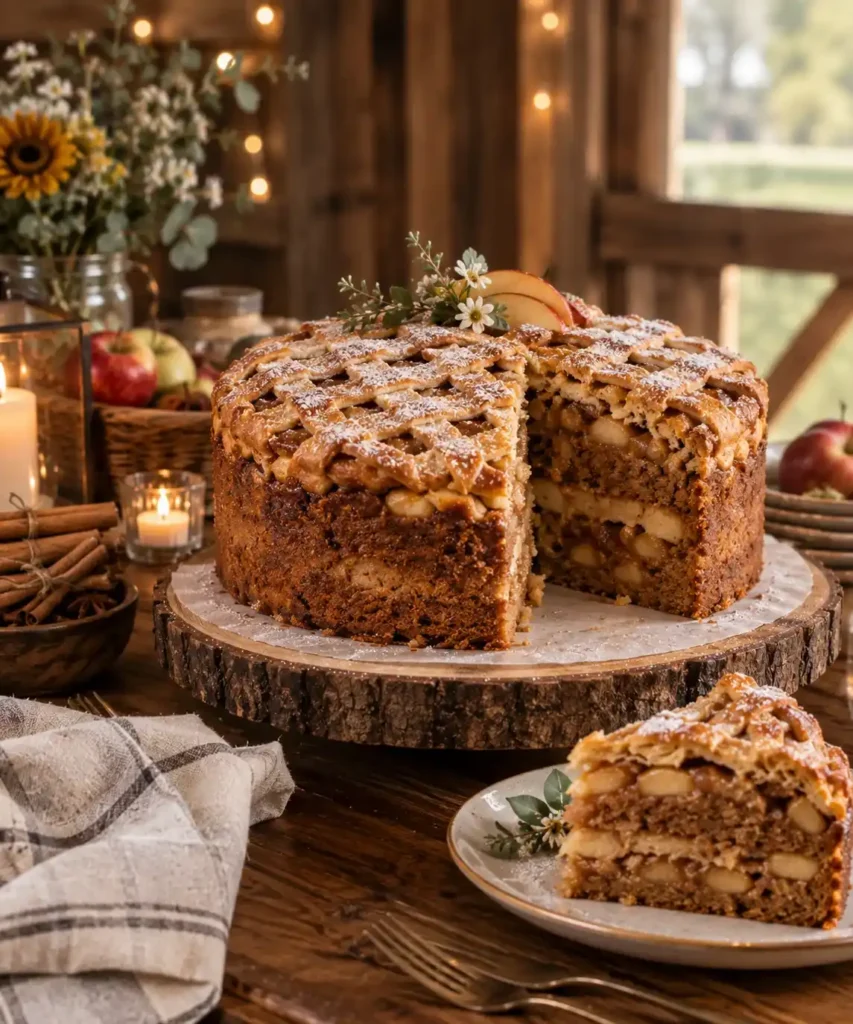
Unlike a classic tiered buttercream, the rustic apple pie‑cake hybrid pairs a dense, spiced apple cake with a flaky lattice crust on top.
The cake stays firm thanks to a recipe that adds an extra quarter cup of all‑purpose flour and a dash of oat flour, preventing the crumb from sinking into the filling.
The lattice is baked separately and placed on the cake just before the final reveal, so the pastry never sits in wet apple puree for more than a few minutes.
This avoids the soggy crust many pie‑lovers fear.
The look works best for barn or farmhouse weddings with 30‑80 guests, where the comfort‑food vibe matches a relaxed reception.
Couples who dislike towering buttercream will appreciate the down‑to‑earth feel.
For those who find the lattice too labor‑intensive, a naked apple‑spice cake topped with sliced caramelized apples offers a similar flavor without pastry work.
The trend peaked in fall 2023 and remains a favorite for seasonal weddings, especially in October and November.
A budget‑friendly route uses a store‑bought refrigerated pie crust and a boxed spice cake mix, still delivering the same visual impact.
Place a thin parchment circle between the cake and lattice right before serving to keep the crust crisp.
15. Spatula-Painted Floral Buttercream
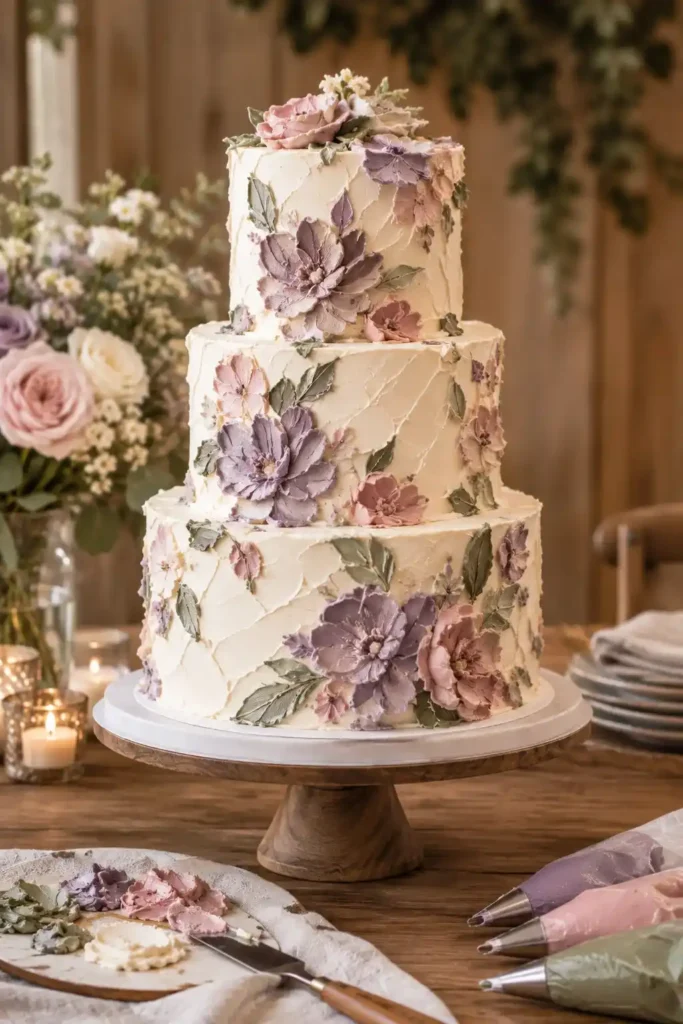
A palette knife sweeps across the ivory base, laying down thick, textured petals in muted lavender, sage, and dusty rose.
The technique creates three‑dimensional blooms that stay edible and fresh even under July heat. Start with a smooth buttercream coat using an offset spatula.
Chill the cake for 15 minutes, then fill three piping bags with the colored buttercream.
Hold the palette knife at a 45‑degree angle and drag it through the frosting, shaping each petal in a loose, natural curve. Work from the outer edge inward to build depth.
The result mimics real flowers without the wilt risk.
Because the method demands a cake artist skilled in sculpting buttercream, prices can climb to $800‑$1,200 for a three‑tier cake.
If the budget feels tight, consider sugar‑paste flowers or edible printed sugar sheets as a more affordable, still edible alternative.
DIY‑savvy couples can try the technique at home, but steady hands and a chilled cake are essential; a common mistake is applying the buttercream on a warm surface, which causes the flowers to melt and lose definition.
Ask the baker to prep the colored buttercream in separate piping bags the day before the wedding to keep colors vivid.
16. The Bare Wood Slice Base with a Minimalist Cake
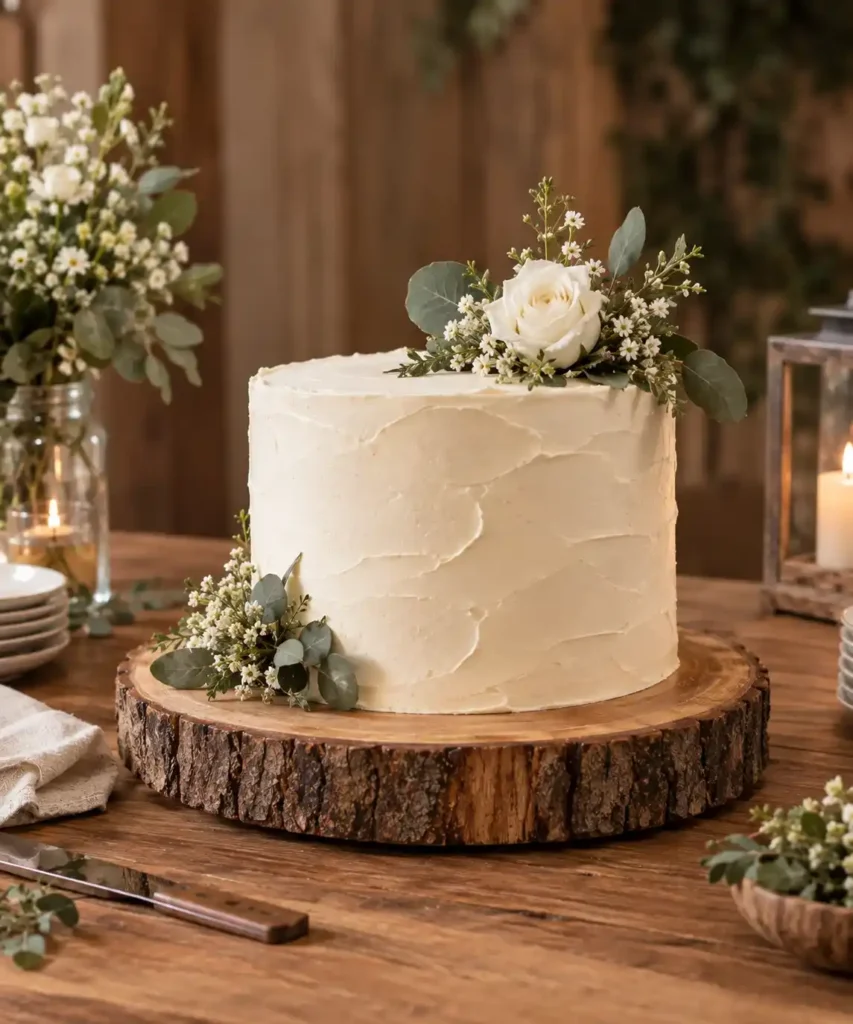
A raw‑edge cedar slice, 12 inches in diameter, serves as the cake’s base. Place a smooth white buttercream tier directly on the slice for a clean, minimalist look.
Before it touches the dessert, dry the wood for at least 48 hours, sand the edges smooth, and coat every surface with food‑safe mineral oil.
The oil creates a barrier that locks out moisture and prevents loose sawdust from contaminating the cake’s bottom layer.
If you prefer a quicker setup, line the slice with a single sheet of parchment paper and then set the cake board on top; the parchment catches any stray particles.
This base works best for cakes up to three tiers; larger cakes may need a sturdier board beneath the wood to avoid flex.
For a budget‑friendly option, source a reclaimed barn plank from a local salvage shop instead of a specialty vendor.
DIY‑ers can finish the slice at home with a brush and a small bottle of mineral oil; professional rentals often include pre‑sealed slabs, which saves prep time but adds $80‑$120 to the rental fee.
After the celebration, wipe the slice clean and re‑apply a thin coat of oil every few months to keep it ready for future events.
Pick Your Favorite Rustic Cake
You’ve just toured options from a sturdy bundt‑cake tower to a chocolate ganache tree‑trunk masterpiece.
Choose one style that fits your venue’s temperature and your skill level, then do a small test run before the big day.
Keep a food‑safe barrier between any natural elements and the frosting, and chill the cake before adding drips or delicate decorations.
Trust the tips you’ve learned, and you’ll avoid the common pitfalls that ruin many outdoor cakes.
Pin this guide for your planning board, share it with a fellow bride‑to‑be, and let your cake become the centerpiece that truly holds up.
Frequently Asked Questions
What are some rustic wedding cake ideas?
Popular rustic wedding cake ideas include semi-naked cakes accented with fresh berries, textured buttercream that mimics stucco or wood bark, and displays using natural elements like lavender, rosemary, and wooden tree-slab stands.
How do you keep a naked wedding cake from drying out?
To prevent a naked cake from drying out, bakers should apply a light coat of simple syrup to each sponge layer before assembly, use a denser cake recipe (like sour cream or oil-based sponge), and keep the cake boxed or wrapped until shortly before the reception.
Is it safe to put real wildflowers on a wedding cake?
Only if they are certified non-toxic and organic. Many common country flowers like eucalyptus, ivy, and sweet peas are toxic. Always wrap stems in floral tape or use plastic cake spikes to prevent the plant’s sap from contaminating the cake.
How do you display a wedding cake safely on a wood slice?
Never place a cake directly on raw wood. Ensure the wood slice is sanded, clean, and sealed. Always place a greaseproof cake board or a sheet of parchment paper between the bottom of the cake and the wood to prevent sawdust and sap transfer.
What type of frosting is best for a rustic outdoor wedding?
Swiss meringue buttercream or white chocolate ganache are best. They hold up much better to warm temperatures and humidity than standard American buttercream or cream cheese frosting, which tend to melt and slide off the cake easily.