25 Practical Fall Wedding Ideas That Actually Work in Real Life
When the venue manager says sunset is at 5:30 p.m. and the forecast dips into the high 40s, a dreamy fall wedding quickly turns into a logistics puzzle. Short daylight, chilly guests, and busy autumn vendor calendars are the usual culprits.
The best fall wedding ideas solve those problems with style: a hot cider station at arrival, fleece throws for outdoor seating, warm amber lighting, and a portrait schedule built around the early sunset. Below are 25 of them, each with pros and cons, a tip, budget note, or checklist where it helps, and a lower-cost swap when the first option won’t suit your venue.
Still choosing your palette? See our guide to fall wedding colors. Short on time? Jump to the picks by problem or the weather contingency checklist.
1. Velvet Table Runners Paired with Raw Wood Tables

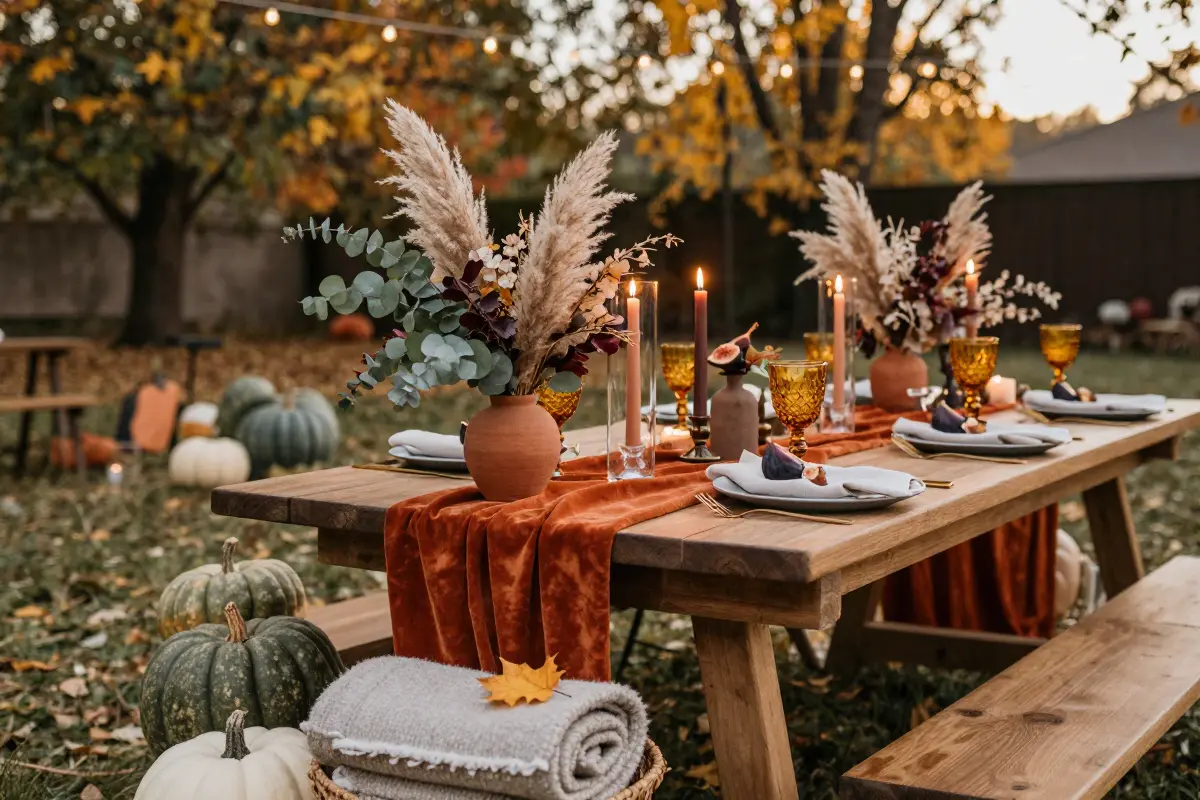
A deep-rust velvet runner drapes the length of a raw-sawn banquet table, its plush nap catching the candlelight while the wood grain stays visible at the edges. A cotton-blend velvet stays put and photographs well, but it pulls in dust, so give it a quick shake and brush before plates arrive. Skip high-sheen polyester velvet, which slides under plates and shows every wrinkle.
For an outdoor reception, consider a linen runner instead. It is lighter, sheds dust more easily, and folds flat for storage. To keep either one in place, attach the runner with small silicone dots at each corner; they hold without marring the wood.
- Plush texture adds warmth
- Pairs well with rustic wood
- Easy to drape
- Heavier than other table fabrics
- Attracts dust and lint
Use silicone dots to secure the corners without damaging the table.
2. Dried Floral Installations Mixed with Hearty Fresh Foliage
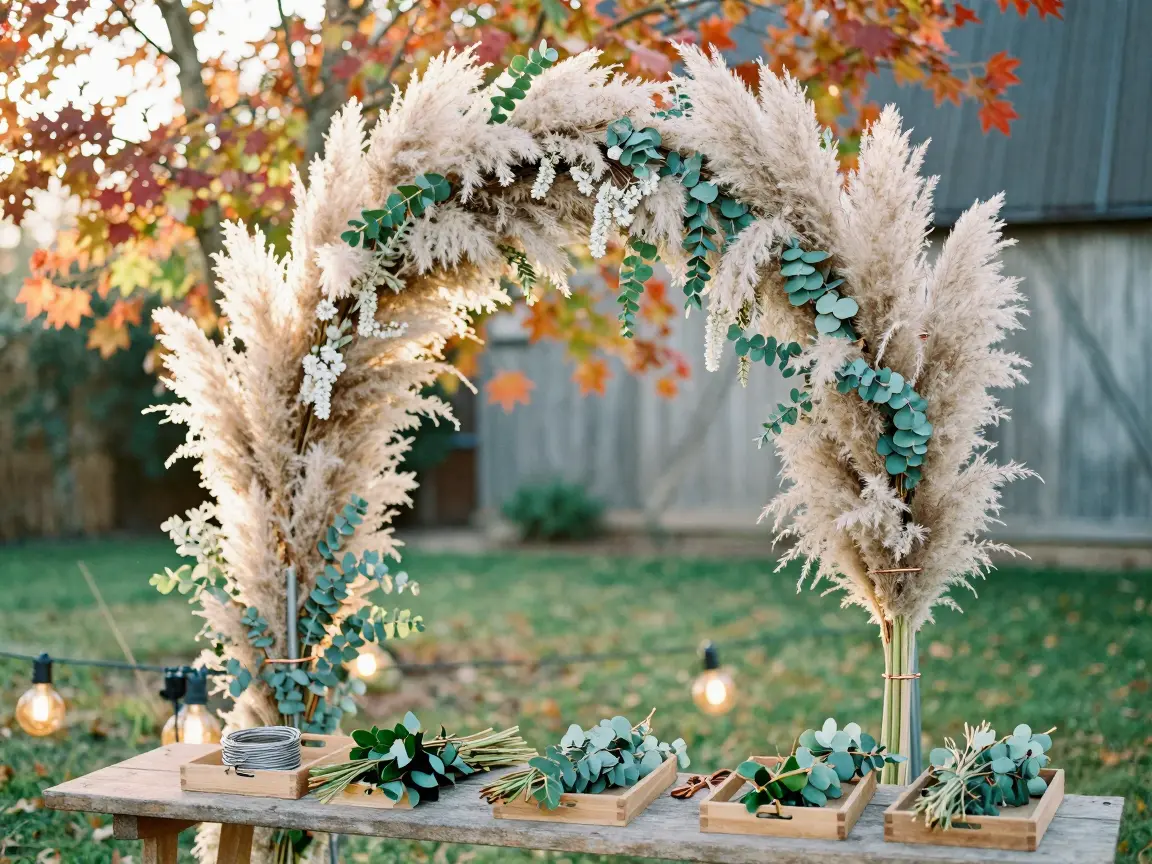
Wire-wrapped stems let you blend airy pampas plumes with sturdy salal sprigs without bruising delicate dried heads. Start with a metal arch, attach fresh eucalyptus bundles with zip ties, then slip in dried lunaria and pampas on the same ties, spacing them to hide the gaps.
The mix stays lush while keeping costs down. A budget version uses bulk dried stems and basic floral wire; a splurge version uses custom-finished copper frames and hand-picked, sustainably sourced botanicals. A common mistake is over-tightening the ties, which cracks brittle dried stems. Keep the installation covered in transit and store extra bundles in a cool, dry room for reuse at the reception.
- Visual depth
- Cost-efficient
- Dried stems turn brittle in the cold
- Pieces can shed
Wind can topple an unsecured arch. Anchor it, and check every tie before guests arrive.
3. Self-Serve Hot Spiced Apple Cider Station at Guest Arrival

Guests shiver on the lawn while they wait, and a cold welcome sets the wrong tone. Set up a self-serve hot spiced apple cider station by the entrance so guests can sip while coats are hung. An insulated beverage carrier (the Cambro type) holds hot cider for hours without drawing power, unlike electric urns that can trip temporary outdoor circuits.
Offer a plain, alcohol-free batch and set mini bourbon bottles on the side for guests who want a warm cocktail. Heat the cider in a large pot on a portable burner under a pop-up canopy, then transfer it to the carrier to hold the temperature. This setup suits a mid-sized fall wedding of roughly 50 to 120 guests and keeps the arrival area cozy without a permanent kitchen.
- Easy setup
- Low cost
- Needs a heat source to prepare the batch
- Cools slowly over a long arrival window
If you use an electric urn instead, check the venue’s power capacity first.
What you’ll need:
- Insulated beverage carrier
- Insulated lid or blanket
- Mini bourbon bottles
- Sign marking the alcohol-free option
4. Local Apple and Pear Escort Card Displays
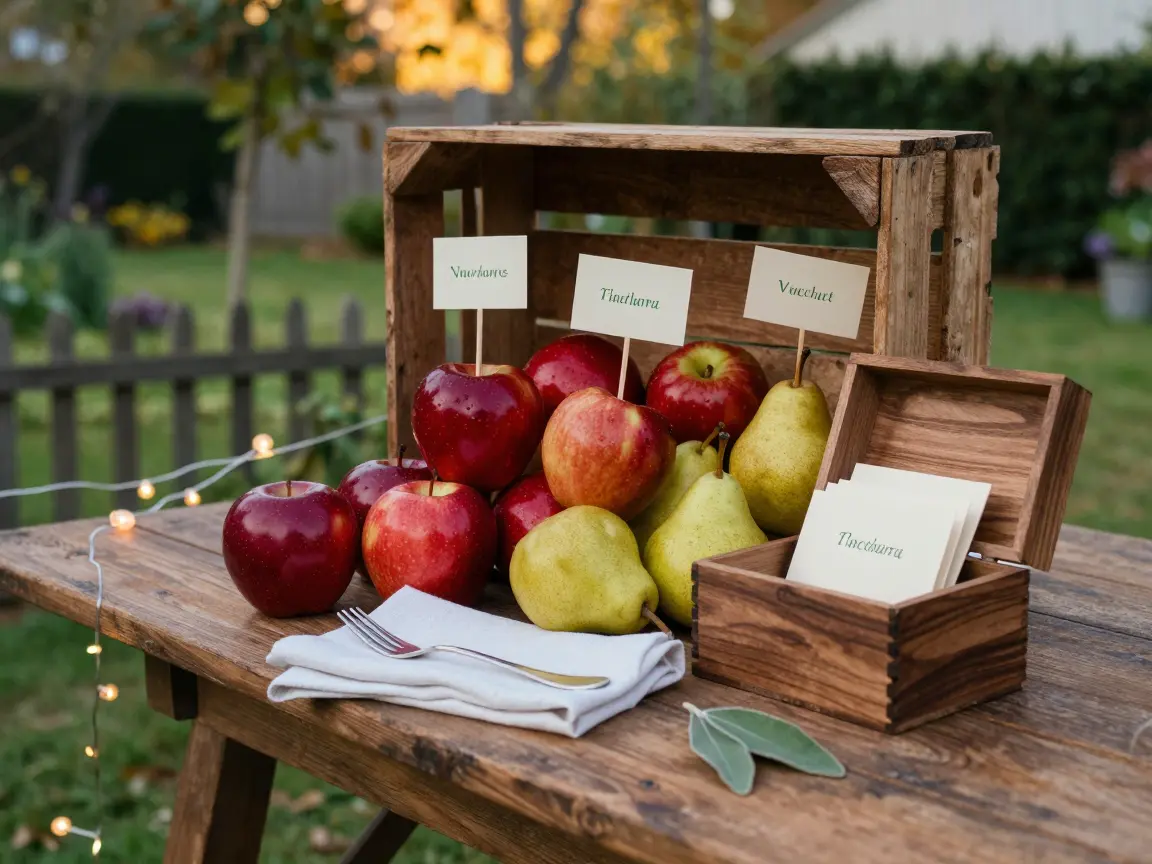
A wooden crate of crisp apples and pears sits by the entrance, each fruit holding a small cardstock escort card. The fruit’s weight keeps the cards steady in a light breeze, unlike flimsy paper tents that flip. Wash and dry the fruit, then secure each card with a toothpick pushed into the stem end so it can’t slide.
Choose firm fruit rather than soft, overripe pieces, which release sugars that attract yellowjackets at an early-autumn afternoon reception. If the orchard look isn’t your style, small wooden boxes with printed cards make a reusable, insect-free alternative. Custom acrylic fruit holders run about $30 each, while the budget approach of fresh fruit costs roughly $2 per pound.
DIY is realistic if you live near an orchard; otherwise, buying pre-washed fruit or renting holders saves time.
- Natural, rustic look
- Biodegradable
- Can attract insects
- Limited reuse
Overripe or unwashed fruit can draw yellowjackets.
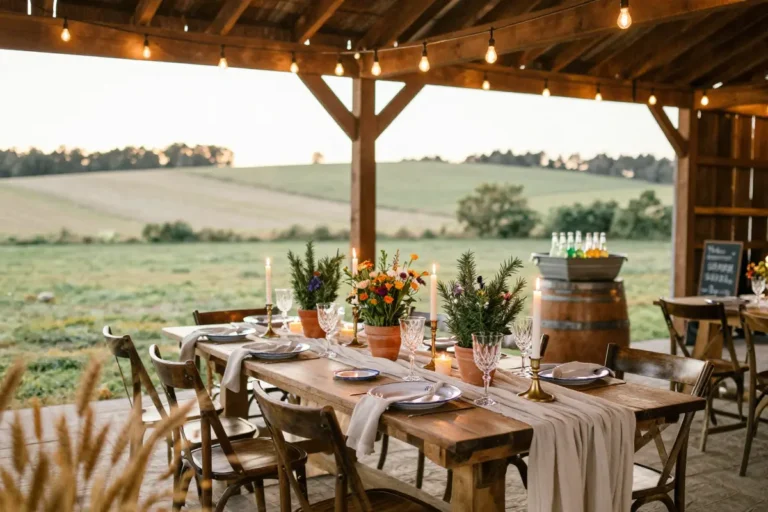
5. Terracotta and Stoneware Vessel Centerpieces

A 12-inch terracotta pot with a raw, unglazed surface anchors a low, communal floral arrangement. Pair it with thrifted stoneware bowls of varying heights for a tiered look that feels hand-picked rather than store-bought. Because the vessels are shallow, skip floral foam and use a kenzan pin frog or a coil of chicken wire to secure the stems.
Before adding water, line the interior with a clear waterproof sealant; porous clay otherwise soaks up liquid and adds weight. Even so, these pieces are heavy, so plan for extra hands at setup and strike. They rinse clean and store well for future events, making them a reusable alternative to disposable glass. For more table ideas, see our wedding table decorations guide.
- Earthy texture
- Reusable
- Heavy to move
- Unsealed clay is porous
Use a kenzan pin frog or a chicken-wire coil in shallow vessels to hold stems without foam.
6. Fleece Throw Blanket Baskets for Outdoor Seating
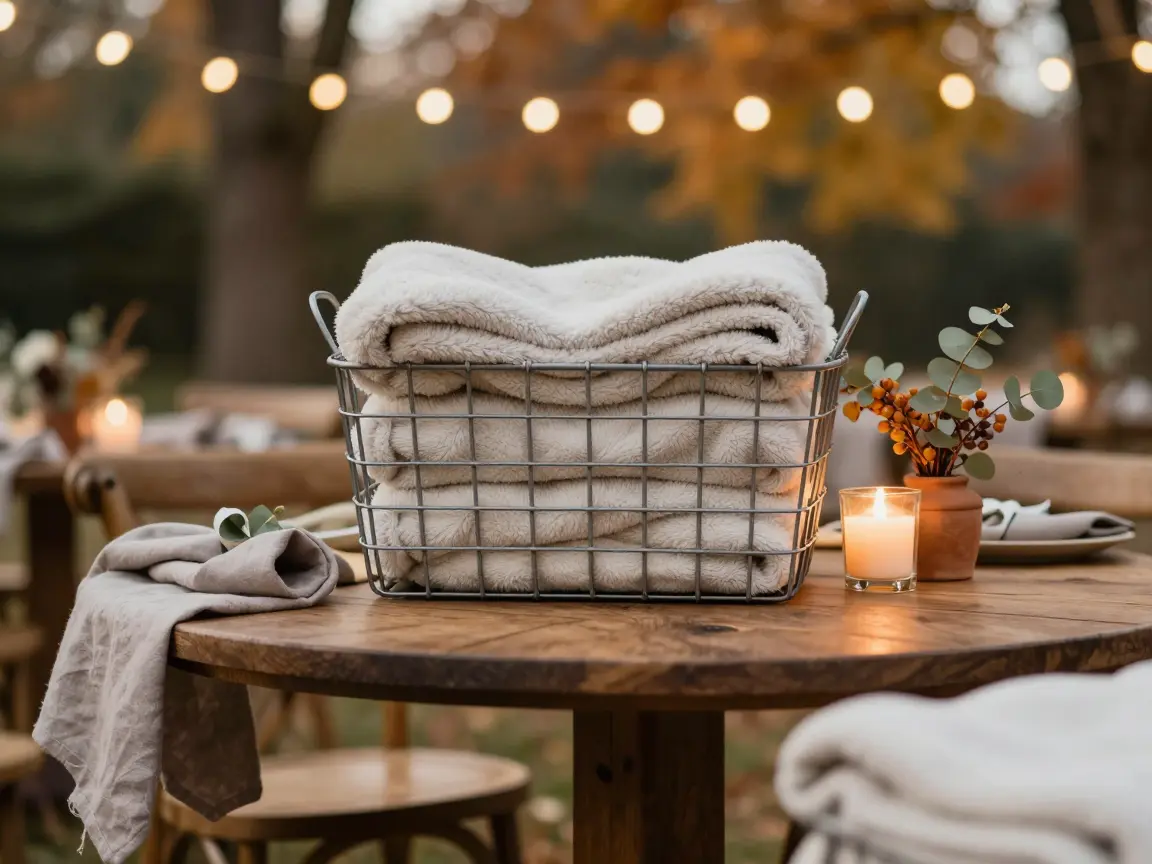
Shivering guests ruin the cozy mood of an outdoor fall ceremony, especially once the temperature drops after sunset. Fill baskets or wire crates with anti-pill polar fleece throws (about 60 by 80 inches) and place them at the ceremony entrance and near reception seating. Fleece stays soft after repeated washing and costs less than wool, which makes buying in bulk realistic.
Plan one throw for every two to three guests rather than one per guest. That keeps the budget in check and avoids a mountain of unused blankets after the night. Fold each blanket in thirds before it goes in the crate; the neat stack signals guests to take one without fuss. This works best for outdoor ceremonies and cocktail hours where seating clusters are clearly defined.
- Warm, low-maintenance fabric
- Easy bulk storage afterward
- Upfront cost adds up
- Can run short if the guest count grows
- Blanket size: about 60 by 80 in
- Fabric: anti-pill polar fleece
- Quantity: about 1 per 2 to 3 guests
7. Deep Berry and Ochre Taper Candle Groupings in Hurricane Glass
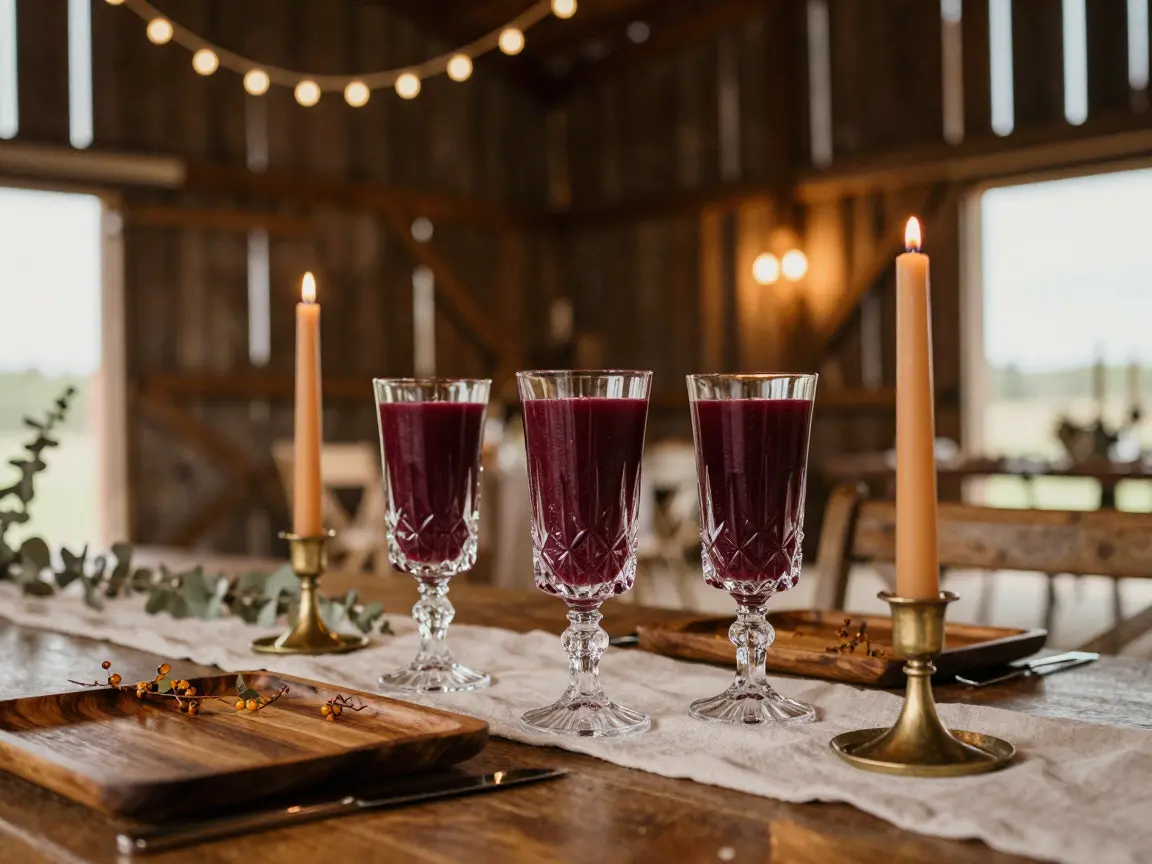
Tall hurricane glasses holding deep-berry and ochre taper candles create a warm focal point in a barn or tent, especially when the glasses are staggered at three heights. The rich hues echo autumn foliage, and the glass walls shield the flames from drafts and keep wax off the linens.
Check venue rules first, because some venues ban open flames on tables even when they are enclosed in glass. The tradeoffs are the rental cost for the glassware and the need to readjust the sleeves as drafts shift, which can make colored wax tunnel onto the tabletop. If the budget or venue rules make candles impractical, swap in battery-operated LED tapers in matching colors.
- Warm, seasonal color palette
- Visually striking centerpiece
- Added rental expense
- Needs frequent adjustment
Confirm that your venue permits open flames, and keep flames at least 12 inches from any fabric.
8. Wood-Fired Mini Pizza Truck for Late-Night Comfort Food
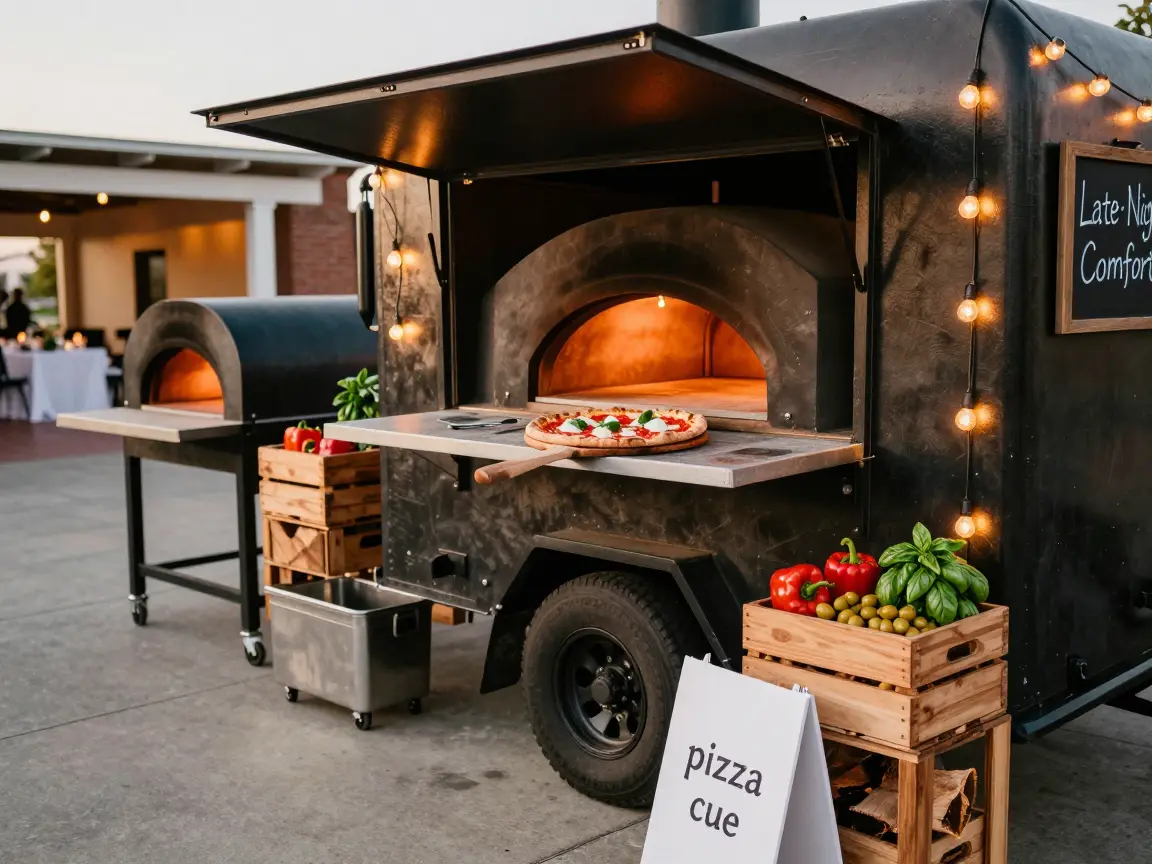
A wood-fired pizza oven on a trailer can turn out a crisp Margherita in about 90 seconds, giving guests a warm bite after the plated dinner. Confirm with your venue that a truck can park beside the reception hall; you’ll need a flat, load-bearing surface and clearance around the flue. Plan on roughly one pie every couple of minutes per oven, so a single oven works for a late-night snack for 80 to 150 guests when service is spread over a couple of hours.
To keep lines short, hand out pizza tickets with the place cards so service is staggered, and ask the vendor about a backup oven. Buying a custom oven runs $12,000 to $18,000, which only makes sense for a caterer; renting a stone-deck oven costs about $800 to $1,200 for the night. For more food ideas, see our guide to outdoor wedding food.
- Fresh comfort food
- Quick service per pie
- Lines can build
- Needs flat, load-bearing space
- Oven heat-up time: allow 30 to 60 minutes
- Pie cook time: about 90 seconds
- Ideal guest count: 80 to 150
9. Charcuterie Table Runners Instead of Plated Salads

A grazing table works like a communal first course. Butcher-paper runners give guests a long, flat surface piled with cured meats, aged cheddar wedges, and fresh figs, so they can graze instead of waiting on individual plates. Set platters over shallow trays of ice to keep dairy and sliced meats cold.
Follow USDA food safety guidance: perishable food should not sit out for more than two hours (one hour above 90°F), so replace platters on a schedule rather than topping up old ones. A DIY spread with a 10-pound slab of cheddar and a few pounds of local salami can run about $150 for a modest crowd, while a licensed caterer may charge $300 to $500 including staff.
If you lack space for a central table, serve individual salad bowls in the same flavor profile. DIY works when you have a dedicated helper and plenty of coolers; otherwise a catering crew saves time and handles food safety.
- Communal feel
- Strong visual impact
- Limited room for florals
- Spoilage risk
Keep dairy and meats on ice, and discard perishables after two hours out (one hour if it’s above 90°F).
10. Muted Brass and Brushed Gold Flatware Rentals

Matte brass flatware catches the eye before any food arrives and sets a warm tone for a fall reception. Pair it with dark stoneware dinner plates, and optionally a brass charger, so the metallic sheen has something moody to anchor against and the table doesn’t feel too bright.
The catch is care and cost. Matte finishes can show water spots and scratches, and rental companies often charge a premium over standard flatware. Prices vary by region, but quotes of roughly $0.50 to $1 per piece (about $5 to $6 for a five-piece setting) are common for gold flatware, with gold chargers around $5 to $8 each. Ask for written quotes before you commit.
If the budget won’t stretch, use polished silver or classic stainless steel, which is often included in venue and catering packages and washes easily. A practical compromise is to reserve the brass for the sweetheart table and head table and use standard flatware for everyone else.
- Warm metallic glow
- Cohesive fall palette
- Can show water spots
- Rental premium over standard flatware
- Gold or brass flatware rental: about $0.50 to $1 per piece
- Gold charger rental: about $5 to $8 each
- Standard stainless flatware: often included with the venue or caterer
11. Smoked Old Fashioned and Bourbon Signature Cocktails
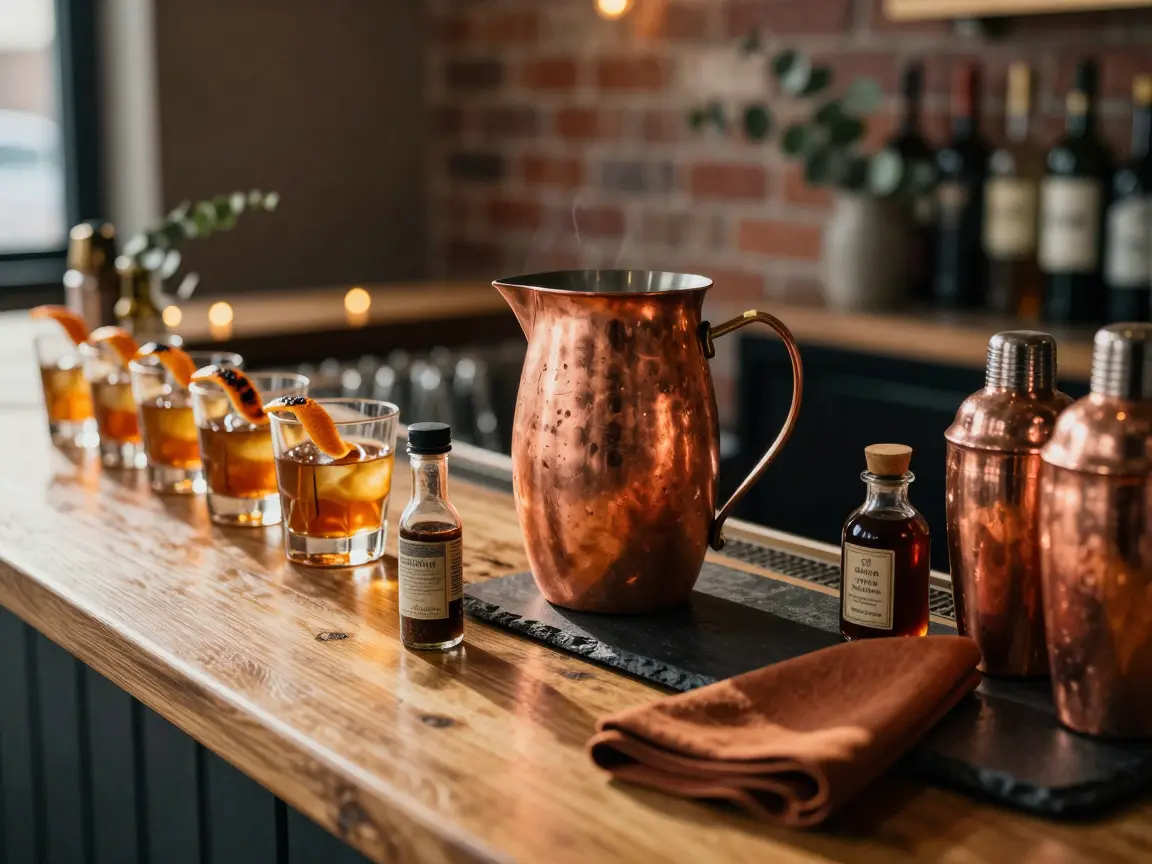
A hand-smoked Old Fashioned looks impressive, but each table-side infusion of charred orange peel and cedar smoke adds minutes to service. When guests line up for a signature bourbon cocktail, those minutes multiply into a bottleneck that stalls the whole bar. Batch the drink instead: combine the base spirit with spiced bitters and a pre-smoked simple syrup.
Char an orange peel with a kitchen torch, stir it into simple syrup, and smoke the syrup with an untreated, food-grade cedar plank on a stovetop or smoker, then chill it overnight. The batch pours like any other cocktail, so bartenders finish drinks in seconds while guests still get a smoky aroma, and you avoid extra torches or smoke guns at each station. For more bar planning, see our guide to outdoor wedding bars.
- Aromatic depth
- Signature-drink feel
- Hand-smoking slows service
- Equipment cleanup
Make a batch of cedar-smoked simple syrup the night before and store it in an airtight bottle for quick pours.
12. Pressed Fern and Autumn Leaf Acrylic Signage

Sandwiching pressed fern fronds and autumn maple leaves between clear acrylic panels makes a natural welcome sign or bar menu that stays flat and legible. Dry the foliage in silica gel for at least 48 hours; removing all moisture prevents the foggy condensation that forms when damp leaves are sealed in. Once completely dry, arrange the pieces on a matte backing and secure the two acrylic sheets with clear standoff hardware or sealed edges.
Trim and polish the edges for a clean finish. The sign wipes clean with a damp cloth and can be reused, but keep it out of prolonged direct sun, which can fade pressed leaves and, over years, yellow lower-grade acrylic.
- Elegant, organic look
- Easy to customize
- Needs careful drying
- Leaves fade and acrylic can yellow in strong sun
- Dry the leaves in silica gel
- Arrange them on a backing
- Secure them between the acrylic sheets
13. Naked Spice Cake with Salted Caramel Drizzle

A naked spice cake lets the warm aromas of cinnamon, ginger, and cardamom shine, while a light cream-cheese frosting keeps the layers visible. A salted caramel drizzle adds a finishing touch that suits a rustic barn setting.
Because the cake isn’t sealed in fondant, have it delivered just before the reception and set on a sturdy board; humid tent air can make an exposed sponge slide or crumble. Ask the baker to dowel the tiers, since stacking layers without dowels lets the middle sag under its own weight. Cream-cheese frosting should stay refrigerated until close to serving time. If you’re worried about drying in a drafty venue, choose a semi-naked cake with a thin buttercream coat; for more options, see our rustic wedding cake ideas.
- Visible layers
- Warm spice flavor
- Dries quickly in drafts
- Needs precise delivery timing
Ask your baker to place dowels in each tier so the structure stays stable.
14. Portable Fire Pit Stations with S’mores Ingredients
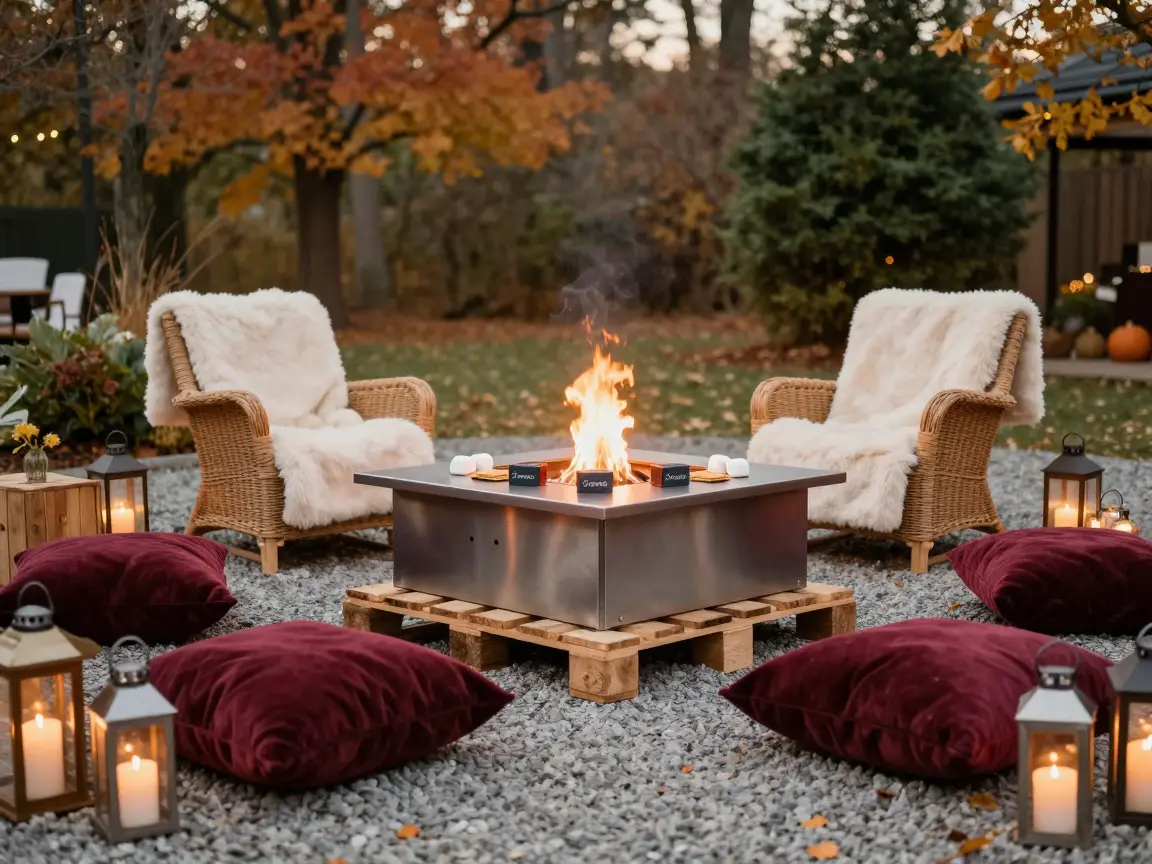
Place a low-profile propane fire pit in each seating circle and pair it with a pre-packaged s’mores kit: marshmallows, a square of chocolate, and a graham cracker. Set each pit on a stable, non-flammable surface, never on wooden pallets, and keep the flame away from delicate gowns and tuxedos. A 60-inch circle comfortably fits eight to ten guests, which makes this a good fit for mid-sized fall weddings of roughly 50 to 80 people.
Some venues and local fire codes restrict open flames, including propane pits, so ask your venue and local fire authority whether a permit or written safety clearance is required. Keep the surrounding ground level so formal shoes don’t catch on uneven terrain, and assign a helper to supervise each circle.
- Cozy, interactive dessert
- Easy guest flow
- May need a permit or safety clearance
- Needs supervision
Open flames and uneven ground are a poor mix with formal shoes. Level the area and keep a fire extinguisher nearby.
15. Tailored Tweed and Wool Outer Layers for the Wedding Party
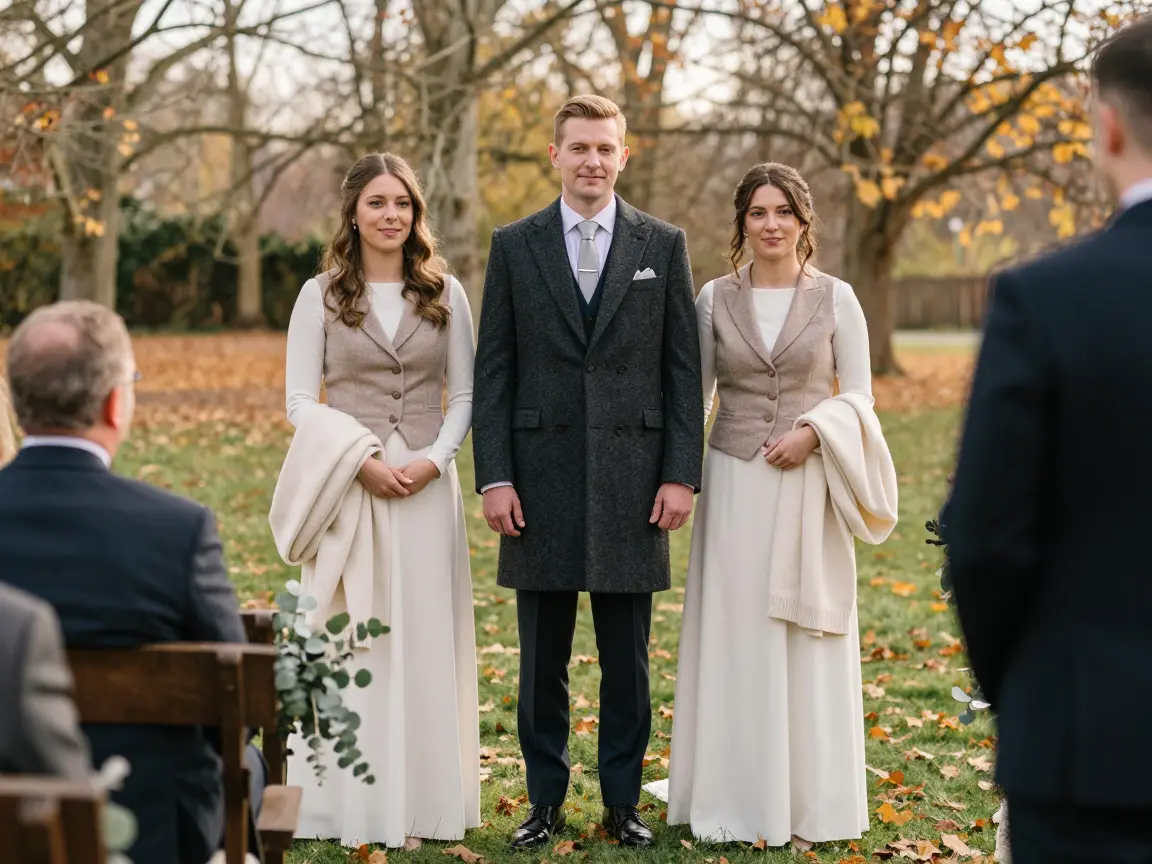
A charcoal tweed overcoat over a navy suit adds instant structure and keeps the groom’s party warm for a crisp October ceremony. For the bridal party, soft wool wraps or cashmere cardigans in coordinating colors give the same cozy layer with a more relaxed feel.
Make sure the coat’s shoulder seams sit at the natural shoulder line, and try it on over the full outfit, since a coat that is too snug will pinch and limit arm swing in outdoor photos. Heavy wool can also get uncomfortably warm once everyone moves into a heated reception. If that’s a concern, swap the overcoat for a lightweight ponte trench that still offers texture without bulk. This works best when the ceremony is outdoors and the reception is indoors.
- Adds warmth
- Elevates texture
- Can limit arm movement
- Can overheat indoors
Try the outer layer on over the full outfit, and have it adjusted so the seams don’t pull across the shoulders or chest.
16. Fresh Fig, Plum, and Pomegranate Garnish Accents

Dark-red fig halves, plum wedges, and ruby pomegranate seeds spill across the dessert table like tiny jewels, instantly deepening a fall palette. Arrange them in shallow bowls, or scatter them on cake slices, cheese boards, and cocktail glasses just before guests arrive.
A common pitfall is letting cut fruit sit for more than an hour, when exposed pulp and juices can bleed into white linens and pale pastries and leave stubborn stains. Keep a fresh batch on hand for top-ups, and reuse the decorative bowls for the next event’s garnish station.
- Rich color contrast
- Seasonal feel
- Juice can stain linens
- Short prep window
Brush cut figs and plums lightly with lemon juice to slow browning, and keep the bowls on trays so juice doesn’t reach the linens.
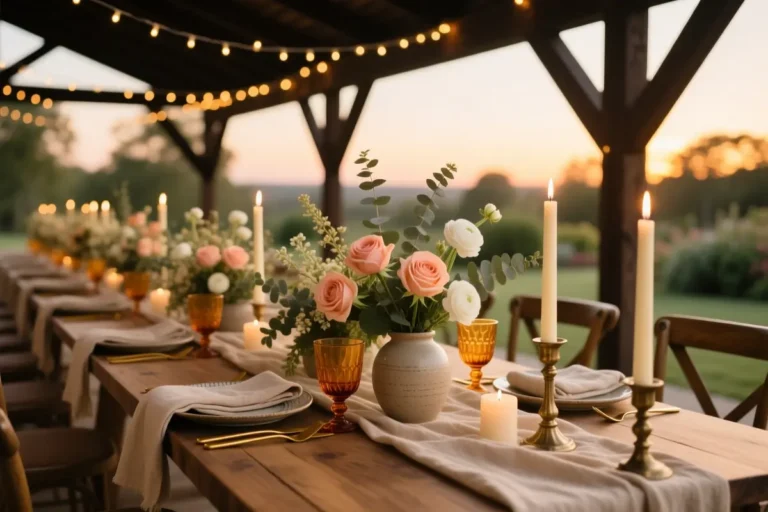
17. Ambient Overhead Amber Bistro String Lighting
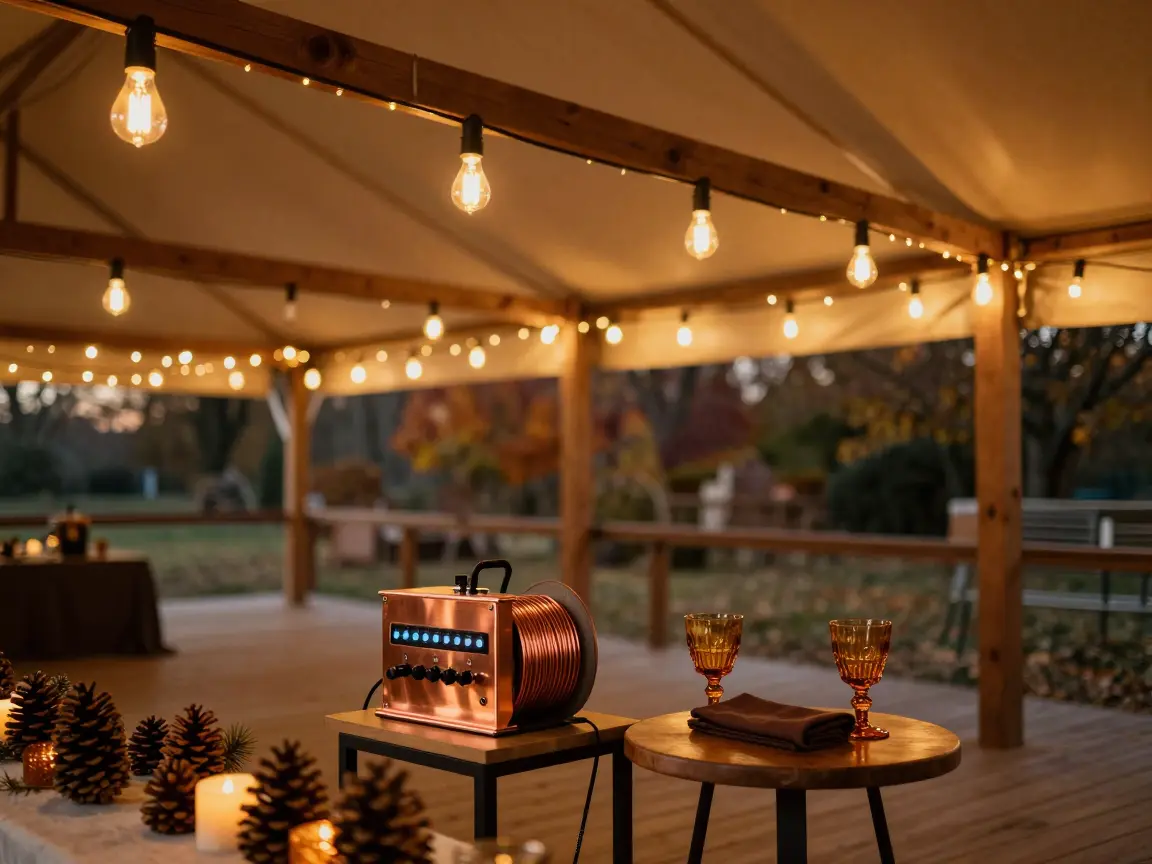
Warm amber bistro strings at about 2200 K give a venue a sunset glow, while cool-white strands flatten shadows and make an autumn palette look sterile in photos. The look works best when the bulbs are dimmable and hung on sturdy rafters or tent lines with adjustable clamps; otherwise the light can wash out detail or leave dark pockets. A high-end kit with copper-coated cables and professional rigging runs $300 to $500 and may include a controller for precise dimming.
A budget version with standard LED Edison bulbs on zip-tie strings costs $80 to $120, but expect to spend extra on clamps and a basic dimmer. DIY is doable for small pavilions, but larger tents usually need a hired electrician to meet safety codes.
- Warm, cozy glow
- Matches the fall palette
- Requires precise rigging
- Needs a dimmer for balanced exposure
- Bulb temperature: about 2200 K
- Typical string length: 30 ft
- Power draw per bulb: about 5 W
18. Vintage Amber Glass Goblet Rentals for Water and Wine
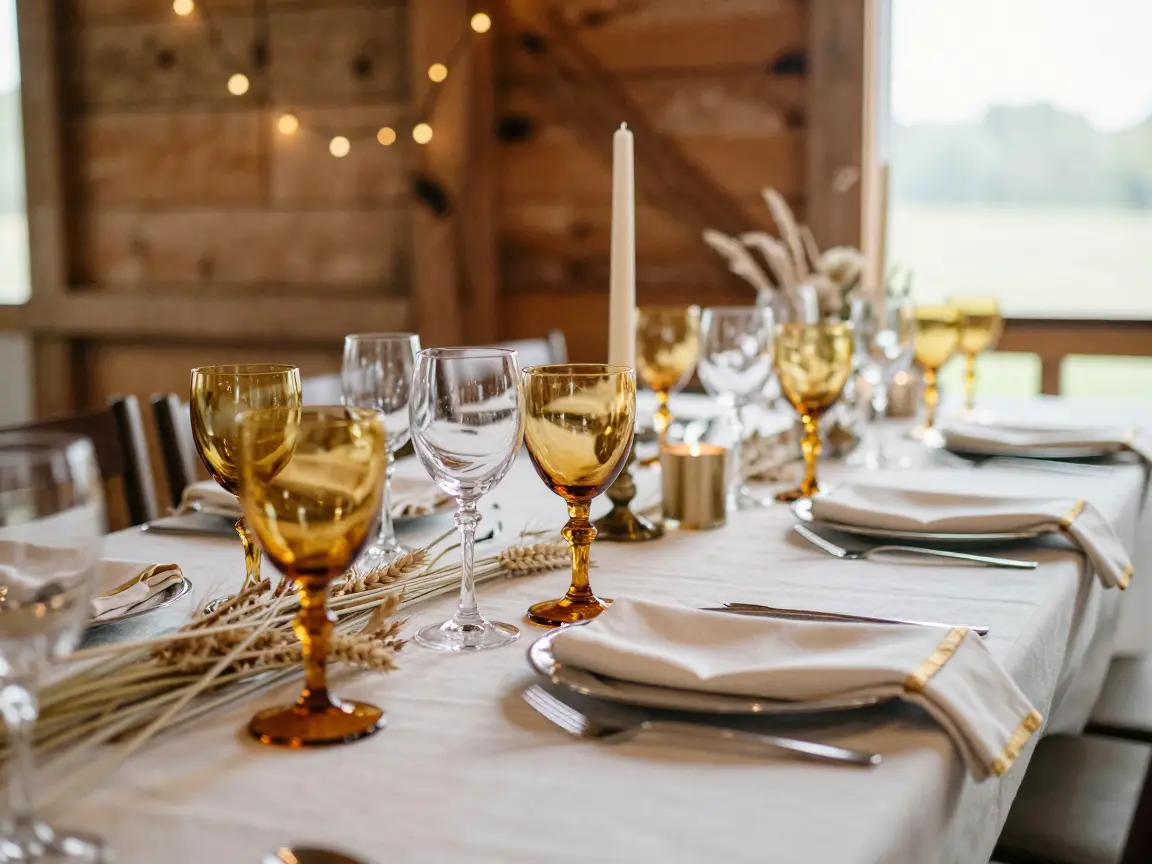
Amber-tinted goblets add a warm pop of color to a neutral linen table without the bulk of a full floral palette. The tint is subtle enough that guests still see the wine’s true color, yet the glass itself becomes the accent. Renting a single water goblet per place setting avoids the steep replacement fees that come with full antique sets, where a single chip can cost $15 to $30 in breakage fees.
If the vintage look feels too fragile, choose modern amber-toned glasses, which rent for less and mix well with standard clear glassware for a layered effect. For a splurge, buy a set of genuine 1930s amber stemware at $120 to $180; a budget rental of contemporary amber glass runs $2 to $4 per glass.
- Warm color accent
- Subtle hue
- Mixes easily with neutrals
- High breakage fees
- Limited availability
- Vintage rental: $5 to $8 per goblet
- Modern amber rental: $2 to $4 per goblet
- Genuine 1930s set (purchase): $120 to $180
19. Autumnal Velvet Ring Boxes and Hand-Torn Silk Ribbon Details
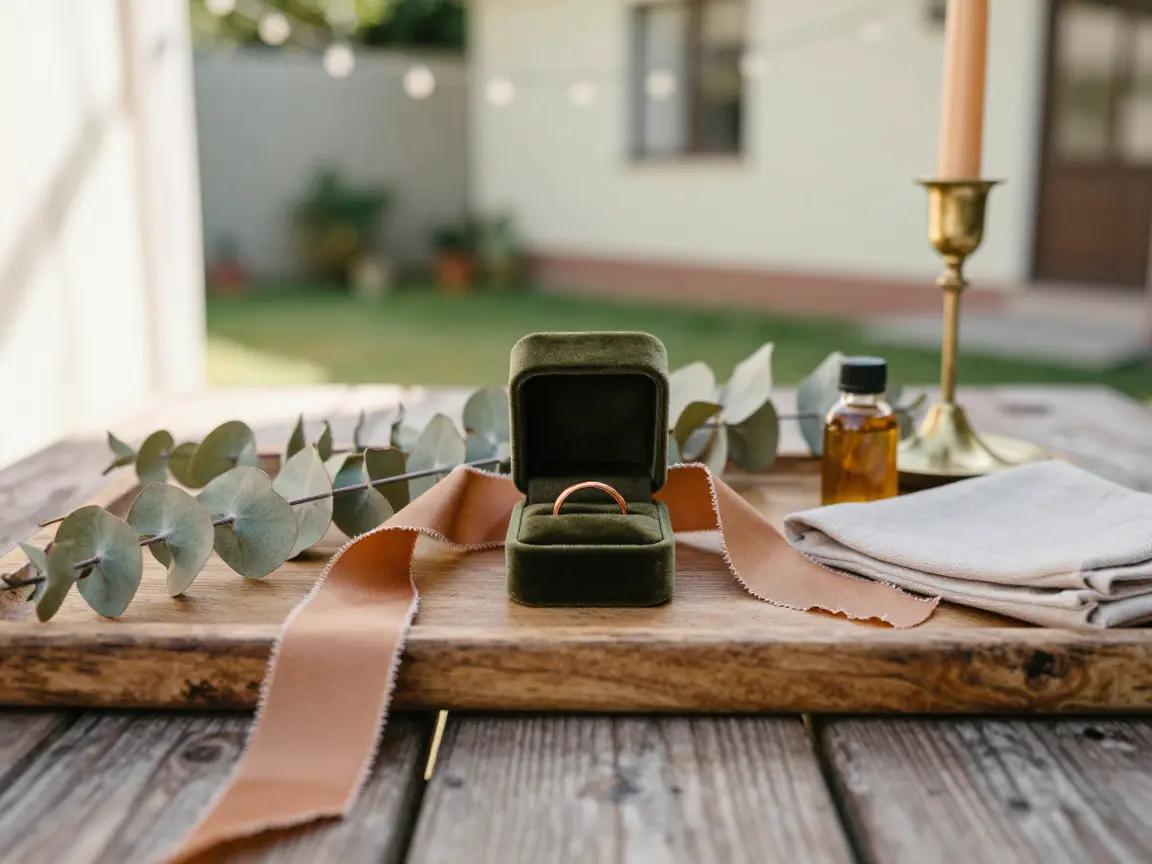
A deep-olive velvet ring box tied with hand-torn silk ribbon dyed ochre reads as fall at a glance. Styled on a reclaimed-wood tray with dried eucalyptus, the textures pop in a morning flat-lay. This is a photo detail rather than a guest-facing one, so keep the budget small and focus on how it looks in pictures.
Hand the styled box to your photographer before you get dressed so they can shoot it while you’re still in your robe. Tear the ribbon rather than cutting it so the raw fringe shows.
- Rich seasonal texture
- Photo-ready detail
- No impact on the reception itself
- Extra prep time
What you’ll need:
- Deep-olive velvet ring box
- Hand-torn silk ribbon
- Reclaimed-wood tray
- Dried eucalyptus
20. Acoustic Guitar and Cello Duo for Cocktail Hour
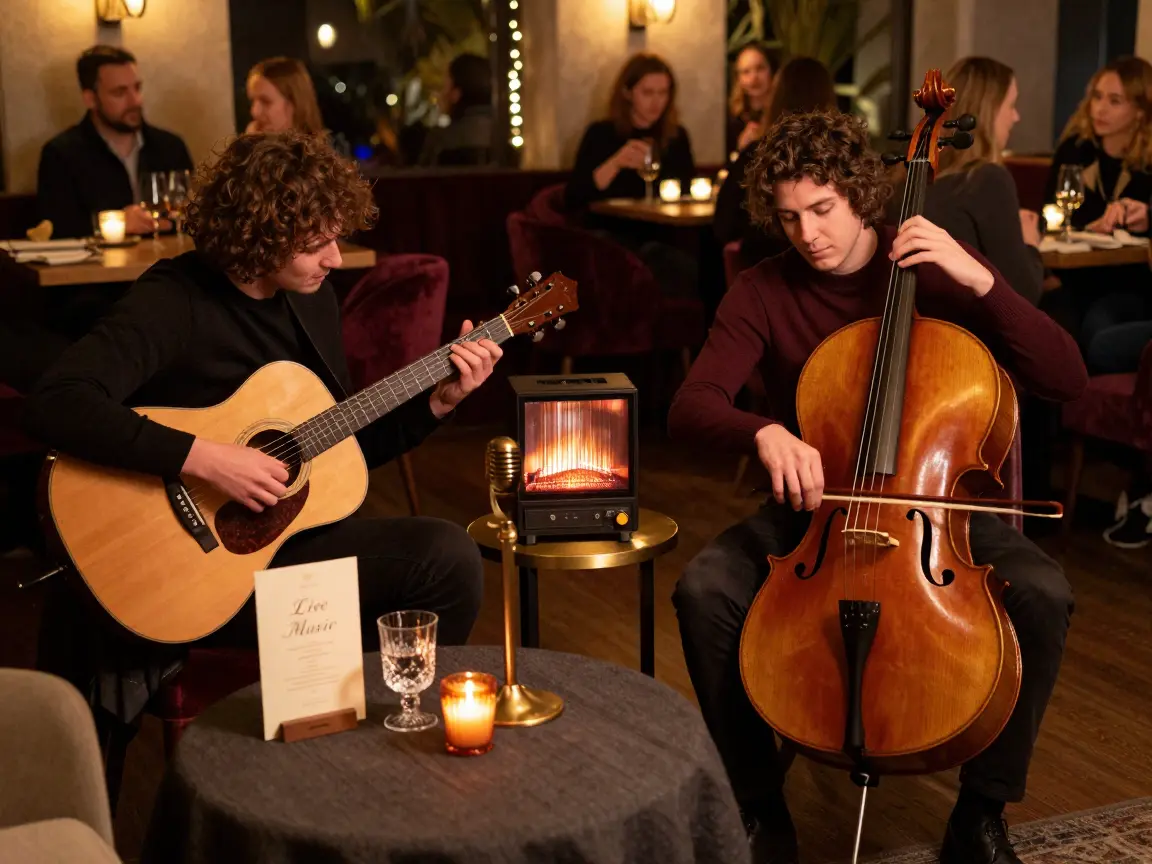
A guitar-and-cello duo creates a warm, intimate backdrop while guests mingle, and low-key arrangements keep cocktail hour relaxed. Acoustic instruments are sensitive to cold and sudden temperature changes, so give the musicians a covered, sheltered spot, ideally warmed, if the venue gets chilly. Cold air can throw strings out of tune and, in extreme cases, stress the wood. A curated playlist of similar acoustic tracks avoids the climate risk entirely.
For a splurge, book a professional string ensemble that brings its own protective cases and a plan for cold weather. On a tighter budget, hire local music students and set up a small space heater for the performers, keeping it well away from the instruments (at least a few feet), since direct heat can damage the wood.
- Warm, intimate sound
- Fills the cocktail-hour gap
- Tuning drifts in the cold
- Needs extra equipment
Keep instruments out of cold, damp air and away from direct heat.
21. Mini Loaf and Local Honey Jar Guest Favors
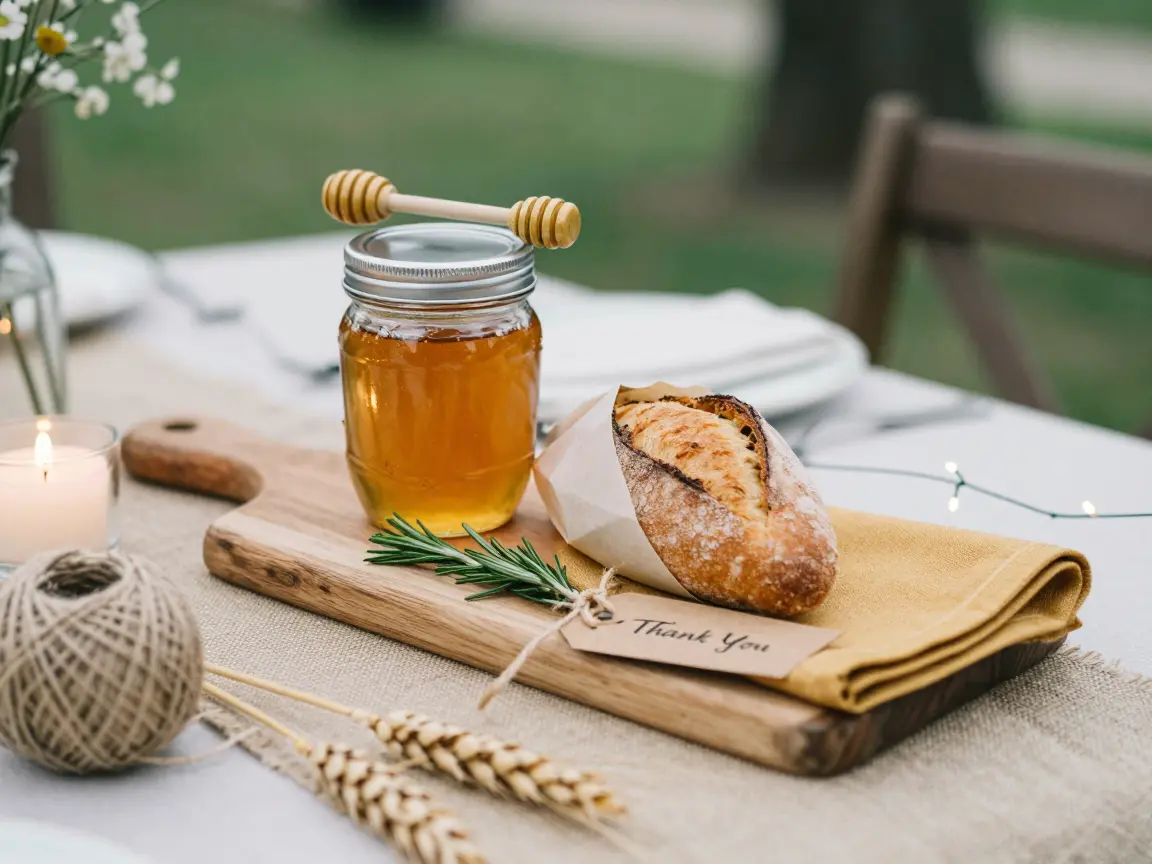
Mini sourdough loaves paired with a small jar of local honey feel personal and are genuinely useful. A fresh loaf stays soft for only about 24 hours, so schedule a bakery pickup the morning of the ceremony, wrap each loaf in parchment, and slip it into a zip-top bag to keep the crust from drying out. Choose a glass honey jar with a screw lid so guests can reuse it.
If the short shelf life worries you, swap the loaves for potted herbs, which have no timing issue and double as reusable decor. A boutique bakery runs about $4 to $6 per loaf; a grocery-store version costs $2 to $3. DIY baking is doable, but the labor and timing often make a local baker the smoother choice. Want more ideas? See our 26 practical wedding favors.
- Edible and useful
- Reusable jar
- 24-hour freshness window
- Needs careful packaging
Wrap loaves in parchment, then seal them in zip-top bags to prevent staling.
22. Heirloom Pumpkin and Squash Cluster Aisles
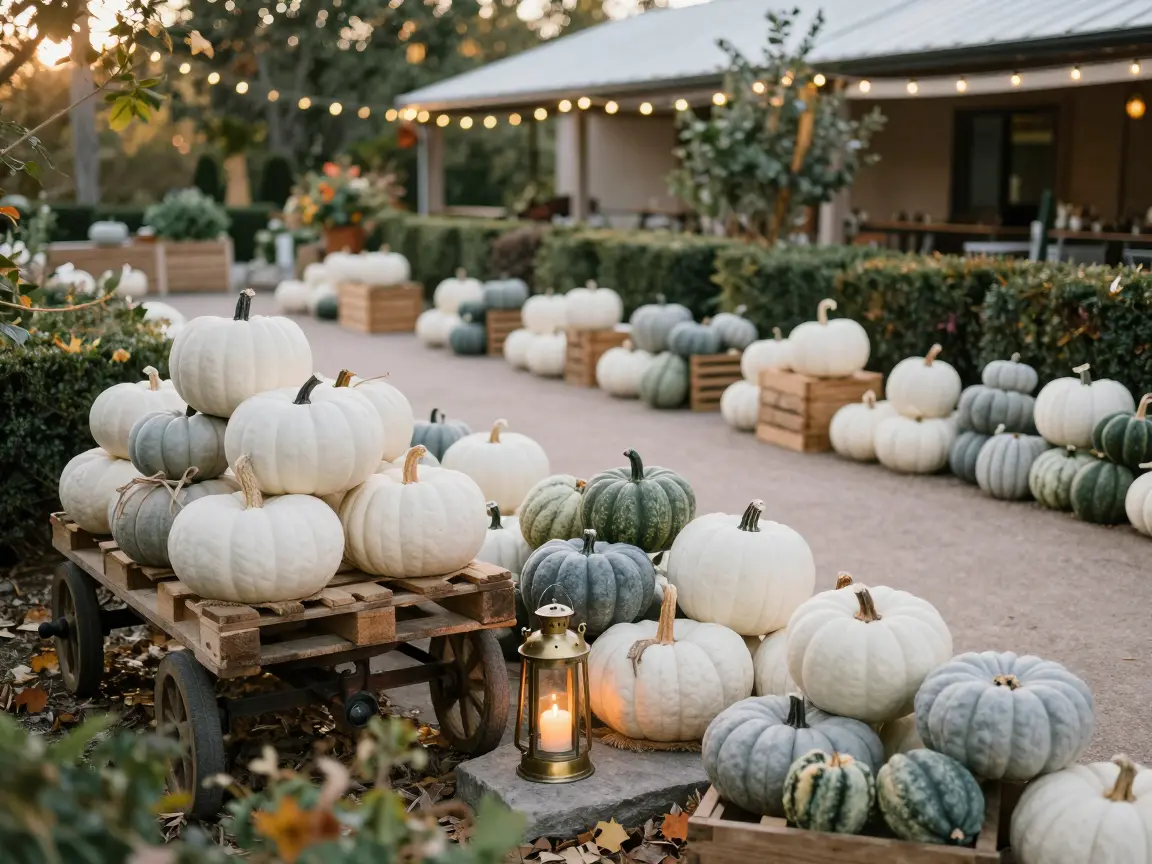
White Lumina and blue-gray Jarrahdale pumpkins line the ceremony aisle in loose clusters, creating a subtle fall palette that feels more sophisticated than traditional orange gourds. Source heirloom squash from a local farm or wholesale grower; buying in bulk, such as 50 pumpkins at once, usually costs less than retail and supports local growers. Each pumpkin can weigh several pounds, so bring a garden cart and pre-stack clusters on pallets or trays for quick placement.
For a polished look, hire a florist or stylist to arrange the clusters with greenery; for a budget version, buy from a farm stand and arrange them yourself with helpers. Plan a post-wedding donation to a community garden or a compost service to avoid venue disposal fees.
- Elegant natural palette
- Low waste if reused
- Heavy to transport
- Needs a disposal plan
Use a garden cart to move clusters, and pre-assemble them on pallets or trays for easy placement.
23. Deep Evergreen and Walnut Wood Ceremony Backdrop
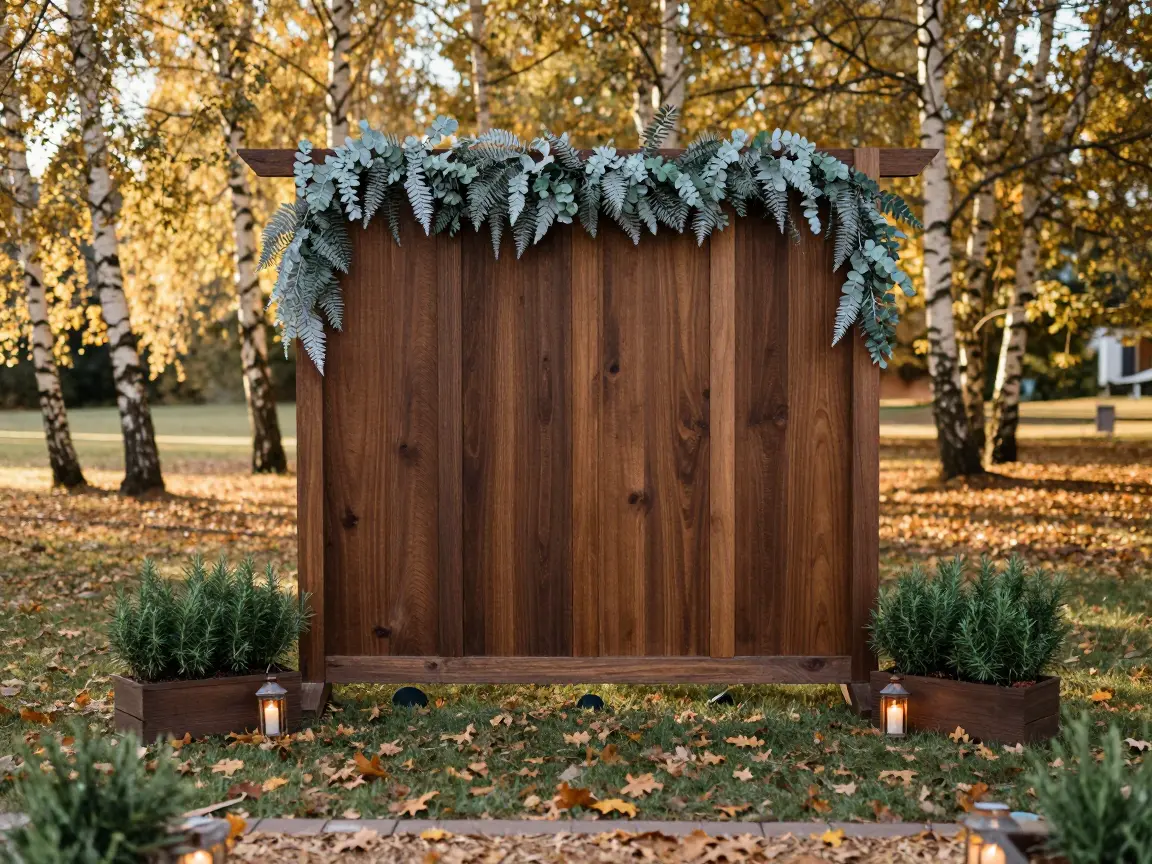
Hidden ballast weights tucked under planter boxes let a cedar or stained-walnut arch stay put on soft autumn turf. Build a simple rectangular frame from 2x4s, then attach a few sprigs of eucalyptus and dusty-gray ferns for a minimal evergreen touch. The timber looks striking in a clearing, but tall arches act like sails in the wind, and heavy footers can flatten grass, so camouflage them with mulch or potted herbs.
For most couples, buying a prefabricated arch or hiring a rental company saves time and avoids structural headaches, while a skilled DIYer with a drill and level can manage it on a small budget. For more options, see our wedding arch ideas.
- Strong visual impact
- Easy to customize
- Needs heavy ballast
- Can damage grass
- Build the timber frame
- Add ballast in the planter boxes
- Attach minimal greenery
24. Hot Donut and Specialty Espresso Cart Service

Late-night guests often hit a sugar slump after dinner, and a hot-donut and specialty espresso cart fills the gap with fresh cider-glazed donuts and barista-made drinks. The setup needs careful power planning: a dual-boiler espresso machine typically needs its own dedicated 120 V, 20 A circuit, and a double-cart setup needs two, which older barns or venues with limited amperage may not provide.
The cart itself takes up roughly 7 by 4.5 feet. Plan an 8-by-10-foot area, or more for a larger crowd, so a line can form without blocking the dance floor. The splurge option includes a custom-branded cart and a portable generator; a budget-friendly choice rents a standard cart and uses existing venue power.
- High-energy dessert boost
- Matches fall flavors
- Needs a dedicated 20 A circuit
- May need a generator
Check the venue’s amperage before booking to avoid breaker trips.
25. Golden Hour Portrait Schedule Built Around Early Sunset Times

By early November the sun can set around 5:00 p.m. in many parts of the US, and the soft, golden light photographers love lasts only about the hour before sunset. To use it, build the timeline backward from sunset: schedule a first look and couple portraits so they finish just before the sun goes down, and start the ceremony early enough that the rest of the day isn’t in the dark.
The tradeoff is breaking from tradition: you’ll finish getting ready earlier and may skip a long post-ceremony portrait session. If your venue or vendors can’t accommodate an early start, plan a short twilight session after dinner using portable LED panels that mimic sunset tones. Check the exact light window for your date and location with a sunrise-sunset app.
- Captures warm light
- Works with an early sunset
- Requires an early first look
- Limits ceremony timing options
Planning checklist:
- Confirm sunset time for your date and venue
- Move hair and makeup earlier
- Book your photographer for golden hour
Fall Wedding Ideas at a Glance: Picks by Problem
- Keeping guests warm: the cider station (idea 3), fleece throws (idea 6), fire pit stations (idea 14), and tweed and wool layers (idea 15).
- Handling the early sunset: taper candles (idea 7), amber string lighting (idea 17), and the golden-hour schedule (idea 25).
- Tight budget: dried florals (idea 2), stoneware centerpieces (idea 5), fleece throws (idea 6), honey and mini-loaf favors (idea 21), and pumpkin aisles (idea 22).
- Late-night food and drink: the pizza truck (idea 8), grazing table (idea 9), batched smoked cocktails (idea 11), and donut and espresso cart (idea 24).
- Confirm power with your venue first: string lighting (idea 17) and the espresso cart (idea 24), plus any electric urn or heaters.
Prices in this list come from the ranges given in each idea, and local quotes vary, so get written estimates before you book.
Fall Wedding Weather Contingency Checklist
Use this list to pack the gear and backups for a fall wedding that could face sudden chill, gusty wind, or early darkness, and share it with your venue manager and rental coordinator.
- Heaters: propane or electric patio heaters, as your venue allows, placed away from fabric and walkways.
- Traction: heavy-duty rubber matting or outdoor rugs over lawn or gravel, secured at the edges.
- Extra throws: fleece blankets stored in sealed bags so they stay dry.
- Backup lighting: battery-powered LED string lights and lanterns to extend light after dark.
- Wind-rated shelter: a tent or canopy with sidewalls to protect tables and decor.
- Power backup: a generator or battery power source to keep lights and heaters running.
- Fire safety: dry lighters or matches, a fire extinguisher, and signage for fire pits and candles.
- Warm drinks: insulated dispensers for hot cider or coffee.
- Spare layers: a small stash of neutral fleece jackets or wraps for guests who get cold.
A frequent oversight is forgetting a reliable power backup, which leaves lights and heaters dead, so check the generator’s fuel level the night before. For the full timeline, use our free wedding planning checklist.
Frequently Asked Questions
What is the best color for a fall wedding?
Deep tones such as rust, forest green, or burgundy, paired with neutrals like taupe, cream, and warm brass, make the most versatile fall palette. Earth tones also avoid clashing with changing seasonal foliage.
How do you keep guests warm at an outdoor fall wedding?
Place fleece throws at the ceremony entrance and near reception seating, add patio heaters around the perimeter where the venue allows them, and offer warm arrival drinks such as hot cider or tea before guests take their seats.
What time should a fall wedding ceremony start?
For an outdoor ceremony, start about two hours before sunset, often between 3:00 and 4:00 p.m. in late fall, so there is daylight left for portraits before temperatures drop. Check the sunset time for your date and location, because it shifts quickly in autumn.
How do you plan a fall wedding around early sunsets?
Build the timeline backward from sunset: schedule a first look and couple portraits for the hour before sunset, hold the ceremony earlier in the afternoon, and add string lights or LED lanterns for the reception after dark.
What are some budget-friendly fall wedding ideas?
Dried floral installations with fresh foliage, thrifted stoneware centerpieces, fleece throws, farm-stand pumpkins for the aisle, and a batched signature cocktail all keep costs down without losing the seasonal feel.
How do you budget for fall wedding floral arrangements?
Lower costs by combining dried grasses, local seasonal foliage, and hearty blooms like chrysanthemums or dahlias rather than relying entirely on premium imported out-of-season cut flowers.