
20 Wedding Vow Examples That Sound Natural in Real Life
20 Wedding Vow Examples That Sound Natural in Real Life
At my cousin’s rehearsal, the bride recited a vow that sounded like a museum plaque, stiff, over‑the‑top, and impossible to breathe through. When the words don’t match the couple’s daily rhythm, the moment feels rehearsed rather than shared.
In this list, I’ve gathered twenty vow templates that stay grounded, stay under two minutes, and skip the melodramatic clichés. You’ll find structures that sound natural aloud, balance heartfelt sentiment with everyday promises, and can be customized for any style, from concise classics to blended‑family affirmations. Each example includes a quick tip for trimming excess phrasing so the delivery stays smooth and sincere, making your vows feel truly yours.
1. The Concise Classic: Timeless Structure Without Stiff Archaisms
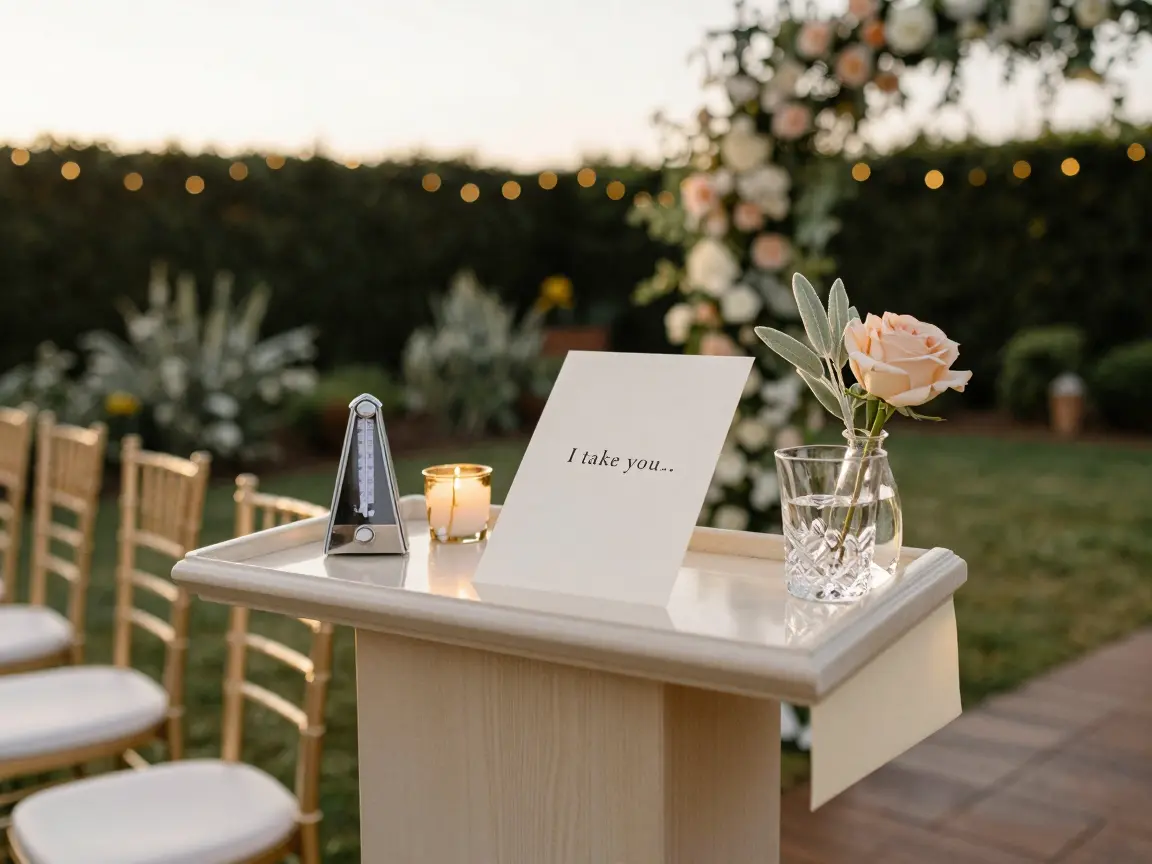
The three‑sentence cadence, “I take you…,” “I promise…,” “I will…”, gives a natural rhythm that steadies a trembling voice.
Each line lands on a strong beat, so the speaker can breathe between phrases and stay on track. Because the wording avoids archaic “thee” and “thou,” it feels secular yet still honors the vow tradition.
The downside is that stripping out personal quirks can make the vows sound generic, especially in larger, formal weddings.
If you want more intimacy, swap the middle promise for a specific memory or shared goal. Read the three lines aloud with a slow, steady count of one beat per second; the even pulse trains your pacing.
This format shines at gatherings of 50 or fewer.
- reliable rhythm
- secular language
- can feel impersonal
- may lack uniqueness
Practice with a slow one-beat-per-second count to lock the pacing
2. The Equal Partnership: Focus on Shared Responsibility
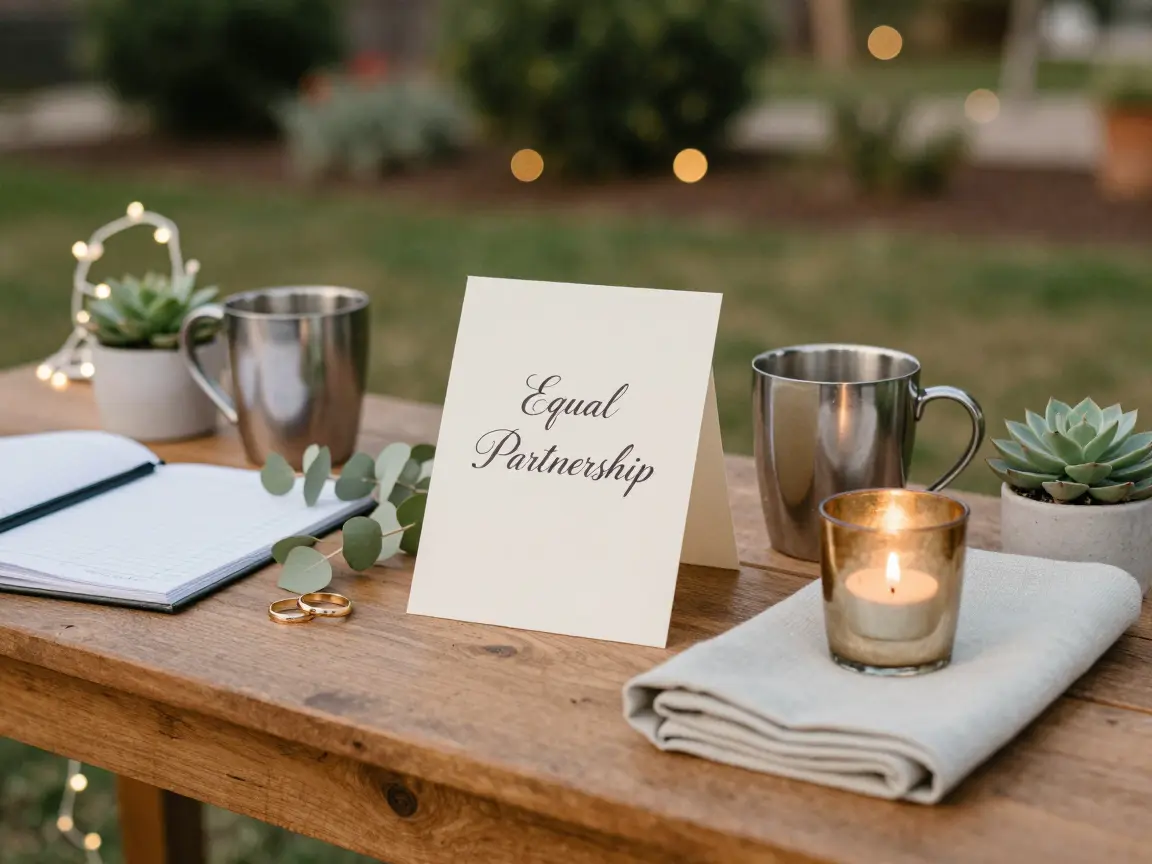
We both know that the daily grind can feel like two separate shifts, and today we promise to run the same schedule as co‑captains.
I’ll take the trash on Tuesdays, you’ll handle the grocery list on Saturdays, and together we’ll review our budget every quarter, not because numbers are romantic but because transparency keeps us honest.
By naming chores and finances, we protect the love that fuels the rest of our lives, while still leaving room for spontaneous hugs and laughter.
If the checklist feels too contractual, swap it for a simple promise to “always listen before fixing.” This vow works best in an intimate ceremony of 20‑30 guests where the couple’s dual‑career rhythm is already front‑stage.
- Shows clear commitment
- Reinforces teamwork
- Can sound legal
- May lack poetic flair
Risk of sounding like a business contract if poetic language is omitted
3. The Under-Sixty-Second Vow: Low-Stress Delivery for Anxious Speakers

When your heart races and the mic feels like a spotlight, long vows can trigger panic. A three‑promise template keeps the speech under 100 words and covers your commitments to love, growth, and adventure. Vow coaches warn against overwriting; a concise script gives a 30‑second safety margin for stage fright.
If you prefer a lyrical, multi‑paragraph pledge, consider a pre‑recorded reading or a friend’s narration.
Execution tip: write each promise on a separate index card and rehearse with a timer, pausing only for breaths. It works best for anxious speakers in intimate venues of 30 guests or fewer, where the voice carries clearly.
- reduces panic
- fits small ceremonies
- may feel brief to audience
- limits storytelling depth
- Word limit: <100
- Promises: 3
- Safety margin: ~30 seconds
4. Grounded Humor: Real Quirks Paired with Genuine Anchors
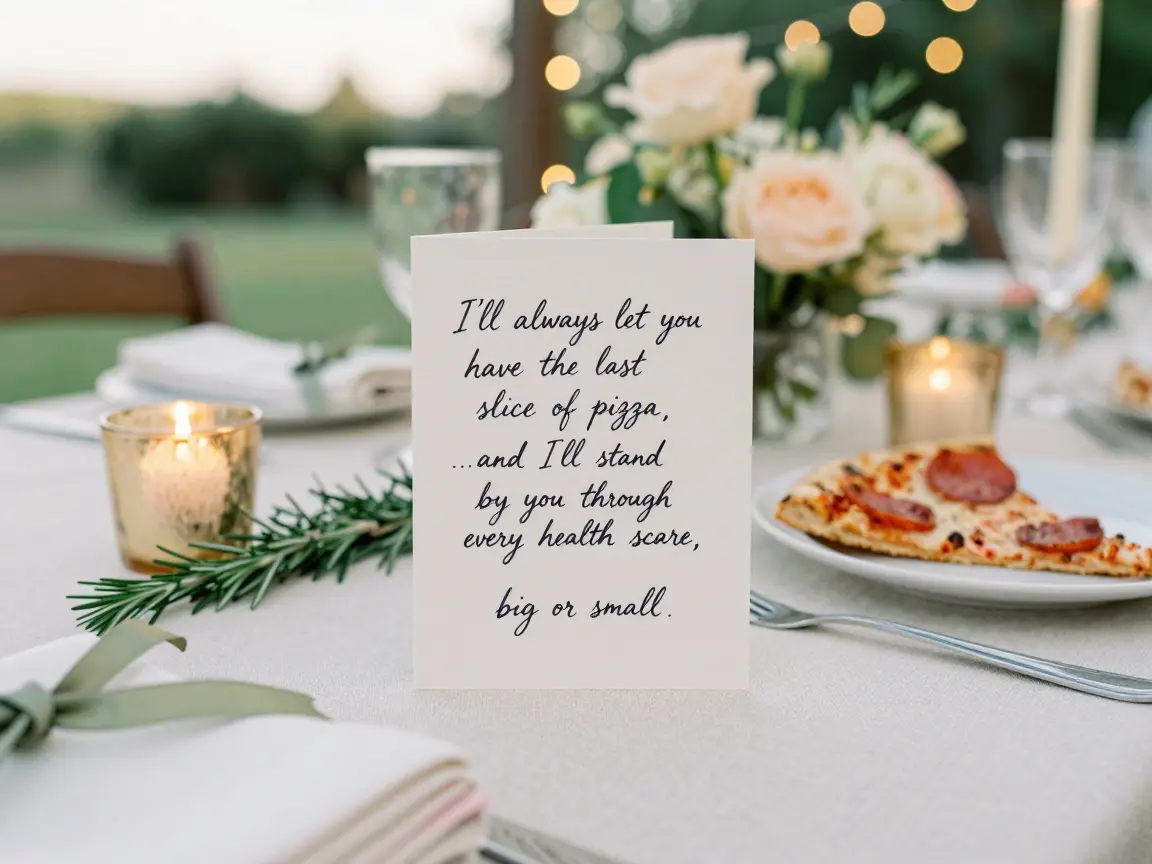
Start each vow with a tiny habit your partner has already seen, like “I’ll always let you have the last slice of pizza, then follow with a weighty promise such as “…and I’ll stand by you through every health scare, big or small.”
The contrast makes the line feel real and keeps the tone light without veering into private jokes that leave grandparents puzzled.
A useful tip: write the humor on a separate line, then pause before the serious pledge; the pause signals to listeners that the next line carries the covenant’s core weight.
- Lightens the ceremony
- Shows personality
- Risks confusing older guests
- May feel too casual
Avoid sarcasm that could undermine solemnity
5. The Shared History Narrative: Long-Term Couples Finally Formalizing
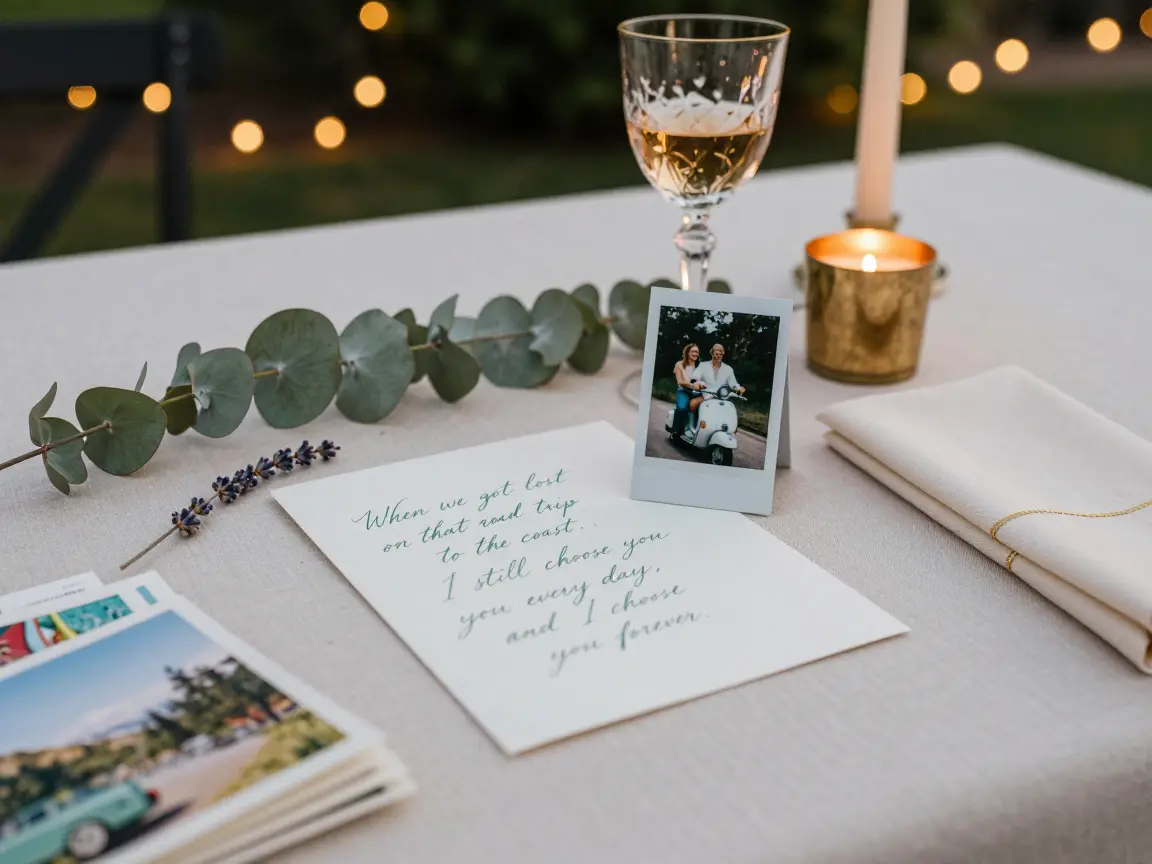
Unlike a resume‑style list of past leases, a shared‑history vow weaves a few vivid moments into a single promise of continued choice. Start with a line that names one unexpected adventure, “When we got lost on that road trip to the coast…”, then pivot to the present: “I still choose you every day, and I choose you forever.”
Keep the timeline tight; three snapshots are enough to hint at years without turning the vow into a chronology. This format shines at an intimate ceremony of 20‑30 guests, where the couple’s familiar faces appreciate the personal touch.
If you’re a newer pair or prefer brevity, skip the shared‑history angle and opt for a simple “I promise to grow with you” promise instead.
- Highlights deep connection
- Feels authentic
- Risks sounding like a checklist
- May overwhelm short‑term couples
Choose two specific memories and pair each with a forward‑looking promise to keep the vow concise and future‑focused
6. The Concrete Promise: Actionable Commitments Over Vague Sentiments
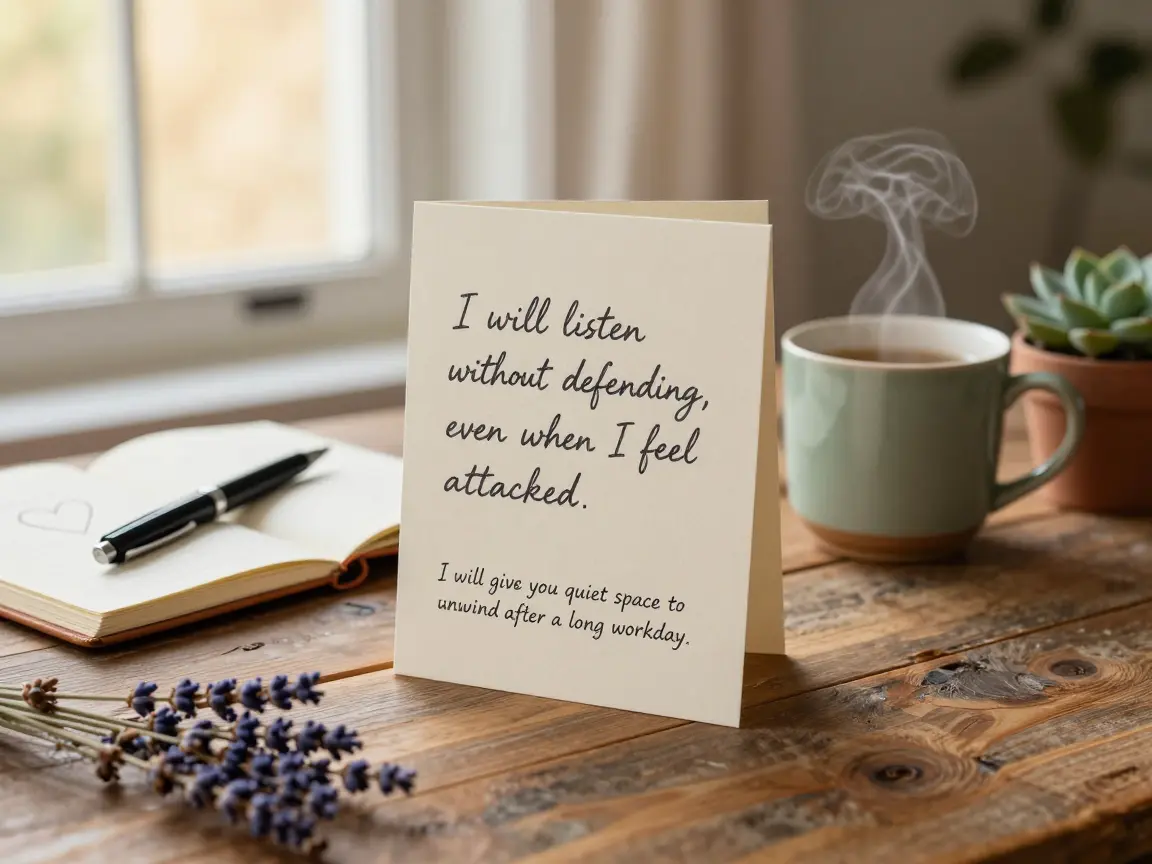
A concrete vow reads, “I will listen without defending, even when I feel attacked,” and another might be, “I will give you quiet space to unwind after a long workday.”
These promises anchor love in everyday habits, so the marriage survives the grind rather than relying on vague feelings that fade.
A useful tip: write each vow as a two‑step action, first the situation, then the exact behavior, so you can rehearse it aloud and feel its sincerity. Grounding vows this way keeps them sacred while avoiding the sterile feel of a checklist.
- clear expectations
- builds daily trust
- may feel less romantic
- can sound clinical
- Identify routine stress points
- Choose specific action verbs
- Test phrasing for sincerity
7. The Blended Family Integration: Including Children with Grace
When you try to fit every child’s name into a single sentence, the vow can feel like a public audition rather than a promise.
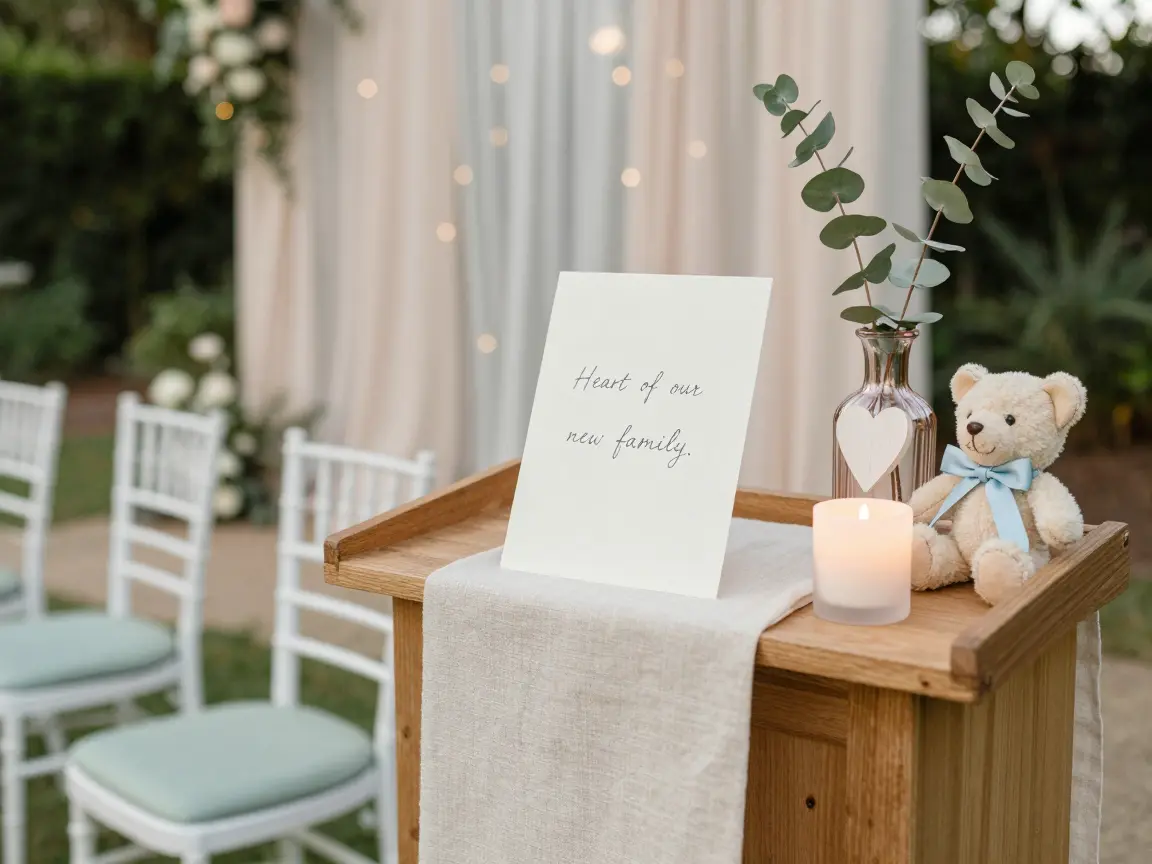
A gentle approach is to acknowledge the kids as “the heart of our new family” and pledge to “listen, learn, and grow together,” without promising specific roles or outcomes.
This works well for intimate ceremonies of 20‑30 guests where the focus stays on the couple and their shared future.
If you’re uncomfortable with any mention of children, skip the vow line and instead give a short toast after the ceremony that celebrates them.
- Honors children’s place in the family
- Shows inclusive love
- Risks overburdening kids with expectations
- Can feel forced in large weddings
Avoid language that puts children on the spot during a public vow, as it may cause unnecessary emotional pressure
8. The Quiet Elopement: Intimate Cadence for Remote Locations

The wind at the ridge carries every syllable, so keep the wording short and rhythmic, like a whispered promise that folds into the sound of the sea.
“I will hold your hand through every sunrise, and let my breath be the calm you return to when the tide pulls us apart.” Use simple present tense and avoid long clauses; they stay clear when the air is thin.
Speak directly into your partner’s ear, cupping the words with your hand to block gusts. This style shines for a handful of guests, often just the two of you and a witness, and works for any couple, because it relies on story rather than spectacle.
- Intimate connection
- Natural cadence
- Video lost without lapel mic
- Wind can muffle longer vows
Speak from the chest, pause briefly after each line to let the wind carry the words
9. Secular Humanist: Shared Values and Mutual Intellectual Growth
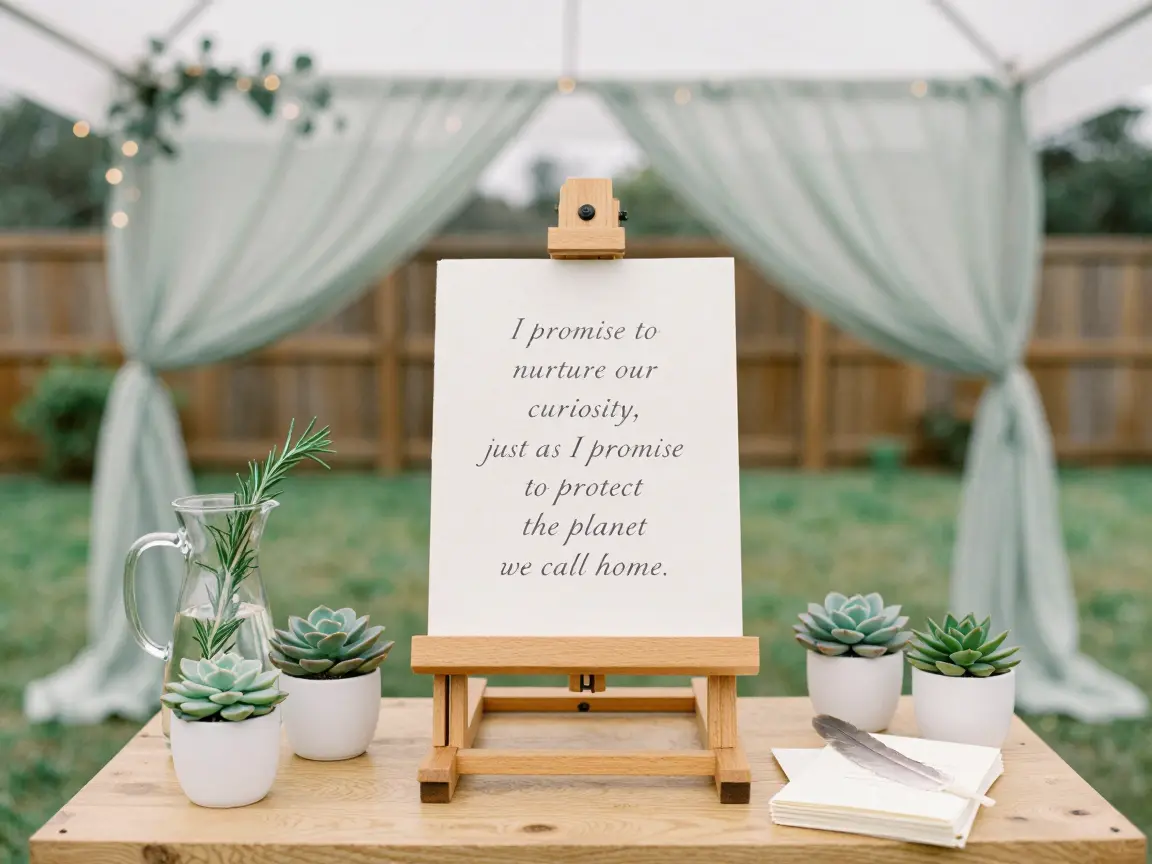
Begin with a parallel‑sentence structure: “I promise to nurture our curiosity, just as I promise to protect the planet we call home.” This technique‑spotlight frames the vow as a two‑part promise, mirroring the shared values of a secular humanist partnership.
Use concrete language, “ethical living,” “environmental stewardship,” “lifelong learning”, to replace liturgical phrasing while keeping the tone reverent.
A common trade‑off is that family members expecting traditional spiritual language may feel the omission, so be ready to explain the personal significance.
If the vow feels too abstract for a large, formal ceremony, swap it for a shorter, universally resonant line like “I will stand beside you in every choice we make.” It works best in intimate gatherings where guests appreciate thoughtful, non‑religious expressions.
- authentic voice
- aligns with values
- may unsettle religious relatives
- can feel abstract for large crowds
Pair each promise with a specific, everyday action to ground the vow in lived experience
10. The Realistic Caregiver: Pledging Support Through Health Crises
When a partner’s chronic condition or mental‑health journey is part of everyday life, vows that promise “patient listening” and “steady presence during doctor visits” feel authentic.
Phrase the pledge as a promise of ongoing support, “I will hold your hand through flare‑ups and celebrate each good day”, instead of listing diagnoses.
Keep the language specific enough to show care but vague enough to protect privacy; the ceremony stays intimate without turning into a medical briefing.
Tip: Write the vow first in a private journal, then trim any medical jargon that feels like a case study.
This style works best for medium‑sized gatherings (≈50 guests) where the audience knows the couple but isn’t expected to absorb clinical detail.
- Deep emotional honesty
- Strengthens partnership
- Risk of audience discomfort
- Potential privacy breach
Avoid naming specific diagnoses or treatment plans in the vows
11. The Independence-First Formula: Retaining Individual Identity
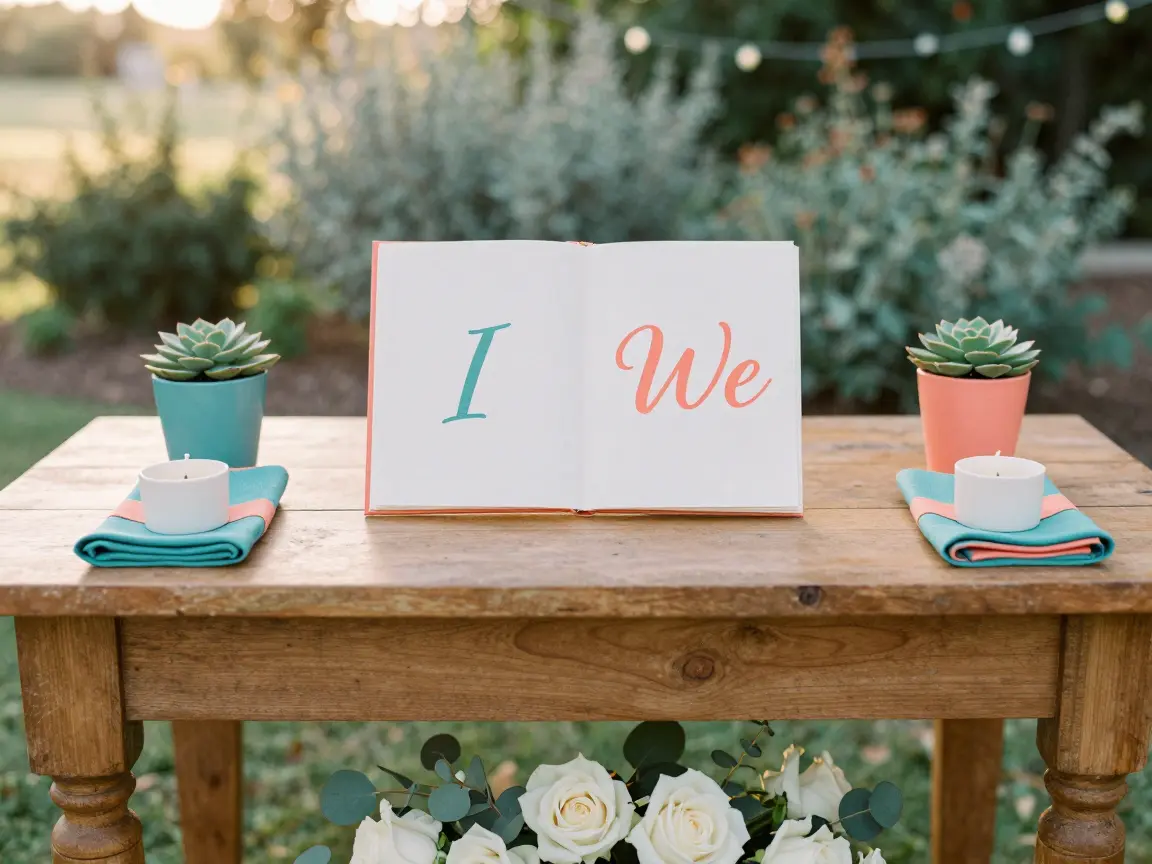
Like a duet where each singer keeps their own melody, a vow that honors independence sounds like: “I will pursue my dream of opening a bakery, and I will cheer you on as you chase your own art studio, while we build a home where both passions thrive.”
The key is to weave ‘I’ and ‘we’ evenly; start a line with personal ambition, then follow with a shared promise. This approach celebrates autonomy and avoids codependency, yet leaning too heavily on solo goals can make guests wonder how tightly the couple is bound.
If that feels too risky, try a simpler “We grow together, supporting each other’s dreams.” Tip: draft the ‘I’ clause first, then add a parallel ‘we’ phrase to balance the vow.
- Highlights personal growth
- Fosters mutual support
- May seem self‑centered
- Could dilute sense of unity
Draft ‘I’ statements, then add a parallel ‘we’ phrase to balance the vow
12. The Second Marriage Vow: Perspective Built on Lived Experience
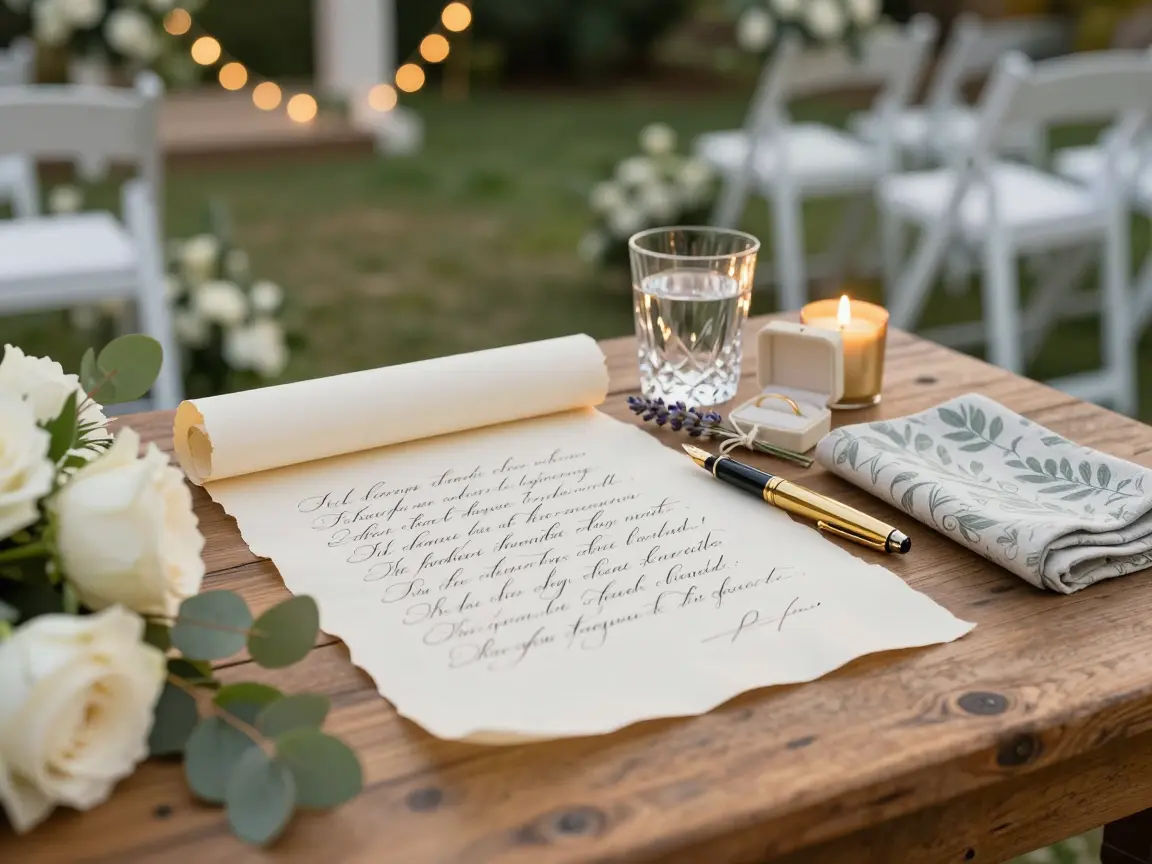
A seasoned second‑marriage vow can sound like, “I promise to honor the peace we’ve earned together, to listen with the patience years have taught me, and to build a future rooted in the love we choose each day.”
This phrasing shows emotional maturity without naming past break‑ups. It works best in an intimate ceremony of 20‑30 guests, where the quiet strength of the words can be felt.
If you worry the tone feels too solemn, swap the line for a lighter promise about shared hobbies or future travel, still sincere, but less reflective.
Execution tip: write the vow on parchment, rehearse it once aloud, then pause briefly before each sentence to let the weight settle.
- Shows deep commitment
- Highlights personal growth
- Risks invoking past relationships
- May feel overly serious
Avoid any mention of previous divorces or ex‑partners, as it can pull old grief into the ceremony
13. The Day-to-Day Domestic Rhythm: Finding Devotion in the Mundane

Here is a sample vow built from small daily rituals: Steam curls from the mug as we both reach for the same spoon, a habit we’ve turned into a silent promise.
I vow to greet each sunrise with the coffee you love, to stir in patience when the brew runs cold, and to share the quiet after the last bite of our weeknight pasta.
I promise to keep the kitchen light on for your late‑night tea, and to listen to the hum of the dishwasher as a reminder that we’re building a home together.
These micro‑details anchor the ceremony in a reality you’ll live every day, while still honoring the legal and moral weight of marriage. Let that shared rhythm be the backdrop for every promise you make.
- Relatable, heartfelt
- Grounds vows in daily life
- Risk of over‑detail, may dilute solemnity
Swap in your own real details, such as your actual morning drink or weeknight meal, so the vow sounds like you
14. The Call-and-Response Format: Alternating Symmetrical Lines
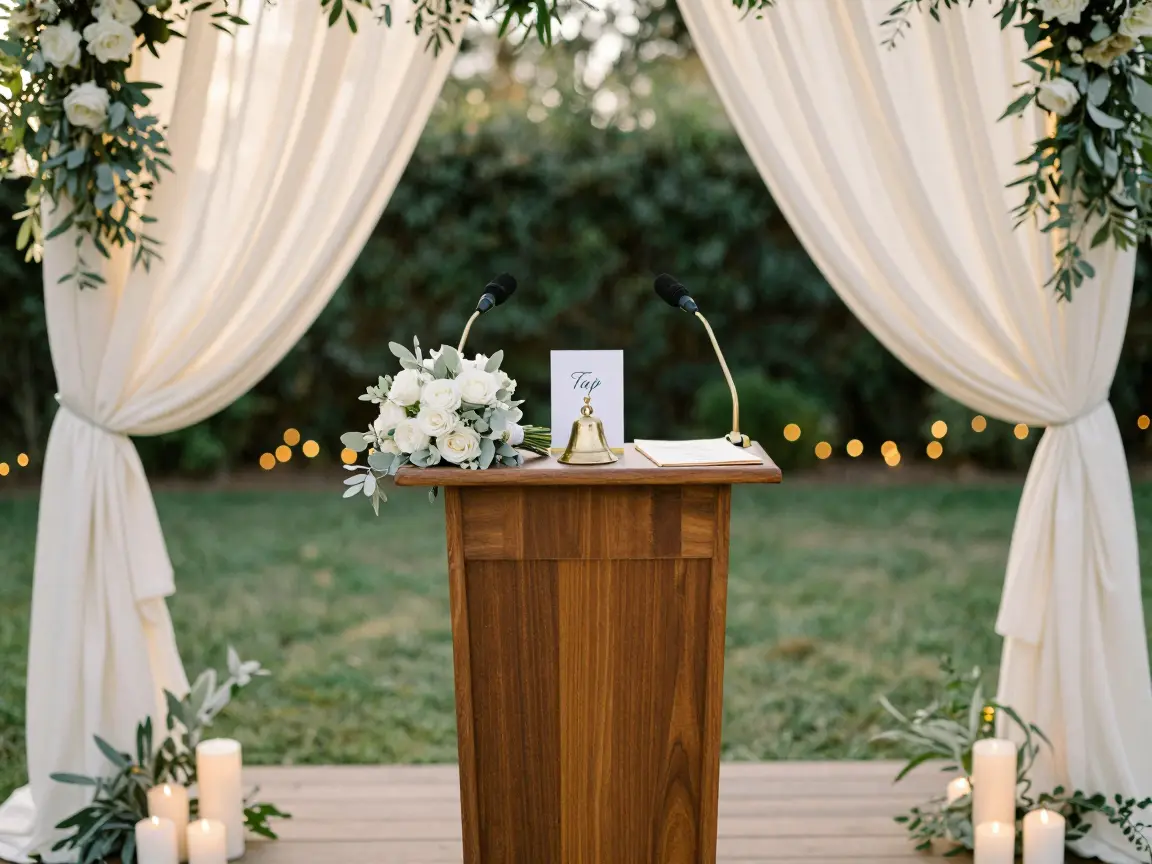
Begin with a short line that mirrors your partner’s rhythm, then let them answer in the same beat. For example, “I promise to lift you,” followed by “And I’ll stand beside you always.”
Keep each sentence to eight‑to‑ten syllables so the pattern stays tight. Write both halves together, then rehearse with a cue word, like a gentle tap on the podium, so each knows when to speak.
A common mistake is forgetting the cue, which stalls the flow and feels forced. If the scripted feel worries you, skip the strict symmetry and each write a single paragraph that still references the other’s promises.
- balanced speaking time
- shared structure keeps vows even
- requires rehearsed cues
- can feel scripted if a line is missed
- write matching lines
- choose a cue signal
- rehearse together
15. The Micro-Wedding Introspective: Raw Reflections for Small Guest Lists
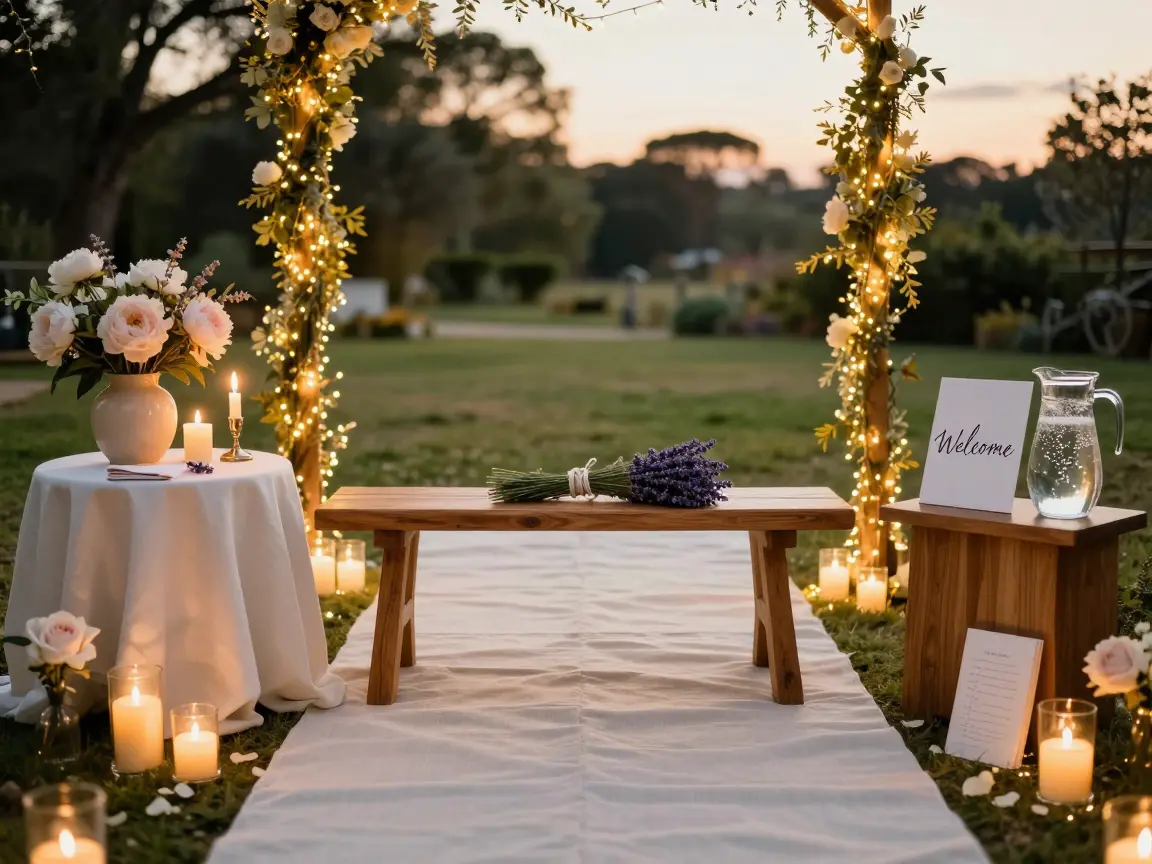
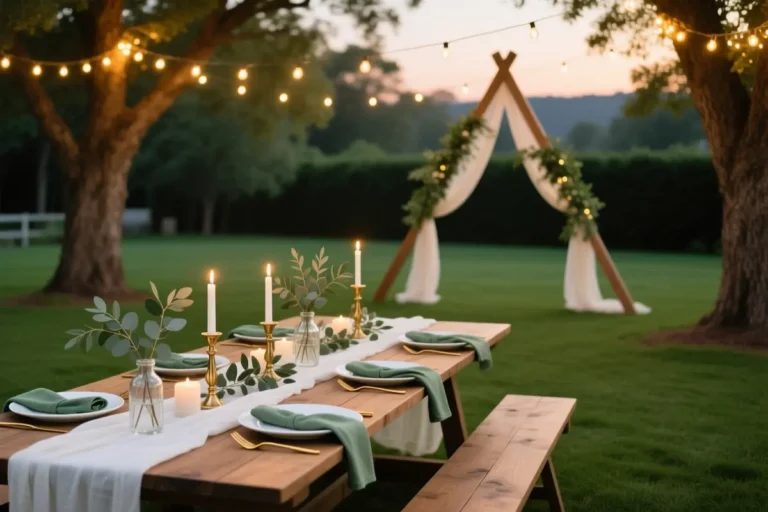
A narrow aisle framed by string lights and a single wooden bench sets the tone for an intimate micro‑wedding.
With twenty guests or fewer, you can whisper your vows and still be heard, letting raw reflections linger in the close‑knit circle. Keep the language conversational; think of speaking to a close friend rather than delivering a staged performance.
Start with a brief anecdote about how you met, then share one specific moment that changed you, and finish with a simple promise that feels genuine.
A common mistake is over‑rehearsing; the words should feel spontaneous, not scripted. This style shines for couples who value vulnerability and have a small, supportive audience, but it loses impact in a grand ballroom of two hundred.
- Intimate connection
- Authentic tone
- Limited scalability
- May feel under‑whelm in large venues
Practice the vows in the actual ceremony space, speaking softly to gauge volume and adjust with a discreet lapel mic if needed
16. Overcoming Distance: Honoring Adaptability and Patience
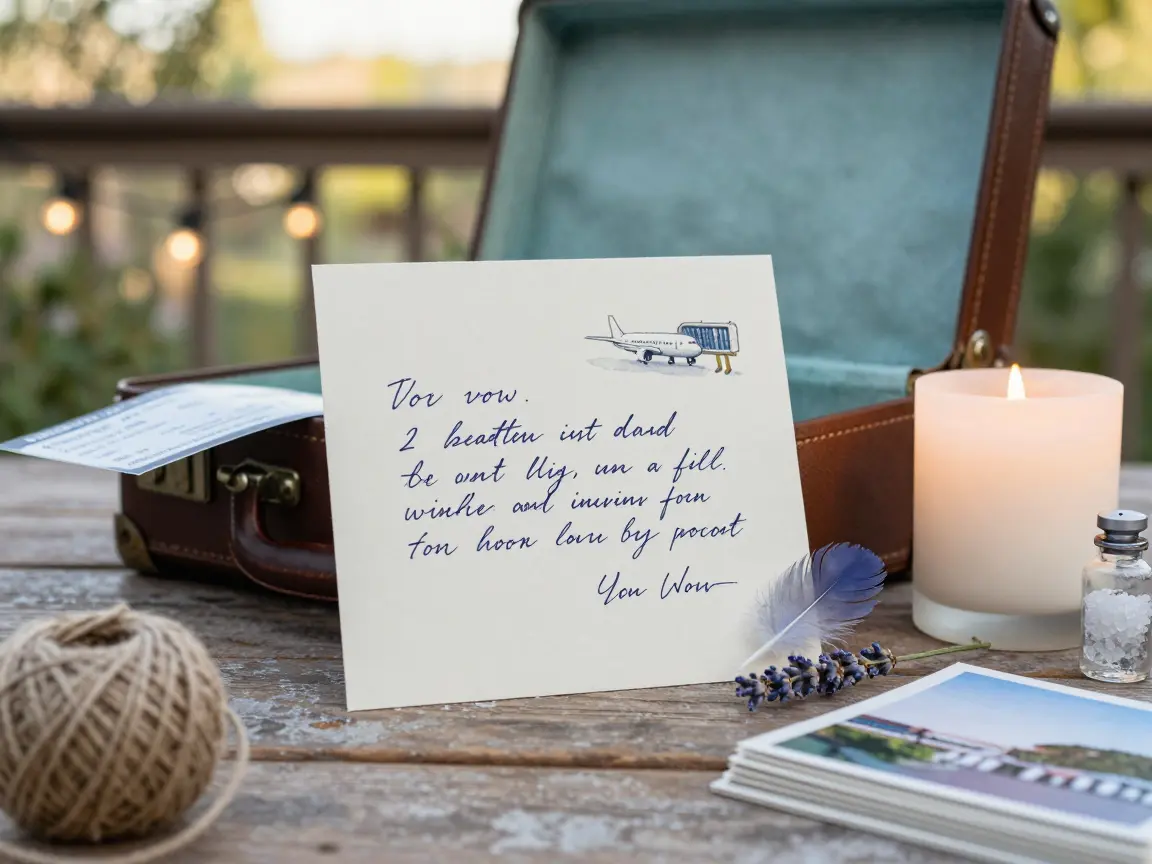
Long‑distance love often feels like a series of missed flights and midnight calls, so a vow that names those gaps can feel honest and grounding.
Begin with a line that thanks the partner for “waiting at the gate when my schedule slipped,” then promise to keep “the same three‑minute check‑in ritual even when the next trip lands us on opposite coasts.”
Acknowledge the strain of past loneliness, but keep the tone forward‑looking; a brief nod to “the nights we felt the distance most” validates grit without dragging the ceremony into gloom.
If your relationship never faced miles, swap the travel imagery for a promise about “the everyday moments we still discover together.”
Tip: Write the vow in present tense and rehearse it to stay under 30 seconds, so the sentiment stays vivid and the ceremony flows.
This approach shines at intimate weddings of 20‑30 guests, where each word carries weight, and works well for couples of any body type because it relies on story, not silhouette.
- Validates shared resilience
- Highlights real challenges
- May bring a somber note
- Can feel too specific for couples without distance
Reliving past loneliness can cast a somber shadow over the celebration
17. The Poetic Realist: Lyrical Flow Anchored by Practical Truth
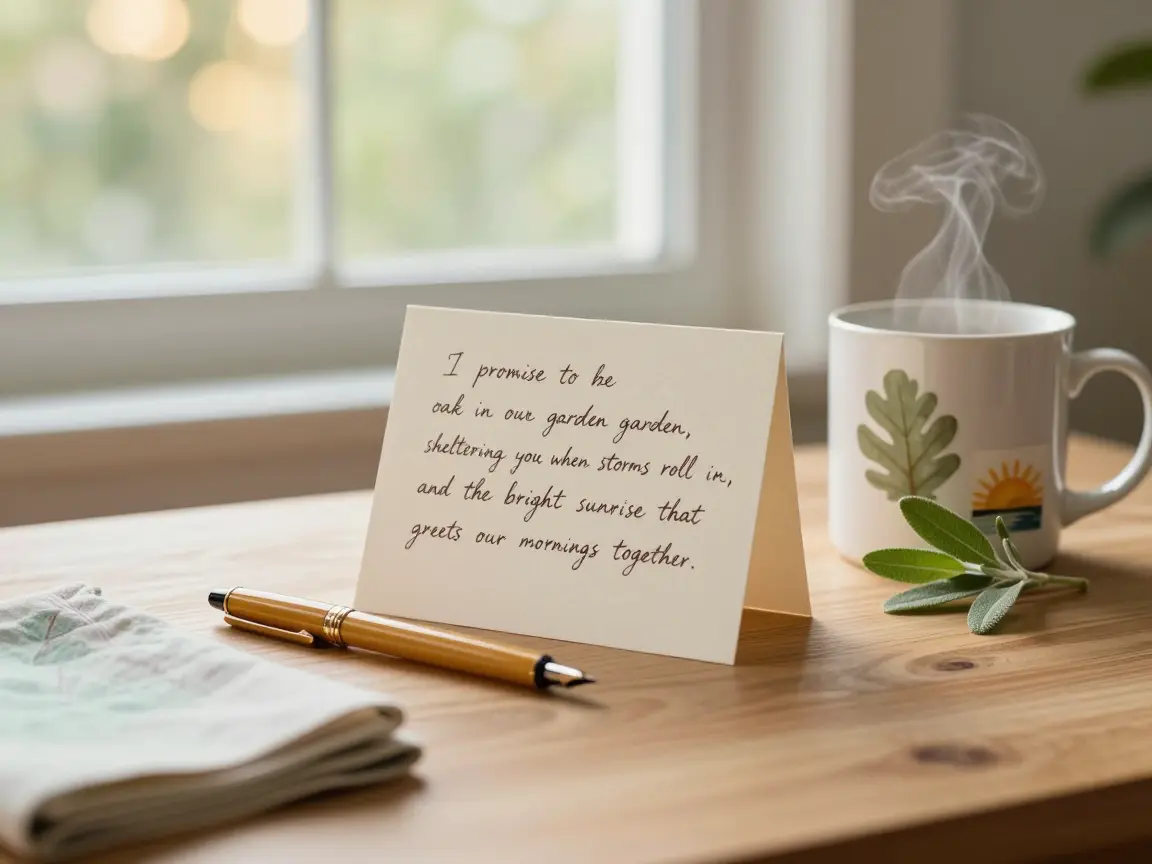
A poetic realist vow might read: “I promise to be the steady oak in our garden, sheltering you when storms roll in, and the bright sunrise that greets our mornings together.”
The metaphor of weather and foundations gives the vows a lyrical lift while the follow‑up line, “I’ll brew your coffee every day, even when I’m half‑asleep”, keeps the delivery grounded.
- Lyrical imagery adds emotional depth
- Natural metaphors feel relatable
- Over‑adjectiving can cause vocal stumbles
- Too many flowery phrases may feel insincere
After writing, read the vow aloud and cut any adjective that interrupts the natural rhythm; aim for one vivid image per sentence
If the poetic style feels too risky, swap the metaphor for a simple list of promises like “I will listen, I will support, I will laugh with you.” Write the final line on a small card so you can glance at it without breaking eye contact.
18. Community and Hospitality: Welcoming Friends and Neighbors Together

I’ll promise to keep our home a warm hearth, where friends and neighbors gather for Sunday brunch, birthday cake, or quiet tea after a long day.
I’ll greet each guest with a smile, set extra chairs when the crowd grows, and remember the favorite dish of the cousin who visits every summer. In return, I ask you to hold space for us, so our love stays intimate even while our table stays full.
This vow works best for couples who love large family gatherings and have a spacious living area; it can feel overwhelming for introverted partners who crave private moments.
- strengthens community ties
- builds shared memories
- may shift focus from couple intimacy
- can strain personal energy
schedule regular “just us” evenings to balance hospitality with private connection
19. The Resilience Anchor: Pledging Stability Through Financial Ups and Downs
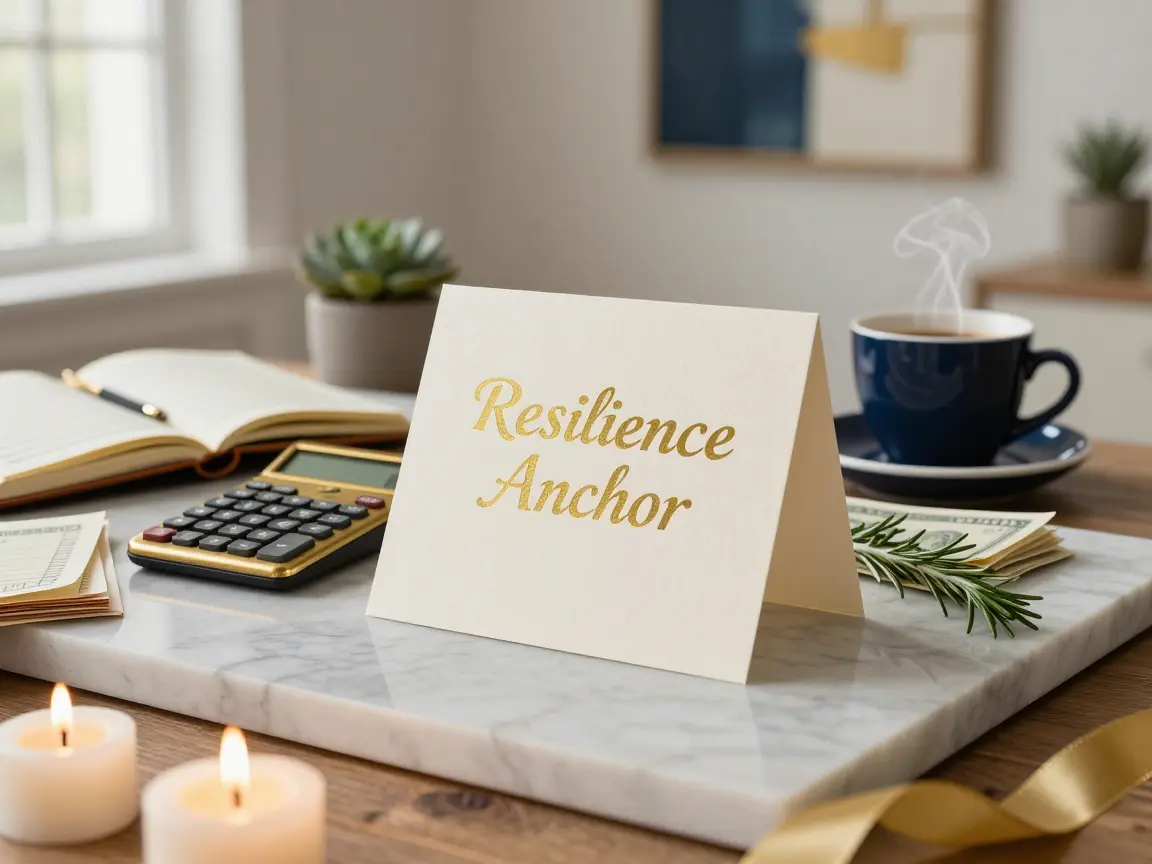
When a couple’s future includes inevitable pay cuts, career pivots, or unexpected debt, the ceremony can feel like a pressure test for their partnership.
Framing vows around “I will stand beside you through every fiscal storm, sharing decisions and resources with honesty” grounds love in a realistic teamwork model.
Naming shared financial values out loud can set a cooperative tone for the hard conversations ahead.
If the idea feels too business‑like, replace the pledge with a promise to “support each other’s dreams, no matter the paycheck size,” keeping romance front‑center.
Execution tip: write the vow in plain language, using “we” statements and a single concrete example, then rehearse it aloud to ensure it sounds heartfelt, not contractual.
- Shows practical partnership
- Reinforces trust
- May dampen romantic mood
- Risks sounding transactional
Avoid detailed budgets in vows; keep language broad.
20. The Unison Vow: Reading One Co-Written Manifesto Together
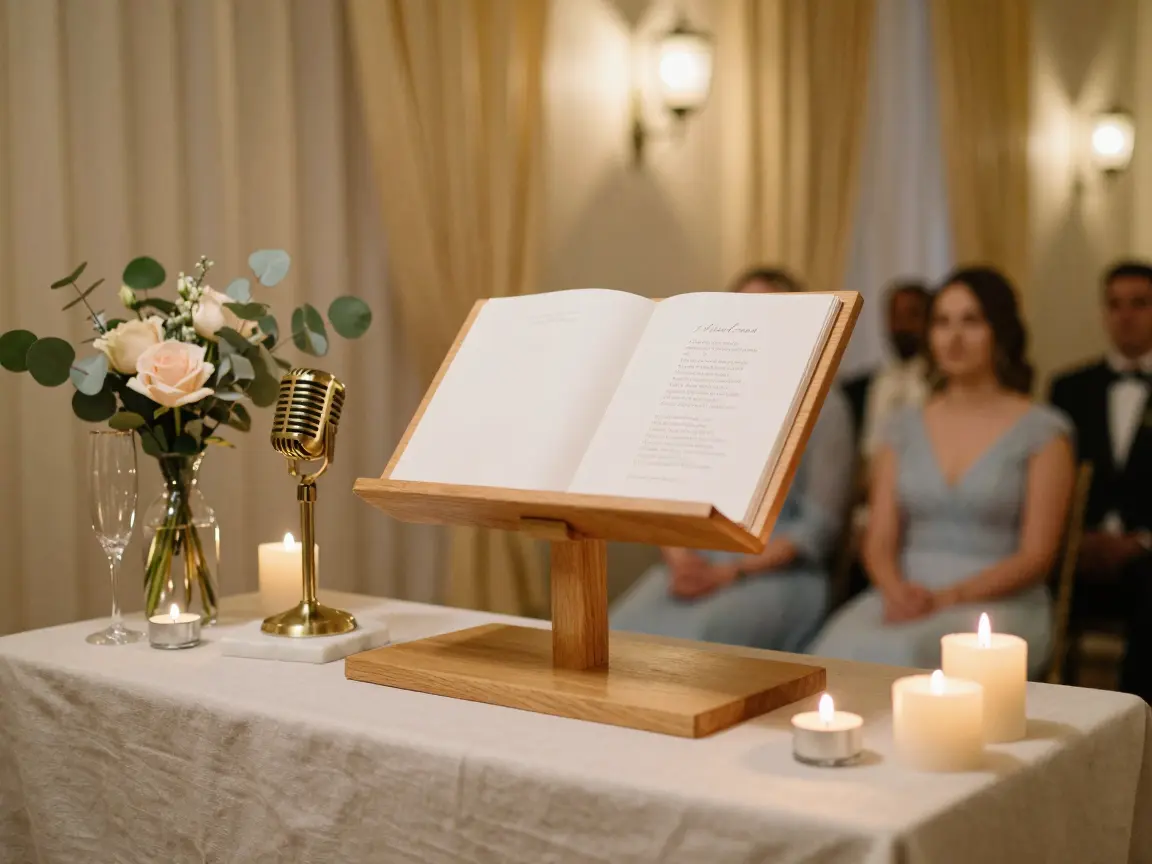
Both partners hold a single printed page and read the co‑written manifesto together, line by line, while the officiant cues the next sentence. The joint delivery looks like a literal pact, but mismatched speech cadences can make the rhythm feel choppy.
Rehearse three times with a timer to lock breath timing; place a small wooden stand on the altar so the booklet slides cleanly between you without fumbling.
This vow works best for intimate ceremonies of 20‑30 guests where the couple feels comfortable sharing the same microphone. If the pair has very different speaking speeds or severe stage nerves, a sequential vow, each partner speaking their own paragraph, keeps the sentiment alive without the coordination pressure.
- visual unity
- symbolic partnership
- timing mismatches
- rehearsal needed
- write joint text
- practice reading together
- use stand for booklet
How to Time and Practice Reading Your Vows Aloud
Following this five‑step protocol will give you a polished, breath‑controlled reading that stays comfortably under two minutes, and it only requires a phone and a soft‑lead pencil.
- Phone with a stopwatch app, to measure total time and pauses.
- Soft‑lead pencil, to lightly mark breathing spots on your printed vows.
- A printed copy of your vows so you can write directly on the paper.
- Quiet space or mirror, to hear yourself and watch pacing.
- Print your draft and read it straight through while the phone times you; note the total length.
- Identify any sentences that push you past the two‑minute mark and highlight them with the pencil.
- Insert brief pause marks (//) at natural breath points and rewrite any overly long phrases into tighter language.
- Read the revised version again, timing each pause; aim for a steady rhythm and keep the overall count under two minutes.
- Practice the full read‑through three times, adjusting breath marks each round until the timer stays steady and your mouth stays moist.
The most common mistake is trimming words without re‑timing, which can leave hidden overruns; always do a final timed run before the ceremony.
Frequently Asked Questions
What are 10 important vows to include in a wedding?
Ten essential commitments to include are: offering emotional patience, preserving honest communication, sharing domestic responsibilities, supporting personal ambitions, managing financial challenges together, providing care during illness, resolving disagreements without contempt, making time for intentional connection, honoring individual independence, and reaffirming fidelity every day.
What is the best opening line for a wedding vow?
The strongest opening line states a clear, present-tense truth about your partner rather than a generic fairy-tale reference. Opening with a concrete observation—such as acknowledging how your partner handles daily adversity or naming the precise moment you realized you made a formidable team—immediately grounds the ceremony.
What are the most powerful wedding vows?
The most powerful vows focus on voluntary restraint and active reliability under stress rather than effortless affection. Promising to remain kind when tired, to listen before reacting during disagreements, and to protect your partner’s dignity in public carries far more weight than vague promises of perpetual happiness.
What not to say in wedding vows?
Avoid inside jokes that leave your guests baffled, unflattering stories about poor habits, any mention of past romantic partners or divorces, and passive-aggressive complaints disguised as humor. Vows should never include private disclosures your partner has not consented to share publicly.