22 Wildflower Centerpieces: Practical, Honest Table Styling Ideas
22 Wildflower Centerpieces: Practical, Honest Table Styling Ideas
When the spring brunch tables arrived with plain white linens and no focal point, the empty surface and a breeze tossing stray stems instantly killed the vibe you hoped for. This roundup delivers 22 honest centerpiece options, amber glass medicine bottles weighted with pebbles, reclaimed‑wood troughs that lower the conversational barrier, mismatched ceramic pitchers that stay put, live wildflowers in terracotta pots, and more.
Whether you’re staging an outdoor garden wedding, a backyard dinner, or a modest brunch, these ideas give you stable, eye‑catching tables that feel thoughtfully styled without inflating the budget.
1. Amber Glass Medicine Bottles with Single Stems

A vintage amber medicine bottle, about 6 inches tall, holds a single chamomile stem for a quiet, warm‑toned pop. The amber hue deepens feverfew and chamomile, letting their yellow shine.
Narrow necks hold only one or two stems, so a 6‑foot table needs 12‑15 bottles, raising cost. Add glass pebbles or sand to the base; the weight stops breezy tips outdoors.
Budget: bulk refill bottles $2‑$4 each. Splurge: hand‑blown apothecary bottles $12‑$18, which are heavier and smoother.
DIY is doable, rinse, dry, and slip a rubber stopper to keep filler in; a florist can pre‑fill for $1‑$2 per bottle. For an intimate brunch, three bottles per setting work well; for a reception, arrange rows of five across the length.
- warm amber glow
- cheap bulk
- limited stems
- many bottles needed
lightweight bottles tip in breezy outdoor settings; add filler
2. Reclaimed Wood Troughs with Queen Anne’s Lace

Long banquet tables hide conversation when tall vases block sightlines. A reclaimed‑wood trough kept low, about 4‑5 inches deep, lets guests see each other while still holding a wildflower arrangement.
Line the interior with a clear heavy‑duty plastic bag and tape the edges; this prevents water from soaking the wood and staining table linens.
Set a shallow dish or a few water tubes inside the liner, fill them with water, and tuck the stems in so the Queen Anne’s lace drinks while the wood stays dry. Queen Anne’s lace is a thirsty stem, so check the water level an hour before guests arrive and top it up.
Troughs are usually 24‑36 inches long, so one trough runs down the center of a 6‑foot table and leaves room for plates on both sides.
Fill the gaps with filler like clover or small daisies, and keep the stems under about 12 inches so sightlines stay open. Raw reclaimed wood can leave splinters and dust, so sand the rim and wipe the interior before lining it.
Tape the plastic liner on the outside edge and trim it just below the rim so it stays hidden
Thrifted or rented troughs cost roughly $15‑$40 each, and a handmade one from a carpenter runs $60‑$100. Plan on two people to carry them filled, since wet wood and water add weight. Queen Anne’s lace can cause skin irritation in some people, so wear gloves when handling the sap‑covered stems.
- low profile keeps sightlines open
- one piece covers a long table
- needs a waterproof liner
- heavy to carry when filled
Unlined wood leaks and leaves water rings on linens and rented tables
3. Mismatched Ceramic Pitchers with Chamomile
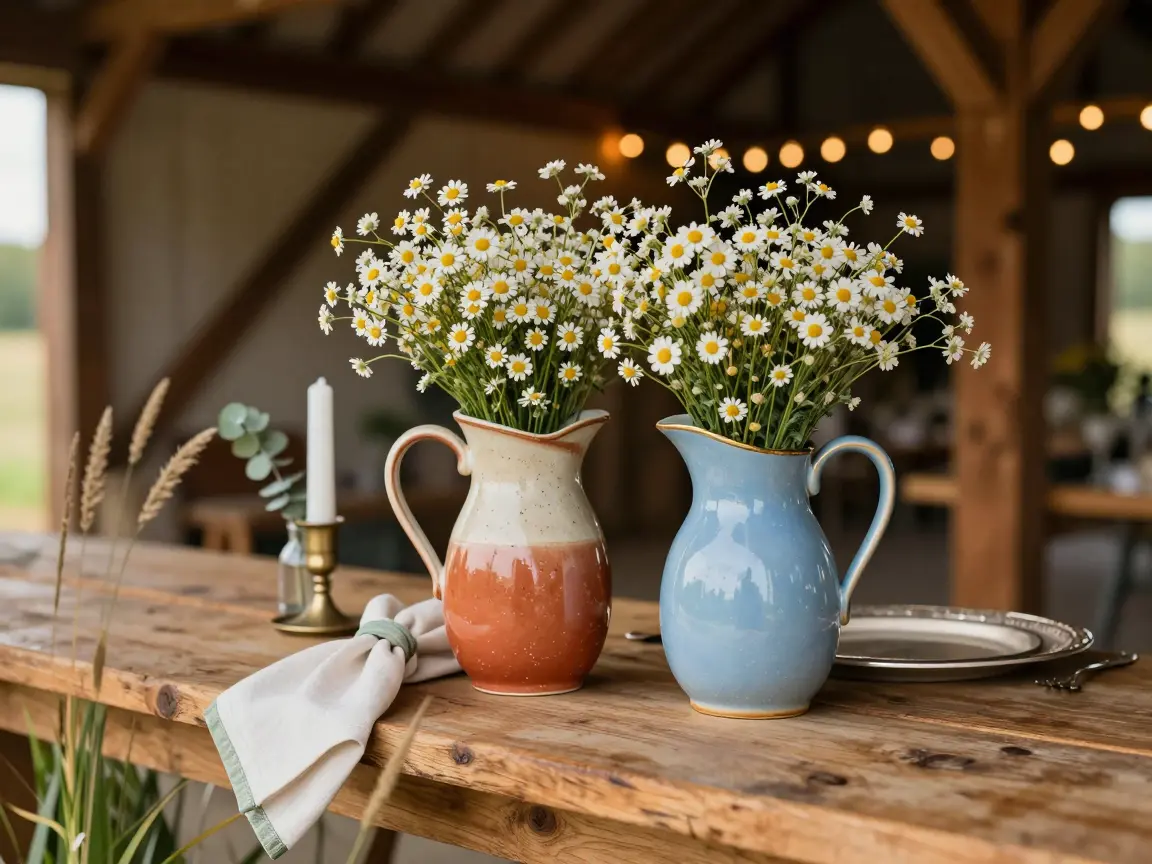
Mismatched ceramic pitchers in cream, sage, and faded blue make the table look collected rather than staged, and chamomile’s small white and yellow daisies suit the soft glazes. Heavy ceramic is the big advantage here: a filled pitcher sits steady in a breeze that would knock over a glass vase.
Group three to five pitchers of different heights down the center of the table, and keep a simple color rule, such as all neutrals or all blues, so the mismatch looks deliberate.
Cut chamomile stems to 8‑10 inches and pack each pitcher loosely, so the flowers spill slightly over the rim and hide the opening. Test every pitcher with water overnight before the event, because old crazed or chipped glaze can seep and leave rings on linens.
Thrift stores and flea markets carry pitchers for $3‑$12 each, so a full table runs about $15‑$50, and you can reuse them for serving water or juice at the same event.
Chamomile wilts quickly in heat, so keep the stems in a bucket of cool water until you set the table, and refresh the pitcher water once if the day runs long.
- heavy and stable outdoors
- cheap and easy to source
- old glaze can leak or chip
- chamomile wilts fast in heat
Pick pitchers in a single color family and vary only the shape and height, so the group reads as a set
Vintage glazes can contain lead, so use old pitchers for flowers only, not for serving drinks
4. Live Growing Wildflowers in Terracotta Pots
Place a 4‑inch terracotta pot with a single sprig of wild lupine at each plate. The plant stays fresh all night, and guests can take the pot home. Soil and drainage water can stain white linens, so set each pot on a matching terracotta saucer and rest the saucers on a coaster.
If mess worries you, use dried seed heads in the same saucers. Keep the plants in indirect light and mist once before the ceremony; they can be reused later. A hand‑painted pot runs $30‑$45, while a thrift‑store pot costs $5‑$8.
Hiring a florist to supply and water the pots saves time and ensures even hydration.
- lasts weeks
- guest take‑home
- soil may stain linens
- requires saucer
5. Pressed Wildflower Floating Frames
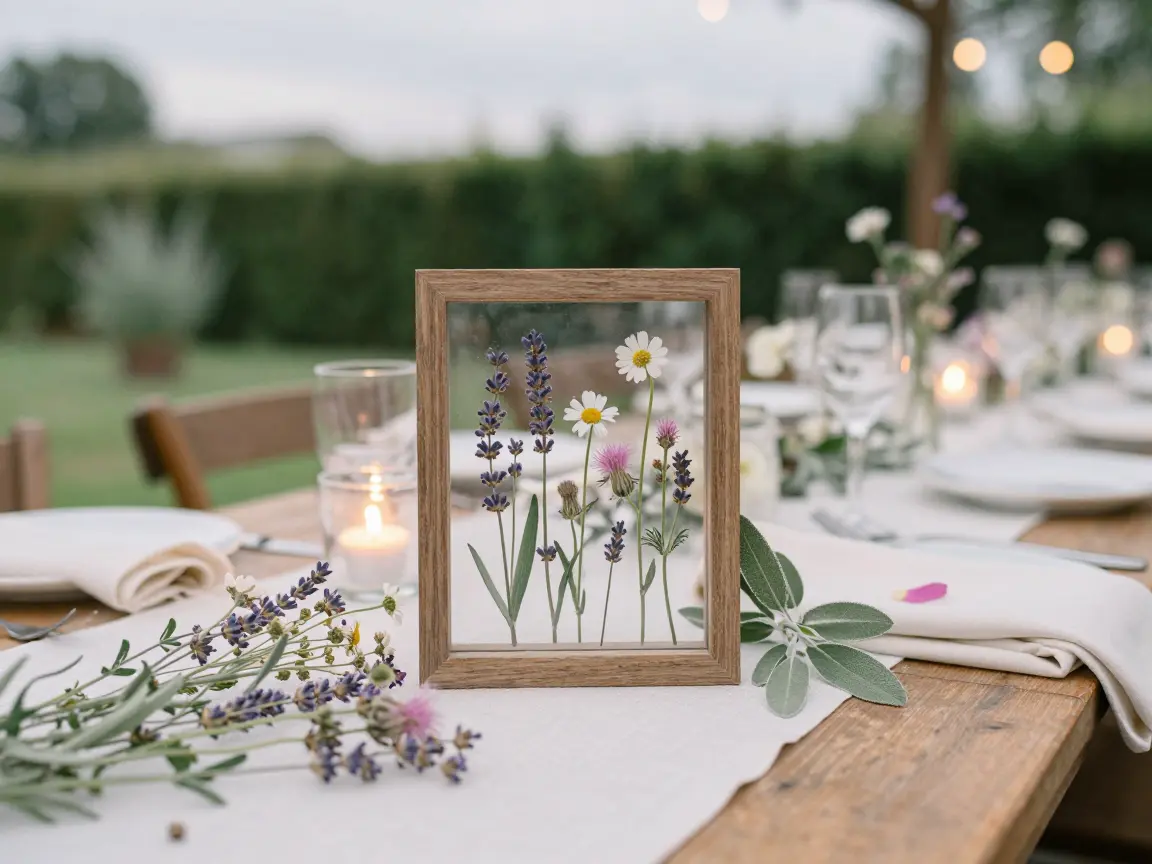
A gusty garden reception can knock over tall vases, so a flat floating frame stays stable. The double‑glass frame holds pressed wildflowers between two panes, keeping the silhouette low. Flowers must be harvested, pressed, and dried for three to four weeks before assembly, making the project labor‑intensive.
Place wax paper on the glass before arranging petals; it stops them from sticking. These frames work best on tables for 20‑30 guests at casual outdoor brunches. DIY is possible with a press, but most hosts prefer buying a pre‑made set to save time.
Add a tealight behind the frame for a soft after‑dark glow.
- low profile
- wind‑proof
- weeks of prep
- height limited
- Material: double-glass
- Height: 12 inches
- Prep time: 3-4 weeks
6. Farmhouse Enamelware Colanders with Field Flowers
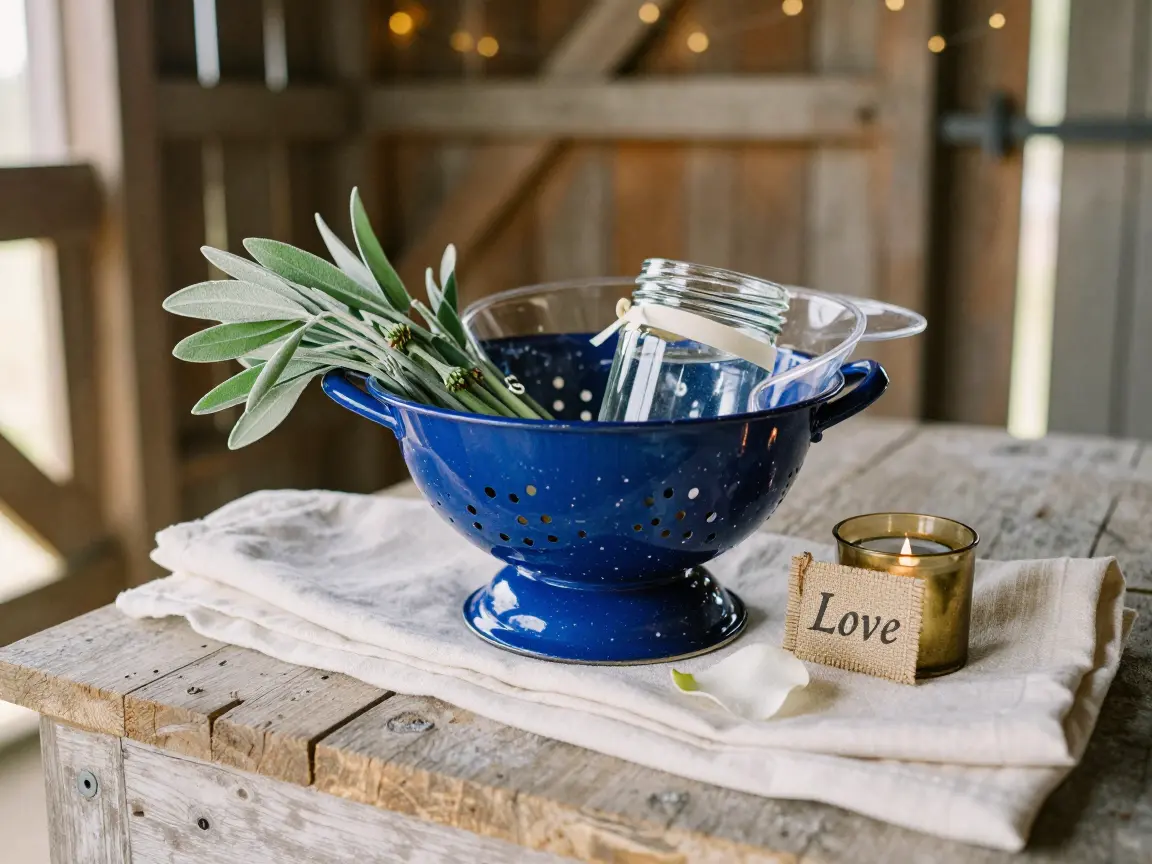
A 12‑inch cobalt enamel colander rests on the table, its glossy speckles catching the light. Because colanders are designed to drain, you must fit a hidden waterproof vessel inside each one to keep field flowers from wilting. I line the interior with a 2‑inch clear acrylic disc cut to the rim, then nest a small glass jar filled with water.
Chicory stems and clover buds spill over the rim, adding a vibrant meadow feel. Thrift stores often have cheap colanders, but cutting acrylic requires a hobby‑shop saw, so buying pre‑cut discs may save time.
- vintage charm
- vivid wildflowers
- drainage risk
- hidden vessel needed
Cut a 2‑inch clear acrylic disc to the colander’s inner rim to hold a water jar unseen
Secure the jar with a thin ribbon so it stays hidden while you arrange the blooms, and the centerpiece stays fresh through the meal.
7. Woven Baskets with Dried Grasses and Craspedia

A low wicker basket overflows with fluffy yellow craspedia and silvery bunny‑tail grasses, the stems spilling over the rim. The bright globes of craspedia anchor the neutral, airy grasses, creating a simple palette that feels fresh in late‑summer or early‑fall gatherings. Because the materials are dried, they stay light and can be stored in a sealed box for next year’s event.
When reusing, replace drooping stalks and mist the grasses lightly, but keep the basket away from rain or humidity.
- Texture contrast
- Easy to refill
- Humidity sensitive
- Limited durability
Avoid using in damp outdoor settings; moisture will cause drooping and mold
The basket’s natural weave also hides stray stems, making cleanup quick. This look works best on indoor tables or covered patios where the air stays dry.
8. Concrete Geometric Vessels with Delicate Cosmos
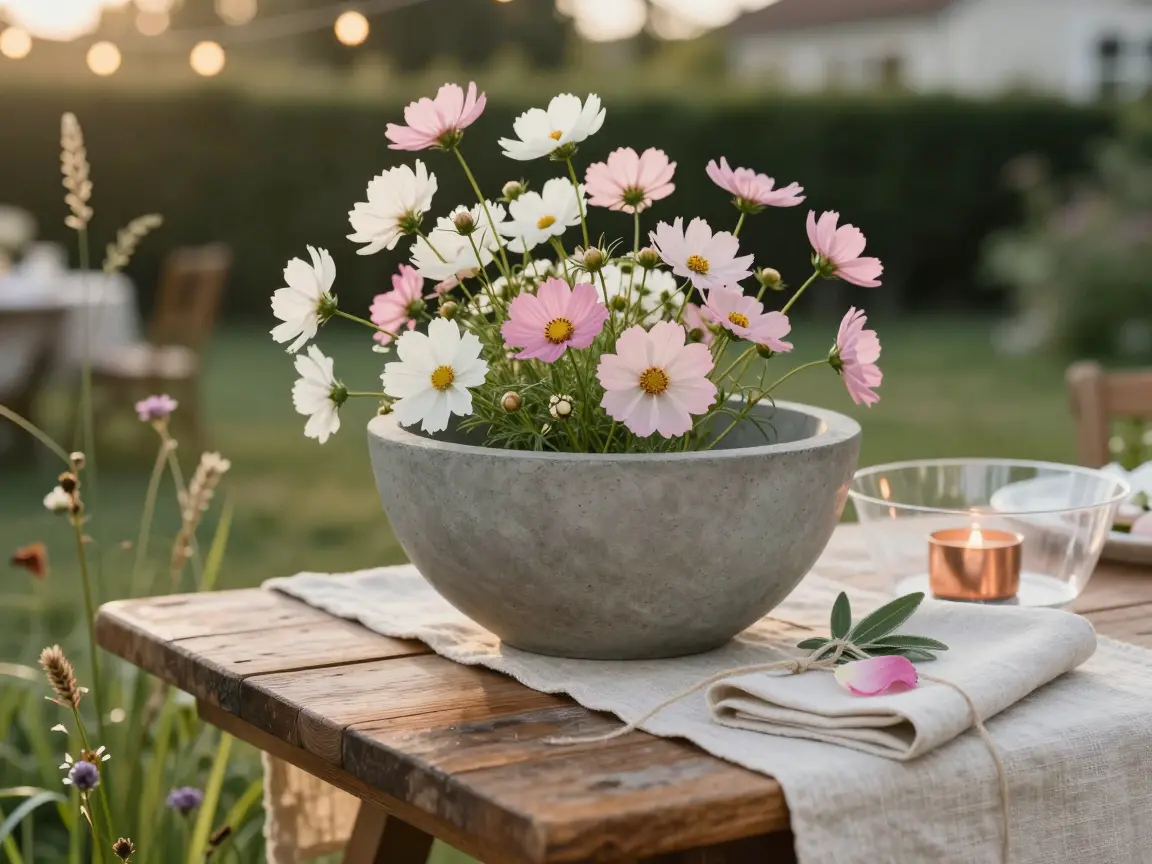
The matte gray of a concrete bowl feels heavier than a glass vase, yet it steadies a bouquet of tall cosmos. The weight prevents the delicate stems from tipping, so you can fill the vase up to the rim without wobble.
Because unsealed concrete is porous, water will seep out and leave wet rings on the table; always line the vessel with a clear food‑grade plastic bag and tie the edge with twine.
After the event, rinse the liner, wipe the concrete dry, and store it for future use. This look shines at casual outdoor garden parties of 20‑30 guests, especially for hosts who enjoy a rugged aesthetic. Casting your own concrete is time‑intensive and messy, so buying a pre‑made bowl is usually the smarter choice.
- sturdy base
- modern vibe
- heavy to move
- needs plastic liner
Line the vessel with a clear food‑grade plastic bag and secure it with twine
9. Upcycled Tin Cans with Lavender and Wheat Ears
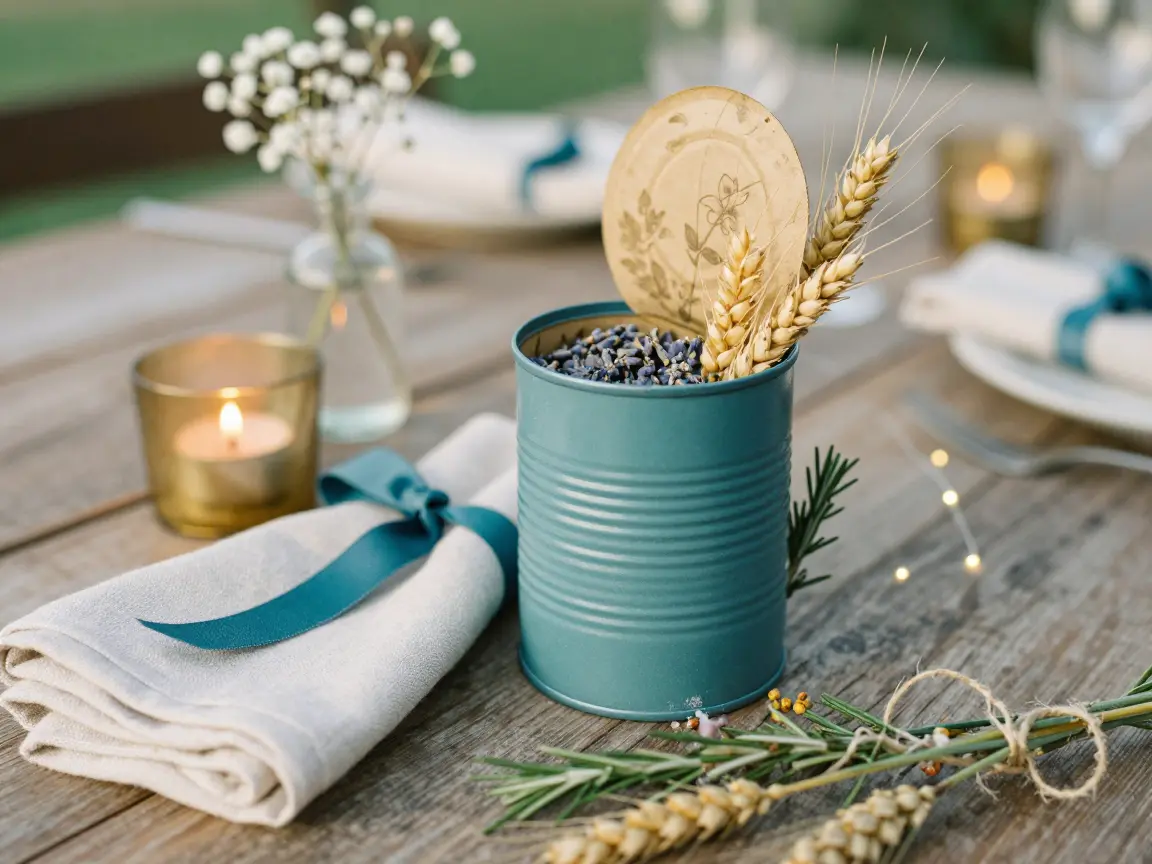
A quick sand‑down of the can’s rim turns a thrift‑store tin into a safe, rustic vase. After smoothing the edge, spray‑paint the body matte teal for a cohesive look, or line the interior with kraft‑paper printed with a subtle leaf pattern for texture without paint. Fill the can with dried lavender and a few wheat ears to add height and scent.
Tip: place a 1‑inch florist foam disc at the bottom; it steadies stems and reduces droop. A budget version costs $2‑$5 per can, while a painted metal vase runs $15‑$20 for a ready‑made, hazard‑free piece. DIY works for a small gathering, but for a larger party, hiring a prop rental avoids the sanding labor and safety risk.
- inexpensive
- reusable
- needs sanding
- can look cheap
- Budget cans: $2 to $5
- Painted metal vase: $15 to $20
10. Clear Bud Vases on a Mirror Runner with Feverfew
A mirrored runner glints under chandeliers, reflecting the venue’s glow. Clear glass bud vases sit in a line, each holding feverfew stems that seem larger because the mirror bounces light.
To keep water crystal clear, add a single drop of bleach per quart; it prevents clouding without harming flowers. Use 3‑inch vases for a six‑person table and 5‑inch for a banquet spread, so the arrangement scales without looking sparse.
Polish the runner and each vase with a lint‑free cloth until guests arrive; any fingerprint will stand out. After the event, wash the vases in warm soapy water and store them flat to reuse.
- amplifies light
- makes bouquets look full
- shows smudges
- requires polishing
Keep a microfiber polishing cloth handy for a final buff before guests arrive.
11. Birch Log Planters with Blue Cornflowers
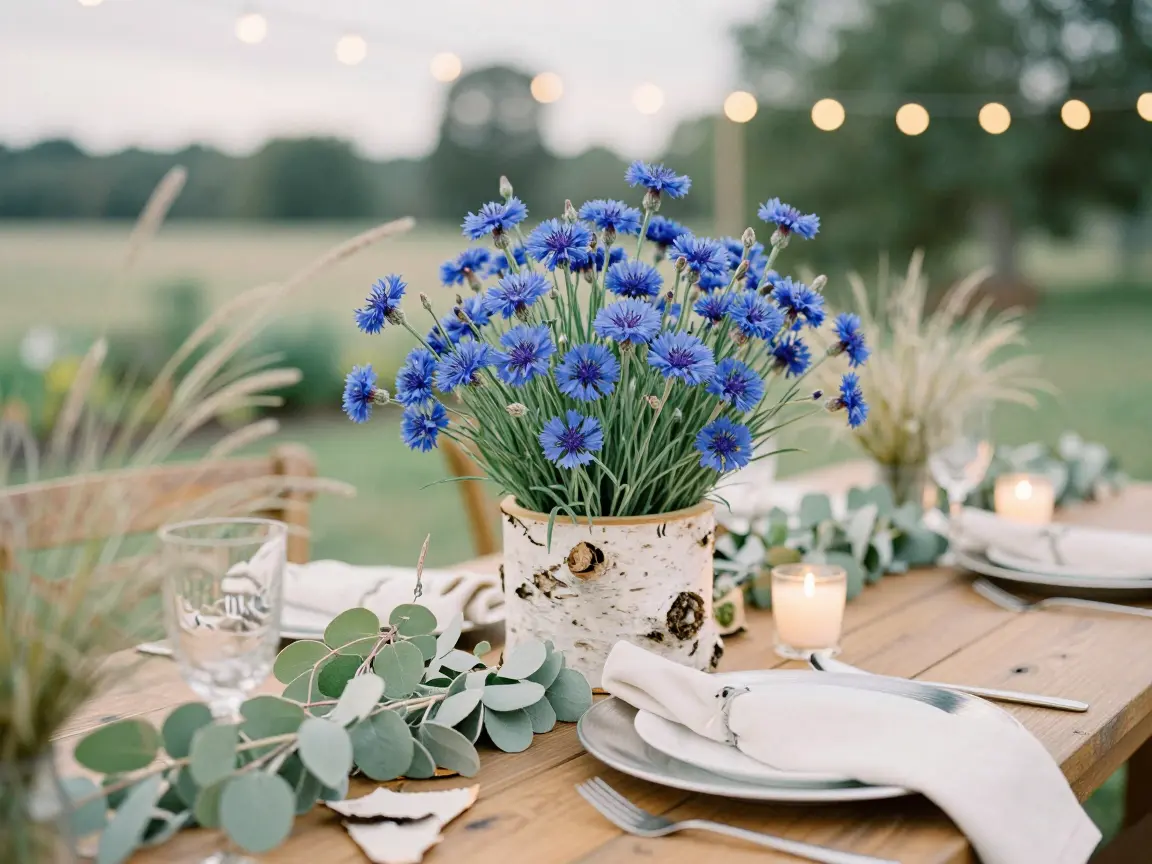
A hollowed natural birch log cradles blue cornflowers, giving the table a forest‑kissed feel. Authentic birch often sheds papery bark flakes, so sweep the surface before placing plates. Cut a 4‑inch opening, insert floral foam, soak it for an hour, then arrange the flowers to stay hydrated.
If flakes worry you, use a painted MDF cylinder that mimics the look without shedding. This low‑profile centerpiece works at outdoor summer weddings of 30‑50 guests, where guests sit at casual‑height tables. DIYing the hollow is messy; most hosts quickly rent pre‑hollowed logs from a florist.
- Natural texture
- Matches cornflowers
- Bark shedding
- Messy DIY
Flaked bark can stain table linens if not cleared
12. Vintage Tea Tins with Sweet Peas and Poppies
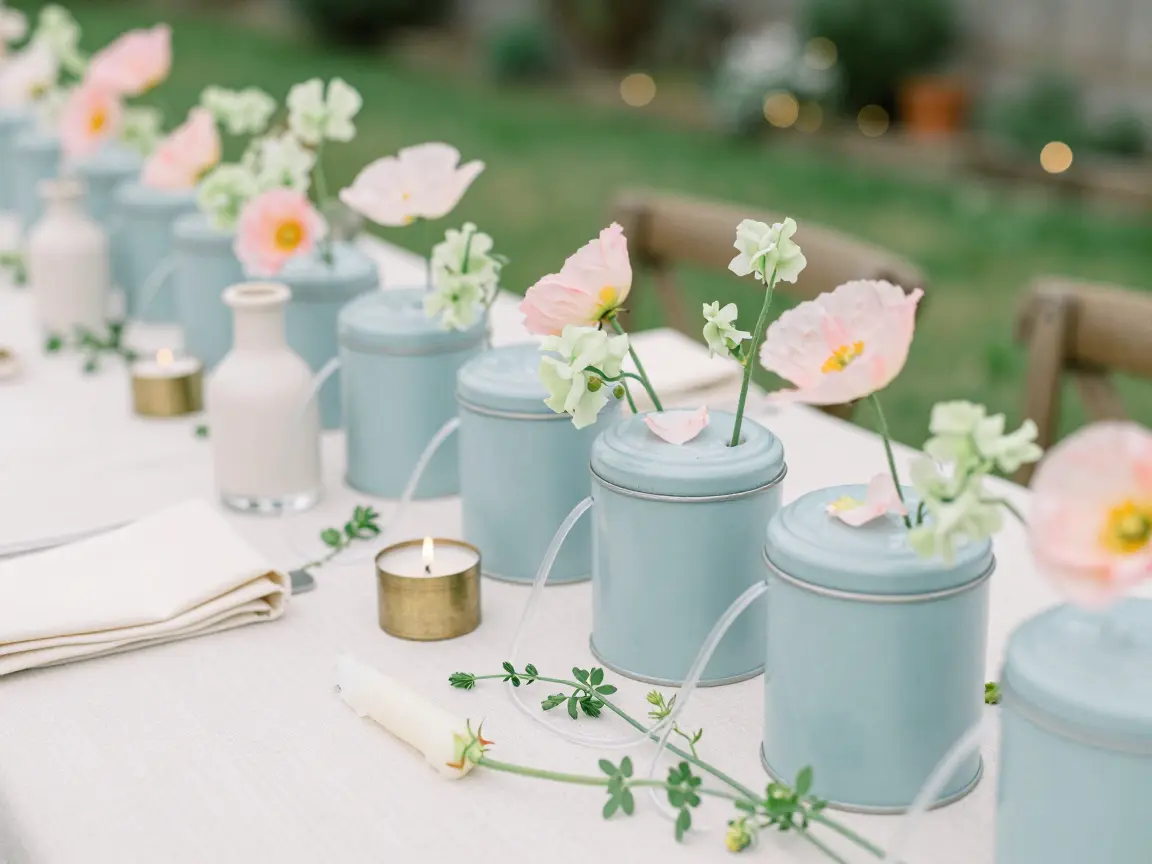
A set of pastel‑blue tea tins sits in a row, each lid slightly ajar to reveal a burst of pink poppies and soft‑green sweet peas.
The graphic tins give a vintage feel and keep the stems upright. Because poppies and sweet peas have thin‑walled stems, they wilt within minutes if not hydrated.
Slip a thin water tube into each tin, cut stems at 45°, and set them in the tube just before the event. Rinse the tins after use and store the tubes; the tins can later hold napkins or candles.
Keep a bucket of water nearby for quick re‑cutting if a stem droops.
- Vintage charm
- Easy to transport
- Limited flower volume
- Stems need constant moisture
Poppies and sweet peas wilt quickly without moisture
13. Galvanized Metal Buckets with Sunflowers and Goldenrod
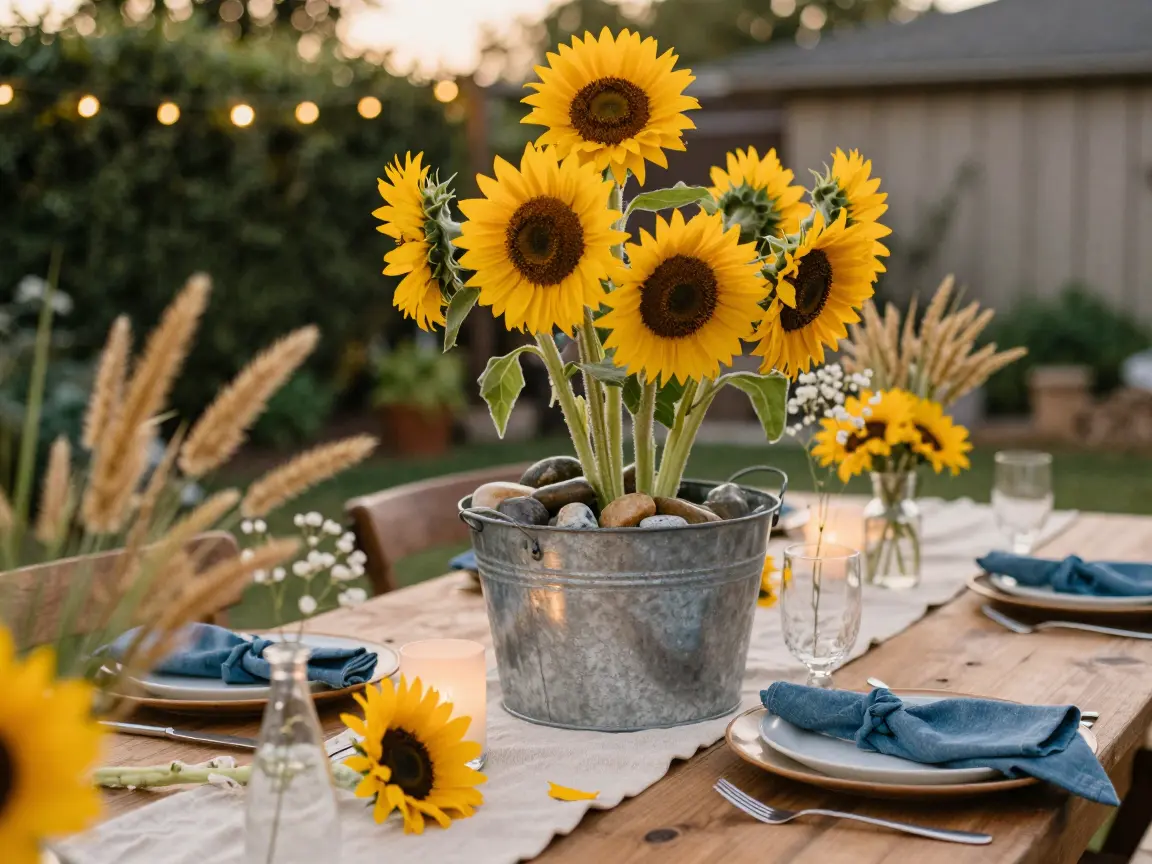
Use a galvanized bucket as the vessel for tall sunflowers and goldenrod, a technique that keeps the stems upright.
The wide, heavy base follows the scale rule of thumb: taller stems need a low center of gravity. Place a handful of river rocks inside, then add water and cut stems to 12‑14 inches.
The rustic metal pairs well with a casual backyard dinner where guests wear denim or linen.
- rustic charm
- easy to find
- top‑heavy can tip in wind
- requires weighting
Add river rocks to the bucket bottom for stability
Secure the bucket to the table with a discreet silicone pad if the evening outdoor breeze picks up quickly later.
14. Glass Cloches with Dried Larkspur and Ferns
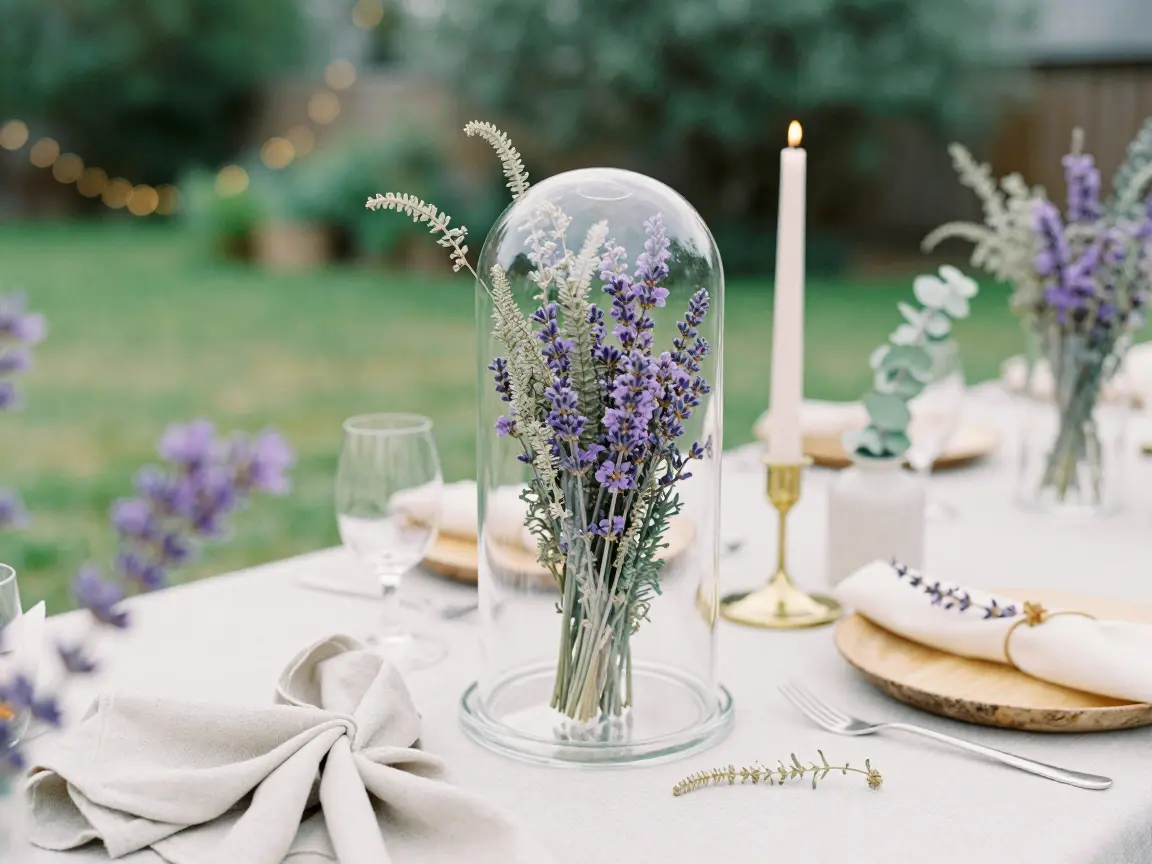
A glass cloche over a small bundle of dried larkspur and ferns acts like a tiny display case, and it shields the stems from wind and spilled drinks. The purple and blue larkspur holds its color well when dried, so the cloche reads as a soft, vintage still life rather than a fresh bouquet.
Use only fully dry material. Any moisture will fog the glass and can cause mold, so air‑dry larkspur upside down for two to three weeks first. Fresh ferns turn brittle and curl, so use preserved ferns or skip them for dried grasses.
Set the arrangement on a wood slice, a small plate, or a linen square so the cloche sits level, and keep the total height under about 12 inches so guests can see across the table.
Cloches run $15‑$40 each new, while glass cake domes and large upturned jars from a thrift store cost $5‑$15. Glass lifts off easily, so mention to guests that it is delicate, and store cloches in padded boxes between events. Because the display is sealed and dry, you can build it a week ahead.
- protects flowers from wind and spills
- can be built days ahead
- fragile glass
- fogs if the stems are damp
Drop a small silica gel packet under the base to keep the inside of the glass clear in humid weather
15. Vintage Inkwells with Buttercups
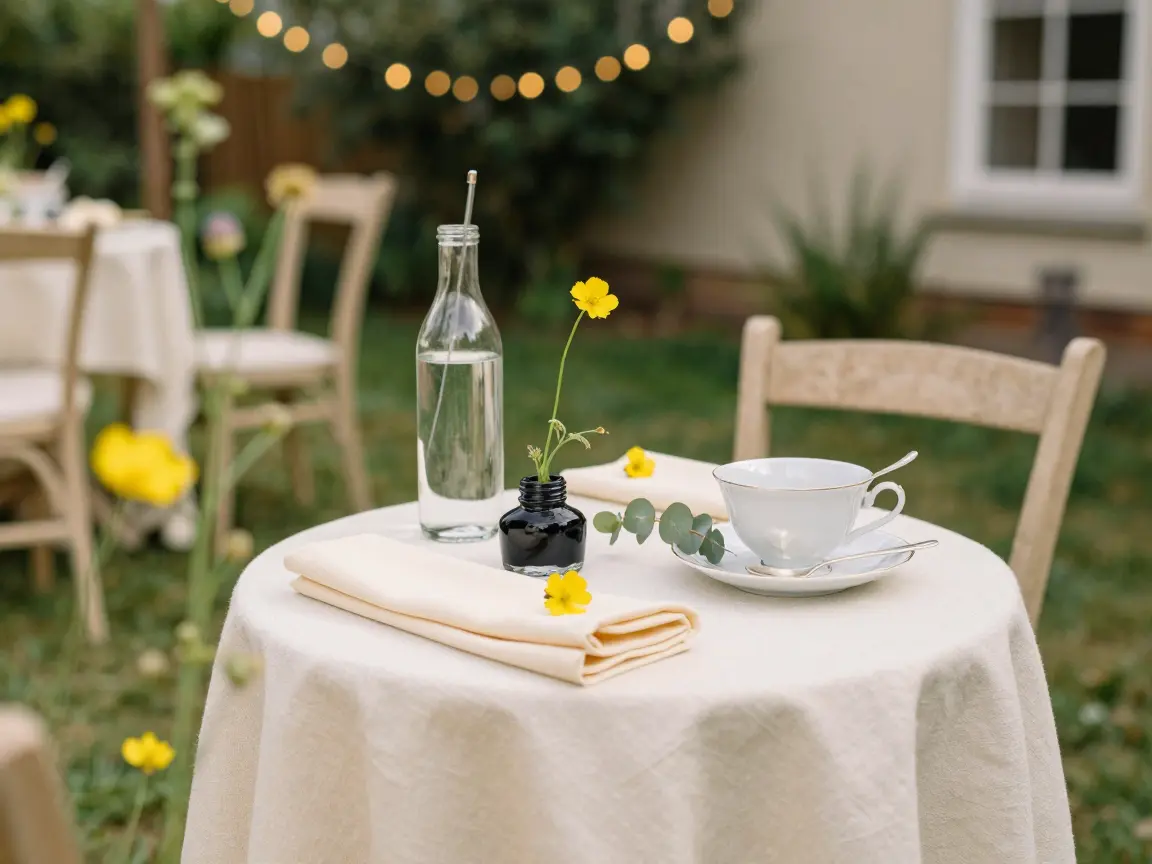
A set of antique glass inkwells lines a small two‑person table, each holding a single buttercup stem. Their microscopic water pocket dries in minutes, so a last‑minute refill is required right before guests sit.
The minimal height keeps the view clear, making it ideal for brunches, tea parties, or an intimate wedding cake table. Rinse the inkwells with warm soapy water after use; the glass or ceramic can be stored for future events.
- Elegant antique look
- Reusable after cleaning
- Must refill at last minute
- Very small water capacity
Glass inkwells can crack on uneven surfaces or when handled roughly
Place a small water bottle and a pipette at the back of the table to top up each inkwell within seconds.
16. Grapevine Wreaths Nesting Glass Vases of Clover
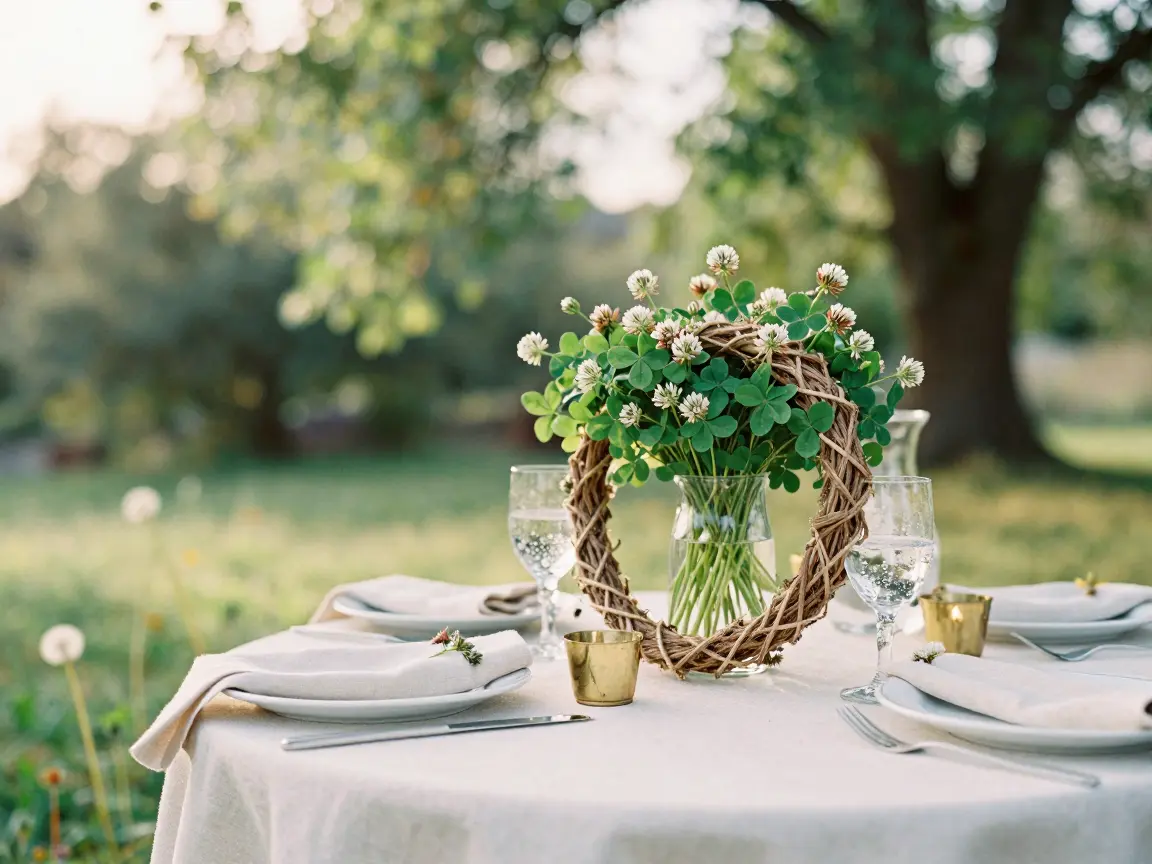
One glass vase of clover looks like a single bloom, but a surrounding grapevine wreath expands the footprint to fill a round table without breaking the bank.
The wreath’s twine spreads outward, turning a modest centerpiece into a garden‑sized display. The natural twine also catches light, making the arrangement feel larger than its actual size.
- adds visual volume
- budget-friendly
- occupies flat table space
- crowds out platters and glasses
The setup shines at casual outdoor brunches of eight to ten people, where low‑profile plates stay visible.
For a splurge, choose a hand‑woven oak wreath around $120; a synthetic pre‑made version runs about $30.
Attach the vase with two florist‑wire loops to the wreath base to keep it steady
DIY works, but buying saves time. If you prefer a faster route, local florists often rent ready‑made wreaths for $20‑$40 per event. Position the wreath a few inches from the table edge so dishes still have room.
17. Stoneware Crocks with Foraged Branches and Asters
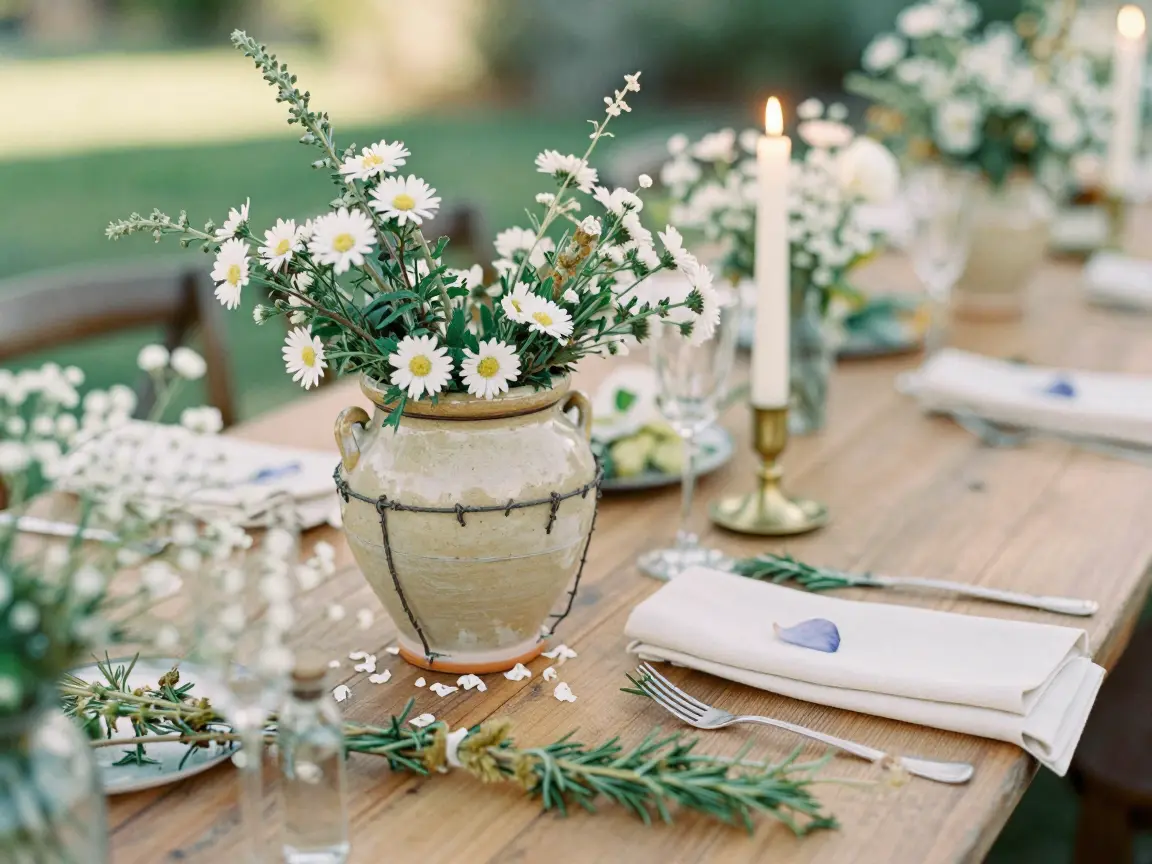
The chicken‑wire cage you slip inside the heavy stoneware crock keeps foraged branches upright without crushing the aster heads. First, choose a 2‑quart antique stoneware jar with a wide mouth; its weight steadies the centerpiece on any table.
Cut a piece of 1‑inch chicken wire, shape it into a shallow basket, and press it into the crock so the branches rest on the wire, not the glaze.
Before arranging, shake each branch over a white sheet, spray lightly with a 1‑part white‑vinegar to 4‑part water solution, and let dry to discourage spiders and aphids.
- rustic charm
- reusable
- possible insects
- heavy to move
- Select antique stoneware crock
- Form chicken‑wire basket
- Treat and arrange branches
Place a thin silicone mat at the bottom of the crock to catch stray petals and speed cleanup.
18. Brass Candlesticks Paired with Yarrow Bud Vases

A brass candlestick glints beside a clear bud vase brimming with airy yarrow stems, their yellow heads catching the low light.
The metallic base anchors the wild, breezy look, and the tall taper adds height without crowding the table. Because yarrow dries quickly, an open flame is a real fire hazard; local venue rules often forbid it.
Use drip‑free taper candles rated for at least 4 hours, or swap to LED brass sticks that mimic flicker without wax.
If the risk feels too high, replace the candlesticks with battery‑powered brass lanterns and keep the yarrow in a water‑filled vase.
This arrangement shines at a garden‑party of 12‑15 guests, where guests stand or mingle rather than sit for a formal dinner. Add a small metal saucer under each candlestick to catch any stray wax.
- warm metallic contrast
- height adds drama
- fire hazard
- requires supervision
Open flame near dry yarrow can ignite quickly
19. Twine-Wrapped Mason Jars with Baby’s Breath and Daisies
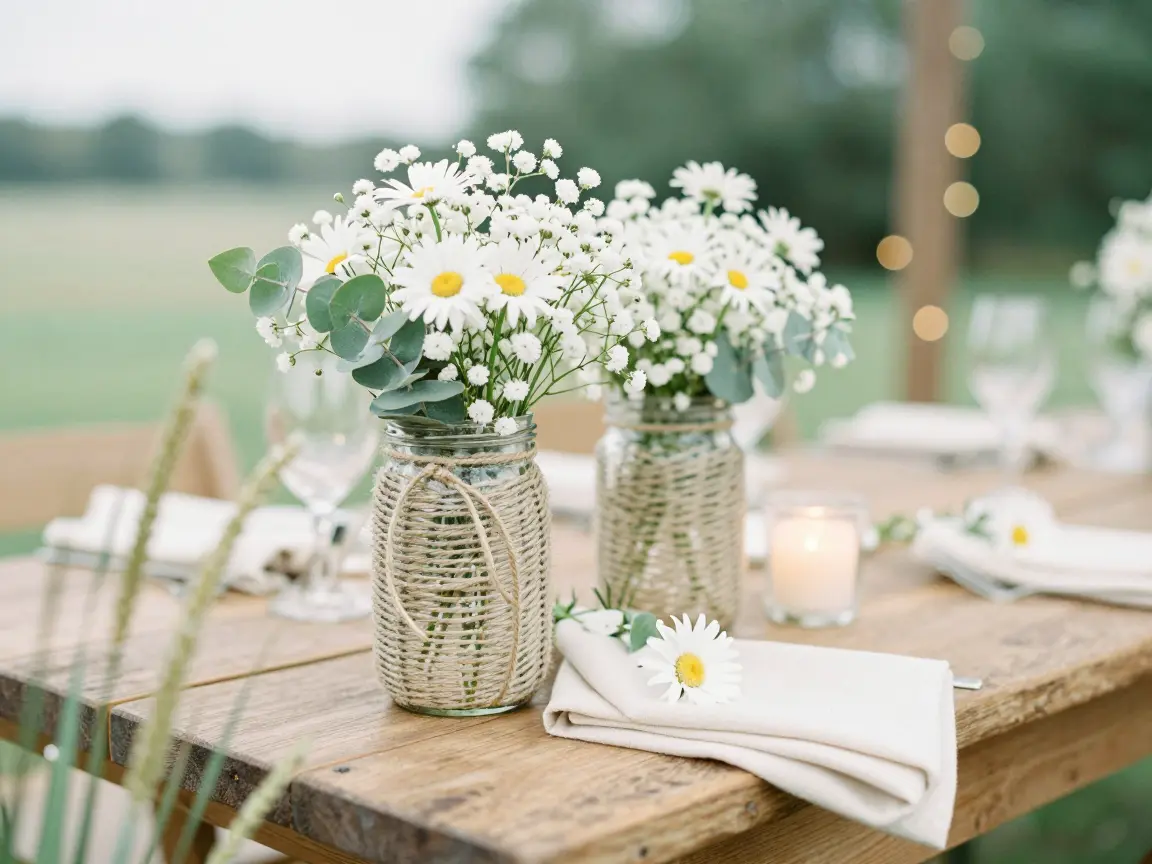
A pint‑size mason jar wrapped in a few turns of natural twine, filled with white daisies and a puff of baby’s breath, is the easiest centerpiece on the list to repeat across a long table. The jars are cheap, easy to find, and sturdy, and the casual look suits picnics, backyard dinners, and casual brunches.
Wrap the twine around the upper third of the jar only and secure the ends with a dot of hot glue, since twine that soaks up water can sag and grow mold. Cut daisies at 45°, strip any leaves below the water line, and fill jars with about three inches of water.
Mix two or three daisies with a small bunch of baby’s breath so the jar looks full without using many stems.
Jars cost $1‑$2 each in bulk, a bunch of daisies runs $5‑$10, and baby’s breath about $4‑$8, so a table of six jars comes to roughly $20‑$40.
Baby’s breath has a musty smell some people dislike, and a few guests have allergies to daisies, so keep arrangements away from the food on buffet tables. For a fuller look at a larger event, group three jars of different heights in the center of each table.
- very cheap and easy to repeat
- sturdy glass stays upright
- can look generic without variety
- baby’s breath has a musty scent
Vary the jar heights by stacking a jar on a wood block or upturned bowl so the cluster has a natural silhouette
20. Floating Wildflower Bowls
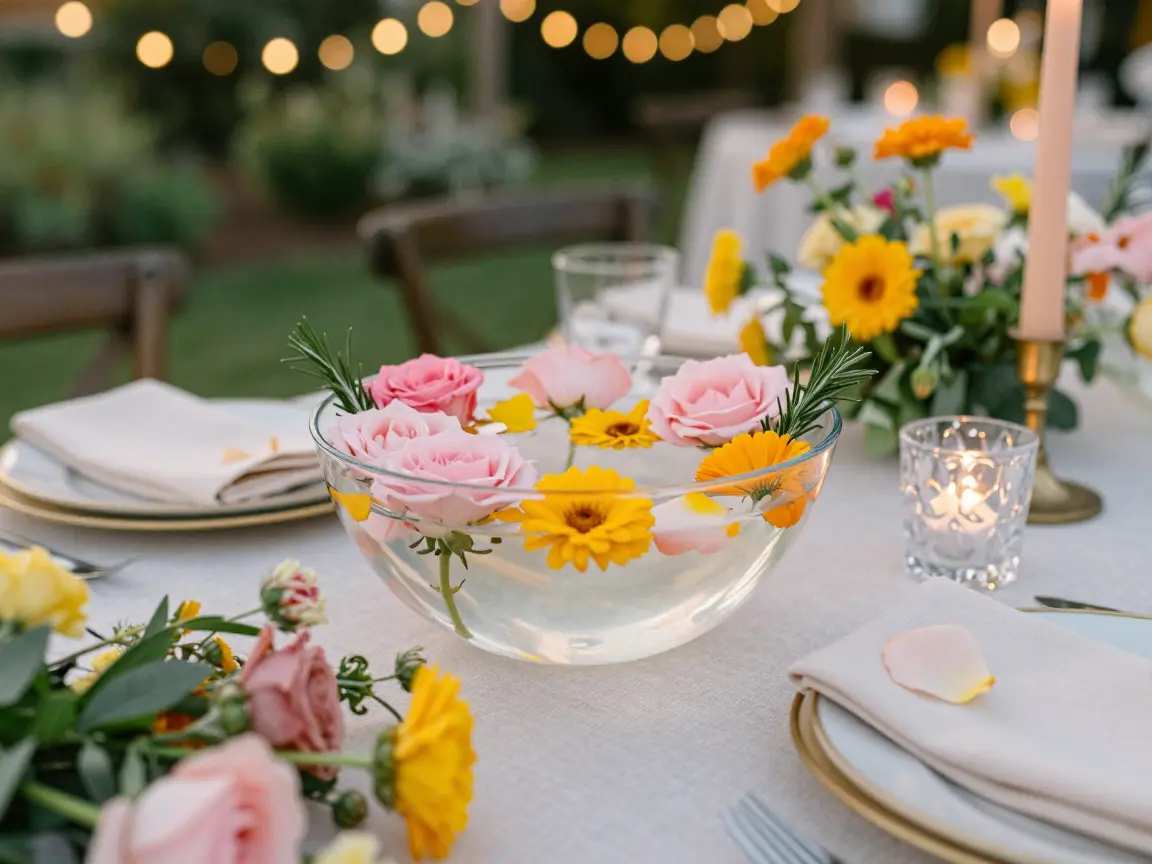
A shallow glass bowl sits on the table, its surface barely covering the stems of wild roses that hover like tiny buoys.
Thick‑petaled blooms such as wild roses or calendula stay buoyant for hours, while dainty petals wilt and sink. Swap the water every evening and gently rinse the stems to prevent slime, then let the bowl dry before the next use.
Place a thin layer of clear aquarium gel at the bottom; it holds the stems upright and slows petal decay. Add a single sprig of rosemary on the rim for scent and a touch of green contrast.
- Eye‑catching centerpiece
- Reusable bowl
- Thin‑petal blooms submerge fast
- Needs nightly water refresh
Bowl may tip on uneven surfaces
21. Driftwood Branches with Wild Thyme and Succulents

A weathered driftwood branch spans the center of a white linen runner, its knots cradling tiny glass vials of wild thyme.
The salty‑scented wood pairs with plump succulents for a coastal‑meadow vibe that reads well at a summer garden wedding of 30‑40 guests. Authentic, clean driftwood is surprisingly expensive, and its irregular shapes can make it incredibly difficult to balance on flat tablecloths.
If the price or stability is a concern, swap the branch for a reclaimed pine slab or painted wooden dowel. A splurge version costs $80‑$120 for hand‑picked driftwood; a budget option runs $15‑$25 for faux branches.
It works best on rectangular tables where the branch can lie lengthwise without crowding plates. Because cleaning driftwood is labor‑intensive, buying pre‑cleaned pieces is usually wiser than a DIY hunt.
- natural texture
- visual contrast
- high cost
- unstable on flat surfaces
Apply clear silicone bead inside each knot to lock the thyme vial in place
22. Vintage Milk Glass Goblets with Forget-Me-Nots

A trio of opaque white milk‑glass goblets sits at the table, each holding a single forget‑me‑not stem.
The clean glass makes the tiny blue blooms pop like a flash of color against snow. Arrange the goblets at 4‑, 8‑, and 12‑inch heights for a balanced triangle.
A three‑person dinner can use the same cluster, while a buffet may repeat the set in groups of three for larger scale.
- vintage elegance
- high contrast
- fragile
- pricey to match
For a splurge, source original 1930s goblets at antique shops; for a budget, buy clear acrylic replicas that mimic the milk finish.
Cut a circle of florist foam to the rim and secure the stem, so the flower stays upright and cleanup is quick.
Add a thin silicone coaster under each goblet to protect the tabletop and catch any chips.
Pick Your Favorite Look
You’ve just explored 22 ways to turn ordinary tables into wildflower‑filled statements, from weighted amber bottles to driftwood branches cradling thyme.
Pick one or two ideas that match your venue’s size, weather, and budget. Test stability with a quick shake, line wooden troughs with plastic, and keep a spare water tube handy for delicate stems like poppies and sweet peas.
Prep what you can the day before, set up in shade, and save the most fragile ideas for tables near the kitchen where you can refresh them. Save this list, pin your favorites, and share it with anyone planning a garden table.
Frequently Asked Questions
How do you keep wildflower centerpieces from wilting during an event?
Hydrate wildflowers in a cool, dark room for 24 hours before arranging. Recut stems at a 45-degree angle under water, strip all leaves below the water line to prevent bacteria, and use a floral preservative.
What are the cheapest wildflowers to use for centerpieces?
Queen Anne’s lace, chamomile, feverfew, and baby’s breath are highly affordable, readily available, and provide excellent volume to fill out table arrangements on a tight budget.
How far in advance can you arrange wildflower centerpieces?
Assemble arrangements no more than 24 hours before the event. Delicate wildflowers wilt much faster than commercial hot-house flowers, so keeping them in a temperature-controlled space until setup is critical.
Can you use real foraged wildflowers for wedding tables?
Yes, but you must debulk them thoroughly by shaking stems gently outdoors, spraying with a mild organic insecticide, and testing their hydration limits a few weeks before the actual event.