
Practical Wedding Budget Breakdown: Realistic Percentages, Hidden Fees, and Trade-Offs
Practical Wedding Budget Breakdown: Realistic Percentages, Hidden Fees, and Trade-Offs
Most couples think the average wedding costs $30,000, but only about a third of that number actually covers the headline items most people obsess over. The rest slips into venue inclusions, taxes, and hidden service fees that most budget templates ignore.
This article breaks down a realistic percentage framework, shows where hidden costs hide, and explains how to shift the numbers based on your venue’s package, guest count, and location. You will end up with a flexible spreadsheet that matches real line‑item quotes, not idealized industry averages.
The Percentage Split Baseline: How to Divide Your Total Spend
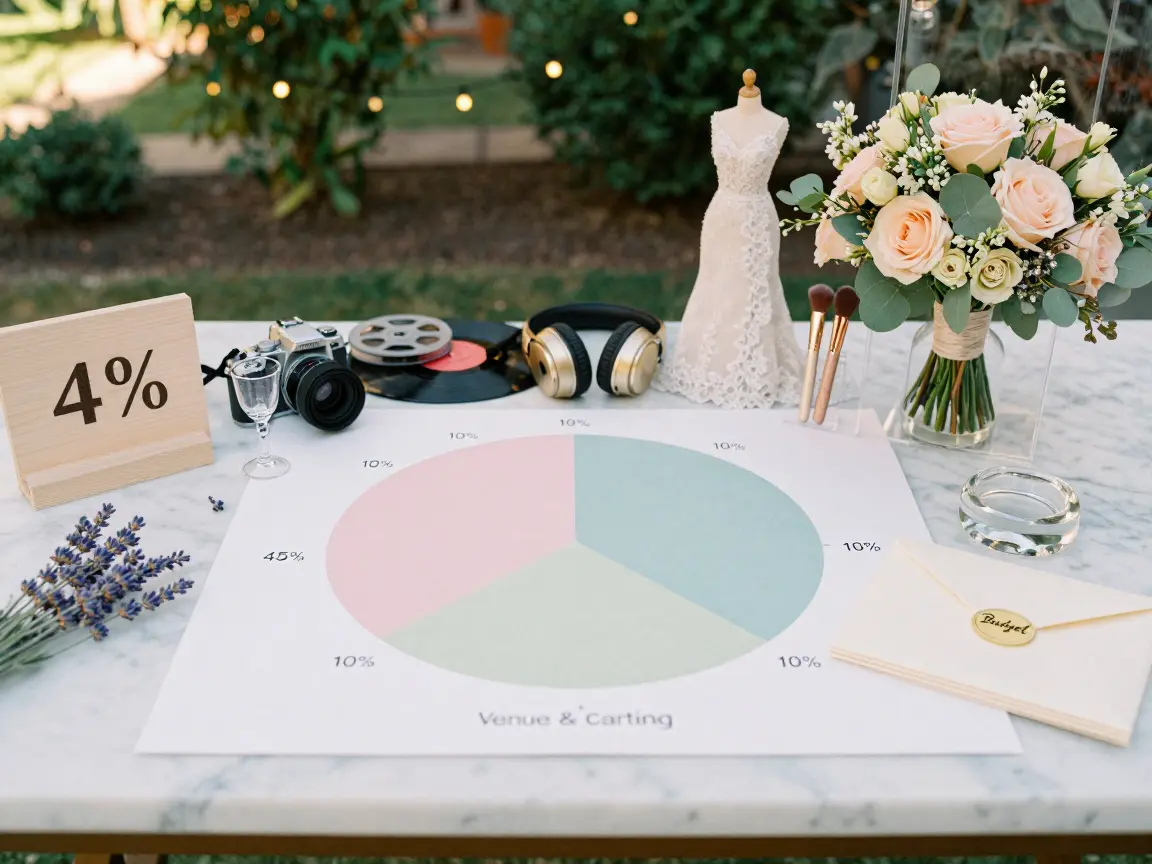
Venue‑catering at 45% looks clean on paper, but regional price floors often force a higher spend on the site alone. Photo‑video at 15% and entertainment at 10% sit within the typical 10‑12% and 5‑10% ranges.
Attire, décor, and a 10% buffer round out the split, leaving room for stationery and transport if needed. Couples planning a micro‑wedding of 50 guests should shift a few points from décor to venue to secure a desirable space, while a large, weekend celebration may need extra buffer for vendor minimums.
A practical tip: list every vendor’s minimum fee before applying percentages; adjust the model only after you know those floor numbers. This baseline works best for medium‑to‑large gatherings (100‑200 guests) where venue costs dominate.
- clear guardrails
- aligns with industry averages
- rigid ratios hide mandatory minimums
- can limit creative flexibility
- Reception venue: $5,400‑$6,600
- Catering & bar: $6,000‑$7,500
Capture each vendor’s minimum fee before budgeting
Venue, Food, and Beverage: Navigating the 45% Core Expense
Most couples underestimate that venue rental, food, and drinks easily consume 45% of the total budget, with catering plus bar alone pulling 20, 35% depending on the service style. A basic plated dinner and limited bar runs about $80 per guest, while a full premium bar can push that to $130‑$150.
Hidden fees, corkage, cake‑cutting, mandatory gratuities for bartenders, add $500‑$1,200 and often appear only in the final invoice. All‑inclusive venues cut coordination stress but lock you into bundled service fees and limit menu tweaks.
If you need flexibility, consider a standalone banquet hall and hire an independent caterer; this works best for 75‑100 guests and lets you swap a plated dinner for a $60‑$110 buffet.
- streamlined planning
- fixed vendor list
- limited menu control
- hidden mandatory fees
mandatory bar staff gratuities can inflate the bill unexpectedly
- Basic plated dinner (incl. limited bar): $80 per guest
- Premium full bar: $130‑$150 per guest
Photography, Videography, and Entertainment: Managing Fixed Professional Costs
A solo violin for the ceremony costs about $480, an acoustic duo $900, while a full‑band set averages $1,600 and can rise to $3,300 for a showband. DJs start around $1,500 in the US and $1,000 on average in the UK.
Because venue travel, power needs, and equipment rentals add fees, a band’s total often exceeds its headline rate. Trim the photographer’s coverage from eight to six hours to free $300‑$500, but you’ll lose early‑prep shots and late‑night dancing.
If a band feels out of reach, hire a solo guitarist for the ceremony and a DJ for the reception; the DJ can handle both playlists, keeping the vibe consistent. For a splurge, book a four‑piece function band with a live‑stream package; for a budget‑friendly route, combine a solo musician with a DJ and limit each set to the core moments.
- Live band creates atmosphere
- DJ offers flexibility
- Trimming hours saves money
- Risk missing key moments
Schedule the DJ’s first set to start at the cocktail hour, ensuring continuous music without a handoff gap
Attire, Beauty, and Rings: Accounting for Alterations and Extras
A simple satin sheath may be $2,200, but expect $600‑$800 for intricate custom tailoring that secures a flawless fit. Simple alterations like a hem run $125‑$450, yet a full‑length bustle can add $75‑$175.
Hair and makeup artists often require $300‑$500 minimums plus a $150 trial fee, so set aside $450‑$650 for bridal beauty. A platinum band costs $1,200‑$1,800, while a gold option sits around $700‑$1,100; both need polishing kits ($20‑$40) for upkeep after the ceremony.
- precise fit
- higher confidence
- hidden costs
- risk of overruns
extensive custom work can delay final fitting
- Dress alterations: $300‑$800
- Beauty minimums: $300‑$500
Flowers, Decor, and Rentals: High-Impact Elements vs. Overpriced Line Items
A cascade of white peonies and blush lisianthus frames the altar, while a single garland of eucalyptus runs the reception tables, creating a cohesive visual anchor that feels intentional without excess. Importing out‑of‑season fresh blooms creates a custom look but dramatically spikes floral expenses over local varieties.
If that price jump isn’t feasible, swap the imported peonies for in‑season garden roses and reuse the ceremony bouquet as a centerpiece for the head table. The splurge route, hand‑tied silk arrangements and custom‑cut crystal vases, delivers a luxe finish, while a budget‑friendly plan uses potted greenery and rented metal troughs that can be reclaimed for future events.
- Custom look
- Seasonal sustainability
- High cost
- Limited DIY feasibility
Harvest ceremony flowers early and store them in a cool, dark place to keep them fresh for reception use
- Ceremony bouquet
- Reusable potted greenery
- Rental metal troughs
The Overhead Trap: Service Charges, Taxes, Tips, and Delivery Fees
Catering contracts often list a base price, then tack on an 18%‑25% service charge and a 7%‑10% sales tax, turning a $5,000 quote into roughly $6,200. Add vendor meals, delivery surcharges, and gratuities, typically $800‑$1,500 for a mid‑range wedding, plus insurance, and you’re looking at $2,500‑$5,000 of hidden overhead, about 9%‑15% of the total budget.
The safest move is to earmark a 5%‑10% contingency buffer from day one; it absorbs these mandatory additions but inevitably trims the amount left for décor upgrades.
For a splurge approach, allocate a dedicated $1,200 tip fund and pay service fees with a premium credit card that offers travel rewards. On a tighter budget, negotiate a flat‑fee catering package that includes delivery and staff meals, then set aside the minimum $800 tip in cash.
- protects against surprise costs
- ensures realistic budgeting
- reduces funds for design upgrades
- may limit vendor negotiation power
hidden fees can push the budget over 15% beyond quoted amounts
- Contingency buffer: 5%‑10%
- Hidden overhead: $2,500‑$5,000
Strategic Cuts: Trimming $3,000 Without Compromising the Experience
Swap paper save‑the‑dates for a QR‑code email that links to a simple wedding website. The digital invite cuts stationery spend to about 2% of the budget, roughly $300, while still delivering all details.
Next, replace a full bar with a limited service, wine, beer, and one signature cocktail, for $600, representing 4% of the budget. Together these moves shave $3,000 without touching venue or dress costs. A full bar feels luxurious, but guests rarely miss a curated drink list, especially at gatherings of 100 or fewer.
If you prefer the classic paper feel, choose a modest printed suite on cardstock and limit the bar to wine only, accepting a slightly higher spend.
- Digital invites save money
- Limited bar reduces cost
- Full bar adds luxury feel
- Paper suites boost formality
- Choose QR‑code platform
- Order limited bar package
- Communicate drink options early
Include a “bring‑your‑own‑wine” note for guests who want more variety
Essential Wedding Budget Allocation Checklist
This checklist walks you through every cash‑flow milestone from the first deposit to the final tip envelope, perfect for couples who want to avoid surprise invoices.
- Initial venue deposit (usually 10‑15% of total budget) , locks in the date early.
- Catering contract down‑payment (often 20% of food budget) , due 6‑8 weeks before the wedding.
- Photographer’s retainer (about 25% of their fee) , payable at booking.
- Dress and suit alteration timeline , schedule fittings 3‑4 months out and set aside a small reserve for last‑minute tweaks.
- Floral and décor installment fee , typically due 2 weeks before the ceremony.
- Rental equipment final payment , settle the week of the event.
- Cash tip envelopes prepared for each vendor , allocate 10‑15% of each vendor’s total cost.
- Contingency reserve (5‑10% of overall budget) , keep in a separate account for unexpected fees.
The most common slip is forgetting to schedule the tip envelopes; set them aside with your vendor contracts to ensure nothing is left unpaid.
Frequently Asked Questions
What is the 50/30/20 rule for budgeting for weddings?
The 50/30/20 rule for weddings adapts personal finance concepts by allocating 50% of overall income or savings to major fixed venue and catering costs, 30% to key visual and guest experience vendors (photo, music, attire), and 20% to emergency buffers, taxes, fees, and post-wedding expenses.
What is a realistic budget for a wedding?
A realistic wedding budget depends heavily on guest count and location, but average comprehensive budgets in the U.S. range between $30,000 and $40,000 for a 100-guest event, while micro-weddings or casual backyard receptions can be executed effectively for $10,000 to $15,000.
What is the most common hidden cost in a wedding budget?
Service charges and venue administrative fees are the most frequent unexpected costs, often adding 20% to 25% on top of food and beverage totals before local sales tax and vendor gratuities are applied.
How much buffer money should be set aside in a wedding budget?
Couples should reserve 5% to 10% of their total wedding budget specifically for unallocated expenses, late contract adjustments, overtime charges, and last-minute weather contingencies.


One Comment
Comments are closed.